The secret to a successful family game night isn’t the complexity of the game or the size of the prize; it is the deliberate lowering of stakes to prioritize connection over winning. When you shift the focus from “who wins” to “how we play,” you eliminate the common triggers for sibling rivalry, parental frustration, and the inevitable “I’m bored” complaints that turn a fun evening into a logistical headache.
- Prioritize Cooperative Games: Shift the dynamic from “us vs. them” to “us vs. the game” to neutralize aggressive competition.
- Implement a Hard Time Limit: Keep sessions under 45 minutes to prevent fatigue-induced meltdowns and maintain excitement for the next time.
- Separate Skill Levels: Use age-appropriate mechanics or “team-up” rules to ensure younger children don’t feel perpetually defeated by older siblings or parents.
Why “Low-Stakes” is the Missing Ingredient in Your Weekend
If you are in your 30s or 40s, your week is likely filled with high-stakes decision-making. From managing professional deadlines to navigating the complex logistics of school runs, sports practices, and household maintenance, your brain is constantly in “optimization mode.” When the weekend arrives, there is a natural, often unconscious, desire to make family time “productive” or “perfect.”
This is where the trap lies. We often approach family game night as a test of intelligence, a lesson in sportsmanship, or a way to get kids off screens. When the game becomes a test, the stakes rise immediately. If a child loses, they feel the weight of your expectation; if they win, they might gloat, triggering a conflict. This is not a relaxing evening; it is a continuation of the day’s stress.
A “low-stakes” approach means fundamentally changing the environment. It is about creating a space where the outcome is secondary to the interaction. It is not about ignoring the rules, but about removing the pressure to perform. When the atmosphere is relaxed, the brain shifts from a defensive, competitive state to a social, exploratory one, which is exactly where meaningful family memories are formed.
The Anatomy of a Low-Stakes Game Session
To keep the energy manageable, you need a framework that prevents the game from spiraling into a marathon session. Most parents find that when a game crosses the one-hour mark, the “diminishing returns” of fun kick in. Attention spans wane, snacks run out, and the likelihood of a disagreement increases exponentially.
1. The Selection Rule: Matching the Game to the Mood
One of the biggest mistakes is choosing a game that is too complex for the current energy levels. If you have had a long week, trying to learn a heavy strategy game with complex rules is a recipe for disaster. Use the “10-Minute Rule”: If you cannot explain the core objective and the basic mechanics to everyone in under ten minutes, the game is too complex for a “low-stakes” night.
| Game Type | Best For | Why it Works |
|---|---|---|
| Cooperative | High-conflict days | Eliminates individual losers; forces collaboration. |
| Dexterity | High-energy evenings | Levels the playing field between adults and kids. |
| Party/Social | Post-dinner wind-down | Focuses on conversation and humor rather than strategy. |
2. Eliminating the “Parental Edge”
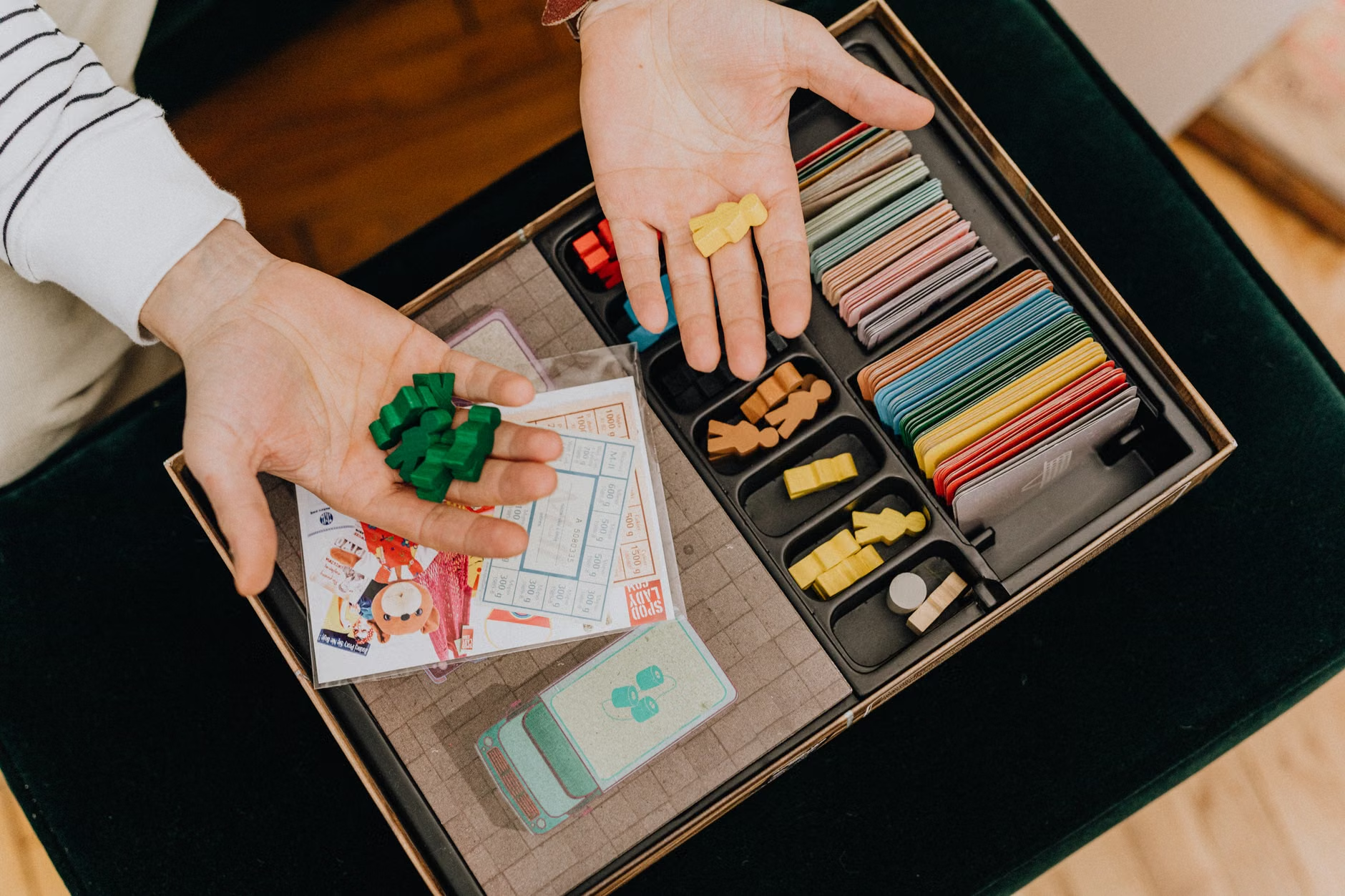
Parents often struggle with the “let them win” dilemma. If you play at full capacity, you crush the children’s spirit; if you play poorly on purpose, they eventually notice and feel patronized. The solution is to introduce asymmetric handicaps. For example, in a racing game, give the youngest player a head start or an extra “boost” card. This is not about cheating; it is about creating a level playing field that acknowledges developmental differences without making the game feel fixed.
Managing the “Win/Loss” Emotional Volatility
Even with the best intentions, the competitive spirit can sometimes overtake a child. For children (and some adults), losing is not just a game outcome; it feels like a personal failure. Addressing this requires a proactive, rather than reactive, approach.
The “Game Over” Reframing Strategy
When a game ends, the immediate focus is usually on the score. Instead, steer the conversation toward the “Game Story.” Ask questions like: “What was the funniest moment of that round?” or “How did we manage to escape that trap?” By highlighting the narrative of the game rather than the final tally, you shift the focus away from the binary win/loss outcome.
If a child is prone to significant meltdowns, avoid games that involve “player elimination.” There is nothing worse for a sensitive child than being knocked out of a game 15 minutes early and having to watch everyone else play. Choose games where everyone stays in until the final score is tallied, or better yet, cooperative games where if one person fails, the team assesses what went wrong together.
The Role of the “Game Moderator”
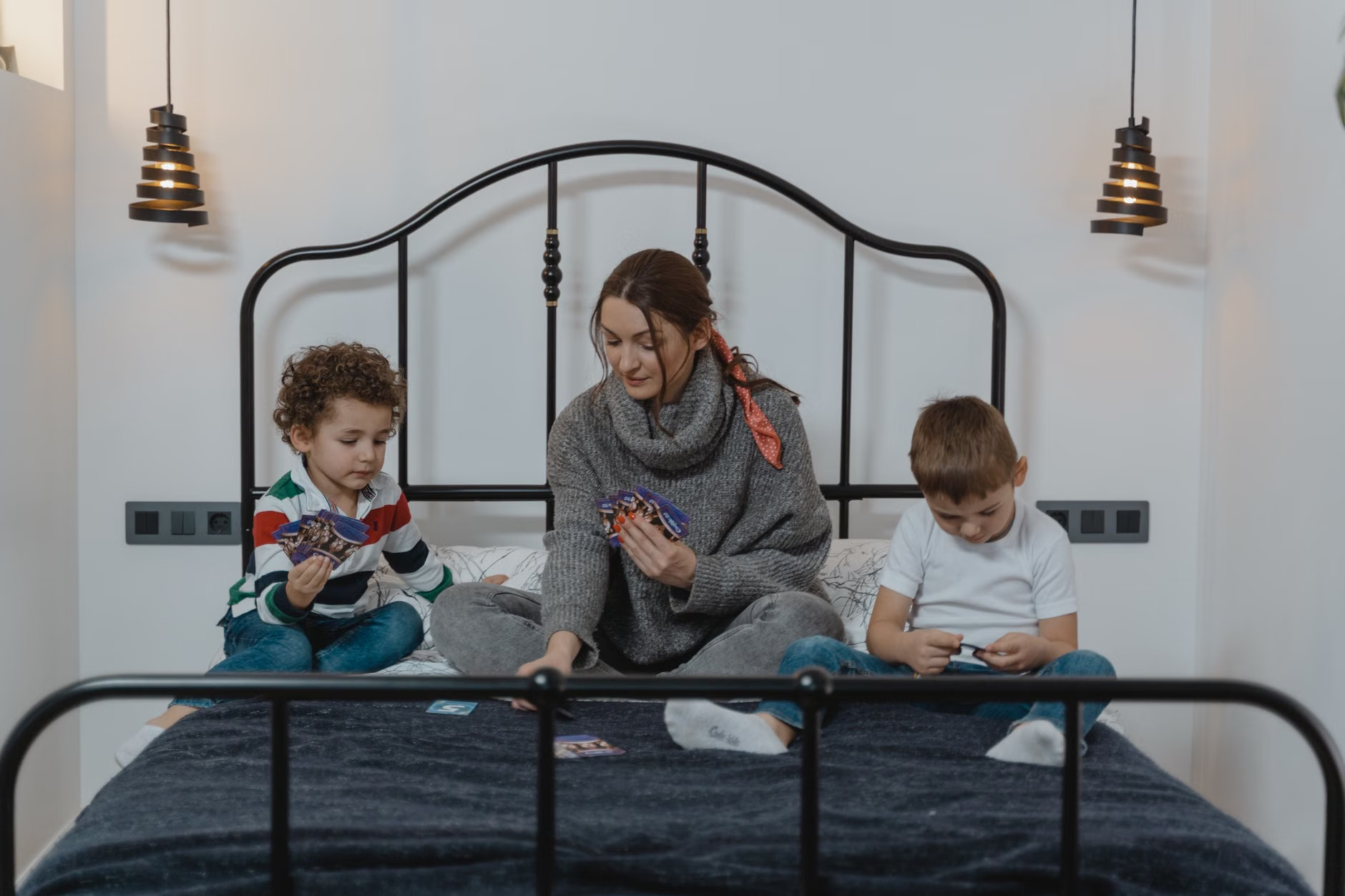
If you have more than two children, the “moderator” role is vital. One parent should act as the facilitator—the person who manages the rules, settles minor disputes, and keeps the energy moving. This parent should play, but their primary goal is to ensure the “low-stakes” environment persists. If a conflict arises, the moderator doesn’t pick a side; they pause the game, address the frustration, and reset the clock. This prevents the parent from being perceived as the “referee” who is constantly handing out penalties.
Designing the Environment for Success
The physical environment dictates how we behave. If you are playing on a cramped coffee table while the TV is blaring in the background, you are setting yourself up for distraction and irritability. Create a “sanctuary” for the game.
Lighting and Soundscapes
Dim the overhead lights and use a floor lamp or warm ambient lighting. If you have a favorite playlist, use it, but keep the volume low. The goal is to create a sensory bubble that separates this hour from the rest of the week’s chaos. Avoid playing in high-traffic areas like the kitchen if possible, as the temptation to get up and check on chores will break the flow.
The “Snack Buffer”
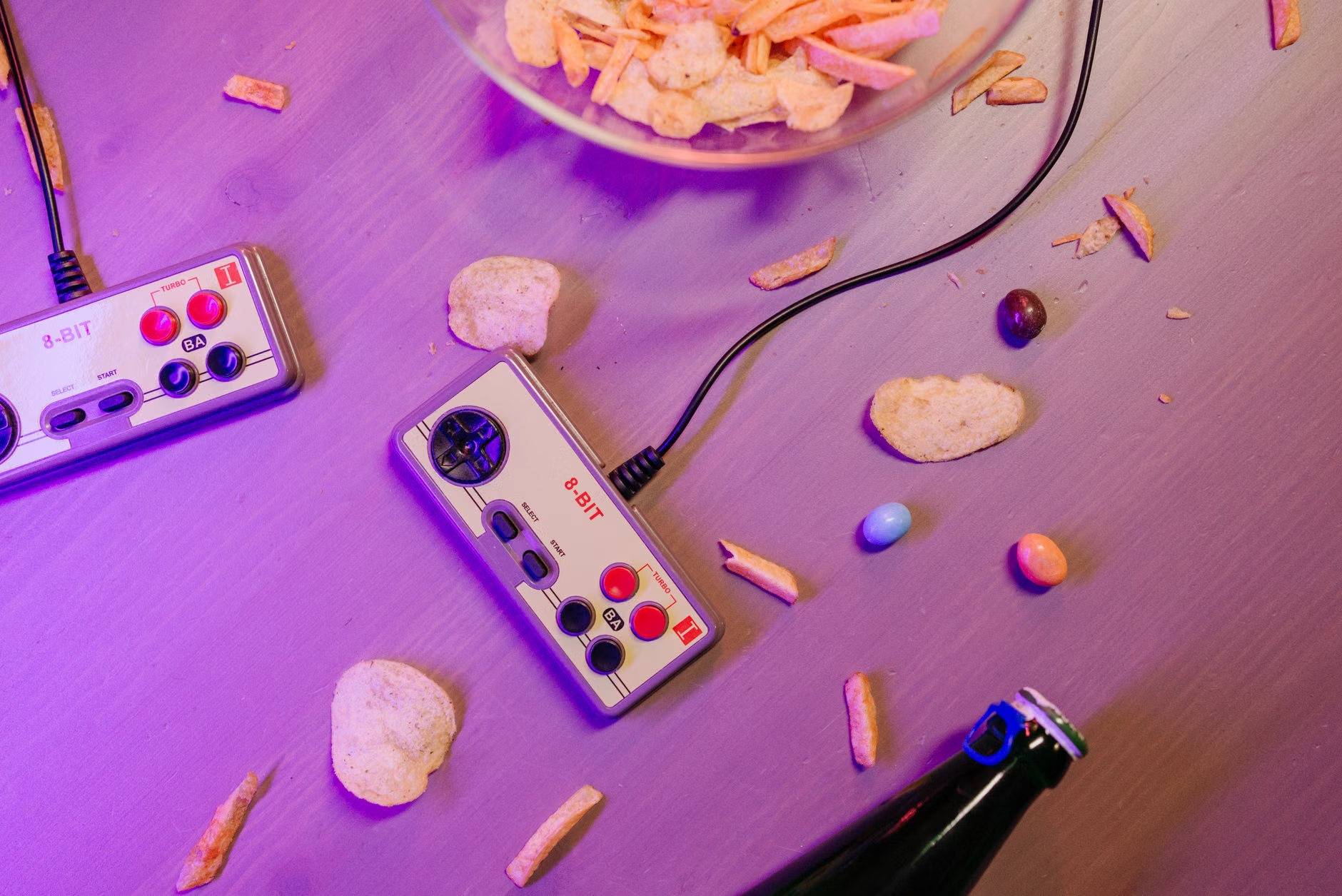
Never rely on a game to hold a child’s attention for an hour without a sensory bridge. A small, shared snack board acts as an anchor. It provides a natural “pause” button. If the game gets heated, the snack board is the neutral ground where everyone converges. Avoid messy or sticky foods that might ruin game components—think grapes, cheese cubes, or crackers—anything that allows the flow of play to continue without interruption.
Common Pitfalls and How to Pivot
Even with the best planning, things will go wrong. Someone will get grumpy, a piece will go missing, or a game will just fall flat. How you handle the pivot determines whether the night is a success or a bust.
The “15-Minute Abandon” Rule
Do not be afraid to abandon a game. If it is clear that the game is not working—whether it is too boring, too difficult, or causing genuine distress—invoke the “15-minute rule.” If everyone is not engaged by the 15-minute mark, call a timeout. Suggest a change in rules, or if that doesn’t work, put the game away and switch to a low-energy activity like reading a book together or listening to music. Forcing a game to its conclusion when the energy is dead is the fastest way to make family game night feel like a chore.
Handling the “Rules Lawyer”
If you have an older child who is obsessed with the rules and gets upset when others make mistakes, establish a “house rule” at the start of the night. State clearly: “Tonight, we are prioritizing fun over strict rule adherence. If someone makes a mistake, we will help them correct it, but we won’t penalize them.” This sets the expectation that the night is about learning and bonding, not about strict adherence to the manual.
Beyond the Board: Creating Rituals
The true value of a low-stakes game night is the ritual itself. It is a recurring event that children can look forward to, knowing that it is a safe space where they are not being graded or judged. The consistency of the ritual is more important than the quality of the games you play. Whether it is Friday night or Sunday afternoon, make it a non-negotiable block of time.
As your children grow, the games will change. A five-year-old’s interest in memory games will shift to a teenager’s interest in complex strategy or social deduction games. The “low-stakes” philosophy, however, remains the same. It is the ability to walk into a room, put away the phone, and engage with the people who matter most without an agenda. That is not just a game; it is a vital part of maintaining family health in a busy world.
Summary of Implementation
To start your own low-stakes tradition, start small. Pick one Friday evening this month. Communicate to the family that the goal is to play, have a snack, and laugh. If it goes well, repeat it the following week. If it doesn’t, analyze what went wrong, adjust your strategy, and try again. The goal is not to be the “perfect family,” but to be a family that knows how to reset, reconnect, and simply enjoy each other’s company.
For more on the psychology of play and developmental benefits of board games, you can review resources from organizations like the Psychology Today archive on play, which highlights how collaborative play supports emotional regulation in children and adults alike.
Frequently Asked Questions
What if my children have a significant age gap?
The best approach is to choose games that rely on luck or simple pattern recognition rather than complex strategy or reading skills. Cooperative games where the older child can “mentor” the younger one without taking over the turns are also excellent. If the age gap is extreme, consider games that can be played in teams, pairing an adult with a younger child.
How do I handle the “bad loser” personality?
Acknowledge their frustration without indulging it. Say, “I can see you’re disappointed that you didn’t win, and that’s okay. It’s hard to lose.” Then, immediately pivot to the next part of the game or the next activity. Do not spend excessive time trying to “fix” the mood, as this often gives the negative behavior more attention than it deserves. Consistency in your calm response will eventually teach them that losing is just a normal, non-catastrophic part of the game.
What if I don’t have time for a full game night?
You don’t need a three-hour block to reap the benefits. A “micro-game night” can be just 20 minutes before bedtime. The key is the ritualistic nature of it—setting the scene, putting the phones away, and having that dedicated, undistracted connection. Even a quick game of cards or a simple dice game can provide the same emotional reset as a longer session.