The rise of the “micro-community” housing model is not just a trend for digital nomads or students; it is increasingly becoming a pragmatic, long-term solution for families in their 30s and 40s who are looking to trade the isolation of suburban single-family living for shared resources, lower costs, and built-in social support.
- Economic Efficiency: Micro-communities allow families to access high-quality amenities—like guest suites, co-working spaces, and playrooms—that would be unaffordable in a private home.
- The Social Safety Net: Shared living environments significantly reduce parenting burnout by facilitating “co-parenting” dynamics, such as informal child-care swaps and shared meal prep.
- Rigorous Vetting Required: Success in these communities depends heavily on the “operating agreement” or community charter; you must evaluate the governance structure before committing to a long-term lease or purchase.
If you are in your 30s or 40s, you likely know the specific exhaustion that comes with the “sandwich” phase of life. You are balancing a career, managing the intricate logistics of your children’s schedules, and trying to maintain a semblance of a social life. The traditional model of housing—a detached house with a private fence—often exacerbates this by creating physical barriers to the very community you need to survive the week.
Enter the micro-community. It is a form of intentional living where individual private units are paired with substantial shared facilities. Think of it as a hybrid between a high-end apartment complex and a traditional neighborhood. But is it right for your family? Let’s break down the reality behind the trend.
What Defines a Modern Micro-Community?
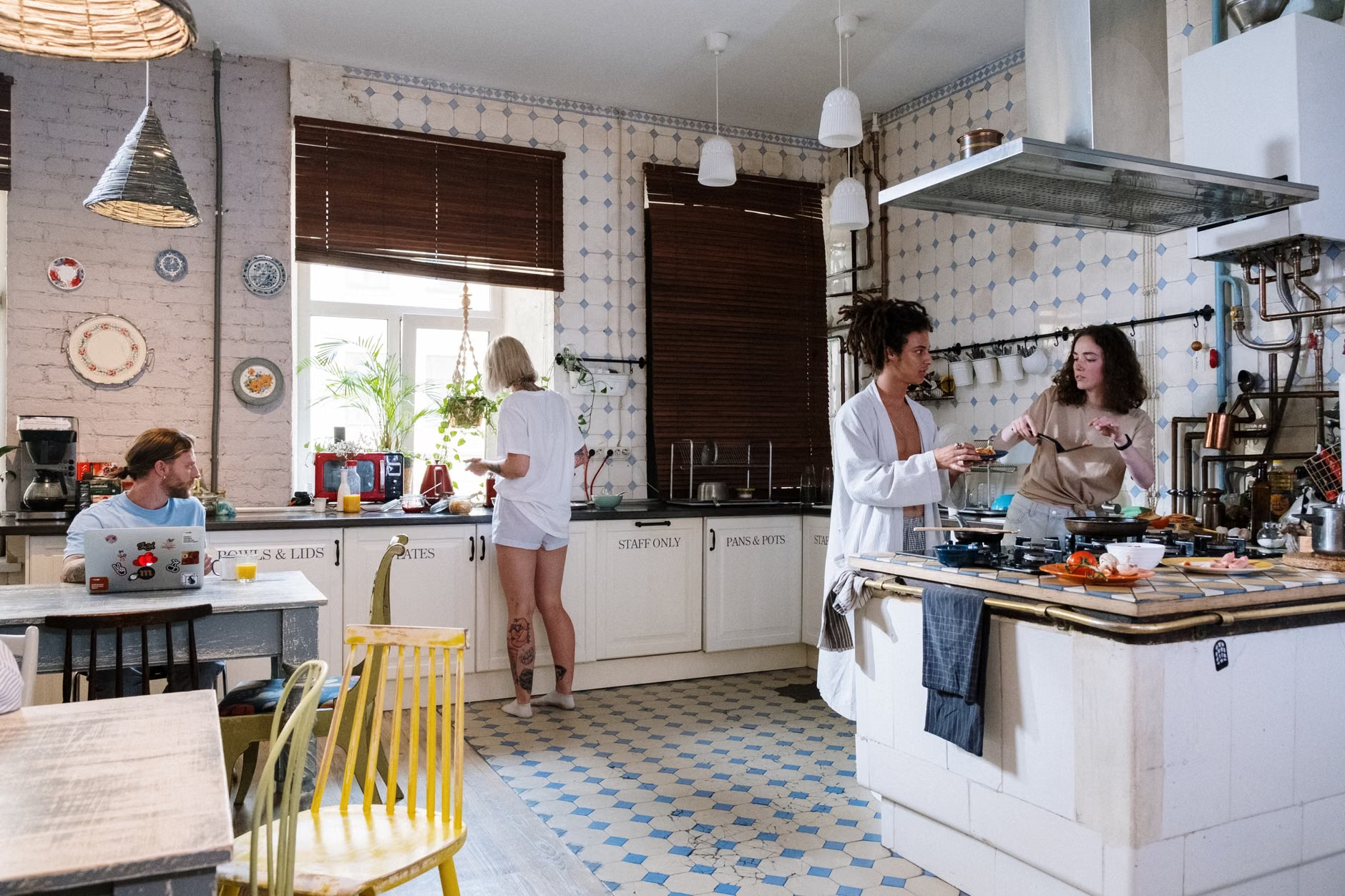
A micro-community is not just a building with a gym. It is a development designed with communal friction in mind—and by that, I mean the intentional creation of spaces that force casual, positive interactions. While a standard apartment building might have a lobby you walk through as quickly as possible, a micro-community features shared spaces that are actually functional for family life.
Typically, these developments include:
- Shared “Great Rooms” or Kitchens: Large, professional-grade kitchens that allow for community dinners.
- Flexible Co-working Zones: Separate from the home, allowing parents to work without the distraction of children playing in the next room.
- Tool Libraries and Storage: Instead of every family owning a drill, a ladder, or a camping tent, the community maintains a shared pool of equipment.
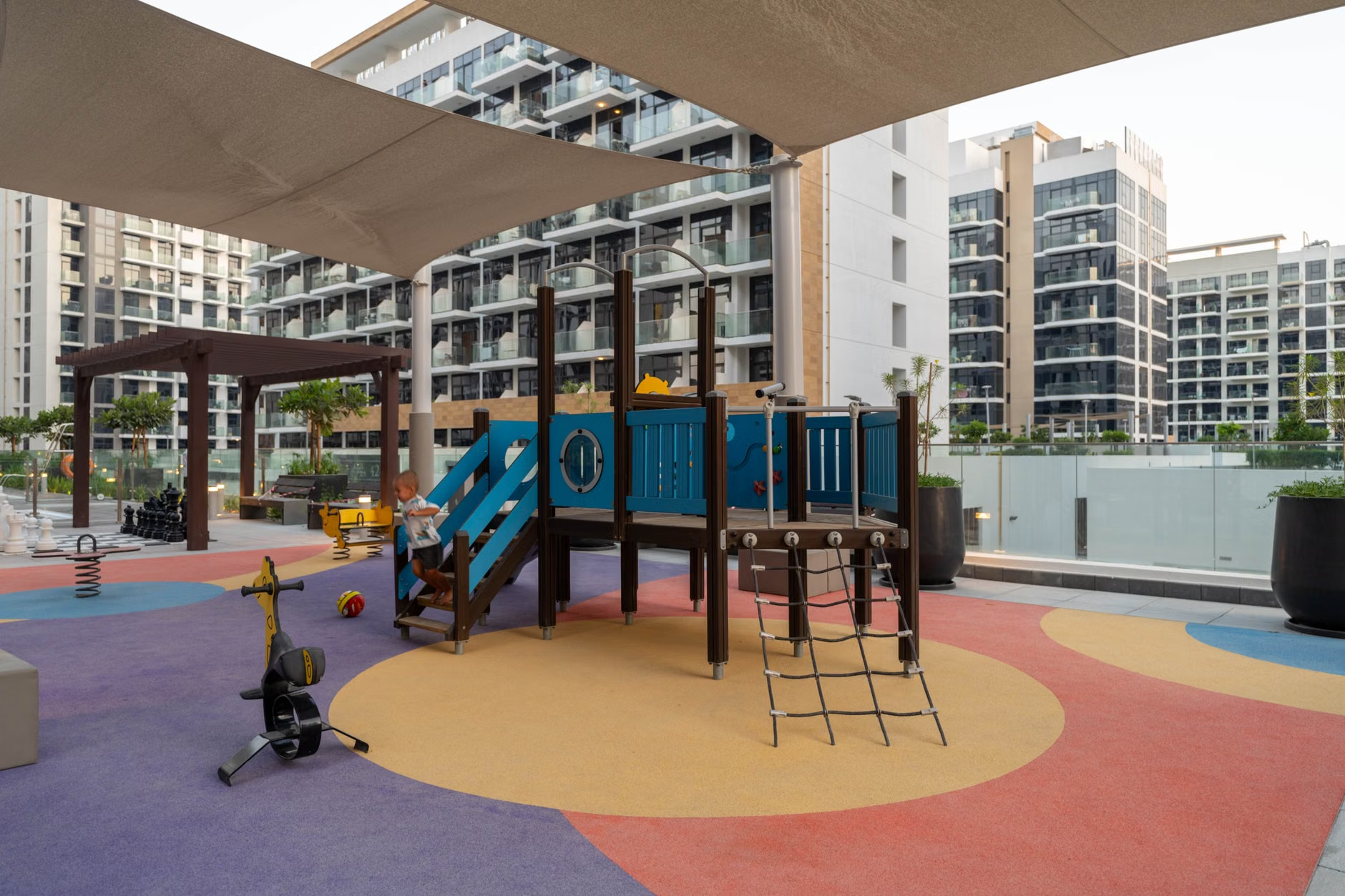
- Integrated Playgrounds: These aren’t just patches of grass; they are designed to be visible from communal seating areas, allowing parents to supervise children while socializing or working.
The goal is to reclaim the “village” that many of us lost when we moved away from extended family. It is about converting private square footage into shared utility.
The Economic Reality: Is It Actually Cheaper?
The common misconception is that micro-communities are inherently cheaper because the units are smaller. While the monthly rent or mortgage payment might be lower for a smaller footprint, you have to account for the “community fee” or higher Homeowners Association (HOA) dues.
However, when you look at the total cost of living, the numbers often shift in favor of the micro-community. Consider the following table comparing a traditional suburban home with a micro-community unit:
| Expense Item | Traditional Home | Micro-Community |
|---|---|---|
| Childcare/Play-dates | High (Paid babysitters) | Low (Community swaps) |
| Home Maintenance | High (Total responsibility) | Included (Shared cost) |
| Co-working Space | None (Home office) | Included (No commute) |
| Appliances/Tools | High (Individual ownership) | Low (Shared inventory) |
The hidden benefit here is the opportunity cost of time. If you live in a community where you can share the “mental load”—one neighbor picks up the kids from school while another handles the grocery run—you are effectively buying back hours of your week. That is a return on investment that doesn’t show up on a bank statement but significantly impacts your quality of life.
Managing the ‘Community’ Part: The Biggest Risk
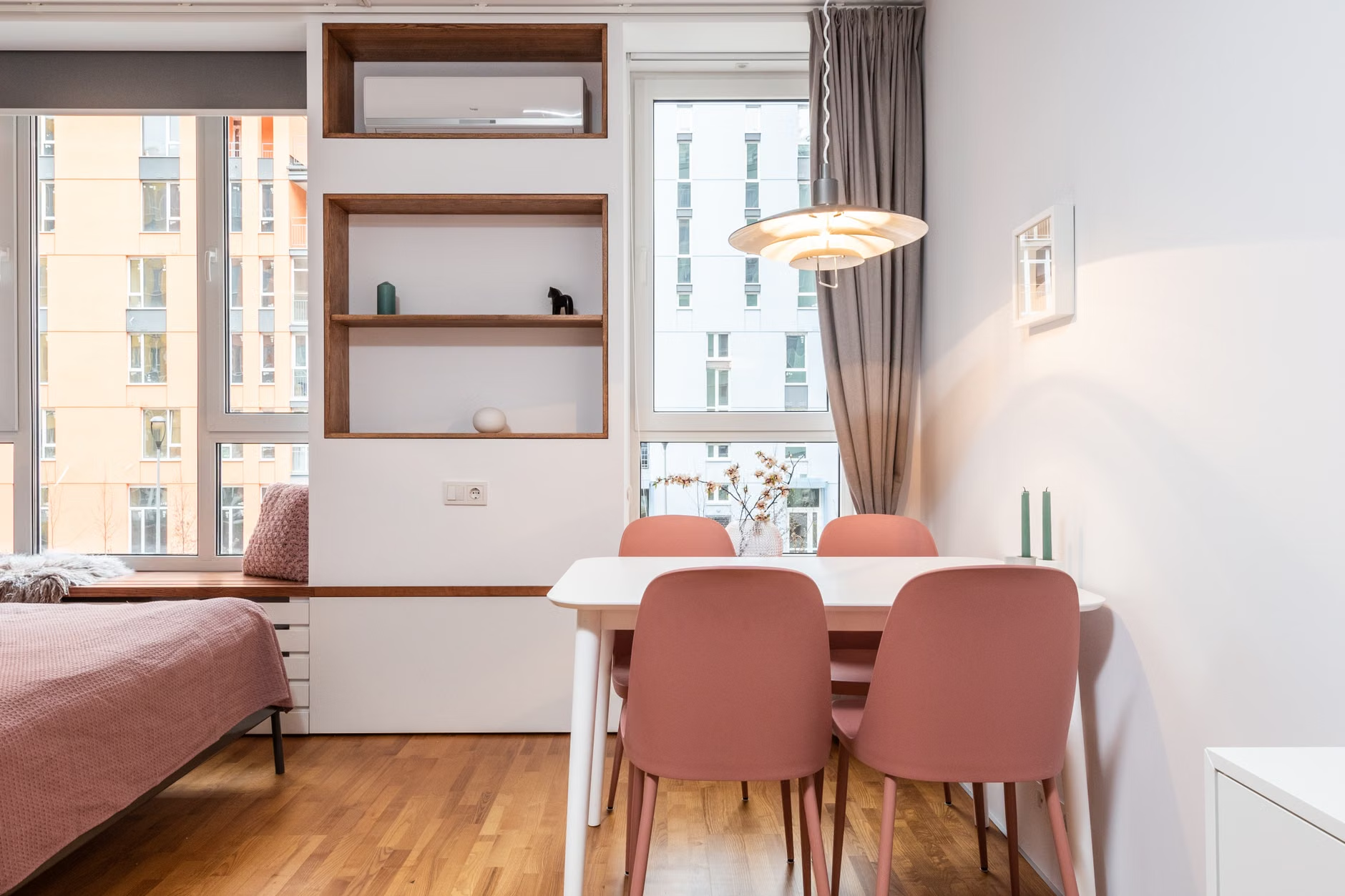
If you are considering this lifestyle, you must look beyond the glossy brochure and the modern architecture. The biggest risk in any micro-community is governance failure. What happens when the communal kitchen is left messy? What happens when one family is consistently louder than the rest?
In traditional housing, you can ignore your neighbors. In a micro-community, you cannot. You need to ask yourself if you are the type of person who is willing to participate in community meetings and abide by a shared “charter” or set of rules.
Questions to ask before you move in:
- Who manages the shared spaces? Is there a professional management company, or is it entirely resident-led? If it is resident-led, be prepared for a significant time commitment.
- What is the conflict resolution process? Look for a written document that outlines how disputes regarding shared spaces are handled. If there is no process, there will be resentment.
- How is the community turnover? A healthy micro-community needs a core group of long-term residents. If the turnover is high, the “community” aspect will feel more like a transient boarding house than a village.
Common Mistake: Assuming that shared spaces will automatically lead to friendships. They lead to proximity. You still have to put in the effort to introduce yourself, participate in events, and build the trust required for the “village” model to actually work.
Parenting in a Micro-Community: The ‘Co-Parenting’ Advantage
For parents in their 30s and 40s, the most significant advantage is the reduction of the “silo effect.” In a standard suburban cul-de-sac, everyone is inside their own house. In a micro-community, the threshold between “my space” and “our space” is thinner.
This facilitates informal childcare. When you know your neighbors well, the barrier to asking for a favor—like watching your child for 30 minutes while you take a Zoom call—is significantly lower. This is not about outsourcing your parenting; it is about creating a safety net that prevents the isolation that leads to burnout.
However, be aware of the “privacy trade-off.” You will see your neighbors more often. Your children will have more interaction with other families. If your family values extreme privacy or prefers to avoid social obligations, this housing model will likely feel intrusive rather than supportive.
How to Start Your Search
If you are ready to explore this, do not search for “apartments.” Use terms like “co-housing,” “intentional community,” or “multi-generational housing” in your local area. Many of these communities start as private developments and are listed on specialized websites rather than standard real estate aggregators.
Step-by-step approach to evaluating a community:
- Visit during off-hours: Don’t go during a planned open house. Go on a Tuesday afternoon. See how the shared spaces are actually used. Are they clean? Are they empty? Are they being used for their intended purpose?
- Talk to a resident who isn’t the property manager: Ask them what the biggest challenge of living there is. If they can’t name one, they are likely just trying to get you to move in.
- Review the budget: Ask to see the breakdown of the community fees. Ensure that a portion is being set aside for long-term maintenance of the shared amenities. You don’t want to be hit with a massive “special assessment” fee in three years because the rooftop deck wasn’t properly maintained.
The Verdict: Is It Worth the Shift?
Moving into a micro-community is a lifestyle shift, not just a change of address. It is a move away from the “my castle” mentality toward a “our village” approach. For many families in their 30s and 40s who are struggling to balance the demands of modern life, the sacrifice of some private space is a small price to pay for the gain in community support and mental well-being.
However, this is not a panacea for all parenting stresses. If you are not comfortable with compromise, collective decision-making, and a higher level of social engagement, you will likely find the experience draining. The best candidates for this lifestyle are those who are actively seeking to reduce their individual burden by sharing the load with others.
If you are tired of the isolation of modern parenting, start by looking for small-scale pilot projects or established co-housing groups in your city. It may be the most significant decision you make for your family’s long-term happiness.
Frequently Asked Questions
Q: Are micro-communities only for young families?
A: No. In fact, the most successful micro-communities are multi-generational. Having older adults in the community provides built-in mentorship and additional support for families, creating a more stable and diverse social environment than one comprised solely of young parents.
Q: How does this affect my property value?
A: It depends on the legal structure. If you own your unit (as in a co-housing or condo model), the value is subject to the same market forces as any other real estate. However, these communities often have higher resale demand because they are unique and offer amenities that standard buildings do not, which can provide a buffer against market downturns.
Q: Is there a specific legal document I should look for?
A: Yes, always ask for the “Community Charter” or “Bylaws.” This document outlines the rules for shared space usage, conflict resolution, and the financial responsibilities of the members. If a community does not have a clear, written set of rules, proceed with extreme caution.
For further reading on the evolution of urban living and community design, you may find the resources provided by the Cohousing Association of the United States or local municipal urban planning departments regarding “accessory dwelling unit” (ADU) policies helpful for understanding the legal landscape of shared living.