The most effective way to enjoy a coastal rail getaway is to treat the train journey not as a transit necessity, but as the primary destination, allowing you to bypass the logistical fatigue of driving and parking while reclaiming hours of genuine downtime.
- Prioritize Off-Peak Timing: Booking mid-morning or mid-week shoulder slots drastically reduces the risk of overcrowding and increases the likelihood of securing “table seats” which are essential for family productivity or play.
- The 60-Minute Logistics Rule: Never schedule a connection with less than 60 minutes of buffer time; coastal lines are notoriously prone to weather-related delays, and tight windows are the primary source of travel anxiety.
- Digital Minimalism vs. Utility: Download all maps, entertainment, and tickets for offline use before leaving home, as coastal routes often experience significant cellular dead zones near cliffs and tunnels.
If you are in your 30s or 40s, you likely know the specific brand of exhaustion that comes from a “relaxing” weekend trip involving a four-hour drive, a restless toddler in the backseat, and the hunt for a parking spot in a crowded coastal town. The ‘Weekend-Rail’ itinerary is the antidote to this. It isn’t just about taking the train; it is a shift in philosophy from “getting there” to “being there” from the moment you step onto the platform.
Why Coastal Rail Travel Requires a Different Tactical Approach
Coastal rail lines often operate on legacy infrastructure. Unlike high-speed intercity bullet trains, coastal routes are frequently scenic, winding, and—crucially—slower. For the modern professional or parent, this is a feature, not a bug. However, it requires a recalibration of expectations.
Most travelers make the mistake of treating these routes like an airport commute. They pack too much, expect high-speed Wi-Fi, and assume that every station will have a taxi rank waiting. In reality, the charm of coastal rail is its isolation. When you choose a coastal route, you are choosing to enter a space where service frequency is lower and the environment is more rugged. Understanding this allows you to prepare for the specific challenges of these lines, such as signal loss and limited food service.
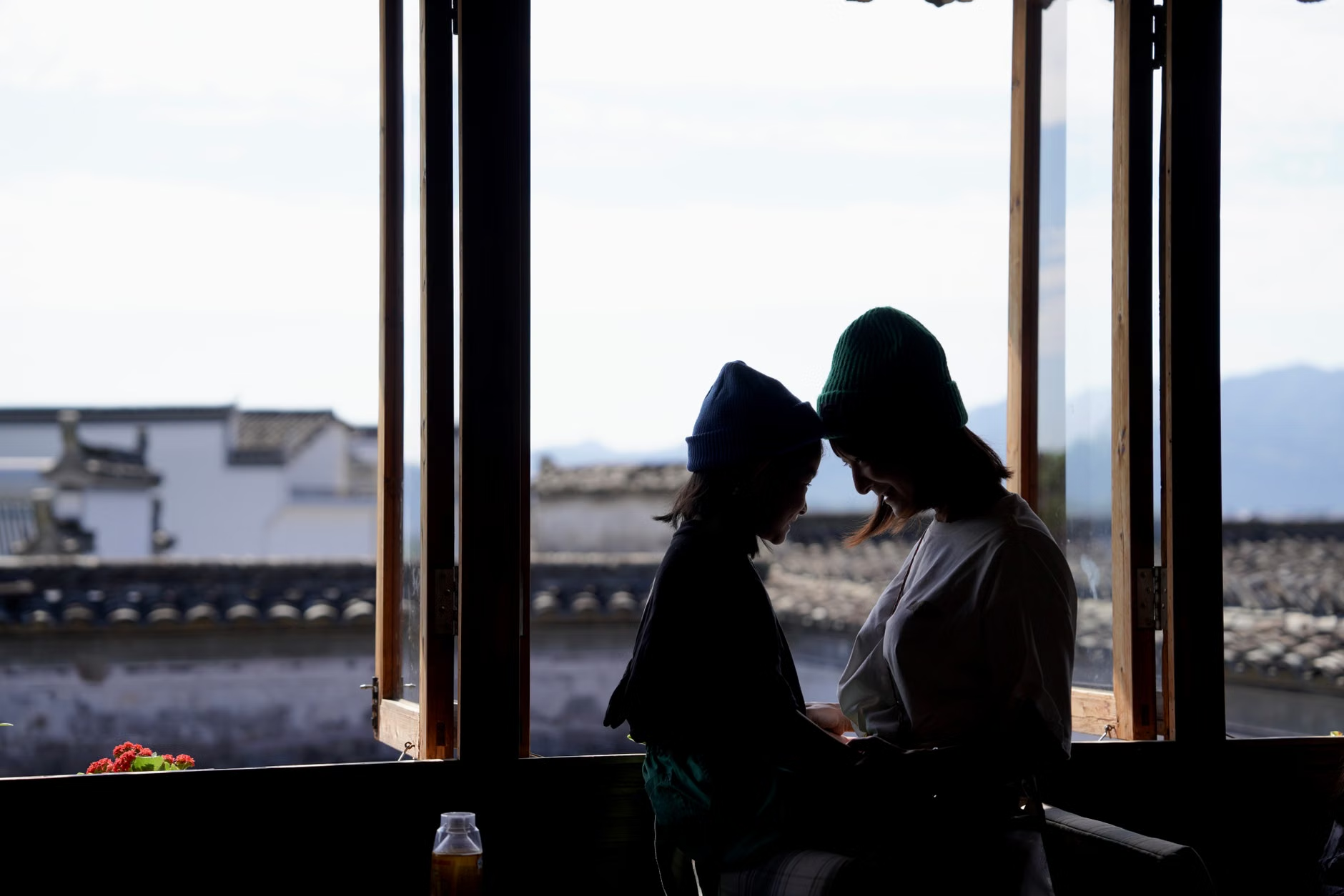
The primary advantage here is the “cognitive offload.” When you drive, you are the pilot. When you take the train, you are a passenger. For someone who spends their week managing calendars, school runs, and project deadlines, that shift from active responsibility to passive observation is the single most effective way to reset your nervous system. You aren’t just traveling; you are practicing “slow travel” by default.
Selecting the Right Train and Seat for Your Needs
Not all seats are created equal, and on a coastal line, your choice of seat dictates your entire experience. When booking, ignore the “fastest” option and look for the “most spacious” option. Coastal rail operators often have a mix of older carriages and refurbished ones. Older carriages often have more legroom but lack power outlets. Newer ones have outlets but tighter seating.
If you are traveling with children, the “table seat” is your golden ticket. It provides a flat surface for coloring, tablet viewing, or a game of cards. If you cannot secure a table seat, look for “quiet zones” if you are traveling solo for work, or “family zones” if you are with kids. Many operators now clearly delineate these on their booking apps.
| Seat Type | Best For | Key Trade-off |
|---|---|---|
| Table Seat | Families, groups, productivity | Often the first to sell out; noisy |
| Window/Aisle Pair | Couples, individual travelers | Limited surface area |
| Quiet Carriage | Solo travelers, deep work | No children or loud calls allowed |
Decision Rule: If you are traveling during a peak weekend, prioritize booking at least 14 days in advance. Coastal routes are popular with tourists and locals alike, and the specific “scenic” seats on the side of the train facing the ocean will vanish within hours of tickets being released.
The Logistics of “Station-to-Stay” Connectivity
The biggest failure point in a rail itinerary is the “last mile”—the distance between the train station and your accommodation. In major cities, this is trivial. In coastal towns, it can be a significant hurdle. Before you book your tickets, use a mapping tool to check the distance from the station to your hotel or rental.
If it is more than 1.5 kilometers (approximately one mile) and you have children or luggage, do not assume you can walk it. Coastal towns are often hilly. Check if the town has a local bus service or a reliable taxi app. If the town is very small, call your accommodation before you book the train and ask: “Is there a reliable taxi service that meets the trains, or should I arrange a private transfer?”
This simple phone call saves you from the “station scramble”—that frantic moment when you arrive, realize there are no cabs, and end up overpaying for a private car or lugging suitcases up a steep coastal incline. Always have the phone number of a local taxi company saved in your phone before you depart.
Managing Expectations: The Reality of Coastal Delays
Coastal rail lines are often exposed to the elements. High winds, storm surges, or even simple debris on the tracks can cause delays that ripple through the system. If you are traveling to a coastal destination, you must adopt a “weather-resilient” schedule.
This means never booking a onward connection (like a ferry or a bus) that departs within 90 minutes of your train’s scheduled arrival. If your train is delayed by 30 minutes, you have a 60-minute safety buffer. If it is delayed by 60 minutes, you still have 30 minutes. If you have no connection to make, the delay becomes an opportunity to finish that book or have an extra coffee at the station cafe.
Common mistake: Trying to squeeze a tight connection to save an hour of wait time. In the context of a weekend trip, that hour is not a waste; it is a buffer against the stress that ruins the entire weekend. Treat the buffer as part of the vacation time.
Packing for the Rail Experience
The “carry-on only” rule is not just about convenience; it is a survival requirement for train travel. If you cannot manage your luggage down a narrow train aisle or lift it into the overhead rack without assistance, you are going to struggle.
For a weekend trip, aim for a single backpack and a small carry-on roller bag. If you are traveling as a family, every person should be responsible for their own “day bag” containing their electronics, snacks, and layers. This prevents the “who has the charger?” panic that often occurs mid-journey.
Pro-tip: Always pack a multi-port wall charger. Train power outlets are often single-socket and located in awkward positions. A charger with a long cable allows you to power multiple devices from a single outlet, making you the most popular person in your row.
Optimizing the Journey for Mental Restoration
Why do we travel? Usually, it is to escape the grind. Yet, we often bring the grind with us. To truly benefit from the rail experience, you need to set boundaries for the journey itself. If you are a parent, this is the time to negotiate “unplugged” hours. Use the train ride to engage in analog activities—sketching, reading physical books, or playing card games.
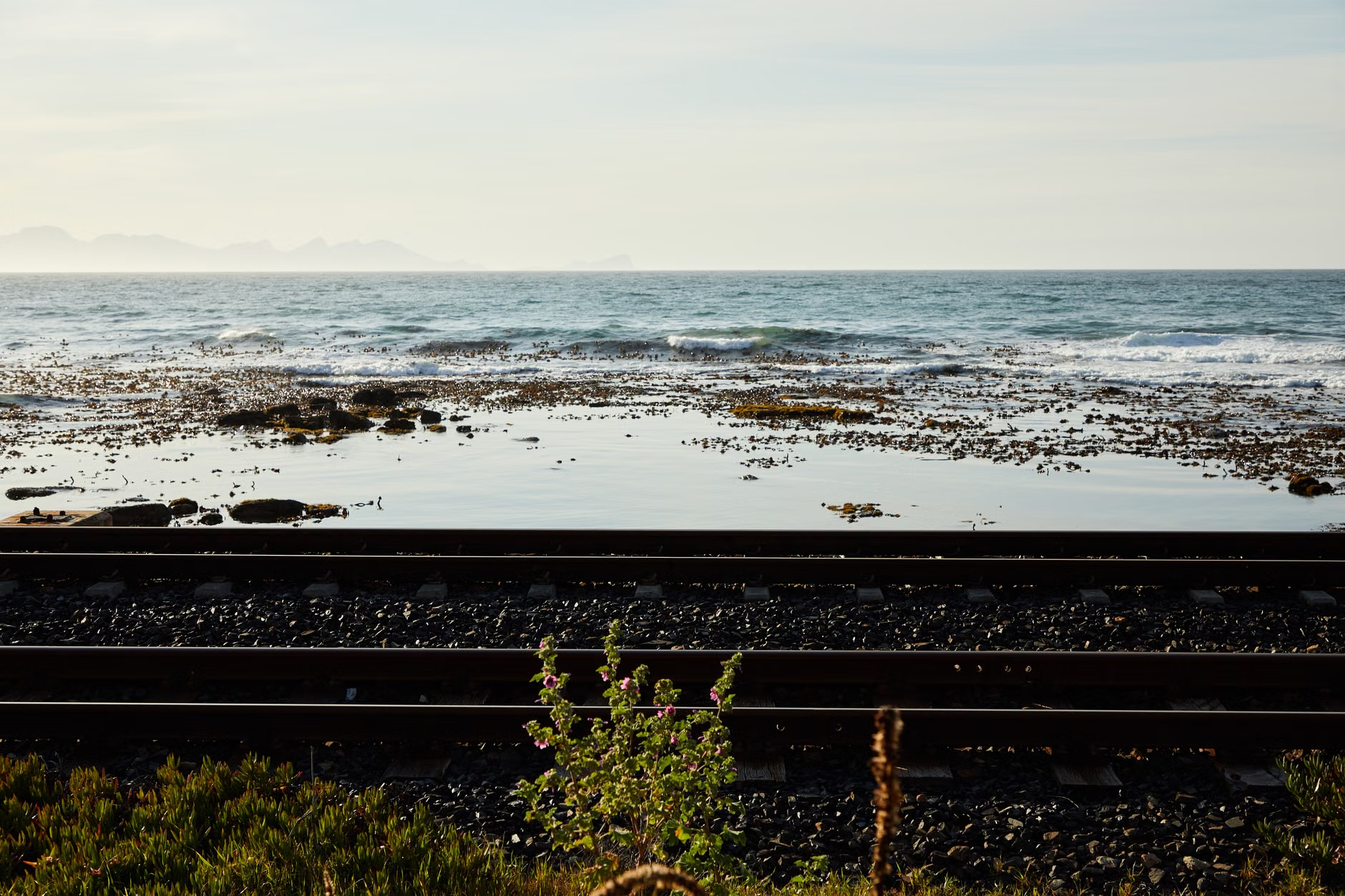
The rhythmic motion of the train is scientifically shown to be relaxing, but only if you aren’t fighting it with high-stress digital tasks. Use the time to observe the changing landscape. Coastal routes are dynamic; the light changes, the flora shifts, and the ocean vistas are ever-moving. This is “soft fascination,” a psychological concept where your attention is held by something that doesn’t require intense focus, allowing your brain to recover from the “hard fascination” of work and parenting.
The Hidden Costs and Trade-offs
While rail travel is generally greener and more relaxing, it isn’t always cheaper than driving. When you factor in the cost of train tickets for a family of four, it can often exceed the cost of fuel for a car. You are paying a premium for the stress reduction and the ability to interact with your family instead of focusing on the road.
Another trade-off is food. Train food is notoriously expensive and often mediocre. The solution is the “provisions kit.” Prepare a meal or high-quality snacks at home. A small cooler bag with sandwiches, fruit, and drinks makes the journey feel like a picnic rather than a chore. This saves money and ensures you aren’t relying on a vending machine if the onboard catering is closed or depleted.
Refining Your Itinerary: A Step-by-Step Decision Framework
To ensure your trip is a success, follow this framework every time you book:
- The Route Audit: Check for planned engineering works on the rail operator’s website. Weekend engineering works are common and can turn a three-hour trip into a six-hour journey involving rail replacement buses. If there are works, choose a different weekend.
- The Accessibility Check: If you are traveling with a stroller or heavy luggage, check the station accessibility. Does your destination station have elevators, or is it stairs-only?
- The Buffer Calculation: Add 60 minutes to your arrival time at the destination and 60 minutes to your departure time. If this fits your schedule, you are safe.
- The Pre-Departure Sync: Two days before, check the weather. Coastal winds can cause speed restrictions on exposed tracks. If high winds are predicted, have a “Plan B” (such as a later train or an alternative route) ready in your mind.
By following these steps, you move from being a reactive traveler—subject to the whims of the transport system—to a proactive one. You are designing the experience, not just enduring it.
Common Misconceptions About Rail Travel
There is a persistent myth that rail travel is “unreliable.” While it is true that delays happen, the data often shows that rail is statistically safer and more efficient than road travel over long distances, especially during holiday periods. The frustration usually stems from a lack of information.
Most rail operators have apps that provide real-time updates. Download the app for the specific operator you are using, not just a general travel aggregator. The operator’s own app will have the most accurate, up-to-the-minute information on platform changes and cancellations. Relying on third-party sites often leads to missing crucial alerts.
Another misconception is that you need a “first-class” ticket to be comfortable. On many modern coastal trains, the difference between standard and first class is minimal—perhaps a slightly wider seat and a complimentary tea. Unless you are traveling on a long-distance route where a meal is included, stick to standard class and use the savings for a better dinner at your destination.
Finalizing Your Coastal Rail Strategy
The goal is to reclaim your weekend. By choosing the rail, you are choosing to avoid the stress of traffic, the fatigue of driving, and the isolation of being trapped in a car. You are choosing to watch the world go by, to talk to your children without having to look at a rearview mirror, and to arrive at your destination with your energy intact.
Remember: the journey is 50% of the trip. If you treat it with the same level of planning and respect that you give to your hotel booking or your restaurant reservations, you will find that the “Weekend-Rail” is not just a mode of transport—it is a vital component of the rest you are seeking.
Start small. Try a shorter, two-hour coastal route first. See how the logistics feel. Once you master the rhythm of the stations, the boarding process, and the buffer management, you will find that the world opens up in a way that driving simply cannot match. You aren’t just going to the coast; you are traveling along it.
Frequently Asked Questions
1. How do I handle potential rail replacement buses if engineering work is scheduled?
If your route has planned engineering work involving a bus replacement, it is generally best to reschedule your trip. Rail replacement buses are rarely as comfortable or as efficient as trains, and they often lack space for luggage or strollers. If you must travel, check the operator’s website specifically for “accessible” bus information to ensure you can board with your gear.
2. Are there specific apps that help with real-time coastal rail tracking?
Always use the official app of the rail operator running the line. If you are traveling through multiple regions, use a comprehensive national rail planner (such as National Rail Enquiries in the UK or similar official portals in your region) to track all connections in one place. Avoid third-party booking sites for real-time tracking, as they often have a lag in data transmission.
3. What should I do if my train is cancelled and there are no more trains that day?
Most national rail policies require the operator to provide alternative transport (such as a taxi or hotel accommodation) if they cannot complete your journey due to a cancellation within their control. Always head to the customer service desk immediately upon hearing of a cancellation rather than waiting on the platform. Being the first in line at the help desk is the only way to secure the limited alternative transport options available.
For further information on planning your journey, consult the official resources for your region: