The most successful modern host doesn’t ask what their guests want to drink; they create an environment where the choice between alcohol and non-alcoholic options feels equally sophisticated and intentional.
- Zero-proof hosting is not about elimination; it is about providing high-quality, complex flavor profiles that stand on their own without the need for alcohol.
- Cultural inclusivity requires understanding dietary restrictions beyond just religion, including health preferences, pregnancy, and simple lifestyle choices.
- The “bar-within-a-bar” setup is the most effective way to empower guests to curate their own drinks without feeling singled out for choosing a non-alcoholic option.
If you are in your 30s or 40s, your social circles have likely evolved. You might have friends who are training for a marathon, friends who are pregnant, friends who simply don’t drink for religious reasons, and friends who have just decided that a Tuesday morning hangover isn’t worth the Saturday night fun. When you host a multicultural, multi-generational group, the “standard” bottle of wine or pack of beer no longer covers the bases.
Hosting “zero-proof”—a term that has moved far beyond the sugary “mocktails” of the 90s—is about hospitality. It is about ensuring every guest, regardless of their relationship with alcohol, feels like they have a premium experience in their hand.
Why the “Zero-Proof” Shift is Essential for Modern Social Networks
In the past, the non-alcoholic guest was often relegated to a glass of lukewarm tap water or a sugary soda that felt like a child’s drink. This created a subtle, often unintentional, social hierarchy. The person drinking alcohol had a “grown-up” beverage, while the non-drinker was treated as an afterthought.
Today, the landscape has changed. With the rise of the “sober-curious” movement, the market for adult, non-alcoholic beverages has exploded. We are seeing high-end botanical spirits, non-alcoholic wines that actually mimic the tannins of their fermented counterparts, and sophisticated shrubs (vinegar-based syrups). When you host, acknowledging this shift isn’t just “being nice”—it is a fundamental requirement for a truly inclusive social environment.
Consider the logistical reality of a multicultural gathering. You might have one guest who avoids alcohol for religious reasons, another who is avoiding sugar for health reasons, and a third who is simply taking a break from drinking. By providing a curated zero-proof menu, you remove the burden of explanation. When a drink is already delicious and thoughtfully presented, nobody asks “Why aren’t you drinking?”—they just ask, “What is that, and can I try some?”
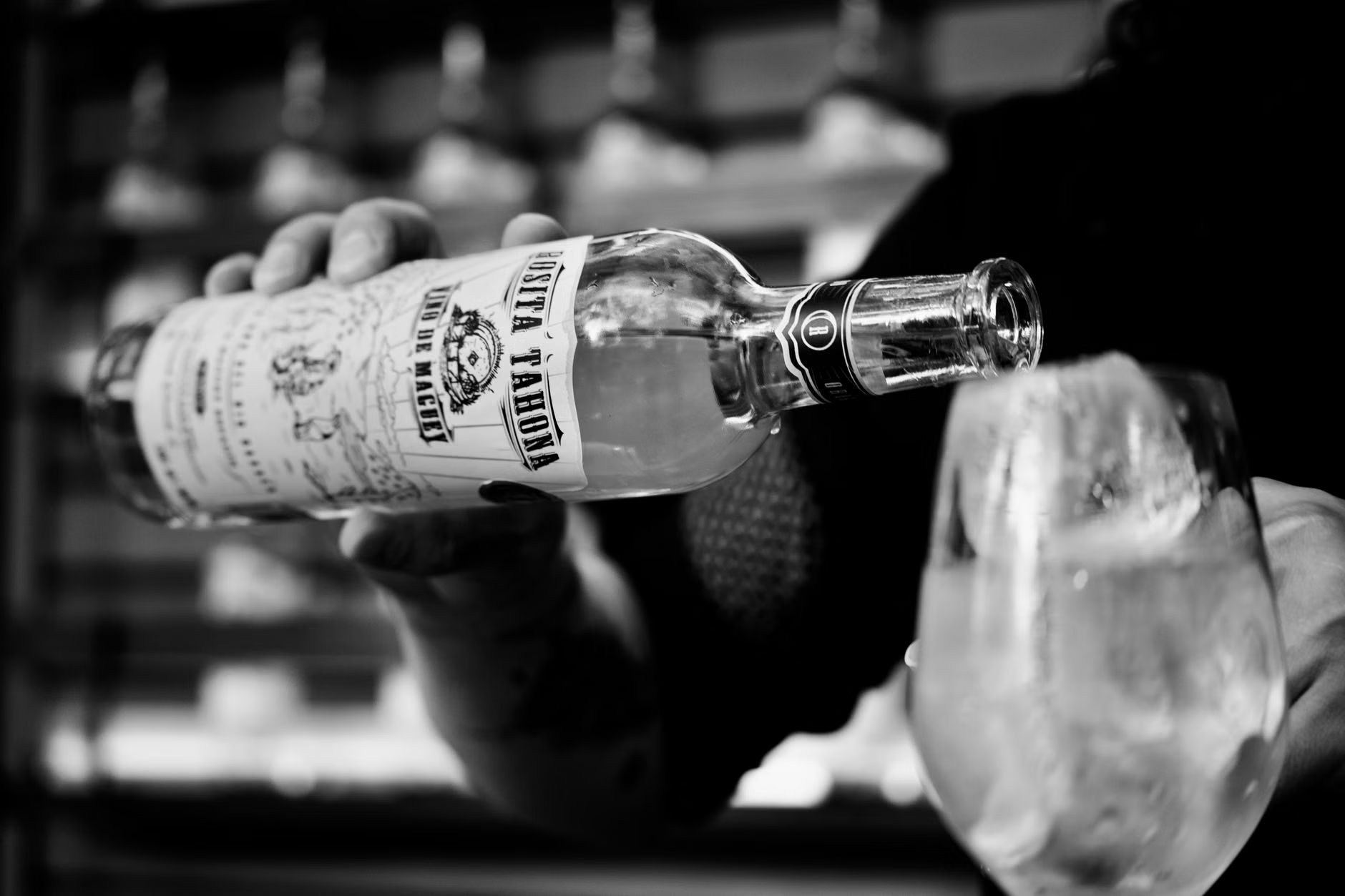
Designing Your Zero-Proof Bar Station
The biggest mistake hosts make is hiding the non-alcoholic options in the back of the fridge. If you want your guests to feel comfortable, the non-alcoholic options must be as visible and accessible as the alcoholic ones. Think of your hosting space as a “bar-within-a-bar.”
The Essential Toolkit
You don’t need an entire liquor store’s worth of products. You need three distinct categories of ingredients to create a balanced drink menu:
| Category | Examples | Purpose |
|---|---|---|
| Botanical Spirits | Seedlip, Lyre’s, Monday | Provides the “burn” or herbal complexity of gin or tequila. |
| Acid/Flavor Bases | Shrubs, Verjus, Kombucha | Replaces the acidity and depth usually provided by wine. |
| Effervescence | Tonic water, Soda, Sparkling tea | Adds the necessary texture and “bite.” |
Pro-tip: Always keep a high-quality tonic or a dry sparkling water on hand. Many people drink alcohol purely for the ritual of the “clink.” If you offer a drink that looks and bubbles like a cocktail, you have already won 80% of the battle.
Managing Cultural and Dietary Expectations
When hosting a multicultural group, “zero-proof” often overlaps with other dietary needs. For example, many religious groups that avoid alcohol also have specific dietary laws regarding gelatin or flavorings. While you don’t need to be a certified nutritionist, a little research goes a long way.
If you are hosting guests from a Muslim background, ensure your non-alcoholic spirits are certified Halal (some contain trace amounts of alcohol from the distillation process, even if they are marketed as non-alcoholic). Similarly, if you have guests who are gluten-free, be cautious with certain grain-based non-alcoholic beers.
The goal is to foster a sense of belonging. When you tell a guest, “I made sure to get this specific non-alcoholic spirit because I knew you might appreciate the botanical notes,” you are showing that you value them as an individual. That is the hallmark of a great host.
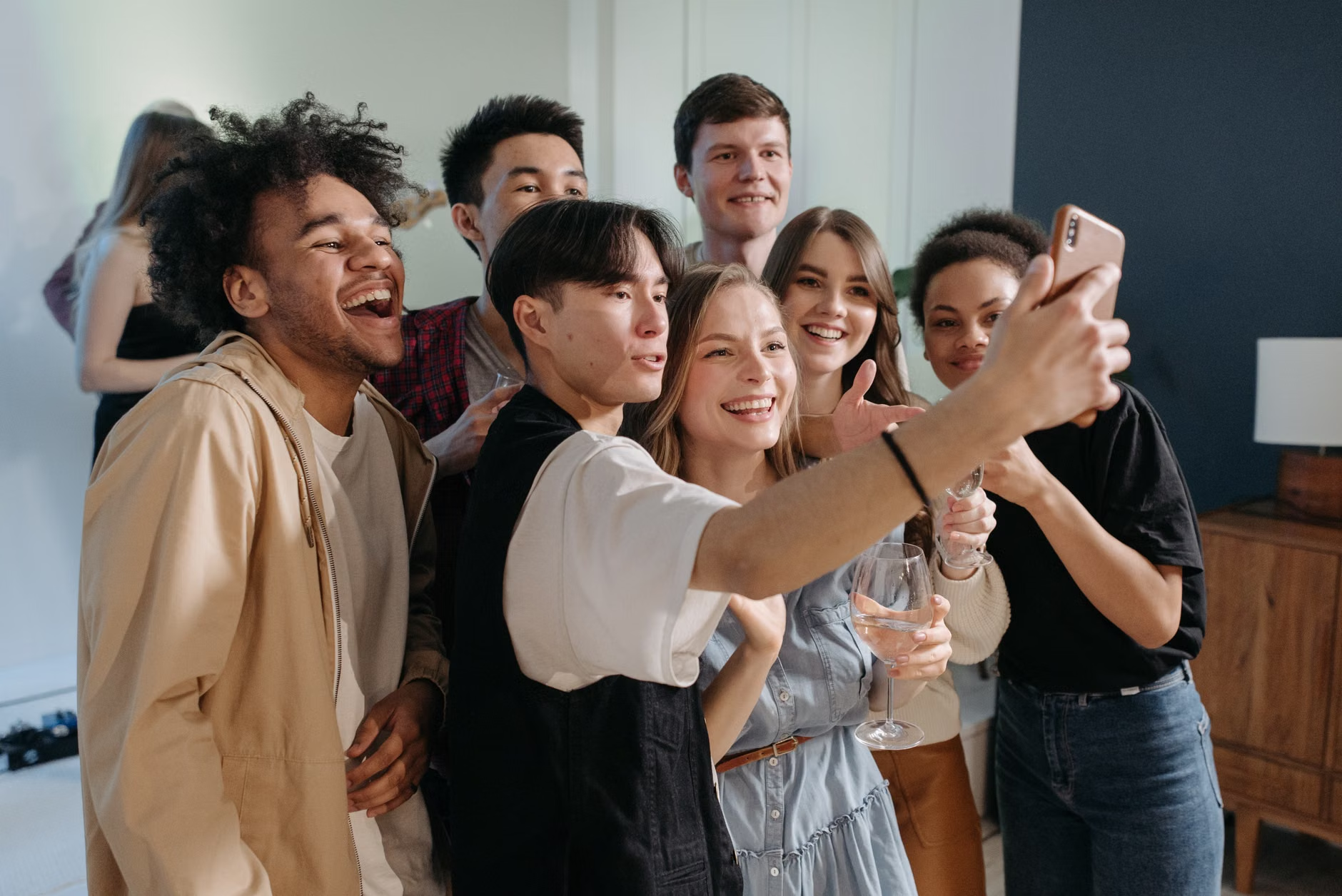
The Psychology of the “Glassware Factor”
It sounds trivial, but the vessel matters. If you serve a sophisticated, house-made hibiscus shrub in a plastic party cup, it feels like a juice box. If you serve that same liquid in a heavy-bottomed rocks glass with a large ice cube and a fresh sprig of mint, it feels like a cocktail.
In your 30s and 40s, your home is likely filled with a mix of “good” glassware and “everyday” glasses. Don’t save the good stuff for the alcohol drinkers. Use the same glassware for everyone. This visual symmetry signals that the non-alcoholic drink is not a “lesser” option—it is simply a different choice.
Common Pitfalls to Avoid
- The “Sugary Trap”: Many commercial non-alcoholic drinks are packed with sugar. If you are serving a long dinner, guests will get palate fatigue if all their options are sweet. Always balance your menu with something savory, like a cucumber-mint soda or a spicy ginger-lime tonic.
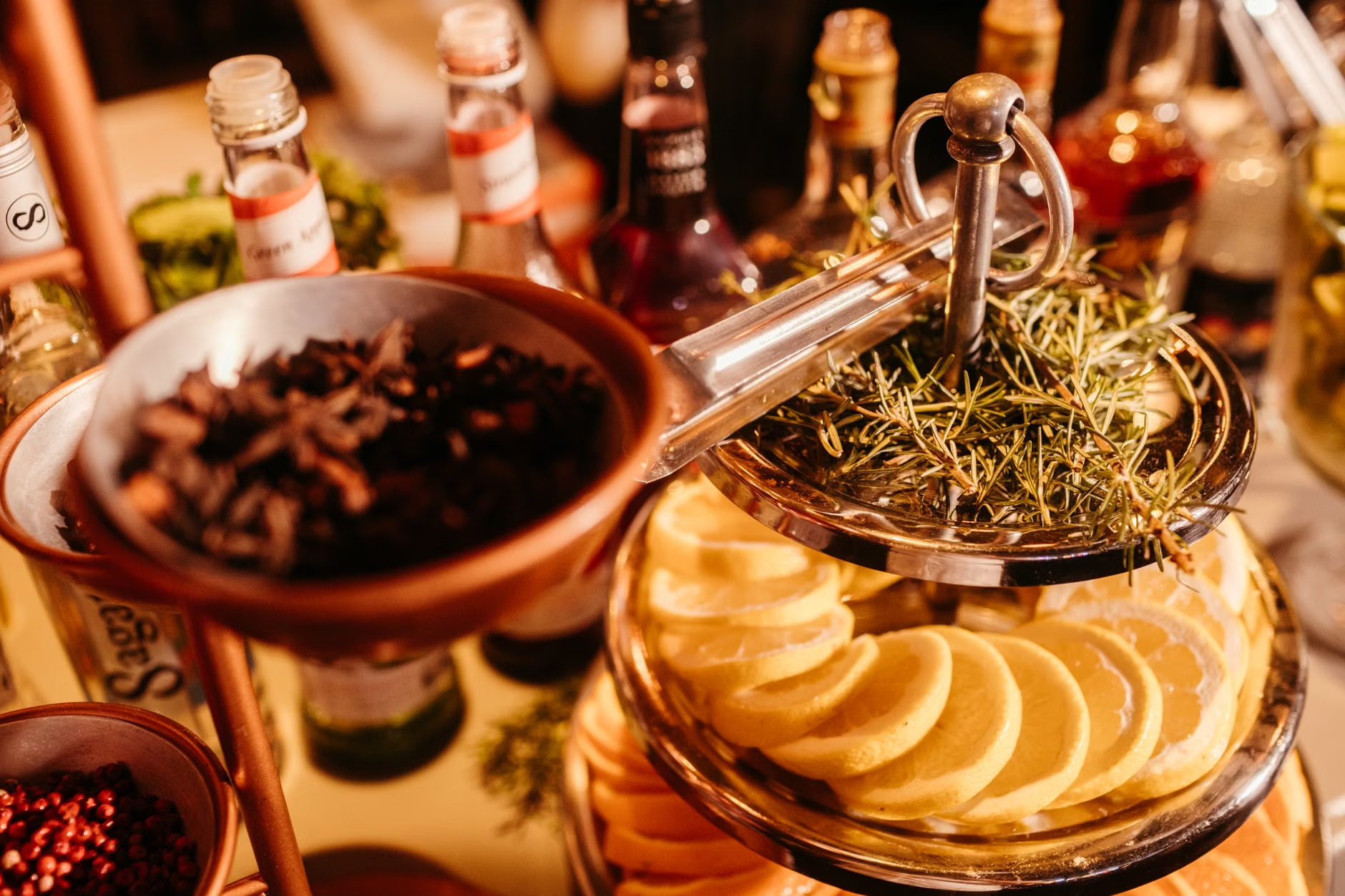
- Forgetting the Garnish: A garnish is not just decoration. A slice of lime, a sprig of rosemary, or a dash of bitters (note: some bitters contain alcohol, check labels if you are being strictly zero-proof) adds aroma and complexity that elevates the drink from “flavored water” to “mocktail.”
- Assuming Everyone Wants a “Drink”: Sometimes, the best zero-proof option is a high-quality tea or a sparkling water with a twist of lemon. Don’t feel pressured to create a complex recipe for every single person.
Actionable Steps for Your Next Gathering
If you are planning a gathering, follow this simple framework to ensure your zero-proof game is on point:
- The “Menu of Two”: Plan at least two signature non-alcoholic drinks that complement your food menu. If you are serving spicy Thai food, a coconut-lime cooler is better than a heavy berry drink.
- Communicate Early: When you send the invite, keep it casual. “We’re going to have a full bar plus some great non-alcoholic options, so let us know if you have any specific preferences or restrictions.”
- Label Clearly: If you are serving a punch, put a small card next to it. It’s helpful to know if a drink contains caffeine or specific allergens, and it saves you from answering the same question ten times.
- Keep it Self-Serve: If possible, set up a station where guests can mix their own. This removes the “waiter” dynamic and makes the process feel more communal.
Reframing the Hosting Mindset
As we get older, the “party” changes. We value conversation, connection, and the ability to wake up the next morning without feeling like we’ve been hit by a truck. By embracing zero-proof hosting, you are not taking away from the experience; you are adding layers of consideration that make your home a more welcoming space for everyone.
Remember that the “best” choice is the one that makes your guest feel the most at ease. Sometimes that means a glass of wine, and sometimes that means a sparkling botanical infusion. As a host, your job is to provide the canvas, not to dictate the art.
Frequently Asked Questions
Q: Are non-alcoholic spirits actually worth the price tag?
A: They can be expensive, but they are concentrated. You are paying for the complex distillation process that removes the alcohol while keeping the botanical flavor. Since you only use a small amount (usually 1-2 ounces per drink), a single bottle can last for many gatherings, making the cost-per-drink quite reasonable.
Q: What if I don’t want to buy expensive specialty ingredients?
A: You don’t have to. You can make incredible zero-proof drinks with simple pantry staples. Try mixing high-quality sparkling water with fresh herbs (mint, basil, rosemary), slices of cucumber, or fresh berries. A shrub—which is just fruit, sugar, and vinegar—is also incredibly easy and cheap to make at home and provides a depth of flavor that is hard to beat.
Q: How do I handle guests who might feel pressured to drink alcohol?
A: The best way to combat pressure is to lead by example. If you, as the host, have a non-alcoholic drink in your hand, it sets the tone for the entire room. It makes it clear that you are there to socialize, not to consume alcohol. When someone asks why you aren’t drinking, keep it light: “I’ve got a busy morning tomorrow, so I’m sticking to these delicious botanical sodas tonight.”
For further reading on the science and social trends of the non-alcoholic movement, you can explore resources from organizations like Sober Curious or check out industry reports on the growth of the non-alcoholic beverage sector via IWSR Drinks Market Analysis, which provides detailed insights into how consumer habits are shifting toward lower- and no-alcohol options globally.
Hosting is, at its core, an act of care. By normalizing the zero-proof experience, you are ensuring that your home remains a place of connection, regardless of what is in anyone’s glass.