The smartest way to future-proof your home is to stop buying furniture that serves only one purpose and start investing in modular systems that grow, shrink, and reshape alongside your family’s changing requirements.
- Prioritize Interconnectivity: Choose systems where units share structural components, as these are more stable and easier to reconfigure than standalone modular pieces.
- The “Transition Zone” Rule: When planning a room, allocate 20% of the floor space to “flex-zones” that can be cleared or repurposed for temporary needs like remote work or play.
- Avoid Over-Customization: Stick to standard industry dimensions for modular units to ensure you can buy compatible add-ons five or ten years from now.
Why Static Furniture Is Costing You More Than Money
If you are in your 30s or 40s, your home is likely the most dynamic it will ever be. One year, you need a dedicated nursery; the next, you need a home office; two years later, you need a space for school projects or a home gym. If your furniture is static—heavy, single-purpose, and bolted into place—you end up in a cycle of buying, discarding, and buying again.
This “disposable furniture” culture is not just a drain on your bank account; it is a logistical nightmare. Every time your needs shift, you have to move heavy objects, find new homes for old pieces, or tolerate a space that no longer functions for your life. Modular furniture acts as a toolkit rather than a finished product. It allows you to disassemble, reconfigure, and repurpose your environment without needing a moving truck or a new budget.
Think of it like building blocks for adults. A modular shelving unit that holds baby books today can be split into two bedside tables tomorrow, or expanded into a full-wall home office unit when the kids are older. By viewing furniture as a system, you are buying into a long-term infrastructure for your home, not just a temporary solution.

The Mechanics of Modular Systems: What to Look For
Not all “modular” furniture is created equal. There is a vast difference between cheap, flat-pack furniture that is designed to be assembled once and a true modular system designed for repeated reconfiguration. When you are shopping, you need to look past the aesthetics and focus on the hardware.
1. Connection Mechanisms
The strength of a modular system lives in its connectors. Look for steel-on-steel locking mechanisms rather than wood screws that bite directly into particle board. Every time you screw a wood screw into a hole, the hole loses integrity. Eventually, the piece becomes wobbly. Systems that use cam locks, magnetic connectors, or drop-in brackets are designed to be moved repeatedly.
2. Standardized Dimensions
The most common mistake is buying a “modular” set from a boutique shop that might go out of business or change their product line in a year. You want a system that follows standard dimensions (e.g., 40cm, 60cm, or 80cm widths). This allows you to mix and match accessories—like drawers, doors, or wine racks—from different production runs or even different suppliers if the system is open-source or industry-standard.
3. Weight-Bearing Capacity
Because modular furniture is often thinner to allow for modularity, it can be prone to bowing if overloaded. Check the weight limits for each shelf or base unit. If you plan to store heavy items like home gym equipment or dense books, ensure the base units are reinforced or wall-mounted. Never assume that because a unit looks sturdy, it can handle the weight of your entire collection.
| Feature | Cheap Flat-Pack | True Modular System |
|---|---|---|
| Connection | One-time wood screws | Reusable steel brackets/locks |
| Material | Low-density particle board | Plywood, MDF, or solid metal |
| Flexibility | Fixed layout | Infinitely reconfigurable |
| Longevity | 1–3 years | 10+ years |
Scenario: The “Parenting Pivot” in a Small Space
Consider a couple living in a two-bedroom apartment. When their child is an infant, the “second bedroom” is a nursery. But what happens when the child grows, and the parents both need to work from home? A static desk and a static crib take up 100% of the room’s capacity.
With a modular approach, the room is designed with “zoning” in mind. Instead of a large, fixed desk, they install a modular wall-mounted system. When the child is young, the lower levels of the system hold toys and storage bins. As the child grows, the middle section is converted into a drop-down desk for the parent, while the upper sections remain for storage. If they need to move, the system doesn’t need to be sold on a marketplace—it simply gets disassembled and installed in the new layout of the next home.

This is the “Parenting Pivot.” You aren’t forcing the house to stay the same; you are building a home that breathes and changes with your schedule. The key here is to keep the “bones” of your furniture neutral. If you buy modular furniture in bright colors or specific trends, you will be stuck with them. If you buy in neutral tones—white, black, oak, or grey—the pieces remain timeless even as their function changes.
Common Mistakes When Designing for Flexibility
Even with the best intentions, people often fall into traps that defeat the purpose of modular furniture. Here are the three most common pitfalls I see in home design:
- Over-provisioning: Buying too many modules at once. Start with the “minimum viable setup.” You can always add a drawer or a shelf later. If you buy everything at once, you often end up with pieces that don’t fit your actual flow of traffic.
- Ignoring Traffic Flow: A modular setup can look great on paper but block a hallway. Always measure your space for the “worst-case scenario”—the largest configuration you plan to use—and ensure it doesn’t block exits or natural light.
- Neglecting Cable Management: In our tech-heavy lives, modular furniture often looks messy because of cables. Look for systems that include integrated cable channels or space behind the back panels. If you have to run a power strip across the floor, the “modular” look is ruined.
The Financial Argument: Why Higher Initial Costs Pay Off
There is a hidden cost to “cheap” furniture. If you buy a $100 desk that lasts two years, you spend $500 over a decade. If you buy a high-quality modular system for $400, you spend $400 over a decade, but you also have the ability to reconfigure it as your needs change. The “total cost of ownership” is lower for modular systems, even if the sticker price is higher.
Furthermore, modular systems hold their value. Because they are standardized, you can often find individual parts on resale sites like eBay or Facebook Marketplace. If you decide you don’t need a specific drawer unit, you can sell that piece individually rather than having to dump the entire desk. This circular economy approach is one of the most practical ways to reduce waste while maintaining a high-quality home environment.
Step-by-Step Implementation: How to Begin
If you are ready to shift your home to a modular system, don’t try to change every room at once. Follow this sequence:
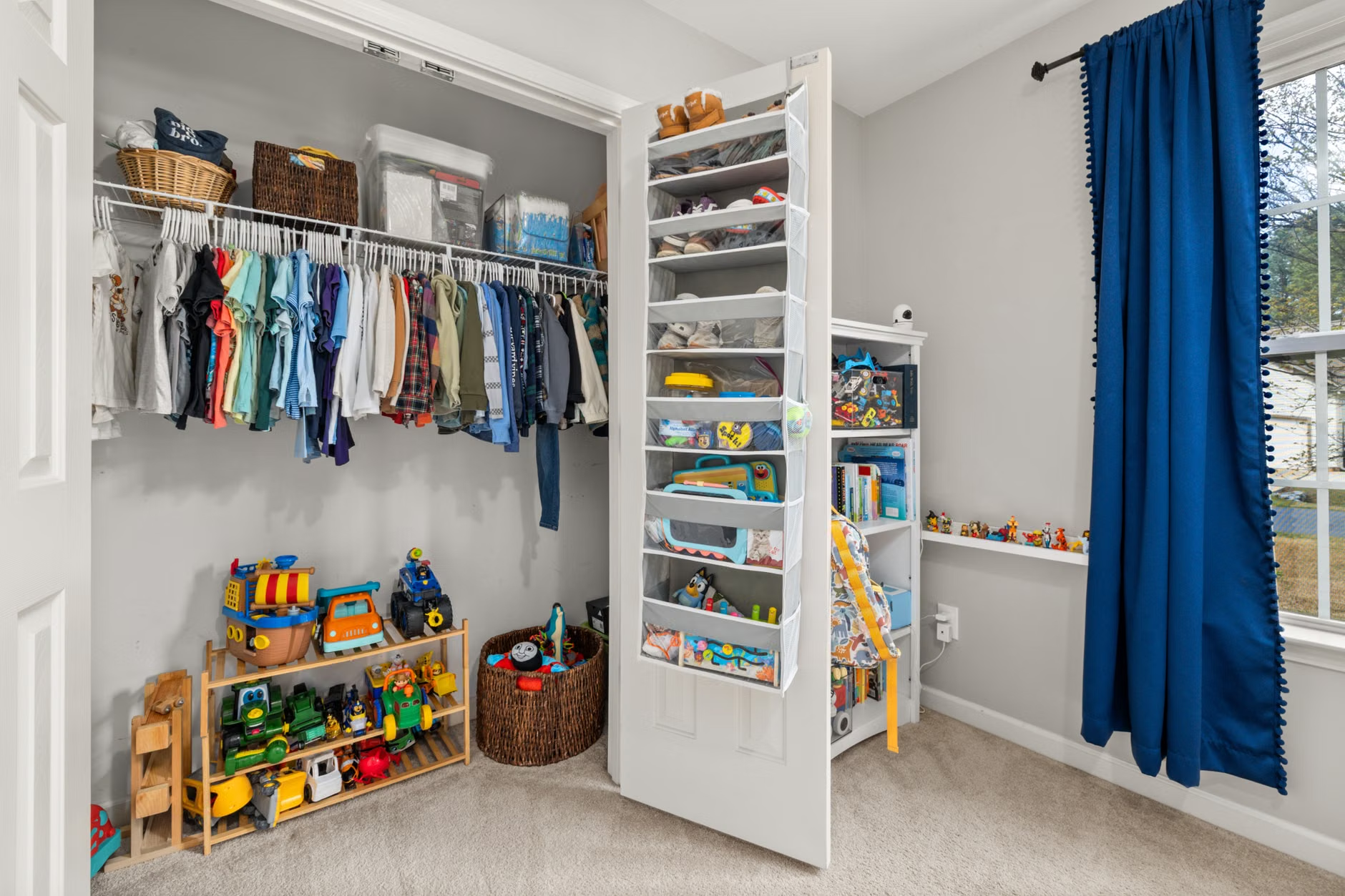
- Identify the “Pain Point” Room: Which room currently causes the most friction? Is it the living room that is always cluttered with toys? Or the bedroom that feels too cramped? Start there.
- Audit Your Storage Needs: Do not buy furniture until you know what you are storing. Measure your most-used items (e.g., specific storage bins, printers, or monitors). Ensure your chosen modular system accommodates these dimensions.
- Map the Layout: Use a simple grid paper or a digital tool to draw your room. Design the layout for the next three years, not just the next three months.
- The “One-In, One-Out” Rule: For every new modular piece you bring in, remove one piece of static, single-purpose furniture. This prevents your home from becoming a graveyard of “maybe we’ll use this later” items.
- Regular Re-evaluation: Every six months, take a look at your setup. Is the current configuration still working? If you have a free weekend, try swapping a shelf for a drawer or moving a module to a different wall. The more you move it, the more you will understand the potential of your space.
The Overlooked Variable: Lighting and Power
One detail people almost always forget when planning modular furniture is the location of power outlets and light switches. When you build a wall of modular shelving, you are effectively creating a new wall. If you cover an outlet, you lose a power source. If you block a light switch, you create a fire hazard or a daily annoyance.
Before you commit to a configuration, check for “access zones.” Ensure that every module is at least 5cm away from an outlet, or ensure the module is designed with pass-through holes for cables. If you are mounting modular shelves to the wall, use a stud finder. Do not trust drywall anchors for heavy items, especially in a home with children who might climb on or pull at the furniture.
Final Thoughts on Building a Home That Lasts
The transition to modular furniture is about more than just aesthetics; it is about reclaiming control over your living environment. As we move through our 30s and 40s, life is unpredictable. We have career shifts, family expansions, and changes in hobbies. Your home should be your biggest ally in these transitions, not a static obstacle you have to work around.
Start small, focus on quality connectors, and prioritize neutral designs that won’t go out of style. By investing in a system that can evolve, you are giving yourself the freedom to change your mind without the burden of starting over. It is a quiet, practical way to make your daily life just a little bit easier.
For more on home safety and mounting standards, refer to the CPSC Furniture Tip-Over Prevention guide. Staying informed on these basics ensures your flexible home remains a safe one.
Frequently Asked Questions
1. Is modular furniture really as stable as traditional furniture?
Yes, provided you choose a system with high-quality, steel-based connectors and follow the manufacturer’s installation guidelines. The main risk to stability in modular furniture is improper assembly or uneven loading. Always follow the weight capacity limits, and if you are building high units, anchor them to the wall studs to ensure total security.
2. Can I mix and match different brands of modular furniture?
Generally, no. Most manufacturers use proprietary locking mechanisms and specific hole patterns that are not compatible with other brands. To avoid frustration, pick one system or brand and stick with it. This ensures that a drawer you buy today will fit into a frame you might buy three years from now.
3. Is modular furniture better for the environment?
It can be, if you choose high-quality materials and keep the furniture for a long time. Because you can replace individual parts rather than the whole unit, you reduce waste over the long term. However, be wary of low-quality “modular” items made from cheap, unrecyclable materials, as these end up in landfills just as quickly as traditional furniture.