The most effective way to manage your home in your 30s and 40s is to abandon the “replace when broken” mentality in favor of a “post-growth” maintenance cycle—a strategy that prioritizes the longevity and performance of what you already own over the dopamine hit of new purchases.
- Shift from Consumption to Care: Viewing home maintenance as a “post-growth” activity reduces long-term debt and prevents the “replacement trap” where low-quality items create recurring costs.
- Predictive Scheduling Saves Capital: Performing small, preventative tasks (like cleaning HVAC coils or sealing window gaps) every 6 months prevents major, expensive systems failure.
- Skill Investment Over Product Purchase: Learning basic repair skills—and knowing when to call a pro—is the highest-ROI investment you can make for your household budget.
If you are in your 30s or 40s, your weekends are likely a battlefield between “to-do” lists, child-rearing, and the creeping feeling that your house is slowly falling apart. We are often sold the idea that when a dishwasher stops draining or a faucet starts dripping, the solution is to buy a newer, shinier version. This is the growth-based consumption model: buy, use, discard, repeat.
The “post-growth” home maintenance cycle flips this. It acknowledges that in a world of rising costs, the most significant financial move you can make isn’t buying a new appliance, but extending the life of your existing one by 30% to 50%. This isn’t just about being “green”; it is about being ruthlessly efficient with your capital and your time.
Understanding the Post-Growth Philosophy in Your Home
In economics, “post-growth” often refers to moving away from the obsession with constant GDP expansion. In your home, it means moving away from the obsession with constant accumulation. When you enter your 30s, the “starter home” or “temporary apartment” phase often transitions into a long-term living situation. The stakes change. Every dollar you spend on a replacement is a dollar that isn’t going into your retirement fund, your children’s education, or your travel experiences.
The core of this philosophy is depreciation management. Every item in your house has a projected lifespan. A standard dishwasher might last 10 years. If you neglect maintenance—like failing to clear the filter or ignoring a minor leak—that lifespan drops to 6 or 7 years. By treating maintenance as a cycle rather than an emergency response, you are essentially “buying back” years of utility from the items you already own.
Why the “Replacement Trap” is Draining Your Finances
The replacement trap is a psychological and financial cycle. We often replace items because of “feature creep”—the idea that a new model has a feature we think we need. However, modern consumer goods are often engineered with “planned obsolescence,” meaning a new machine might actually be less robust than the one you are currently trying to fix. The “post-growth” approach forces you to ask: “Is this item truly broken, or is it just dirty/clogged/misaligned?”
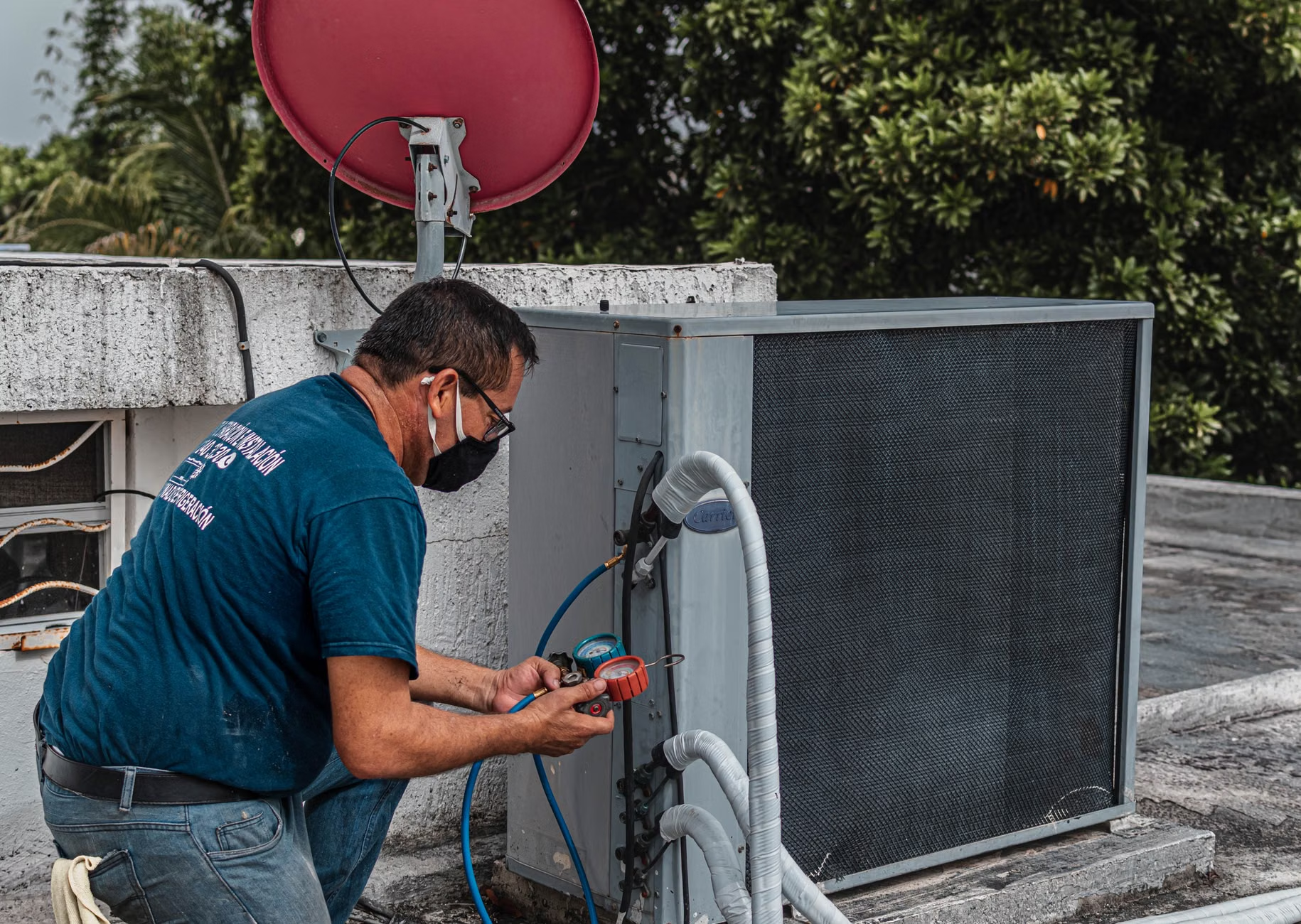
Consider the humble HVAC system. A full replacement can cost anywhere from $5,000 to $12,000 depending on your region and the unit size. Yet, many homeowners replace units that only needed a $200 capacitor replacement or a thorough cleaning of the coils. By shifting to a maintenance-first mindset, you aren’t just saving money; you are avoiding the logistical nightmare of scheduling contractors and dealing with installation downtime.
The Seasonal Maintenance Matrix: A Proactive Framework
Maintenance shouldn’t be a random act triggered by a crisis. It should be a rhythmic part of your life. The “post-growth” cycle is built on a 6-month rotation. By aligning your home care with the changing seasons, you ensure that you are always one step ahead of the weather-related stress that causes most household failures.
| Season | Focus Area | Action Item | Why it Matters |
|---|---|---|---|
| Spring | Exterior & HVAC | Clear gutters, clean outdoor AC condenser, inspect roof | Prevents water damage and ensures AC efficiency for summer heat |
| Autumn | Insulation & Heating | Seal windows, test furnace, flush water heater | Lowers energy bills, extends appliance life, keeps pipes from freezing |
This isn’t about doing everything at once. It’s about the “20-minute rule.” Dedicate one Saturday morning every six months to these specific tasks. If you tackle the list in bite-sized pieces, it never feels like a burden. If you ignore it, you end up with a $2,000 repair bill in the middle of a freezing winter when every contractor in town is booked solid.
The Hidden Cost of “Deferred Maintenance”
Deferred maintenance is essentially a high-interest loan you take out against your future self. When you ignore a small water leak under the sink, you aren’t saving money; you are accumulating a “hidden debt” of mold remediation, cabinet replacement, and potential floor damage. Studies in residential property management suggest that for every $1 you spend on preventative maintenance, you save roughly $5 to $7 in future emergency repairs.
For parents in their 30s, this is critical. You are already managing a chaotic schedule. The last thing you need is a burst pipe on a Tuesday night. By treating your home as a machine that requires regular tuning, you minimize the “emergency” factor and reclaim your time.
Building Your Repair Competency: What to DIY vs. When to Hire
A common misconception is that “post-growth” means doing everything yourself. That is false. The goal is to be a competent manager of your home’s health. Sometimes, the most “post-growth” thing you can do is hire a professional to perform a deep-level service that will add a decade to an appliance’s life.
The Decision Matrix for Repairs
When something breaks, use this decision rule before you call a service or buy a replacement:
- The Visibility Test: Can I see the problem? (e.g., a clogged drain, a loose screw, a dirty filter). If yes, try a 15-minute DIY fix.
- The Cost-to-Repair Ratio: If the repair cost is less than 30% of the replacement cost, repair it. If it is 50% or more, evaluate the age of the unit. If the unit is over 75% through its expected lifespan, consider replacing it with a higher-quality, longer-lasting model.
- The Hazard Threshold: If the repair involves high-voltage electricity, pressurized gas, or structural load-bearing elements, always hire a licensed professional. Your safety is not a place to practice “post-growth” frugality.
The secret to being good at this is not having a degree in engineering; it is having the right resources. Bookmark your appliance manuals (or find them online at sites like ManualsLib). Most modern appliances have “error codes” that are easily searchable. Often, a specific error code like “E1” on a dishwasher is just a sensor that needs a quick cleaning, not a sign of a dead motherboard.
Integrating Maintenance into Family Life
One of the biggest challenges for parents is finding the time. The “post-growth” cycle works best when it is integrated into family routines. If you have children, involve them in age-appropriate ways. Teaching a child how to change a filter or clean a window track isn’t just about chores; it’s about teaching them the value of stewardship. It demystifies how things work, which is a powerful antidote to the consumerist culture they will be exposed to elsewhere.
The “Maintenance Log” Advantage
Keep a simple digital or physical log of what you have done. When was the last time you flushed the water heater? When did you last change the refrigerator water filter? When you eventually sell your home, having a detailed log of maintenance is a massive selling point. It proves to prospective buyers that you have cared for the property, which often allows for a higher valuation.
More importantly, it gives you peace of mind. When you know that the roof was inspected last fall and the furnace was serviced in September, you stop worrying about the “what ifs.” You spend less mental energy on the status of your home and more on actually living in it.
Beyond the Basics: Overlooked Variables
There are subtle factors that often cause more damage than obvious ones. Humidity, for example, is the silent killer of homes. In many climates, keeping your indoor humidity between 30% and 50% is the single most effective way to prevent mold, protect wooden furniture, and extend the life of your drywall and paint. A simple hygrometer—a device that measures humidity—costs less than $15 and can save you thousands in air quality and structural issues.
Another overlooked variable is vibration. Appliances like washing machines and dryers that are not perfectly level will “walk” or vibrate excessively, which destroys the internal bearings and shocks over time. Spending 10 minutes with a spirit level and an adjustable wrench to ensure your machines are perfectly balanced is a “post-growth” action that can easily add three to five years to the life of the machine.
Addressing Common Misconceptions
Many people believe that “post-growth” or “sustainable” home management is synonymous with “cheap.” This is a significant misunderstanding. In reality, this approach often involves spending more on higher-quality, repairable items upfront. For example, buying a commercial-grade blender that can be repaired with replaceable parts is a “post-growth” investment. Buying a cheap, sealed unit that must be thrown away when a plastic gear strips is the opposite.
Another misconception is that maintenance is “boring.” If you view it as a way to exercise control over your environment and reduce your reliance on external systems, it becomes empowering. It is a way of saying, “I understand my home, and I am not a slave to the cycle of planned obsolescence.”
Practical Steps to Begin Your Cycle Today
If you feel overwhelmed, do not try to do everything at once. Start with the “Low-Hanging Fruit.”
- The Audit: Walk through your home with a notebook. Note every loose handle, dripping faucet, or weird noise. This is your baseline.
- The Calendar: Schedule one “maintenance hour” per month. Use this time to address the items on your list.
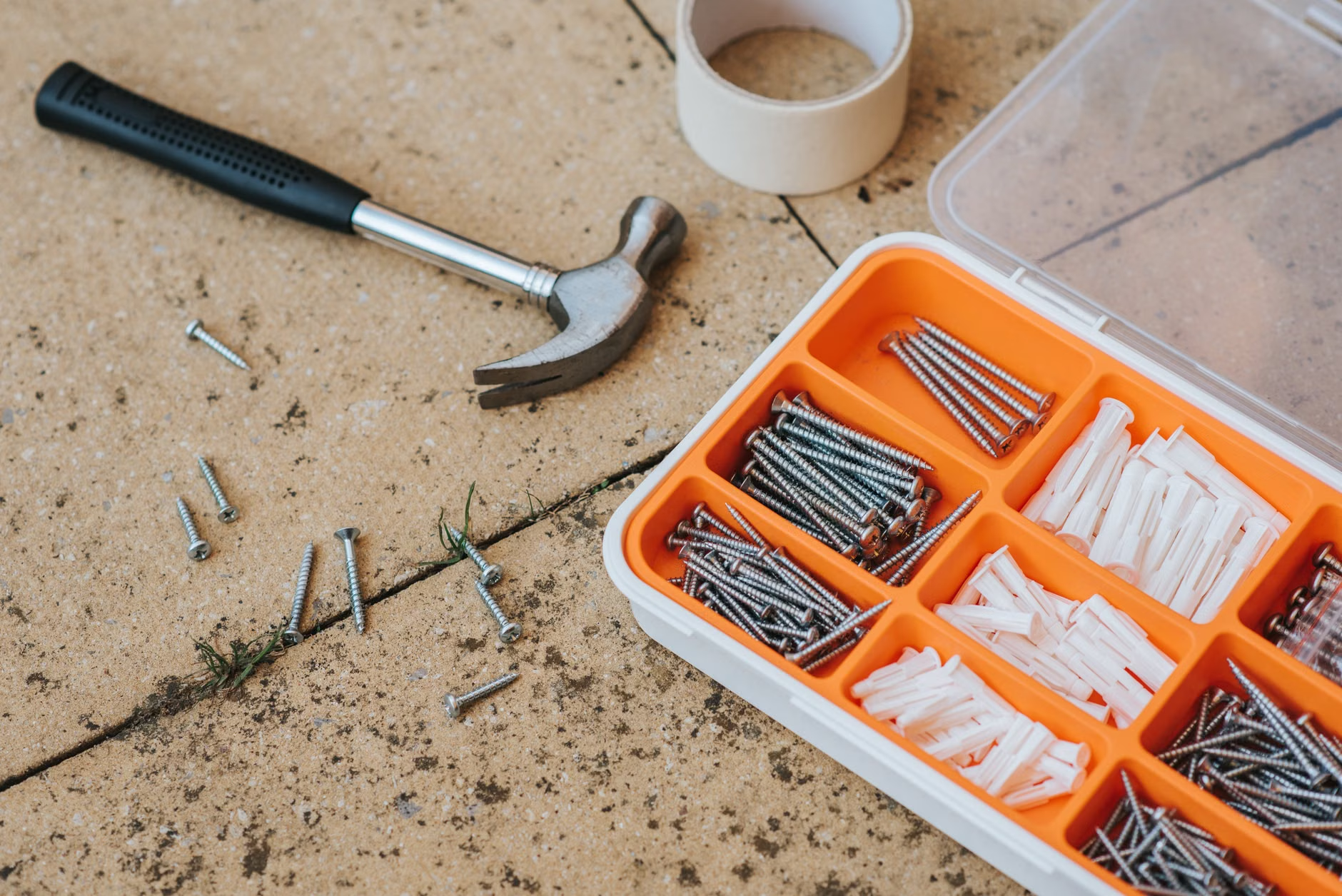
- The Toolkit: Invest in a high-quality multi-bit screwdriver, a good set of pliers, a flashlight, and a level. You don’t need a professional workshop; you need the right basic tools that don’t break when you use them.
- The Resource Library: Create a folder (digital or physical) with the manuals for every major appliance in your home. If you don’t have them, download the PDFs and save them in a cloud drive.
The “post-growth” home maintenance cycle is not a destination; it is a shift in perspective. It’s about recognizing that the value of your home is not just in its market price, but in its function and the stability it provides for your family. By choosing to repair, maintain, and steward what you have, you are making a deliberate choice for long-term security over short-term consumption.
If you find a task that you simply cannot do, or if the risk of failure is too high, don’t feel guilty about calling a professional. The goal is to preserve the home, not to prove your manual dexterity. The professionals are part of the ecosystem; by hiring them for the right tasks, you support the local economy while keeping your home in top shape.
Finally, remember that perfection is not the goal. The goal is consistency. Your home will never be “finished,” and that is okay. The process of caring for it is part of the life you live within its walls. Start small, stay consistent, and watch how much more capable and secure you feel as a homeowner.
Frequently Asked Questions
Q: Is it really worth repairing a 10-year-old appliance, or should I just upgrade to save energy?
A: It depends on the “payback period.” While newer appliances are more energy-efficient, the energy savings rarely cover the cost of a new purchase within a reasonable timeframe. If the repair is minor, fixing it is almost always more economical and environmentally friendly. Only upgrade if the appliance is failing frequently or if the energy savings are substantial (e.g., upgrading an ancient refrigerator to an Energy Star-rated model).
Q: How do I know if I’m “over-maintaining” my home?
A: Over-maintenance is rare, but it happens when you focus on cosmetic upgrades rather than functional systems. If you are painting rooms every two years while ignoring the status of your water heater, you have your priorities reversed. Focus on the “bones” of the house—plumbing, electrical, HVAC, and exterior envelope—before worrying about aesthetic trends.
Q: Where can I learn how to perform basic repairs if I have no experience?
A: YouTube is an excellent resource, provided you use it correctly. Look for channels run by licensed contractors or professional repair technicians (look for those who explain the “why” and not just the “how”). Additionally, look for official manufacturer videos for your specific appliance models. Always cross-reference advice from multiple sources before attempting any repair.
For more information on home maintenance standards, you can refer to the U.S. Department of Housing and Urban Development (HUD) Home Maintenance Guide, which provides a comprehensive overview of essential systems care.