Key Takeaways for Sensory-Sensitive Travel:
- Predictability over Speed: Heritage railways offer a rhythmic, constant pace and consistent sensory input, which significantly reduces anxiety compared to modern, high-speed transit.
- Control Your Environment: Unlike airplanes or busy airports, heritage carriages often allow for more personal space, physical movement, and the ability to choose quieter, less crowded times.
- Tangible Engagement: The tactile nature of mechanical trains—levers, windows, and rhythmic sounds—provides a “grounding” sensory experience that acts as a natural regulator for children prone to sensory overload.
If you are a parent of a sensory-sensitive child, you already know that the “vacation” part of a family trip is often overshadowed by the “getting there” part. Airports are sensory minefields: harsh fluorescent lights, unpredictable announcements, fluctuating temperatures, and the claustrophobic anxiety of being trapped in a pressurized metal tube. For kids who struggle with sensory processing, this isn’t just an inconvenience; it’s a physiological crisis.
Enter the world of heritage railways. These are not your high-speed, hyper-connected bullet trains. They are restored, legacy train lines that operate at a slower, more deliberate pace. Because they prioritize the experience of the journey over the efficiency of the destination, they accidentally happen to be the perfect environment for neurodivergent children. By choosing a heritage rail route, you aren’t just picking a tourist activity; you are choosing a predictable, rhythmic, and manageable sensory environment.

Why “Slow Travel” is a Biological Necessity, Not Just a Trend
We often talk about “slow travel” as a lifestyle choice for people who want to sip espresso in a village square for three hours. But for a sensory-sensitive child, slow travel is a survival strategy. Modern transport is designed to minimize the duration of the experience, often at the cost of sensory intensity. When you move at 300km/h, the environment outside becomes a blur, and the internal environment of the train is often loud and sterile.
Heritage rail, by contrast, operates at a speed where the world remains recognizable. Research into sensory processing suggests that predictability is a primary regulator for anxiety. When a child can see the landscape changing at a pace that matches their cognitive processing speed, the “fear of the unknown” is replaced by observation and curiosity. The rhythmic clatter of an old train—often lower in frequency than the high-pitched whine of modern jet engines—acts as a form of “white noise” that can be incredibly soothing.
Furthermore, heritage trains often feature windows that open. This is a massive win for sensory regulation. The ability to control airflow and temperature, even slightly, gives the child a sense of agency. If the carriage feels too “stuffy” or smells of stale upholstery, a crack of fresh air can be the difference between a meltdown and a calm journey.
The Physics of Comfort: Why Rhythmic Motion Matters
Have you ever noticed how a car ride can put a toddler to sleep, but a flight makes them hysterical? It’s the motion. Modern high-speed trains and planes often suffer from “vibration fatigue”—high-frequency, jittery vibrations that the human body isn’t evolved to process for long periods. Heritage trains, with their heavier, steel-on-steel construction and lower speeds, provide a “deep pressure” sensation that is inherently grounding.
This is known as proprioceptive input. When a child feels the steady, heavy sway of an old carriage, their brain receives consistent signals about where their body is in space. This is a classic occupational therapy technique for sensory regulation. You aren’t just taking a train; you are essentially putting your child in a giant, moving sensory-swing.
Practical Tip: When booking, look for carriages with wooden or firm seating rather than plush, synthetic fabrics. Some children with sensory sensitivities find the “static” or the smell of aging foam cushions to be a trigger. A hard-backed wooden seat is predictable, clean, and minimizes the “hidden” sensory inputs that synthetic materials can trap.

How to Strategically Plan a Heritage Rail Trip
Planning a trip around a heritage line requires a shift in mindset. You are not looking for the fastest route; you are looking for the most stable one. Here is a decision framework to help you choose the right line:
| Feature | What to Look For | Why it Matters for Sensory Needs |
|---|---|---|
| Carriage Type | Open-plan or semi-open | Allows for easy exit if the child needs a “reset” moment. |
| Time of Day | Mid-week, mid-morning | Avoids the weekend tourist rush and the sensory overload of crowds. |
| Sound Profile | Steam vs. Diesel | Steam trains have a rhythmic “chuff” that is often more consistent than the erratic hum of modern diesel-electric engines. |
| Facilities | Restroom proximity | Knowing exactly where the exit/restroom is provides a “safe zone” mental map for the child. |
Before you commit to a line, visit their website and look for photos of the carriages. If the photos aren’t available, call them. Ask the staff: “Is this carriage usually crowded on Tuesday mornings?” and “Does the train have open windows?” These aren’t just polite questions; they are essential due diligence for your child’s nervous system.
The “Hidden” Hurdles: Managing Expectations and Environment
Even the best plan can hit a snag. The most common mistake parents make is assuming the train is a “contained” environment where the child will just sit still. In reality, the train is a new space that needs to be explored. Allow for a “settling-in” period. When you first board, don’t rush to your seat. Walk the length of the carriage, let your child touch the walls, feel the seats, and get a sense of the vibrations before you ask them to sit for an hour.
Another common mistake is overpacking. While you want to be prepared, a cluttered space is a sensory trap. Bring a “sensory kit”—a small, dedicated bag that contains only the essentials: noise-canceling headphones, a favorite weighted lap pad, and perhaps a tactile fidget toy that isn’t loud. Keep the kit accessible, but don’t force the child to use it unless they signal they need it.
The “Escape” Plan: Always identify the “quieter” end of the train. On many heritage lines, the carriages at the very front or very back are less traveled. If the train is an out-and-back journey, try to secure seats near the rear, as these are often the last to fill up during peak boarding times.
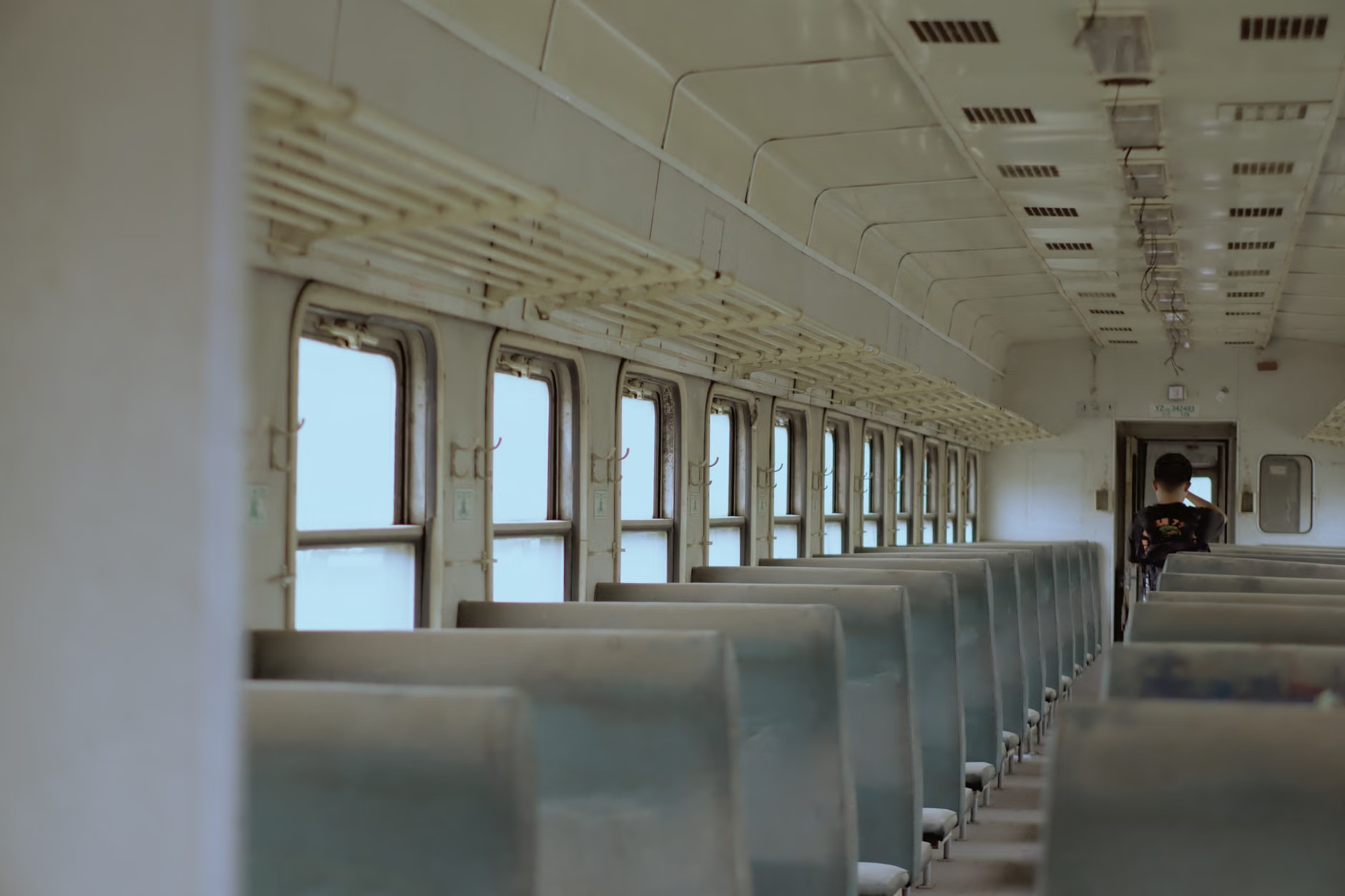
Comparing Modern Transit vs. Heritage Rail for Sensory Regulation
It is worth explicitly comparing the two to understand why the heritage option is superior for your specific needs. Modern rail (like high-speed intercity lines) is optimized for commuters. This means bright LED lighting, automated announcements that can be startlingly loud, and a “vibe” of urgency. Everyone is rushing, checking watches, and staring at screens.
Heritage rail is optimized for leisure. The lighting is often natural, the “announcements” are made by humans (who can modulate their volume), and the atmosphere is one of observation. The visual input is slower, allowing the brain to process the passing scenery without feeling overwhelmed by the “flicker effect” of high-speed travel.
If you are in Europe, lines like the Bernina Express (though modern, it offers slow-travel options) or local heritage steam lines in the UK or Germany provide a much more stable experience than the ICE or TGV networks during peak hours. In North America, many regional scenic railroads (like those in the Colorado Rockies or the White Mountains) offer the same benefits.
Practical Steps to Launch Your First Heritage Rail Adventure
Step 1: The Virtual Dry Run. Use YouTube to find “cab view” or “carriage view” videos of the specific train line you are considering. Let your child watch these on a tablet with their headphones on. If they can tolerate 10 minutes of the video, they will likely handle the actual trip well.
Step 2: The “Off-Peak” Rule. Always book for a Tuesday, Wednesday, or Thursday. The difference in crowd density between a Tuesday and a Saturday is not just about comfort; it is about the entire sensory profile of the train. Fewer people means fewer competing sounds, fewer smells, and more physical space.
Step 3: Tactile Preparation. If your child is sensitive to textures, bring a small blanket or a seat cover that they are already familiar with. Placing this over the train seat provides a “bridge” of familiarity between home and the new environment.
Step 4: The Exit Strategy. Always have a clear plan for what happens when you arrive at the destination. If the destination is a loud, crowded station or a busy tourist site, you have effectively negated the benefits of the calm train ride. Plan to arrive at a quieter, outdoor space where your child can decompress after the journey.
Why This Matters for Your Long-Term Travel Goals
Many parents in their 30s and 40s feel that they have to “give up” travel because the logistics of managing a sensory-sensitive child are just too high. But travel is a vital part of a child’s development. It teaches them that the world is large, interesting, and navigable. By choosing heritage rail, you are not limiting your travel; you are redefining it to fit your family’s needs.
The beauty of this approach is that it forces you to slow down, too. When you stop chasing the “fastest” way to reach a destination, you start noticing the landscape, the rhythm of the journey, and the small moments of joy that your child experiences. You stop being a “travel manager” and start being a “travel companion.”
Essential Resources and Further Research
To get started, look for national heritage rail associations in your region. These organizations often provide accessibility guides that go beyond physical disability to include sensory-friendly information.
- Heritage Railway Association (UK): A great resource for finding lines with specific accessibility information.
- Global Rail Resources: Look for regional chapters that list “scenic” or “tourist” railways.
Frequently Asked Questions
1. What if my child finds the sound of the steam whistle too loud?
This is a valid concern. Steam whistles are loud and can be unexpected. Most heritage lines publish their “whistle policy” or you can call ahead to ask. If the whistle is a concern, choose a line that operates vintage diesel locomotives instead, or ensure you are sitting in a carriage in the middle of the train, which is significantly quieter than the carriages directly behind the engine.
2. Are heritage trains accessible for children who need a lot of physical space?
Generally, yes. Because these trains are often not sold out to capacity like commuter lines, there is usually more “buffer room” between passengers. If you are worried, call the booking office and ask to sit in a carriage that is less likely to be full, or book a private compartment if the line offers them. Private compartments are the “gold standard” for sensory-sensitive travel as they provide a completely controlled environment.
3. How do I handle the “waiting” at the station before boarding?
Station platforms are often the most stressful part of the trip. Avoid the main station building if possible. Find a quiet corner on the platform or stay in your car until 5-10 minutes before boarding. If the station is unavoidable, use the “sensory kit” mentioned earlier to keep the child focused on a tactile task while you wait for the train to arrive.
Final Recommendation: Don’t try to make the journey the “main event” of a massive, multi-city tour. Start with a short, two-hour round trip. If it goes well, you can build up to longer journeys. The goal is to build a positive association with the train as a “safe space” for travel. Once your child trusts the environment, the world—at least the parts accessible by rail—becomes a much smaller, more welcoming place.