The most effective way to end the cycle of constant bickering between your children is to stop treating them as individual competitors and start framing them as partners in a shared “home enterprise.” By shifting the focus from individual behavior to collaborative problem-solving, you can transform the home environment from a battlefield into a workshop where negotiation and empathy are the primary tools of trade.
- Structural Shift: Moving from top-down discipline to a “collaboration workshop” model empowers children to resolve their own conflicts using predefined rules.
- Shared Enterprise: Assigning collective goals (e.g., weekend project planning) forces siblings to practice negotiation and resource sharing in a low-stakes environment.
- The 10-Minute Rule: Implementing a mandatory 10-minute “cool-down and regroup” session before any conflict resolution dialogue prevents emotional escalation.
If you have spent your morning mediating a dispute over a shared tablet or who sits in the “best” chair in the car, you know that reactive parenting feels like playing a losing game of whack-a-mole. You address one conflict, and another pops up three minutes later. The problem isn’t necessarily your children’s temperament; it is often a lack of a clear, collaborative framework. When kids don’t have a system for how to work together, they default to the most primal instinct: competition.
What is a Sibling-Collaboration Workshop?
A “Sibling-Collaboration Workshop” is not a physical room in your house; it is a mindset and a set of operational protocols you establish to manage daily interactions. Think of it as a low-stakes training ground. Just as a project manager in a corporate office sets up ground rules and shared objectives for a team, you are setting up the “Standard Operating Procedures” (SOPs) for your family unit.
The workshop model works because it moves the parent from the role of “Judge/Jury” to “Facilitator.” When you intervene in every fight, you accidentally teach your children that they are incapable of solving their own problems. When you force them into a structured collaborative environment, you force them to use the cognitive machinery required for negotiation, compromise, and long-term planning.
This approach requires you to stop asking “Who started it?” and start asking “How are we going to fix this so we can move forward?” It is a shift from blame to utility. It is about asking: “Does this action help our team, or does it hinder our team?”
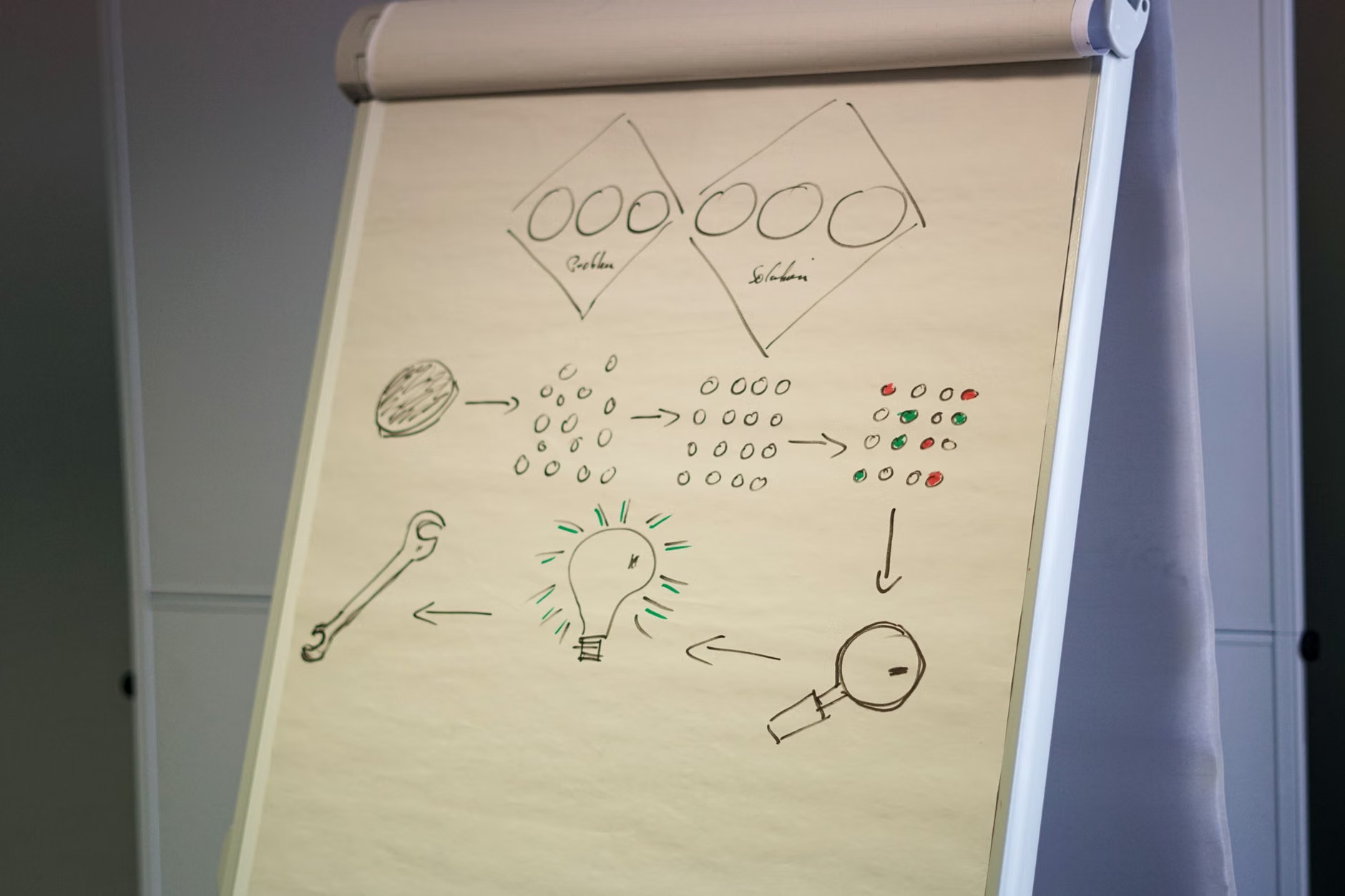
Establishing the Foundation: The Family Charter
Before you can expect collaboration, you must define the “rules of engagement.” A Family Charter is a written (or drawn, if your kids are younger) agreement that everyone in the household signs. This should not be a list of “thou shalt nots,” but a set of positive, outcome-oriented guidelines.
Common mistakes in setting up these charters include being too vague (e.g., “Be nice to each other”) or too rigid (e.g., “No talking during dinner”). Instead, use specific, actionable language. For example: “When we disagree, we use the ‘Stop-Think-Speak’ method.”
| Goal | The Wrong Approach | The Collaborative Approach |
|---|---|---|
| Resource Sharing | “Stop fighting over the toy.” | “We use a 15-minute timer. When the timer pings, the ‘owner’ swaps with the ‘waiter’.” |
| Conflict | “Go to your room until you stop crying.” | “Let’s move to the ‘neutral zone’ to discuss why we are frustrated.” |
| Chores | “Clean up your mess.” | “We have a 10-minute ‘power clean’ where we work together to clear the living room.” |
The beauty of this table is that it transforms an emotional trigger into a mechanical process. By removing the emotion from the initial response, you prevent the “fight or flight” response that keeps siblings stuck in a loop of aggression.
Sibling rivalry often thrives in environments where there is no common objective. If children are merely competing for your attention or the same physical resources, conflict is inevitable. You must introduce “Team Objectives.”
A Team Objective is a task that requires both children to succeed. It could be as simple as building a complex Lego set, planning a dinner menu, or organizing a weekend outing. The key is that the outcome—the finished Lego set, the meal, the outing—is only possible if they cooperate.
Consider the “Shared Reward” strategy. If the children finish their chores separately, they get a small reward. If they finish them as a team, they get a slightly better reward (e.g., an extra 15 minutes of screen time or a special dessert). This creates an incentive for them to help each other rather than just focus on their own speed.
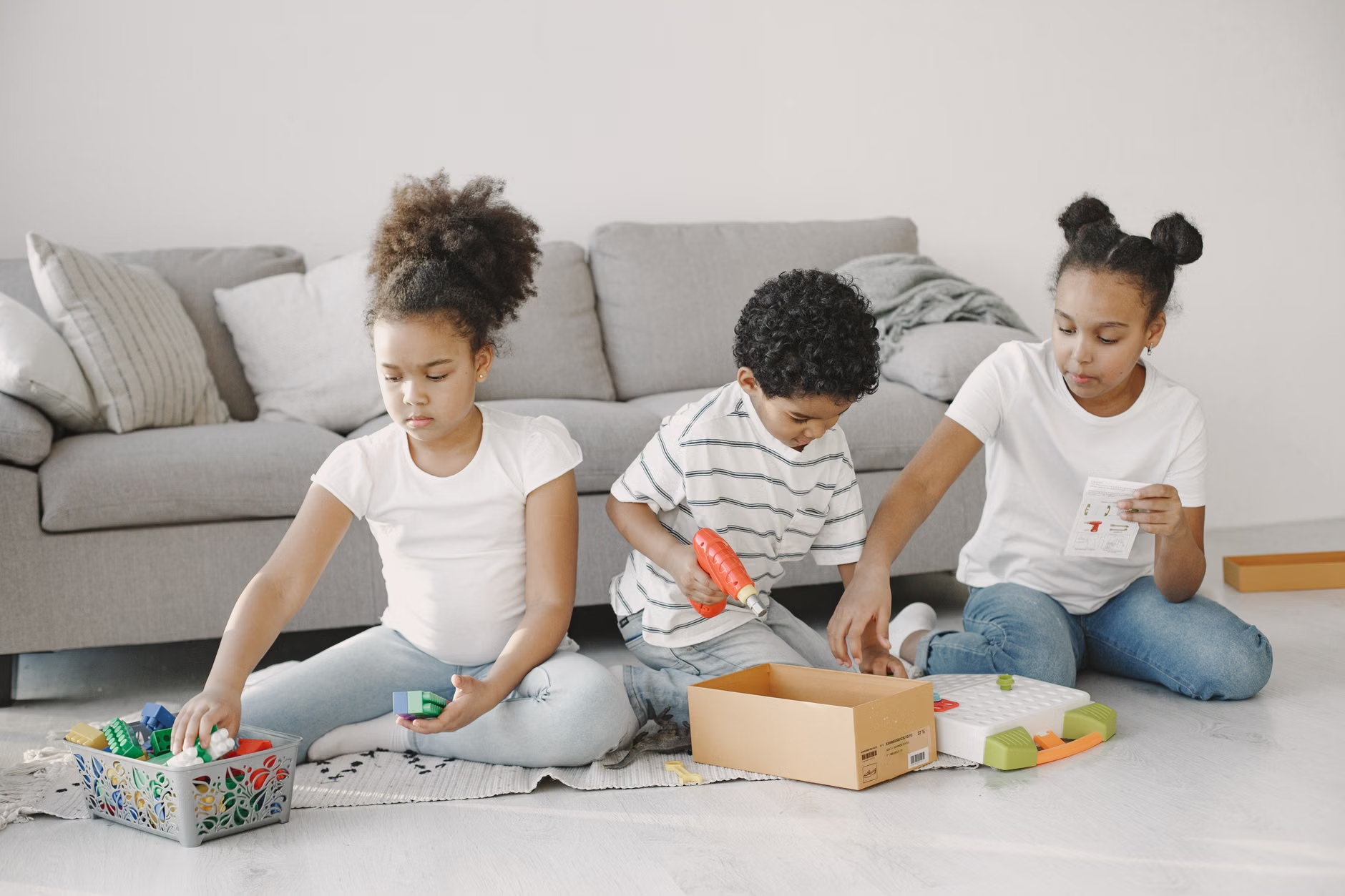
The 10-Minute “Cool-Down and Regroup” Protocol
When a conflict erupts—and it will—do not rush in to fix it. This is a common mistake. If you intervene immediately, you are essentially acting as a referee in a game where the players are trying to get you to call a foul on their sibling. Instead, implement the “10-Minute Protocol.”
Step 1: The Pause. When you hear the yelling start, calmly announce: “We have entered a 10-minute reset period. No one speaks, no one moves, and we all take five deep breaths.”
Step 2: The Assessment. After 10 minutes, gather them. Ask each person two questions: “What was the goal you were trying to achieve?” and “How did your actions help or hinder our team goal?”
Step 3: The Proposal. Ask them to come up with one solution that satisfies both parties. If they cannot, you provide a “neutral” solution, but emphasize that they have lost the opportunity to decide for themselves. This creates a natural consequence: if you can’t work together, you lose the autonomy to manage your own time.
Practical Implementation: Setting Up Your Home Workshop
To make this work in a real-life home environment, you need to designate physical and temporal space. You don’t need a fancy office, but you do need a “Collaboration Station”—a space where you keep the tools for resolution. This might be a physical whiteboard, a timer, and a “Peace Jar” (a jar where they can put notes about things they need to discuss later).
In your 30s and 40s, you are likely juggling professional demands, household maintenance, and the emotional labor of parenting. You cannot afford to be the sole mediator for every minor spat. The “Workshop” model is not just for the kids; it is for your own sanity. By offloading the conflict resolution process to a system, you reclaim your mental bandwidth.
Another overlooked variable is the “Age Gap Adjustment.” If you have a five-year-old and a ten-year-old, the expectations for their contribution to the workshop must be different. The older child should act as the “facilitator-in-training,” while the younger child focuses on following the basic rules of the charter. This gives the older child a sense of responsibility and keeps the younger child focused on the structure.
Common Pitfalls and How to Avoid Them
One common mistake is expecting immediate results. This is a long-term strategy, not a quick fix. You will have days where the workshop descends into chaos. When this happens, do not abandon the system. Instead, hold a “Project Review.”
A Project Review is a family meeting where you discuss what went wrong, not who was to blame. “Today, our collaboration failed because we didn’t use the timer. What can we do differently tomorrow?” This teaches them that failure is a part of the process, not a character flaw. It removes the shame from the equation.
Another pitfall is inconsistency. If you enforce the “10-Minute Protocol” on Tuesday but ignore the arguing on Wednesday because you are tired, the children will learn that the rules are arbitrary. The rules must be absolute. If you are too exhausted to enforce the system, it is better to pause the workshop entirely than to enforce it inconsistently.
Deepening the Connection: The Role of Empathy
Collaborative skills are essentially the ability to understand another person’s perspective. In your workshop, incorporate “perspective-swapping” exercises. During a conflict, ask the children to state the other person’s argument before they are allowed to defend their own. This is a classic negotiation tactic used in professional settings, and it is incredibly effective for children.
When they realize that their sibling has a valid point, the emotional intensity of the fight drops. They move from “You are wrong” to “I see why you want that, but I also want it. How can we share?” This is the core of emotional intelligence. It is not about being nice; it is about being effective.
Managing the “Hidden Costs” of Collaboration
It is important to acknowledge that collaboration takes time. Often, it is faster for you to just step in, declare a winner, and move on. However, this is a “hidden cost” of reactive parenting. By saving five minutes now, you are spending hours later dealing with the same unresolved resentment. The “Workshop” requires an upfront investment of time, but it pays dividends in the form of independent, conflict-resolving children.
Also, watch out for the “Dominant Sibling” trap. In any collaborative group, one person will naturally take the lead. You must ensure that the “leader” is not becoming an “oppressor.” Use rotation systems for tasks where one person has to lead and the other has to support. This ensures that both children develop the skills for both roles.
Long-Term Benefits: Beyond the Home
The skills developed in the Sibling-Collaboration Workshop are highly transferable. Negotiating a toy share is the precursor to negotiating a project deadline at work. Learning to follow a family charter is the precursor to understanding corporate culture and social contracts. By treating your home as a workshop, you are giving your children a competitive advantage in every future social or professional interaction.
You are moving them away from the “me vs. you” mentality that plagues so many adults. You are teaching them that the best way to achieve a goal is to find someone whose strengths complement your weaknesses. This is the foundation of every successful partnership, whether it is in business, friendship, or marriage.
Next Steps for Your Family
Start small. Don’t try to implement the entire workshop on Monday morning. Begin with the “Family Charter.” Spend one afternoon this weekend sitting down with your children to write it. Keep it simple: three core rules that everyone agrees on. Use a piece of cardboard or a dedicated notebook that lives in a common area.
Once the charter is in place, introduce one collaborative task. It could be something as simple as making a collaborative collage or cooking a meal. Observe how they interact and where the friction points are. Do not intervene unless there is physical danger. Use the “10-Minute Protocol” to handle any disputes that arise during the task.
As you become more comfortable with this, you will find that your role as a parent shifts. You will spend less time “policing” and more time “mentoring.” You will start to see your children not as sources of noise and stress, but as a small team that is learning to navigate the complexities of life together. That is the true power of the Sibling-Collaboration Workshop.
Frequently Asked Questions
Q: What if one child refuses to participate in the workshop?
A: Participation is not a choice if they want to be part of the “team benefits.” Frame it as a condition of membership. If they refuse to collaborate, they lose access to collaborative rewards (like the group movie night or the shared game time). They can still play alone, but they lose the “team” privileges.
Q: How do I handle a massive age gap where the older child is clearly more capable?
A: Assign the older child the role of “Team Lead” for specific tasks. This gives them a sense of status while also teaching them how to lead others without being bossy. For the younger child, focus on “contributor” tasks that are age-appropriate. The goal is to make both feel like they have a unique, necessary role in the team.
Q: Can I use this system if my children are toddlers?
A: You can use the core principles, but simplify the execution. Toddlers don’t need a complex charter; they need clear, visual boundaries. Use timers and simple, repeated phrases. The “Workshop” is less about the “meeting” and more about the consistency of your response to conflict. Even at a young age, they will learn that conflict results in a pause, not an immediate reaction from you.
For further reading on child development and conflict resolution, you may find the resources provided by the American Psychological Association on Parenting useful in understanding the psychological underpinnings of sibling dynamics. Always remember that your consistency is the most important factor in the success of any family system.