Bedtime doesn’t have to be a battlefield; by shifting your focus from “sleep training” to “co-regulation,” you can help your toddler calm their nervous system and drift off to sleep with significantly less resistance. The core of this approach is recognizing that toddlers lack the biological tools to self-soothe when they are overtired or overstimulated, making your calm presence the bridge they need to reach sleep.
- Co-regulation is a biological necessity, not a habit to break: Toddlers rely on your nervous system to regulate their own heart rate and stress levels.
- The “Bridge to Sleep” concept: Your physical and emotional presence acts as a stabilizer that prevents the “fight or flight” response from spiking during the transition to sleep.
- Consistency over intensity: A predictable, low-arousal routine is more effective at inducing sleep than elaborate wind-down activities.
Why Your Toddler Cannot Simply “Settle Down” Alone
If you have ever felt like your toddler is intentionally fighting sleep, you aren’t alone. However, viewing this as “defiance” misses the physiological reality. A toddler’s brain is still developing the prefrontal cortex—the area responsible for impulse control and emotional regulation. When a child is tired, their cortisol levels rise. If they haven’t learned how to process that stimulation, they don’t simply “drift off”; they enter a state of hyper-arousal.
Co-regulation is the process by which a caregiver’s calm, steady state helps an infant or child regulate their own emotional state. Think of it like a thermostat. If your toddler is a room that is overheating (the tantrum or the “I don’t want to go to bed” scream), your job is to be the air conditioning. If you get frustrated, your heart rate rises, and your voice becomes sharp, you are simply adding more heat to the room.
This matters for parents in their 30s and 40s because we are often depleted by the time 8:00 PM rolls around. We want our “me time” back. But when we approach bedtime with the goal of “getting them down as fast as possible,” we inadvertently signal urgency and stress. Children are masters at reading body language. If you are rushing, they feel that anxiety, which keeps their nervous system on high alert. You are essentially trying to calm a fire by throwing gasoline on it.

The Science of the Nervous System: Understanding the “Window of Tolerance”
To implement co-regulation, you need to understand the “Window of Tolerance.” This is a concept used in psychology to describe the zone of arousal where we can function effectively. When a toddler is within their window, they are calm, curious, and manageable. When they fall out of this window, they either go into “hyper-arousal” (tantrums, running around, fighting) or “hypo-arousal” (shutting down, dissociating, or intense clinging).
At bedtime, the goal is to keep the child inside this window. Common mistakes include over-stimulating the child with roughhousing or high-intensity play right before bed. By the time you start the “routine,” the child is already outside their window. At this point, no amount of reading or singing will work because their nervous system is in a state of stress.
| State | Toddler Behavior | Parental Strategy |
|---|---|---|
| Hyper-aroused | Running, yelling, aggression | Lower lighting, soft voice, firm boundaries |
| Optimal Window | Calm, listening, sleepy | Maintain routine, light connection |
| Hypo-aroused | Clinging, crying, “zoning out” | Physical touch, reassurance, presence |
The table above highlights that your strategy must change based on where the child is. A common mistake is using the same “shushing” technique when a child is hyper-aroused; this often fails because the child is too far gone. In those moments, you must first provide a “safe harbor”—physical proximity or a quiet space—before you can begin the wind-down.
Building a Co-Regulation Routine: A Step-by-Step Framework
A successful co-regulation bedtime isn’t about being a “gentle parent” who never sets boundaries; it is about being a regulated parent who creates a predictable container for the child. Here is how to structure it.
Step 1: The Pre-Bedtime “Buffer Zone”
Thirty minutes before the official “bedtime routine” starts, the house should shift. Dim the lights. Reduce the volume of music or television. If the environment is loud, the toddler’s brain remains in “daytime mode.” This is the time for low-energy activities like building with blocks or drawing, rather than chasing games or tickling.
Step 2: The Physical Anchor
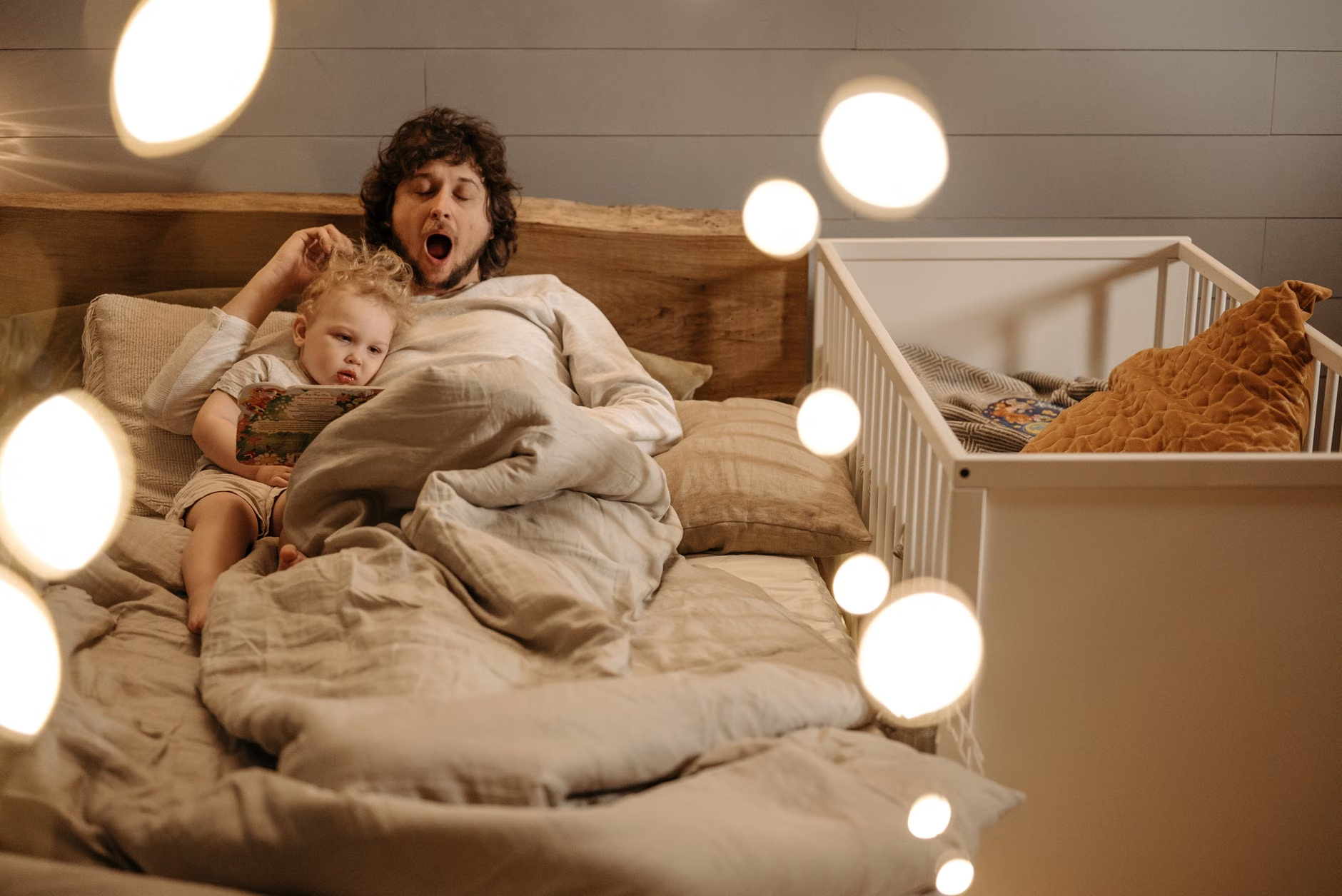
Toddlers need physical feedback to feel safe. During the routine, integrate touch. This could be a firm back rub, a long hug, or simply sitting close enough that your legs are touching. When a child is anxious about separating from you, this physical contact acts as an “anchor.” It tells their brain, “I am here, you are safe, you don’t need to stay alert.”

Step 3: The Predictable “Safety Script”
Use the same words every night. “It is time for sleep. I am right here. Your body is resting now.” The content of the words matters less than the tone. Use a low, rhythmic, and slow cadence. You are essentially “entraining” their heart rate to match yours. If your heart rate is racing because you are worried about the dishes, they will mirror that.
Common Pitfalls and How to Pivot
One of the biggest hurdles for parents is the “Checking the Clock” syndrome. We look at the time and think, “It’s 8:15, they should be asleep by now.” This thought process immediately shifts you into a stressed state. You start projecting that stress onto the child, leading to a feedback loop where the child feels the pressure, gets more anxious, and stays awake longer.
The Decision Rule: If you find yourself getting angry or losing patience, you have reached your own limit. It is better to have a “tag out” moment with a partner or take a literal 60-second walk out of the room to breathe, rather than staying in the room while your internal “frustration meter” is redlining. A calm parent who returns after a minute is far more effective than a “present” parent who is seething with resentment.
Another pitfall is the “Over-Explanation.” When a toddler is fighting sleep, we often try to reason with them: “You need sleep because you have school tomorrow.” A toddler’s brain is not capable of long-term planning or logic when they are tired. Instead of explaining, use “Holding Space.” Acknowledge their feeling without changing the boundary. “I see you want to keep playing. It is hard to stop. But now it is time for sleep.” Then, hold the boundary with kindness.
The Role of Environment and Sensory Input
We often overlook the sensory environment. For a toddler, a room that is too hot, too bright, or filled with “visual clutter” (too many toys) can be a major source of overstimulation. If your child is struggling, look at their sleep environment through their eyes. Is there a pile of laundry that looks like a monster in the dark? Is the hallway light casting a shadow that moves?
White noise is another tool that works as an external regulator. It provides a constant, rhythmic sound that masks the “startle” noises of the house. For a child who has trouble settling, white noise acts as a “sonic blanket.” It isn’t just about blocking out noise; it’s about creating a consistent sensory environment that triggers the brain’s “time for sleep” signal.
Also, consider the timing of the last meal. A child who is hungry will have a much harder time regulating their emotions. A small, protein-rich snack (like a piece of cheese or a banana) about an hour before bed can prevent the “hangry” irritability that often spikes right at bedtime. This isn’t about “stuffing them to sleep,” but ensuring their basic biological needs are met so they can focus on the emotional task of letting go.
Moving Beyond “Self-Soothing” Myths
There is a pervasive myth that if a child doesn’t fall asleep alone, they aren’t “self-soothing.” This is a misunderstanding of developmental biology. Self-soothing is a skill that is built on a foundation of co-soothing. Think of it like learning to ride a bike. You don’t put a child on a bike and push them into traffic; you use training wheels, you hold the back of the seat, and you run alongside them. Eventually, they don’t need you.
The same applies to sleep. By co-regulating, you are providing the “training wheels” for their nervous system. You are teaching them what it feels like to be calm. As they grow older and their internal systems mature, they will naturally begin to internalize that calm. They will start to replicate your slow breathing or your soothing words on their own. This takes time—often years—but it is a more sustainable path than forcing independence before they are neurologically ready.
Actionable Steps for Tonight
If you want to try this tonight, start small. Do not try to overhaul the entire night. Pick one part of the routine to change. Perhaps tonight, you focus entirely on your own breathing. Every time you feel the urge to rush, take a deep, audible breath. See how your child reacts. Often, you will notice an immediate change in their posture or breathing.
Secondly, evaluate your own “bedtime readiness.” What are you doing in the hour before your child’s bedtime? If you are scrolling through work emails, your brain is in “go” mode. Try to carve out a 10-minute transition for yourself before you start the routine. If you are not regulated, you cannot regulate another human being. It’s the “put your own oxygen mask on first” rule of parenting.
Finally, remember that this is a practice, not a test. There will be nights when everything goes wrong—the toddler is sick, there is a thunderstorm, or they are just having a “big feelings” night. On those nights, the goal is not to “fix” the sleep, but to maintain the connection. A child who feels safe and connected will eventually sleep. A child who feels isolated in their anxiety will almost always fight sleep harder.
Frequently Asked Questions
Does co-regulation mean I have to stay until they fall asleep every night?
Not necessarily. Co-regulation is about the quality of your presence, not just the duration. As your child gains confidence and feels secure, you can gradually move from sitting right next to them to sitting in a chair nearby, and eventually to sitting in the doorway. The key is that you are still “anchoring” them, even if you aren’t physically touching them. If they get distressed, move back to a closer position and slowly fade out again over several nights.
What if my partner and I have different approaches to bedtime?
Children are remarkably adaptable, provided the expectations are consistent. If one parent co-regulates differently than the other, it is okay, as long as the boundary (e.g., “it is time to stay in bed”) remains the same. However, if one parent is “co-regulating” while the other is “forcing independence,” the child will naturally gravitate toward the parent who provides the safety they crave. Try to align on the “why” behind your approach to avoid confusion.
At what age should I stop using co-regulation?
There is no “expiration date” for co-regulation. Even as children enter school age and adolescence, they will encounter stressors that overwhelm their nervous systems. During those times, your role as a “co-regulator”—someone who stays calm when they are panicking—becomes even more important. As they grow, the method changes from rocking and singing to listening and validating, but the underlying function of providing a “safe harbor” remains a fundamental part of the parent-child relationship.
For further reading on child development and the biology of stress, you may find these resources helpful:
- Zero to Three: Science-based resources for early childhood development.
- Harvard University Center on the Developing Child: Insights into brain architecture and stress response.
Remember, the goal is progress, not perfection. If you had a tough night, know that tomorrow is a fresh start. You are building a foundation of trust that will serve your child—and your sanity—for years to come.