You are likely ingesting roughly five grams of plastic every week—the equivalent of a credit card—but the rise of kitchenware grown from mushrooms and seaweed is finally offering a tangible way to purge those polymers from your family’s dinner table.
Key Takeaways:
- Mushroom Mycelium is a heat-resistant, naturally insulating material that is fully home-compostable, making it a superior alternative to Styrofoam and plastic for temporary food storage and insulation.
- Seaweed-based films provide a plastic-free, edible, and water-soluble alternative to cling wrap, though they have a shorter shelf life and are sensitive to high humidity.
- Bio-composites (like rice husk or coffee grounds) offer the durability needed for daily parenting—dishwasher safe and drop-resistant—but often contain bio-resins that require industrial composting rather than a backyard bin.
If you have spent any time lately scrolling through design blogs or eco-conscious parenting forums, you have probably seen them: plates that look like they were carved from a forest floor and storage pods that look like translucent kelp. We are moving past the era of “recycled plastic” (which is often just delayed trash) and into the era of “grown materials.” For those of us in our 30s and 40s, trying to keep a household running without poisoning the kids or the planet, this shift feels both exciting and slightly suspicious. Is a mushroom bowl actually going to hold hot soup, or will it turn back into a fungus mid-lunch?
The “Bio-Material” trend is no longer just a high-concept art project seen in London or New York galleries. It is hitting the mainstream market. But as parents, we don’t need “concepts.” We need things that don’t break when a toddler hurls them across the room, things that don’t leach endocrine disruptors when microwaved, and things that don’t add another three hours of specialized cleaning to our weekly routine. Let’s look at what is actually happening in the world of bio-materials and whether you should bother replacing your Tupperware.
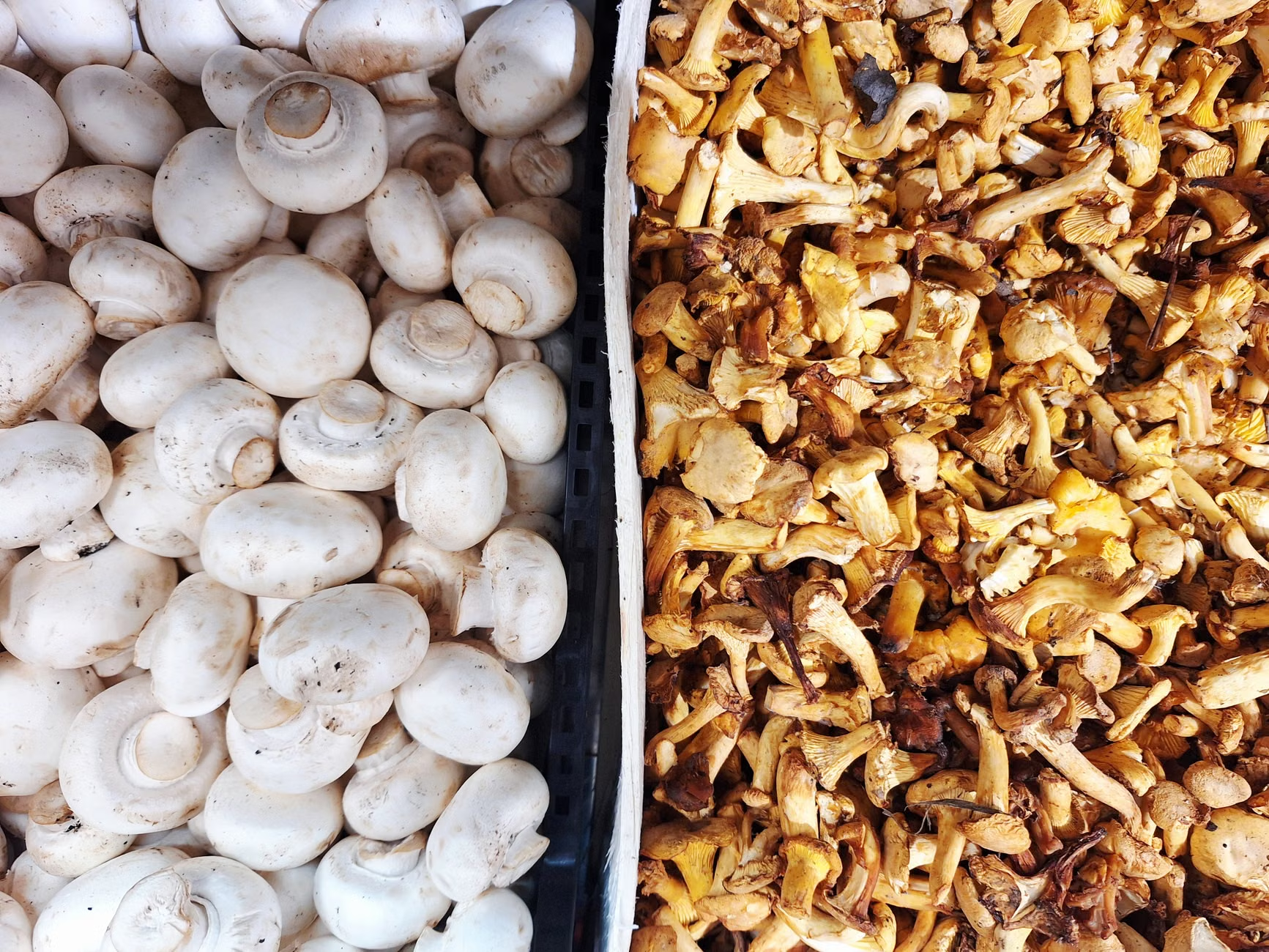
The Fungal Force: Why Mushrooms Are the New Styrofoam
When we talk about mushroom kitchenware, we aren’t talking about the cap or the stem you put in a risotto. We are talking about mycelium—the root-like network of fungal threads that grows underground. In a lab or a factory, companies like Ecovative are “growing” packaging and kitchen goods by feeding mycelium agricultural waste like corn husks or hemp hurds. The fungus acts as a natural glue, binding the waste into a solid, incredibly strong structure.
Why it matters for your kitchen: Mycelium is a natural insulator. If you have ever used those thick Styrofoam coolers for a family picnic or a grocery delivery, you know how effective they are and how much they suck for the environment. Mushroom-based coolers and “grown” bowls are now being used to replace these. They are naturally fire-resistant, water-resistant (to an extent), and—most importantly—they contain zero VOCs (volatile organic compounds).
In real life, this looks like a lightweight, earthy-textured bowl or tray. It feels a bit like a cross between cork and heavy cardstock. For a parent, the “what it is” is simple: it’s a sturdy, biodegradable vessel. The “what it does” is better: it provides a safe, non-toxic surface for dry goods or short-term food contact. However, a common mistake is assuming these are “forever” dishes. Most current mycelium kitchenware is designed for semi-permanent use. You can use a mycelium tray for months, but if you leave it soaking in the sink for three days, it will begin its journey back to the earth. That is a feature, not a bug, but it requires a shift in how we treat our “disposables.”
Seaweed and Algae: The End of Cling Wrap Guilt
Seaweed is perhaps the most promising bio-material for the “daily friction” of parenting. Think about how much plastic wrap you use for half-eaten apples, cheese blocks, or leftover sandwiches. Most of that wrap is LDPE (Low-Density Polyethylene), which is almost never recycled. Enter seaweed-based films. Companies like Notpla are creating “plastic” from brown seaweed and plants that is so natural you can actually eat it.
Seaweed grows up to a meter a day, doesn’t need fresh water or fertilizer, and actively de-acidifies the ocean. From a research perspective, it is the “gold medalist” of sustainable sources. In the kitchen, this material is appearing as flexible films and small “sachets” for liquids like oils or sauces. What it looks like in real life: You might buy a box of seaweed-based wraps that look and feel like slightly thicker, non-sticky plastic wrap. You use the warmth of your hands to seal it over a bowl, much like beeswax wraps, but without the lingering scent of honey or the difficulty of cleaning wax.
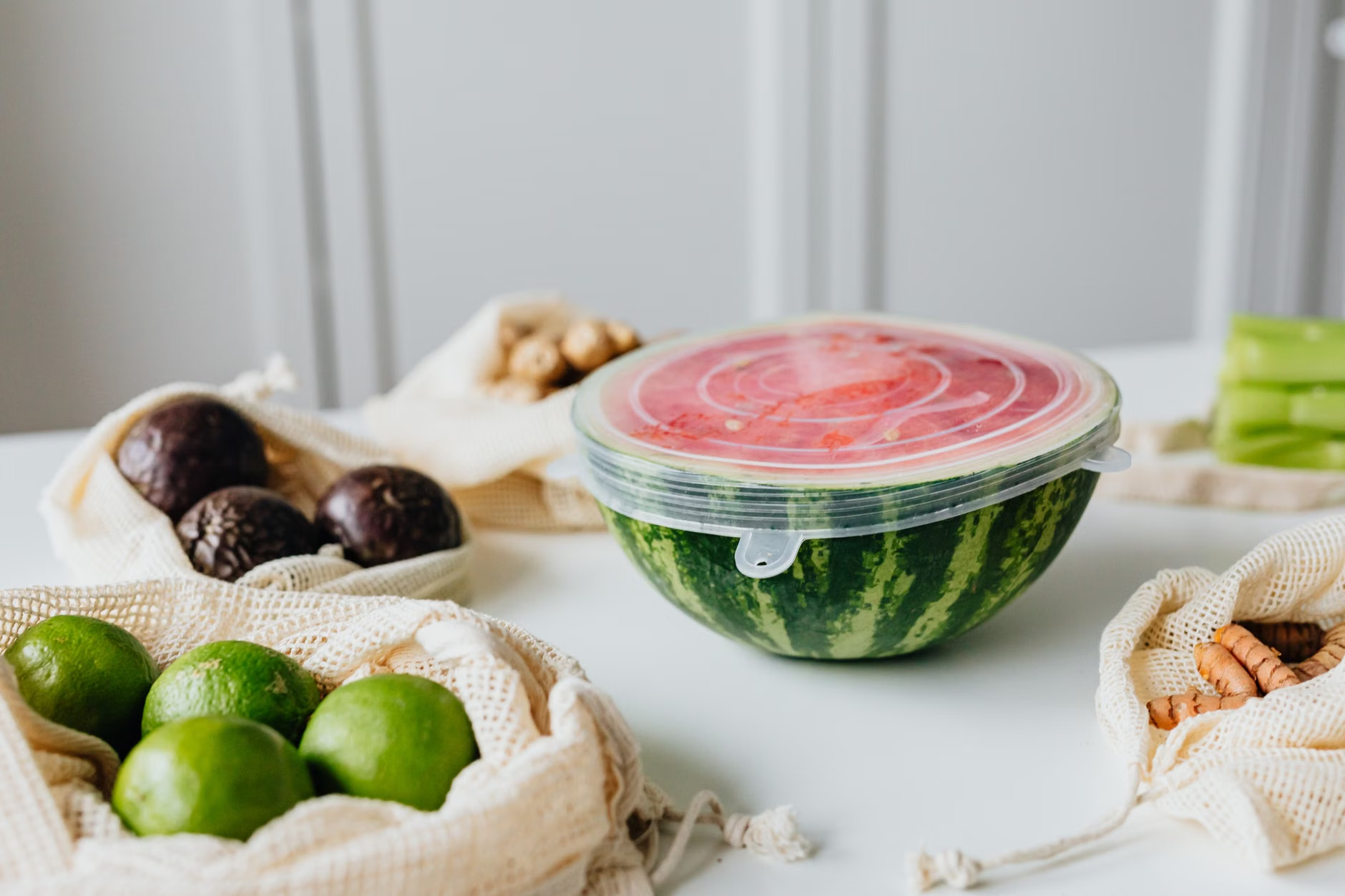
The trade-off here is hygroscopy. Seaweed-based materials love water. If you live in a very humid climate, these wraps can become “tacky” if left out. The practical next step for a reader is to start small: replace your single-use snack bags with seaweed-based versions. They are perfect for dry snacks like crackers or grapes, but maybe don’t use them for a juicy watermelon slice unless you plan to eat it within the hour.
Agricultural Waste: Turning Rice Husks and Coffee into Plates
For the “daily driver” plates and cups—the ones that need to survive the dishwasher—we look to bio-composites. These are made by taking waste products like rice husks (the outer shell of rice grains), coffee grounds, or pineapple leaf fibers and binding them with a bio-resin (often PLA or PHA derived from corn starch).
This is where the 30s and 40s demographic finds the most utility. These items look and feel like high-quality plastic or melamine but are often BPA-free and melamine-free. The hidden cost or variable here is the resin. If a “rice husk” plate is 50% rice husk and 50% traditional plastic, it’s not really a bio-material; it’s just plastic with filler. You want to look for 100% bio-based certifications (like USDA BioPreferred or TUV Austria’s OK Biobased).
| Material Type | Best For… | Durability | Disposal Method |
|---|---|---|---|
| Mushroom Mycelium | Insulated bins, dry trays, gift packaging. | Low to Medium (Single-season). | Home Compost (45 days). |
| Seaweed Film | Wrapping leftovers, snack pouches. | Low (Single-use or limited). | Edible or Home Compost. |
| Rice Husk / Coffee | Daily plates, toddler cups, coffee mugs. | High (Multi-year). | Industrial Compost. |
| Pineapple Fiber | Textured placemats, coasters, bowls. | Medium (Washable). | Home Compost. |
If you are choosing between these, the Rice Husk option is usually the most practical for parents. It is incredibly dense, doesn’t stain as easily as pure plastic, and can handle the high heat of a dishwasher (though always check the bottom for the “dishwasher safe” symbol, as some bio-resins can warp at extreme temperatures).
The Science of Safety: Why Parents are Switching
The primary driver for parents in their 30s and 40s isn’t just “saving the turtles”—it’s the growing body of research on microplastics and endocrine disruptors. Recent studies have shown that heating food in plastic containers can release billions of nanoplastic particles. For a developing child, the concern is that these particles can mimic hormones, leading to developmental issues.
Bio-materials like mycelium and seaweed are fundamentally different at a molecular level. They are made of chitin (in mushrooms) or cellulose/alginate (in plants and seaweed). When these break down, they don’t leave behind persistent micro-polymers. They leave behind organic matter that soil microbes recognize as food.
A common misconception: Many people think “BPA-Free” means “safe.” In reality, many manufacturers just swapped BPA for BPS or BPF, which may have similar effects. Switching to a material that was literally grown in a lab from a fungus or an alga removes that chemical “shell game” entirely. However, you must be careful with “bamboo” plates. Many were recently banned in the EU because they used a melamine-formaldehyde resin to bind the bamboo fibers together, which leached into hot food. The rule of thumb: If it looks too much like smooth, shiny plastic, ask what the binder is. If it’s melamine, put it back.
The Durability Test: Can It Survive a Toddler?
Let’s talk about the “gravity test.” If a ceramic plate falls, it shatters. If a plastic plate falls, it bounces. Where do bio-materials land?
Mushroom mycelium is surprisingly shock-absorbent. It’s why it’s being used to replace Styrofoam for shipping wine bottles and electronics. If a child drops a mycelium bowl, it won’t shatter; it might just get a small dent. However, it is lightweight, so it can fly quite far.
Rice husk and coffee composites are the heavyweights. They have a density similar to heavy ceramic but with the flex of a polymer. In a realistic scenario, a rice husk plate can survive hundreds of drops onto a hardwood floor. The “wear and tear” usually shows up as a slight fading of the matte finish over several years, rather than cracking or chipping.
What the reader should do: If you are transitioning, start with the “high-impact” items. Replace the kids’ cereal bowls and your morning “to-go” coffee cup with bio-composites. These are the items most likely to be dropped or heated, where the benefits of bio-materials are most pronounced.
Identifying Greenwashing: How to Read the Labels
As this trend grows, so does the marketing fluff. You will see “Bio-based,” “Biodegradable,” and “Compostable” used interchangeably, but they mean very different things for your kitchen and your waste bin.
- Bio-based: This just means the material came from a living thing (like corn). It does not mean it will biodegrade. Some bio-based plastics are designed to be chemically identical to regular plastic so they last forever.
- Biodegradable: A mostly useless term without a timeframe. A lead pipe is “biodegradable” if you wait 10,000 years. Avoid products that use this word without a specific certification.
- Compostable (Home vs. Industrial): This is the big one. If a plate is “Industrially Compostable,” you cannot put it in your backyard bin. It needs the 140-degree heat of a city-scale facility to break down. If you don’t have a green bin program in your city, that “eco-friendly” plate is just going to sit in a landfill for decades.
One overlooked variable: The “Forever Chemicals” (PFAS) often found in molded fiber plates (like the “eco” bowls at fast-casual restaurants). To make paper or fiber hold liquid without getting soggy, manufacturers often add a grease-resistant coating of PFAS. True bio-materials like pure mycelium or seaweed-coated paper avoid this, but you should always look for “PFAS-free” on the label of any fiber-based kitchenware.
The Financial Reality: Is It Worth the Premium?
Right now, you will pay a 20% to 50% “green premium” for high-end bio-material kitchenware. A set of four rice husk plates might cost $35, compared to $15 for a cheap plastic set at a big-box store.
However, consider the Life Cycle Cost. If you are replacing plastic plates every two years because they get scratched, stained, or warped in the dishwasher, a durable bio-composite that lasts five to seven years is actually cheaper. Furthermore, the “hidden cost” of health—reducing exposure to microplastics—is an investment that many parents in their 30s and 40s are now prioritizing over pure bottom-line savings.
Decision Rule: If the item is for “long-term daily use” (plates, cups), spend the extra money on high-quality rice husk or coffee composites. If the item is for “short-term convenience” (wraps, snack bags), look for the cheapest seaweed-based options, as these are becoming price-competitive with high-end silicone or beeswax alternatives.
How to Dispose of Bio-Materials Properly
The biggest mistake people make is “wish-cycling”—putting bio-materials into the blue recycling bin. Bio-materials are the enemy of plastic recycling. If a seaweed bag gets into a batch of PET plastic recycling, it can ruin the entire “cook,” making the resulting recycled plastic weak and useless.
- Mushroom Mycelium: Break it into small pieces and toss it into your garden or backyard compost. It’s basically fertilizer.
- Seaweed Wrap: If it’s clean, you can actually dissolve it in warm water and pour it on your plants. If it’s dirty, put it in the compost.
- Bio-composites: These are the tricky ones. Check the brand’s website. Many, like Huskee (coffee grounds), have “closed-loop” programs where you can mail the cup back to them at the end of its life to be ground up into new cups.
The Future: Grown Kitchens
We are moving toward a “circular” kitchen. In the next five to ten years, we may see 3D printers in our homes that use algae-based filaments to “print” a bowl when we need one, and then we simply toss it in the compost when we’re done. For now, the transition is happening through the products we choose to buy today.
By choosing a mushroom-grown cooler for your next family camping trip or switching to seaweed wraps for the kids’ lunches, you aren’t just following a trend. You are participating in a fundamental shift in human chemistry—moving away from the age of petroleum and back to a partnership with the natural world. It’s a bit more expensive, and it requires a little more attention to disposal, but for a generation of parents trying to do better, it’s a trade-off that finally makes sense.
Official Source for Bio-material Standards: TUV Austria OK Compost & Biobased Certifications
Research on Microplastics in Kitchenware: ACS Environmental Science & Technology – Release of Microplastics from Plastic Containers
Frequently Asked Questions
1. Do mushroom bowls smell like mushrooms or dirt?
No. During the manufacturing process, the mycelium is heat-treated (dried), which kills the fungus and stops the growth. This process removes any “earthy” smell, leaving the material neutral and scent-free. It won’t affect the taste of your food.
2. Can I put seaweed wraps in the microwave?
Generally, no. Seaweed-based films are designed for cold or room-temperature storage. Because they are often water-soluble or sensitive to high heat, they will likely melt or dissolve if microwaved. Stick to glass or high-heat certified bio-composites for the microwave.
3. Are these materials safe for kids with mushroom or seafood allergies?
This is a vital question. For mushrooms, the mycelium used (usually Ganoderma lucidum or Pleurotus ostreatus) is different from culinary mushrooms, but the proteins can remain. Most manufacturers claim the heat treatment denatures the proteins, but if your child has a severe allergy, consult a doctor first. For seaweed, it is generally considered safe as it is a different kingdom from shellfish, but always check if the seaweed was harvested in waters where shellfish are present (cross-contamination).
Final Takeaway: Start by replacing your most-used “disposables” with seaweed or mycelium alternatives, and swap your children’s plastic dinnerware for rice husk or coffee-based composites. It is the most effective way to reduce microplastic exposure while supporting a truly sustainable manufacturing cycle.