The “Rail-First” strategy is the single most effective way to eliminate the logistical chaos of family travel, turning the journey from a stress-inducing hurdle into a genuine part of your vacation. By prioritizing train travel over air or road transit, you trade the frantic environment of airports and the physical exhaustion of long-haul driving for a space where your family can actually move, eat, and relax together.
- Predictability over Speed: Train travel minimizes the “airport tax” of security lines and boarding delays, providing a fixed, reliable schedule that allows for easier nap and meal planning.
- The Physical Advantage: Unlike cars or planes, trains offer the freedom of movement—the ability to walk to a cafe car, use a spacious restroom, and sit at a table—which is essential for children’s emotional regulation.
- Door-to-City-Center Efficiency: By arriving in the heart of the city, you bypass the expensive and time-consuming airport-to-hotel transfers, often saving 2–3 hours of total travel time.
Why the Airport Experience is Failing Modern Families
If you are in your 30s or 40s, you likely remember a time when flying was merely an inconvenience. Today, it has become a high-stakes logistical operation. For a family, the “airport experience” isn’t just the flight; it’s the three hours of pre-flight stress: the liquid restrictions, the shoe-removing security theater, the frantic race to the gate, and the inevitable “gate check” of your stroller. By the time you board the plane, you are already exhausted.
The core problem is the asymmetry of effort. You are expending maximum energy during the most vulnerable parts of the journey—the transit—leaving you with a “travel hangover” that takes 24 to 48 hours to recover from once you reach your destination. This is where the Rail-First strategy fundamentally changes the math. When you choose the train, you aren’t just choosing a different vehicle; you are choosing a different philosophy of movement.
Consider the average transit cycle for a family of four flying between two major European cities. Between arriving at the airport two hours early, the flight itself, deplaning, baggage claim, and the taxi ride to the city center, you are looking at a six-to-seven-hour commitment. On a high-speed train, that same journey is often four hours, door-to-door, with zero security lines and the ability to bring your own snacks without a 100ml liquid limit.
The Anatomy of the Rail-First Strategy
Adopting a Rail-First strategy doesn’t mean you never fly again. It means that whenever a rail alternative exists within a five-to-six-hour radius, you default to the train. This creates a decision-making framework that removes the “should we drive or fly?” debate every time you plan a trip.
1. The Logistics of “Station-to-Station”
The greatest hidden cost of air travel is the “last mile.” Airports are almost universally located on the outskirts of metropolitan areas. Trains, however, are historical anchors of city centers. When you arrive at a central station, you are usually steps away from public transit, taxis, or even your hotel. This eliminates the need for expensive car seats in rental vehicles or the anxiety of navigating unfamiliar highways after a long day of travel.
2. Freedom of Movement as a Parenting Tool
If you have ever tried to keep a toddler contained in a middle seat for three hours, you understand the psychological toll of air travel. On a train, the environment is dynamic. You have the freedom to walk the length of the train, visit the cafe car, or simply let your children move around the carriage. This physical freedom is the single biggest factor in reducing mid-travel meltdowns.
In our experience monitoring travel trends, the most successful families utilize the “table seat” configuration. By booking seats facing each other with a table, you create a “home base.” This allows for coloring, snacks, or even a laptop workspace for parents, transforming the commute into a functional living space.
Comparative Analysis: The Real Costs of Travel
It is a common misconception that flying is always cheaper. While low-cost carriers often show lower base fares, they rarely account for the “hidden multipliers” of family travel. The table below illustrates the typical breakdown for a family of four traveling 500km.
| Cost Factor | Air Travel | Rail-First Strategy |
|---|---|---|
| Base Ticket Price | Moderate | Moderate to High |
| Baggage Fees | High (Per Bag) | Usually Included/Free |
| Airport Transfer | Expensive (Taxi/Train) | Minimal (Walking/Local) |
| Meal/Drink Costs | High (Airport Prices) | Low (BYO Allowed) |
When you add the costs of airport transfers, baggage fees, and the premium for “convenience food” at the terminal, the price gap often narrows significantly. The Rail-First strategy is not just about the ticket price; it is about the total cost of the travel day. When you factor in the value of your time and the reduction in stress-related spending (like buying expensive airport meals or last-minute items), rail often comes out ahead.
Executing the Strategy: A Step-by-Step Guide
Transitioning to a Rail-First lifestyle requires a shift in how you use travel planning tools. Most general aggregators are optimized to push flight results to the top. To effectively implement this, you must change your workflow.
Step 1: The Six-Hour Rule
Establish a hard rule for your household: If the destination is within a six-hour train ride, the train is the default. Do not even look at flight prices. This removes the “analysis paralysis” that happens when you try to weigh the pros and cons of every single trip. By setting a hard boundary, you simplify your decision-making process significantly.
Step 2: Leveraging Booking Platforms
Use regional rail aggregators rather than general travel sites. In Europe, platforms like Trainline or Omio are excellent for cross-border travel, while national rail sites (like SNCF in France, DB in Germany, or Trenitalia in Italy) often provide the best pricing and seat selection. Always book seat reservations in advance, specifically looking for “family areas” or “quiet carriages” depending on the age of your children.
Step 3: Managing the Luggage
The biggest hurdle for parents is the “luggage trap.” Because trains are more generous with baggage, it is tempting to overpack. Don’t. The Rail-First strategy relies on mobility. If you have to carry it, you have to manage it on the platform. Invest in high-quality, lightweight suitcases that can be navigated with one hand while you hold a child’s hand with the other.
Common Pitfalls and How to Avoid Them
Even with the best intentions, rail travel can go wrong if you aren’t prepared. Here are the three most common mistakes we see parents make when switching to rail.
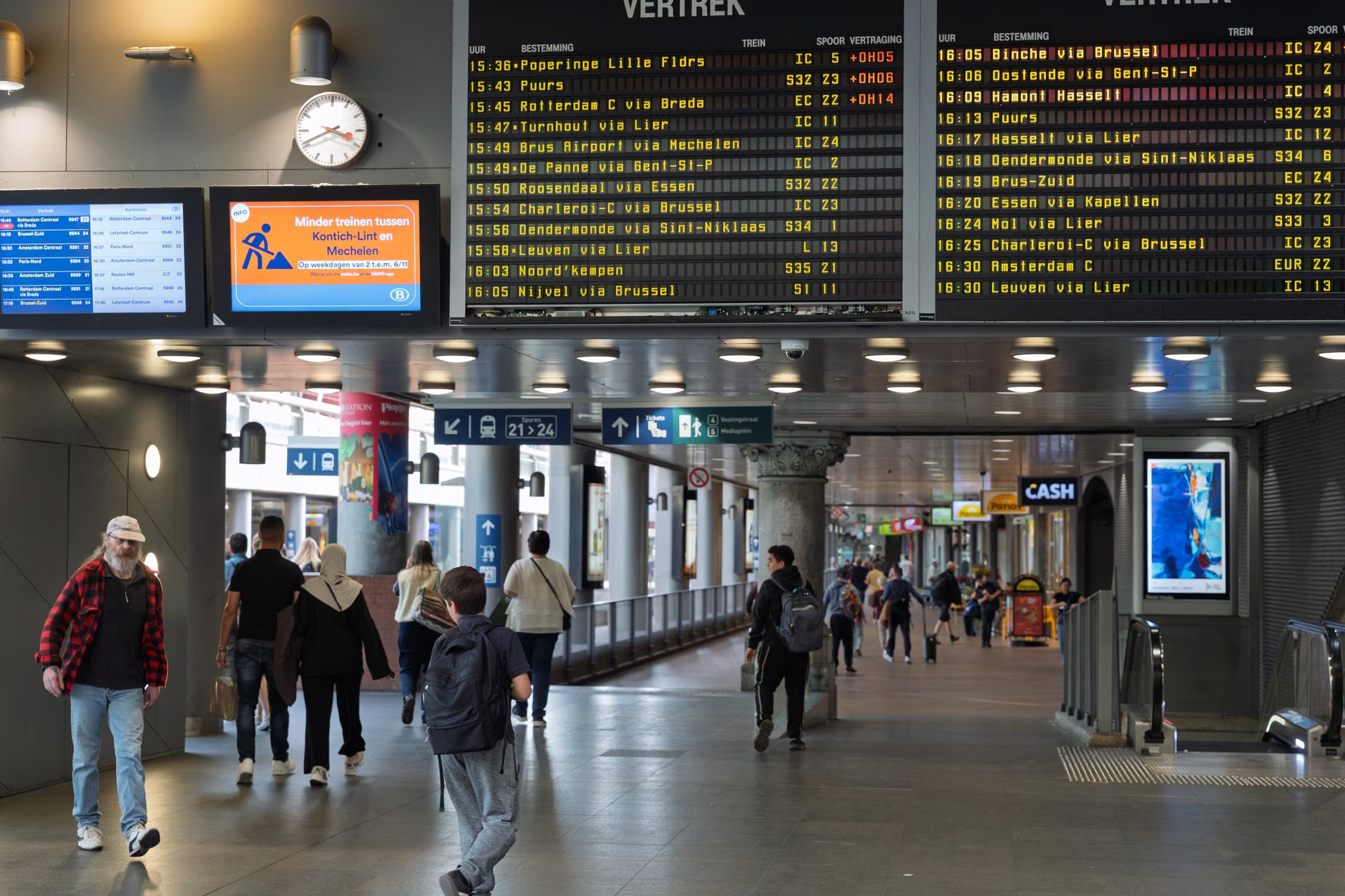
1. The Connection Trap: Do not book journeys with tight connections. Even though trains are generally reliable, a 15-minute transfer window is a recipe for disaster when you have a stroller and two kids in tow. Always aim for a minimum of 45 minutes between connecting trains. If you have to wait, it’s better to wait in a station with a cafe than to miss a train and be stranded.
2. Ignoring the “Station Map”: Large city stations can be labyrinthine. Before you depart, spend five minutes on Google Maps or the station’s official website looking at the layout. Know where the elevators are located. If you are traveling with a stroller, navigating stairs is your biggest enemy. Almost all major European stations have lift access, but it is rarely the most obvious route.
3. Underestimating the “BYO” Potential: One of the perks of rail is that you can bring your own food. Many parents fail to utilize this, relying on the station cafe. Pack a “travel picnic.” Having familiar, healthy food ready to go prevents the “hangry” meltdown that inevitably happens when a train is delayed or the cafe car is sold out of kid-friendly options.
The Hidden Value: Why Rail-First is a Parenting Hack
Beyond the logistics, there is an intangible benefit to the Rail-First strategy: the journey becomes part of the shared memory. When you fly, the experience is compartmentalized—you are “in transit,” waiting for the fun to start. On a train, you are together. You can look out the window at the changing landscape, play games, or simply talk without the noise of jet engines or the pressure to stay buckled in.
For parents in their 30s and 40s, who are often balancing demanding careers with the constant needs of young children, this forced downtime is a rare luxury. It is a moment where you are not expected to be doing anything other than sitting with your family. It is a slow-travel experience that, paradoxically, often gets you to your destination feeling more refreshed than a faster, more frantic flight would have.
Consider the environmental impact, too. While not the primary driver for most, it is a significant factor. Rail travel produces significantly fewer carbon emissions per passenger than short-haul flying. For families who are conscious of their footprint, this is a clear win that requires very little sacrifice in terms of comfort or time.
Deepening the Implementation: Advanced Tips for Rail Travel
Once you are comfortable with the basics, you can start optimizing your trips. Here are some advanced strategies to make the most of your rail-first approach.
Booking the “Family Area”
Many high-speed rail operators now offer dedicated “Family Areas” or “Play Coaches.” These are often located near the cafe car or have specialized seating arrangements. These carriages are specifically designed for noise and activity, which removes the social anxiety of worrying about your children disturbing other passengers. When booking online, look for carriage maps that indicate play areas or table-facing seating.
The Night Train Renaissance
For longer distances, consider the sleeper train. It is the ultimate productivity hack for family travel. You board in the evening, the kids go to sleep in a cabin, and you wake up in your destination city the next morning. You save the cost of a hotel night and arrive refreshed. While sleeper trains require booking well in advance, they are becoming increasingly popular across Europe and Asia.
Understanding Rail Pass Economics
If you are planning a multi-city trip, look at regional rail passes like the Eurail pass. However, do the math first. Sometimes individual “point-to-point” tickets booked in advance are significantly cheaper than a pass. Use a spreadsheet to compare the total cost of individual tickets versus the cost of a pass plus seat reservation fees. Remember that most passes require an additional fee for high-speed train reservations.
Addressing the Skeptics: Is it Really Faster?
The most common argument against the Rail-First strategy is speed. “But flying takes two hours, and the train takes five!” This is a classic example of the “speed illusion.” When you measure total travel time—from your front door to the hotel lobby—the gap is almost always much smaller than you think.
Take the London to Paris route, for example. Flying requires getting to Heathrow/Gatwick, clearing security, the flight, and getting from CDG to central Paris. This can easily take five to six hours. The Eurostar, however, takes roughly two hours and fifteen minutes, city-center to city-center. Even with the security check at the station, the rail option is almost always faster and significantly less stressful.
When you account for the “recovery time” after an exhausting flight, the rail option becomes even more efficient. You arrive in the city center ready to explore, not needing a nap or a long break to recover from the stress of the airport. The Rail-First strategy is about efficiency of experience, not just speed of transit.
The Future of Family Travel is Slow
As we move into an era where convenience is increasingly automated, the deliberate choice to travel by rail feels like a reclamation of time. It is a way to slow down the pace of life, even if just for a few hours. It allows you to see the world from the ground, passing through small towns and landscapes that you would otherwise only see from 30,000 feet.
If you are feeling overwhelmed by the prospect of your next family vacation, start by looking at a map. Identify the major rail lines connecting your city to your destination. Challenge yourself to try the train just once, even if it seems slightly less convenient on paper. You may find that the absence of airport stress, the freedom of the carriage, and the joy of a shared journey are worth more than the hour or two you might have saved by flying.
Travel is not just about the destination; it is about the transition. By choosing the train, you are choosing a transition that respects your family’s need for space, comfort, and connection. It is a small change in logistics that leads to a massive change in the quality of your vacation.
Frequently Asked Questions
Is the Rail-First strategy viable for families with infants?
Yes, and it is often much easier than flying. You don’t have to navigate security with a stroller, and you have the ability to move around if your infant is fussy. Most modern trains have changing tables in the restrooms, and you can bring as much baby gear (diapers, formula, etc.) as you need without worrying about liquid limits or baggage weight restrictions.
How do I handle food and drinks on long train journeys?
The beauty of the train is that there are no restrictions on what you bring. Pack a “travel picnic” with healthy snacks, sandwiches, and reusable water bottles. Most trains also have a cafe car, but relying on it exclusively can be expensive and risky if they run out of items. Bring enough to cover your family for the duration of the trip, plus a buffer for potential delays.
What if my train is delayed or cancelled?
Train delays can happen, but they are generally easier to manage than flight cancellations. Most rail operators have robust apps that provide real-time updates. If a train is cancelled, you are usually entitled to a seat on the next available train without paying extra. Keep your booking reference handy and download the official rail operator app for your route to receive instant notifications and alternative travel options.
For further information on planning your rail journey, you can visit official resources such as the Eurail Official Site for European travel or the Amtrak Official Site for North American routes. Always check your specific national rail operator’s website for the most accurate, up-to-date schedule and policy information.