- Heritage rail lines offer a predictable, rhythmic environment that minimizes the unpredictable sensory triggers often found in airports or high-speed hubs.
- Choosing “slow travel” via heritage trains allows for natural transitions, giving children with sensory processing differences time to acclimate to new environments.
- Planning your trip around off-peak heritage schedules significantly reduces auditory and visual clutter, ensuring a calmer experience for the entire family.
If you have ever tried to navigate a modern international airport with a child who struggles with sensory overload, you know the specific brand of exhaustion that follows. The flashing screens, the erratic announcements, the endless queues, and the sheer volume of humanity can turn a vacation into a battle of nerves before you even board the plane. For families where sensory regulation is a daily priority, the “fast” way to travel is often the most expensive in terms of emotional energy.
This is where the concept of “heritage rail” emerges as an unexpected hero for modern parents. We aren’t talking about your daily commute or the frantic dash of a high-speed intercity train. We are referring to preserved, historic, or scenic railway lines that focus on the experience of the journey rather than the speed of the arrival. These trains offer a slower pace, a predictable rhythm, and—crucially—a sensory environment that is far more manageable for children and adults who need a bit more control over their surroundings.
The Physics of Calm: Why Rhythmic Travel Matters
There is a fundamental difference between the sensory experience of a modern aircraft or a high-speed train and a heritage steam or diesel locomotive. To understand why this matters, we have to look at how the human nervous system processes movement and sound. Modern transportation is designed for efficiency; it is full of sharp accelerations, high-frequency engine whines, and sudden pressure changes. These are “noisy” inputs that keep the brain in a state of high alert.
Heritage rail, by contrast, operates at a lower, more consistent speed. The mechanical sounds of an older train are often lower in frequency—the rhythmic “clack-clack” of the wheels on the track, the deep chug of the engine, and the absence of high-pitched electronic beeps. For a child with auditory sensitivities, this low-frequency “white noise” can actually be grounding. It acts as a form of sensory regulation, helping to soothe the nervous system rather than agitating it.
Consider the difference in the boarding process. Modern air travel requires you to navigate security checkpoints, gate changes, and boarding groups—all of which are high-stress environments. A heritage railway station, particularly those in the UK, the US, or across Europe, often feels like stepping back in time to a quieter era. You can usually walk directly onto the platform. You have the time to settle into your seat, unpack your sensory toolkit, and allow your child to get used to the space before the train ever starts moving. This transition period is the secret weapon of the slow-travel movement.
Evaluating Your Sensory Needs: A Decision Framework
Before you book your next trip, it helps to categorize your family’s specific sensory triggers. Not every heritage train is a match for every family, and “sensory-friendly” is not a one-size-fits-all label. Use the following table to assess whether a heritage rail trip is the right move for your upcoming itinerary.
| Trigger Category | High-Speed Transit | Heritage Rail |
|---|---|---|
| Auditory | High, erratic, electronic beeps, loud PA systems. | Low, rhythmic, mechanical, predictable. |
| Visual | Bright LED lights, fast-moving scenery, chaotic crowds. | Natural light, slower vistas, fewer commuters. |
| Movement | Sudden acceleration, turbulence, rapid pressure changes. | Gradual build-up, steady cruising, smooth movement. |
If your child is primarily triggered by auditory overload, the heritage rail environment is almost always superior. However, if your child has a severe sensitivity to strong smells (like coal smoke or diesel fumes), you need to be strategic. Always opt for a closed carriage rather than an open-air observation car if you know that smoke or heavy wind will cause a sensory meltdown. This is a common oversight—the “romance” of the open-air train is a reality only if your child can tolerate the wind and soot.
Practical Steps to Planning a Low-Sensory Heritage Journey
Planning for a sensory-sensitive child is not about avoiding the world; it is about curating the environment so that the child can engage with the world on their own terms. When you decide to book a heritage rail experience, follow these four steps to minimize the “unknowns” that often lead to anxiety.
1. Scout the Rolling Stock
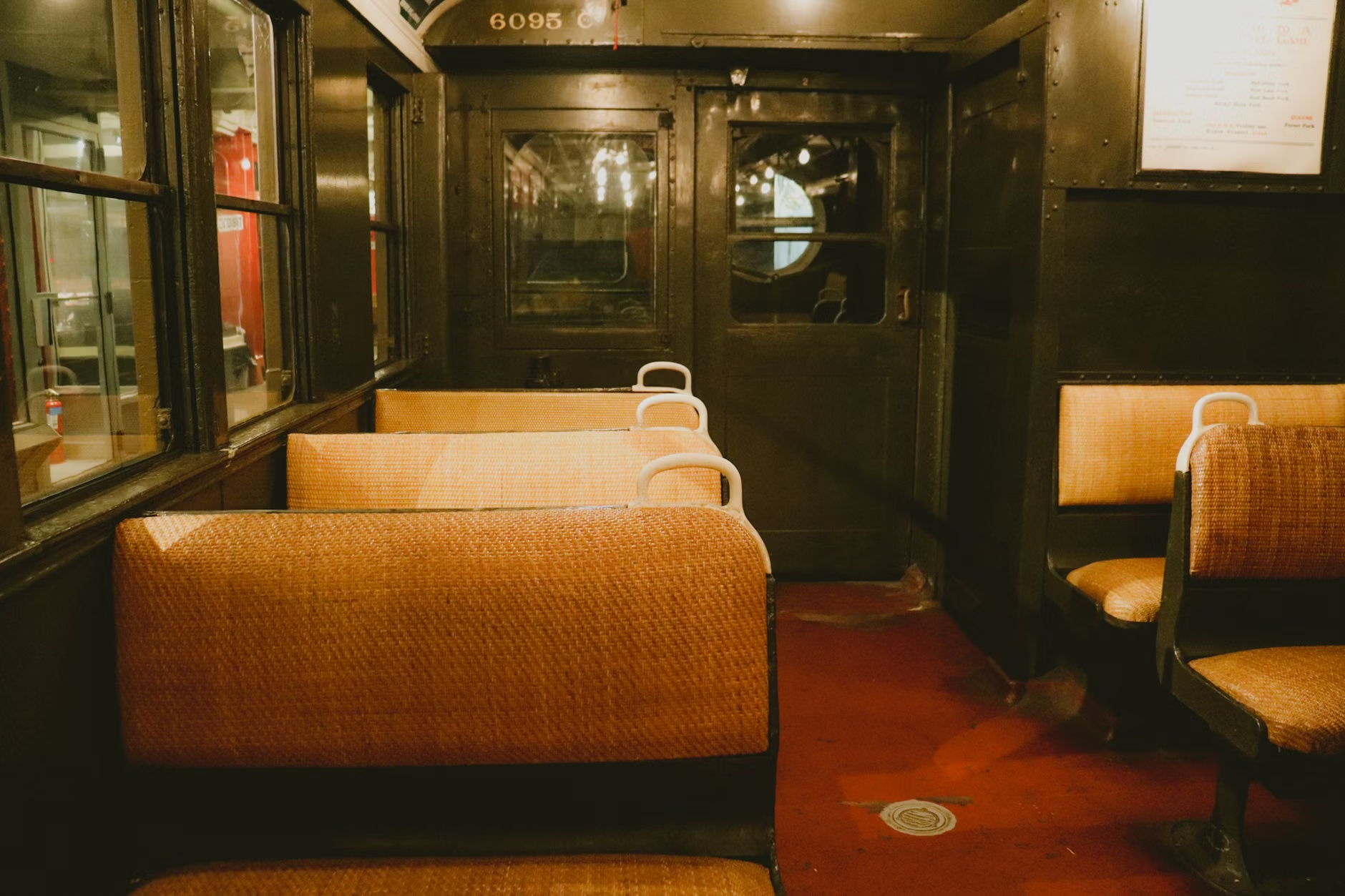
Most heritage railways have a website that details the specific type of carriages they run. Look for photos of the interiors. Are the seats fabric (which is often more sound-dampening) or vinyl? Is the seating arrangement “compartment style” (private rooms) or “open saloon” (all in one long car)? For a child who needs a “safe base,” a compartment-style carriage is gold. It offers a defined, private space that you can control, shielding you from the sensory input of other passengers.
2. Time Your Trip for the “Quiet Windows”
Heritage railways often operate on a schedule that peaks on weekends and holidays. If you can, target a Tuesday or Wednesday morning. You will often find yourself in a nearly empty carriage. This reduces the “people noise” and allows you to move between seats if your child needs a change of perspective. If you must travel on a weekend, book the first train of the day. The staff is fresher, the station is less crowded, and the morning air is usually quieter.
3. The “Pre-Visit” Strategy
If the railway is within a reasonable distance, visit the station on a non-travel day. Let your child see the train, hear the whistle from a distance, and touch the platform. Familiarity is the enemy of anxiety. If you cannot visit in person, use YouTube. Search for the specific railway name to find “cab view” or “passenger view” videos. Showing your child exactly what the experience will look like removes the fear of the unknown.
4. Curate Your Sensory Toolkit
Even on a calm train, you need your standard toolkit. This should include noise-canceling headphones (even if the train is quiet, they signal a “need for space” to others), a weighted lap pad, a favorite sensory toy, and a familiar snack. Do not rely on the train’s cafe car. Heritage train food is often limited to tea, coffee, and biscuits—hardly a reliable source of nutrition for a child with specific dietary needs or preferences.
Common Misconceptions About Heritage Travel
There is a persistent myth that heritage travel is purely for “train enthusiasts” or retirees. This couldn’t be further from the truth. In the UK, for instance, the Heritage Railway Association represents over 150 lines that are increasingly catering to families. They are not museums; they are functioning transport systems that provide a service to the community. By shifting your perspective, you can see these lines as a logistical asset rather than just a tourist attraction.
Another misconception is that heritage trains are “slow” and therefore a waste of time. In the context of modern parenting, “slow” is a feature, not a bug. When you travel at 20 or 30 miles per hour, the landscape becomes a series of comprehensible images rather than a blur. This is significantly easier for children to process. They have time to look at the cows, the trees, and the buildings without the disorientation of high-speed motion. It turns travel time into quality time, where you can actually talk, read, or look out the window together.
Finally, there is the concern about “reliability.” People often assume that because the equipment is old, it is prone to breaking down. While heritage railways are indeed old, they are maintained by some of the most dedicated engineering teams in the world. They are subject to rigorous safety standards, often exceeding those of modern commercial rail in terms of physical inspection frequency. You are not sacrificing safety for the sake of nostalgia.
While heritage rail is a fantastic option, it does come with specific trade-offs. The first is accessibility. Many older carriages were built before modern disability legislation (like the Americans with Disabilities Act or the UK Equality Act) became standard. You may encounter narrow doorways, steep steps, or platforms that are not level with the carriage floor. Before booking, call the railway’s office directly. Do not rely on the “accessibility” icon on a website; ask specifically: “How many steps are there to board the carriage?” and “Is there room for a folding wheelchair or stroller in the compartment?”
The second trade-off is the lack of “on-demand” connectivity. Heritage rail lines are often in rural areas where mobile signal can be spotty. If your child relies on a tablet for regulation or entertainment, ensure your content is downloaded offline. Do not count on streaming services. This is actually a blessing in disguise, as it forces a digital detox, but it requires preparation.
The third factor is the “weather dependency.” Many heritage railways use steam locomotives that are open to the elements in certain configurations. If you are traveling in autumn or winter, the carriages can be drafty. Pack layers. The heating in older train cars is rarely as precise as in a modern climate-controlled environment. Being cold is a major sensory trigger, so ensure everyone has comfortable, familiar blankets.

The Role of Sensory Regulation in Family Travel
For many families, the goal of a vacation is to “do things.” We pack our schedules with museums, parks, and dining experiences. However, for a neurodivergent child, the “doing” is often secondary to the “being.” If the child is not regulated, no amount of sightseeing will be enjoyable. Heritage rail is a masterclass in regulation.
The rhythmic motion of the train is a form of vestibular input—the sense of movement and balance. For children who seek movement to regulate, the gentle sway of a carriage can be deeply calming. For children who are overstimulated by fast movement, the steady, predictable pace provides a sense of security. You are essentially using the train as a moving therapy room. By the time you reach your destination, your child is likely to be more regulated and ready to engage with the world than they would have been after a frantic car ride or a stressful flight.
This is why we recommend building your entire day around the train ride. Instead of using the train as a means to get from point A to point B, make the train the primary destination. Spend the morning on the train, have a quiet picnic at the destination station, and take the return train in the afternoon. This eliminates the “hurry up and wait” dynamic that characterizes most family trips.
How to Choose the Right Line for Your Family
Not all heritage railways offer the same experience. Some are strictly “living history” experiences, where staff wear period costumes and act out roles. For a child who struggles with social predictability, this can be confusing or even frightening if the “characters” are too intense. Other lines are more functional and low-key.
When researching, look for “family-friendly” vs. “event-based” lines. Event-based lines (like those that host “Santa Express” or “Thomas the Tank Engine” days) are high-sensory experiences. They are loud, crowded, and often overwhelming. If you want a sensory-friendly experience, avoid these events. Stick to the standard, everyday service days. These are the days when the railway is just doing its job, providing a quiet, efficient, and beautiful way to travel through the countryside.
If you are based in the United Kingdom, the Heritage Railway Association provides a comprehensive map and guide to lines across the country. In the United States, the Heritage Rail Alliance serves a similar purpose. Use these databases to find lines that are within a two-hour drive of your home. Any further than that, and the stress of the car journey to the train station might negate the benefits of the train ride itself.
Managing Expectations and Handling the Unexpected
Even with the best preparation, things will go wrong. A train might be delayed, a carriage might be warmer than expected, or a child might have a sensory flare-up. The key to successful slow travel is the “exit strategy.”
Because heritage rail lines are shorter and more localized, you are never truly “stuck” in the way you are on a long-distance flight or an international train. If a child begins to struggle, you can often disembark at the next station. Most of these lines operate in a loop or a simple point-to-point, making it easy to find a taxi or a local bus back to your starting point. This knowledge—that you have an escape route—is often enough to lower the parent’s own anxiety, which in turn helps the child stay regulated.
Remember that you are not competing with other travelers. If you need to step into the vestibule (the area between carriages) to give your child some space, do it. If you need to spend the entire journey in the cafe car because it is quieter, do it. The beauty of heritage rail is that it is a community-focused experience. The staff and fellow passengers are usually more patient and understanding than those you would find on a commuter train. They are there for the experience, just like you.
Final Thoughts: Prioritizing Your Family’s Wellbeing
The shift toward slow travel is more than just a trend; it is a necessary pivot for families who need to prioritize their mental and sensory health. Heritage rail provides a unique structure that supports this. It replaces the chaos of modern transport with the rhythm of the past, offering a space where you can breathe, connect, and move at a pace that respects your child’s needs.
Start small. Don’t plan a cross-country rail expedition for your first trip. Choose a local, 45-minute journey. Test the waters. See how your child responds to the sights, sounds, and movements. You might find that this becomes your family’s favorite way to explore the world—not because it is faster, but because it is better suited to how you live.
Ultimately, the best travel experience is one where everyone arrives at the destination feeling like themselves. If that means taking the scenic route, watching the world go by from a wooden seat, and listening to the steady, reassuring hum of a historic engine, then that is the right way to travel.
Frequently Asked Questions
Are heritage trains actually safe for children with sensory processing differences?
Yes, in many ways, they are safer and more manageable than modern transit. The sensory environment is typically more predictable, with lower-frequency sounds and more consistent movement. However, always check the carriage type and avoid open-air cars if your child is sensitive to wind or soot, and ensure you have your own noise-canceling tools as a backup.
How do I know if a specific train line is accessible for my family?
Do not rely solely on website icons. Call the railway’s administrative office directly and ask specific questions about the number of steps at the platform, the width of the carriage doors, and the availability of space for strollers or sensory equipment. Most heritage railway staff are extremely helpful and will be honest about whether their current equipment can accommodate your specific needs.
What should I pack for a sensory-sensitive child on a heritage train?
Pack a dedicated “sensory kit” that includes noise-canceling headphones, a weighted lap pad, familiar snacks (as station food can be limited), and offline-accessible entertainment. Since heritage trains can be drafty or have inconsistent heating, dress the whole family in layers so you can adjust to the environment as needed throughout the journey.
For more information on planning your trip, visit the official resources for your region: The Heritage Railway Association (UK) and The Heritage Rail Alliance (US).