- Morning success is built the night before: 80% of morning stress originates from decisions that should have been made the previous evening.
- The 15-Minute Buffer Rule: Incorporating a non-negotiable “buffer zone” of quiet time prevents the adrenaline spike that ruins the parent-child dynamic before school.
- Visual Cues Over Verbal Commands: Children respond better to external visual systems (checklists) than to repeated verbal reminders, which typically trigger resistance.
The secret to a peaceful school-day morning isn’t waking up earlier; it’s about reducing the “decision load” that you and your child have to carry before the sun fully rises. If your current morning routine consists of a frantic series of commands—”Put your shoes on,” “Where is your homework?”, “Eat your breakfast”—you are already operating in a deficit. The “Gentle-Transition” ritual is a framework designed to replace reactive chaos with proactive systems, turning the morning from a race against the clock into a predictable, low-friction sequence of events.
Why Your Current Morning Routine is Likely Failing
Most parents operate under the misconception that “being faster” is the solution to morning stress. If you’re rushing, you assume you just need to shave five minutes off breakfast or speed up the dressing process. However, research into cognitive load theory suggests that the human brain, especially a developing one, has a limited budget for decision-making. When a child wakes up and is immediately confronted with a dozen micro-decisions—what to wear, where their bag is, what they want for breakfast—they hit “decision fatigue” before they’ve even left the house.
For parents in their 30s and 40s, this is compounded by the “parental command cycle.” You aren’t just managing your own morning; you are acting as the executive function for your child. When you repeat yourself, your cortisol levels rise, and your child’s brain often shifts into a defensive, resistant mode. The goal of the Gentle-Transition is to shift that executive function from you (the parent) to the system (the routine).
1. The Night-Before Audit: Eliminating Morning Friction
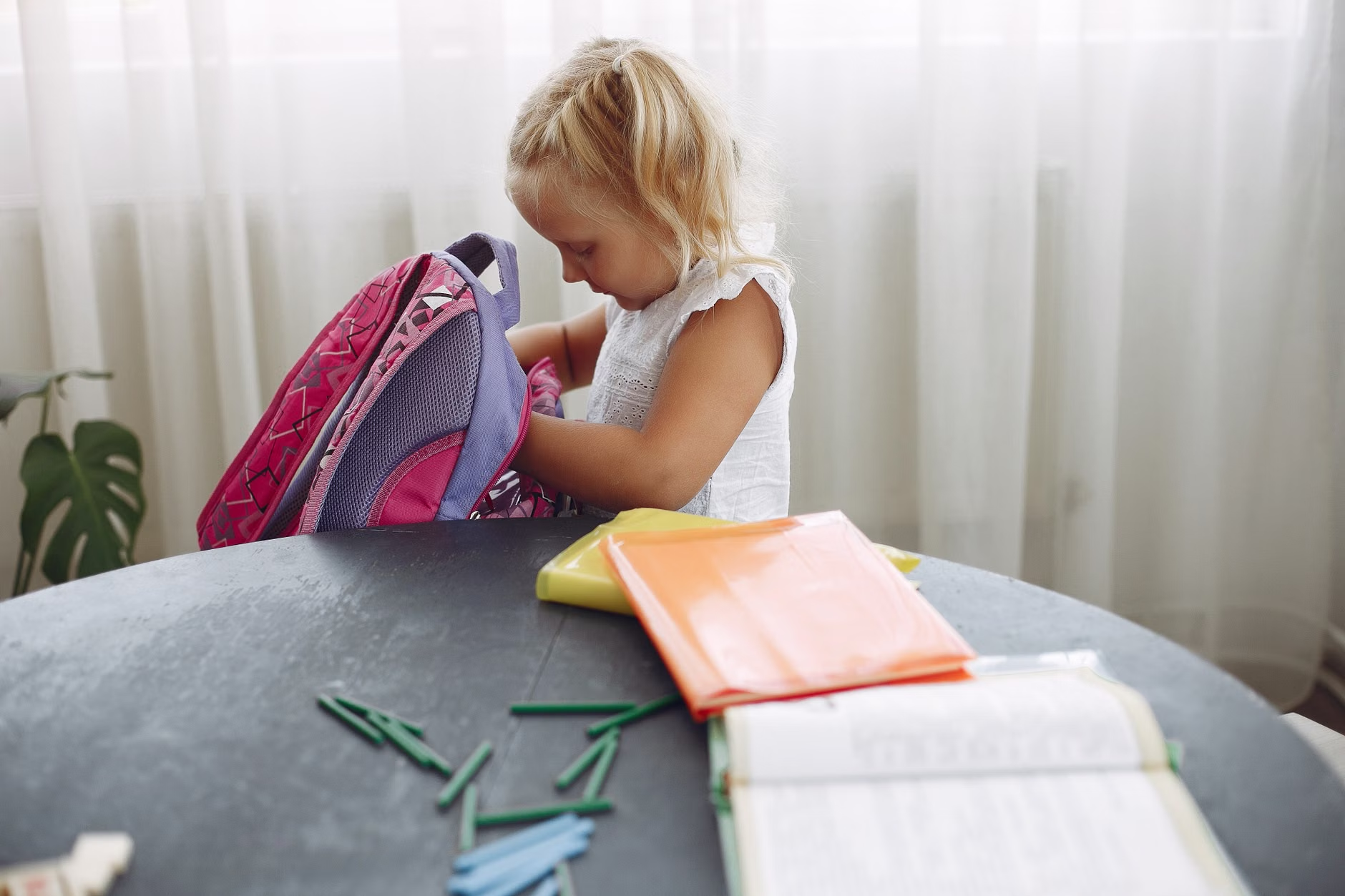
The most critical component of a smooth morning happens between 7:00 PM and 9:00 PM the night before. This is the “Audit Phase.” If you are searching for a lost permission slip or hunting for a matching sock at 7:15 AM, you have already lost the battle. The Audit is not about perfection; it is about visibility.
Start by creating a “Launch Pad.” This is a designated physical space near your front door where every single item needed for the next day—backpacks, coats, lunchboxes, and shoes—is placed before the household goes to sleep. If an item isn’t in the Launch Pad, it doesn’t exist for the purposes of the morning. This physical boundary creates a psychological trigger for the child: “If it’s here, I’m ready.”
The “Two-Choice” Rule
One of the biggest time-sinks in the morning is the wardrobe debate. To bypass this, implement the “Two-Choice” rule. The night before, allow your child to choose between two pre-selected outfits. This gives them agency (avoiding the morning power struggle) while keeping the options limited enough to prevent analysis paralysis. For parents, this means you aren’t checking the weather forecast or the school dress code while simultaneously trying to pour coffee.
2. Implementing the Visual Command Center
Human beings, particularly children, are visually oriented. When you tell your child, “Hurry up and get ready,” the instruction is vague and easily ignored. A visual checklist, however, is an external authority. It removes you from the role of “the nag” and places you in the role of “the facilitator.”

Create a simple, laminated checklist or a whiteboard with 5-6 core tasks: Dress, Breakfast, Teeth, Pack Bag, Shoes, Go. Place this at the child’s eye level. The rule is simple: if the child asks, “What do I do next?”, you simply point to the chart. You are no longer the source of the pressure; the chart is. This subtle shift in power dynamics is profound. It reduces the frequency of “I forgot” or “I didn’t know” as excuses, because the information is permanently displayed.
Common Mistake: The Over-Complicated Chart
Many parents make the mistake of creating a 20-step checklist that includes “make bed,” “feed cat,” “water plants,” and “practice piano.” While these are good habits, they don’t belong in the morning rush. Keep the list limited to the “Must-Haves” to leave the house. If you add too much, the system becomes overwhelming, and the child will abandon it entirely.
3. The 15-Minute Buffer Zone: The Science of Calm
We often try to optimize our mornings by waking up at the absolute last possible second. This is a physiological error. When you wake up and immediately have to start a task, your body releases a spike of cortisol—the stress hormone. This “morning cortisol awakening response” is perfectly natural, but when it is coupled with high-stakes tasks like getting kids to school, it triggers a “fight or flight” state. This is why you feel irritable or impatient by 8:00 AM.
The Gentle-Transition requires a 15-minute “buffer zone.” This is time that is strictly for non-essential activities. No packing bags, no checking emails, no shouting about socks. It is for a slow breakfast, reading a book, or simply sitting in the quiet. This window acts as a circuit breaker for your nervous system. By starting the day in a state of relative calm, you increase your capacity to handle the inevitable “morning surprises”—like a spilled glass of milk or a last-minute realization that a homework folder is missing.

4. Managing the “Morning Surprise” Variables
No matter how perfect your routine is, something will go wrong. The key isn’t to prevent all problems—which is impossible—but to build “resilience protocols.” These are pre-decided responses to common disruptions.
| The Problem | The Protocol |
|---|---|
| Child refuses to eat breakfast | Have a “Go-Bag” breakfast (e.g., apple, granola bar, yogurt drink) ready. Do not engage in a power struggle; move to the next item. |
| Lost shoes/equipment | The “1-Minute Search Rule.” If it isn’t found in 60 seconds, use a backup (e.g., spare sneakers) and deal with the lost item after school. |
| Emotional meltdown | The “Validate and Pivot.” Acknowledge the emotion briefly, then move to a physical activity (e.g., “I know you’re upset, but we need to put on our shoes now. Let’s race to see who gets them on first.”) |
The table above highlights that the goal is to maintain momentum. When a crisis occurs, the “Protocol” allows you to act decisively without re-evaluating the entire situation in the heat of the moment.
5. The “Departure Ritual” and Closing the Loop
The end of the morning is just as important as the beginning. Many families end their mornings with a chaotic scramble to get out the door, which leaves both parent and child feeling frazzled. Create a “Departure Ritual.” This could be a specific song you play, a quick check of the “Launch Pad,” or a consistent goodbye phrase.
The ritual serves as a psychological signal that the “Morning Phase” is over and the “School Phase” has begun. It’s a moment of closure. If you leave the house in a state of hurry, that energy carries over into the child’s arrival at school and your arrival at work. If you leave with a calm, deliberate ritual, you set a different tone for the rest of the day.
Refining the System Over Time
Don’t expect the Gentle-Transition to be perfect on day one. Treat the first two weeks as a “beta test.” Every Friday, have a brief, low-pressure conversation with your children. Ask: “What part of the morning felt the most stressful this week?” Their feedback might surprise you. Perhaps they hate the breakfast you’re serving, or maybe they feel rushed during the toothbrushing stage. Adjust the system based on their input. When children help design the routine, they are significantly more likely to follow it.
Advanced Considerations: The Hidden Costs of Efficiency
While the goal is efficiency, be careful not to optimize the humanity out of your morning. The Gentle-Transition is meant to be gentle, not robotic. If you find that your “system” is making you feel like a taskmaster rather than a parent, it is time to recalibrate. The ultimate goal is connection. If you have to sacrifice 10 minutes of “perfect process” to have a meaningful five-minute conversation, do it. The system exists to serve the relationship, not the other way around.
Furthermore, consider the “Biological Reality” of your child. Some children are naturally slow-movers in the morning. If your child is a “slow-waker,” forcing them into a high-speed routine will only cause friction. Adjust the wake-up time or the evening routine to accommodate their natural rhythm. There is no “one size fits all” in parenting, but the principles of reducing decision fatigue and using visual systems are universally applicable.
Understanding the Data: Why Routine Matters
According to the American Academy of Pediatrics (AAP), consistent routines are linked to better emotional regulation and academic performance in school-aged children. When a child knows what to expect, their brain doesn’t have to spend energy predicting the next event. This “predictability” is the foundation of security. When you provide a consistent morning structure, you are not just saving time; you are providing your child with the psychological safety they need to focus on learning rather than navigating home-life stress.
For parents, the benefits are equally significant. A study published in the Journal of Family Psychology noted that parents who have a structured morning routine report lower levels of daily stress and higher reported satisfaction with their parenting roles. The act of “leading” the routine, rather than “responding” to the chaos, gives you a sense of agency that carries through the entire day.
Final Thoughts: The Power of Consistency
The Gentle-Transition is not a quick fix; it is a lifestyle shift. You will have days where the system breaks down. You will have days where you oversleep, the car won’t start, or the child has a meltdown. That is okay. The goal is not to eliminate all stress, but to build a robust system that can withstand the inevitable bumps in the road. By focusing on the night-before preparation, visual cues, and the buffer zone, you are investing in a more peaceful, connected, and functional family life.
Start small. Don’t try to overhaul your entire morning tomorrow. Pick one element—perhaps the “Launch Pad” or the “Visual Checklist”—and implement it for a week. Once that becomes second nature, add the next layer. Consistency is the engine of change. Stay the course, keep it simple, and remember that the goal is a gentle start, not a perfect one.
Frequently Asked Questions
Q: My child is a teenager; does this system still work for them?
A: Absolutely. While the visual checklist might look different (perhaps it’s a shared digital calendar or a simple list on their phone), the core principles remain. Teenagers actually benefit more from the “Launch Pad” concept because it allows them to take full ownership of their morning preparations, which is a critical step toward independence. Focus on the outcome—being ready to leave—rather than the specific mechanics of how they get there.
Q: What if I have multiple children with different morning speeds?
A: This is common. The trick is to avoid “grouping” them into a single speed. Give the slower child a slightly earlier “start time” (e.g., wake them up 10 minutes earlier) so they don’t feel the pressure of their faster sibling. Use individual checklists for each child, tailored to their specific needs and struggles. The goal is to ensure both children arrive at the “Departure Ritual” at the same time, without the faster child feeling bored and the slower child feeling rushed.
Q: How do I handle weekends? Should we maintain the same routine?
A: You don’t need to maintain the same strict timing, but keeping the “spirit” of the routine is beneficial. Even on weekends, having a loose structure—like getting dressed before breakfast—helps maintain the habit-loop. However, use the weekend to “recharge” the system. Re-organize the Launch Pad, clear out the backpacks, and prepare for the coming week. This prevents the “Sunday Scaries” and makes Monday morning significantly easier.
For further reading on building healthy family habits and managing stress, visit the official resources at: