- The Energy Audit Rule: Your morning routine should be measured by “energy cost” rather than just time. Identify tasks that drain your decision-making capacity before 9:00 AM.
- The 80/20 Friction Reduction: 80% of morning chaos stems from 20% of repetitive decision-making tasks. Automating these small choices (outfits, breakfast, bag packing) preserves your cognitive bandwidth.
- The “Buffer Zone” Strategy: A successful routine isn’t about fitting more in; it is about creating a 15-minute “transition buffer” that protects you from the ripple effects of minor morning mishaps.
Most parenting advice focuses on “time management,” but that is a trap for anyone living in the real world. You can have a perfectly timed schedule, yet still feel completely depleted by 8:30 AM. The problem isn’t your clock; it is your Parental-Energy Budget. Every decision you make—from choosing which socks your toddler wears to deciding what to pack for lunch—is a withdrawal from a finite account of cognitive energy.
If you wake up and immediately start spending that budget on low-value decisions, you are going into debt before the workday even begins. This article isn’t about waking up at 4:00 AM to run a marathon. It is about auditing your current morning flow to identify where your energy is leaking and how to plug those holes so you have enough left over for the things that actually matter.

What Is a Parental-Energy Audit and Why Do You Need One?
An energy audit is a diagnostic tool used to track not your minutes, but your mental load. In our 30s and 40s, we are often juggling professional responsibilities, school runs, household management, and the emotional labor of parenting. When you perform an audit, you aren’t just looking for “wasted time.” You are looking for “high-friction moments.”
High-friction moments are those repetitive, low-stakes tasks that somehow always end in an argument or a scramble. For example, if you spend ten minutes every morning searching for a lost library book or negotiating over breakfast cereal, you are losing more than ten minutes. You are losing your “cool.” That emotional spike is an energy drain that stays with you for hours.
Research into decision fatigue, a concept popularized by psychologist Roy Baumeister, suggests that our ability to make good decisions deteriorates as the day goes on. If your morning is a series of fifty micro-decisions, you are essentially “broke” by the time you sit down at your desk. The goal of this audit is to shift those decisions from active (thinking on the spot) to passive (pre-planned or automated).
Step 1: Mapping the Morning Energy Drain
To start your audit, you need to track your morning for three consecutive days. Do not try to change anything yet. Just observe. Use a simple notebook or a digital note-taking app to record every task you do between waking up and leaving the house (or starting work). Next to each task, assign an “Energy Score” from 1 to 5.
- 1: Low Friction. Automatic, mindless, or enjoyable (e.g., brewing coffee, listening to a podcast).
- 3: Moderate Friction. Requires some coordination or mild negotiation (e.g., getting the kids dressed, finding keys).
- 5: High Friction. The “drainers.” These are tasks that consistently lead to stress, raised voices, or rushing (e.g., the “eat your breakfast now” battle, searching for missing shoes, last-minute school document signing).
Once you have your list, look for the “5s.” These are your primary targets. If you find that “getting the kids to put on their shoes” is a 5 every single day, that is a structural failure, not a behavioral one. You shouldn’t be trying to “be more patient” in that moment; you should be changing the environment so the problem cannot exist.
Step 2: Eliminating the Friction Points
Once you have identified your high-friction tasks, apply the “Automate, Delegate, or Eliminate” framework. This is the core of the audit. You aren’t just trying to do things faster; you are trying to remove the need for human intervention.
Automating the Decision-Making Process
Decision fatigue is the enemy. If you have to ask your child “what do you want for breakfast?” every day, you are making a decision. If you have a set rotation (e.g., Monday is oatmeal, Tuesday is toast), the decision is already made. The same applies to you. If you have to decide what to wear while you are also trying to find the house keys, you are doubling your load.
Common Mistake: Trying to automate too much at once. Start with just one category—like school lunches or morning outfits—and stick to it for a week. If you try to overhaul your entire morning, you will likely abandon the system within four days.
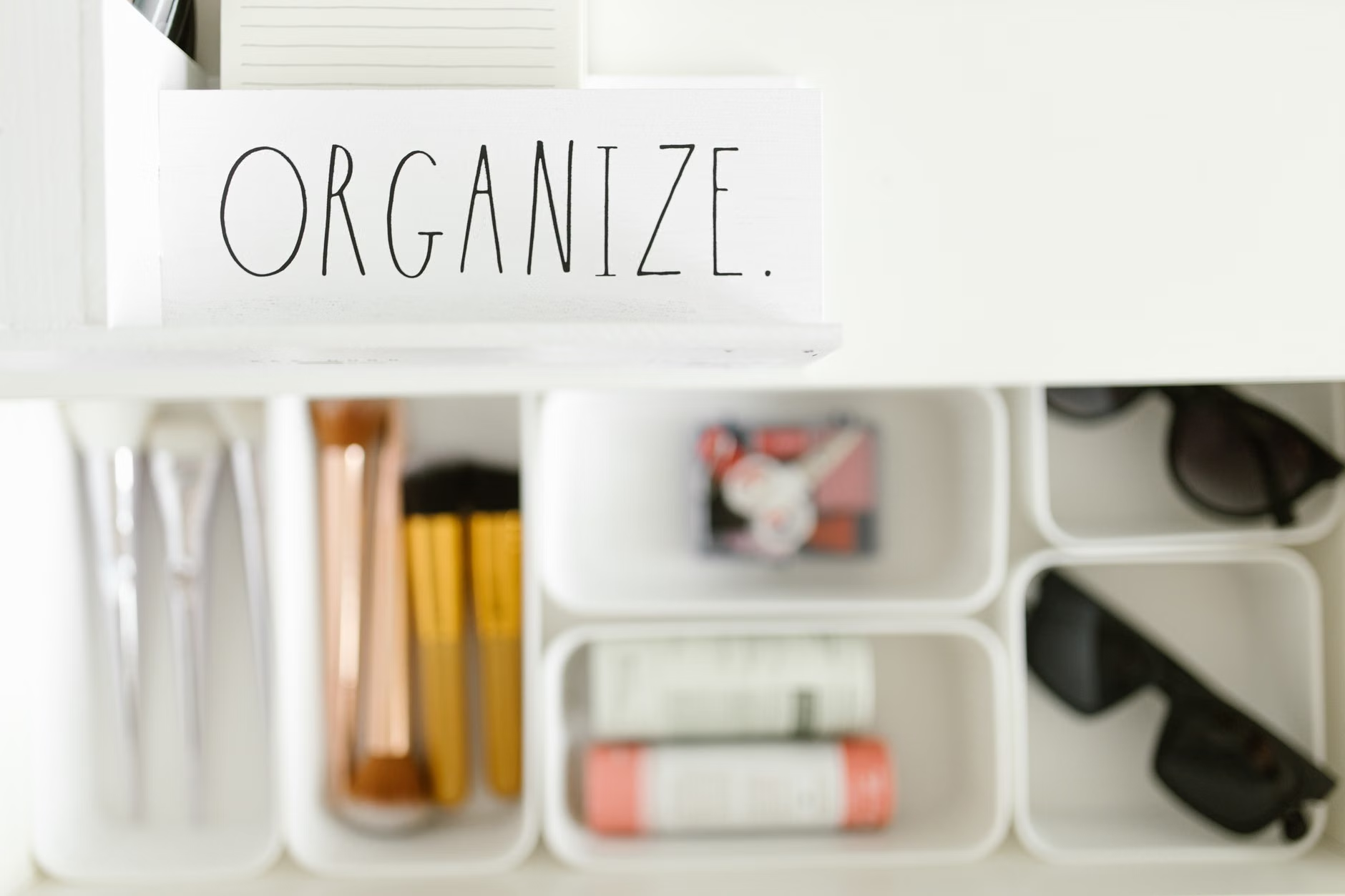
The Power of “Point-of-Use” Storage
Often, “high-friction” tasks are just searching tasks in disguise. If your child’s school bag is in the living room, their shoes are in the hallway, and their coat is in the bedroom, you are creating a scavenger hunt every morning. This is a massive energy drain.
Create a “Launchpad” near your exit door. This should be a dedicated space where everything needed for the day lives. If an item isn’t in the Launchpad, it is not ready for the morning. This simple physical change removes the “where is my…” conversation entirely. When you remove the need for searching, you save your energy for the more important parts of your morning, like connecting with your kids or preparing for your workday.
Step 3: Calculating the “Buffer Zone”
Most people plan their morning down to the last minute. This is a recipe for disaster. If you have a 30-minute commute and you plan to leave at 8:00 AM to arrive at 8:30 AM, any delay—a spilled drink, a forgotten item, a slow traffic light—destroys your entire schedule. This creates a “panic loop” that ruins your energy for the rest of the day.
You need a “Buffer Zone.” A buffer zone is a period of 15-20 minutes that is intentionally left empty. It is not “extra time” to get more done; it is a safety net. If everything goes perfectly, you use that time to read a book, have an extra cup of coffee, or just sit in silence. If something goes wrong, you use that time to handle the crisis without the stress of being late.
Decision Rule: If you are consistently hitting your “buffer zone,” you don’t need to add more work to your morning. You need to keep that time as a recharge period. The goal of the audit is to protect your mental health, not to maximize your productivity at the expense of your sanity.
Practical Comparison: The “Default” vs. The “Audited” Morning
To see the difference, let’s look at a hypothetical scenario. Consider a parent, Sarah, who works a hybrid job. Her “Default” morning is reactive. She wakes up, checks emails, deals with whatever the kids are screaming about, and rushes out the door. Her “Audited” morning is proactive.
| Task | Default Approach (Reactive) | Audited Approach (Proactive) |
|---|---|---|
| Breakfast | Ask kids what they want; scramble to cook. | Pre-set menu for the week; kids serve themselves cereal. |
| Clothing | Searching for clean socks/uniforms at 7:45 AM. | Outfits laid out in the Launchpad the night before. |
| Commute | Leaving at the last possible second. | Leaving 15 minutes early (The Buffer Zone). |
| Energy Level | Already drained by 9:00 AM. | Stable and ready for deep work. |
The difference isn’t that Sarah is doing more work; it’s that she is doing the work at a time when she has the energy to do it (the night before) so that her morning can be a period of low-intensity flow. This shift is what makes the energy audit so effective for parents in their 30s and 40s.

Overlooked Variables: The “Evening Tax”
There is a hidden cost to an efficient morning: the “Evening Tax.” You are essentially moving the work from the morning to the night. For many, this is a fair trade. It is much easier to pack a bag or lay out clothes at 9:00 PM when the house is quiet than it is at 7:30 AM when the house is a war zone.
However, you must be careful not to create a “burnout cycle.” If you push all your tasks to the evening, you might find yourself unable to relax, which hurts your sleep quality. Poor sleep leads to lower energy the next morning, which requires more willpower to manage, which leads to… you get the point. The goal of the audit is to balance your load, not just shift it to a different time of day.
Insight: If you find that your evenings are already too busy, look for tasks that can be done on the weekend. Meal prepping lunches for the entire week on Sunday is a classic move, but don’t stop there. Can you automate school form signing? Can you set up a recurring calendar invite for recurring events? The more you can move tasks out of your “daily” loop, the more energy you will have.
Step-by-Step Implementation Guide
If you are ready to start, follow these steps:
- The Tracking Phase (3 Days): Log every task and assign an Energy Score.
- The Audit Phase (Day 4): Identify the 5s. Ask: “Why is this a 5?” Is it a lack of organization? A lack of boundaries? A lack of help?
- The Solution Phase (Day 5-7): Implement one change for each 5. If it’s “lost shoes,” buy a basket. If it’s “breakfast battles,” pick a menu.
- The Review Phase (Day 14): Re-evaluate. Did the score move from a 5 to a 2? If not, why? Adjust and repeat.
Do not expect perfection. The goal is to reduce the friction, not eliminate it entirely. Life with children is inherently unpredictable. The audit gives you the foundation to handle the unpredictability without losing your mind.
Common Pitfalls and How to Avoid Them
One common mistake is trying to enforce a rigid schedule on your children. If your child is a toddler, they won’t care about your “optimized morning.” They will have their own agenda. Instead of fighting it, work with their natural tendencies. If they love to play with blocks in the morning, incorporate that into the routine as a reward for getting dressed early.
Another pitfall is the “perfectionism trap.” You might find yourself spending an hour organizing your kitchen cabinets just to save five minutes in the morning. That is not an audit; that is procrastination. Keep the solutions simple, cheap, and functional. You are looking for 80% improvement, not 100% perfection.
Finally, remember that your energy needs change. What works for a four-year-old will not work for a ten-year-old. Re-run your audit every six months or whenever you feel that familiar sense of “morning dread” creeping back in. It is a living process, not a one-time fix.
The Long-Term Impact on Your Parenting
When you stop being the “manager” of a chaotic morning, you can start being a parent. When you aren’t yelling about missing shoes, you have the bandwidth to ask your child about their day, to laugh at a joke, or to just enjoy a quiet moment together. This is the real reason to perform an energy audit.
By protecting your morning energy, you are protecting your relationship with your family. You are choosing to spend your limited mental resources on connection rather than coordination. That is a trade-off that pays dividends for years to come.
Start small. Identify one thing that makes you want to scream tomorrow morning, and fix it tonight. You don’t need a total life overhaul. You just need to remove the obstacles that are standing between you and a calmer start to your day.
Frequently Asked Questions
- Q: Should I do this audit if my mornings are already “okay”?
A: Yes. Even if your mornings aren’t a disaster, there is likely “hidden friction” that is slowly draining your energy. Auditing helps you move from “surviving” the morning to “thriving” in it, allowing you to reclaim that energy for your own personal goals or hobbies. - Q: How do I handle it when my partner and I have different morning styles?
A: This is a classic challenge. Have a 15-minute meeting (not in the morning!) to discuss the “friction points” you both feel. Agree on the “non-negotiables” (e.g., the kids leave on time) and then give each other autonomy on how to get there. Focus on the outcome, not the method. - Q: What if my kids are teenagers and don’t follow my routine?
A: Teenagers are a different beast. Instead of enforcing a routine, involve them in the audit. Ask them what their biggest morning friction points are and let them design their own solutions. When they own the system, they are much more likely to follow it.
For more reading on the science of habits and decision fatigue, you can refer to resources like the American Psychological Association’s guide on decision fatigue. Understanding the mechanics of your own brain is the first step toward mastering your day. You have the power to reshape your morning—start by simply paying attention to where your energy actually goes.