The most effective way to eliminate the chaos of family travel is to stop treating the journey as a hurdle to be cleared and start treating the rail network as your primary destination-to-destination vehicle. By prioritizing rail-first planning, you replace the unpredictable stress of airport security, baggage limits, and cramped middle seats with predictable, spacious, and productive travel time that actually allows you to engage with your children.
- The “Station-to-City” Advantage: Unlike airports located on the outskirts, train stations are almost always in city centers, saving you an average of 60–90 minutes in transfer time and significant taxi or shuttle costs.
- The End of the Liquid-Limit Struggle: Rail travel removes the 100ml liquid restriction and strict weight limits, meaning you can pack snacks, full-sized toiletries, and even bulky hobby gear without extra fees.
- Budgeting for Predictability: While high-speed rail can be expensive if booked last minute, booking 8–12 weeks in advance often results in lower total trip costs when you factor in the elimination of airport parking, luggage fees, and expensive terminal meals.
Why the “Airport Experience” is Failing Your Family
If you are in your 30s or 40s, you likely remember the era when flying was a standard, albeit tedious, experience. Today, it has become a logistical marathon. For a parent, the “airport experience” involves a specific kind of cognitive load: managing the stroller, the liquids, the gate changes, and the “are we there yet” countdown before the plane even pushes back from the gate.
The core problem is the hidden friction. A two-hour flight is never just two hours. When you add the two hours of pre-arrival, the one hour of post-landing baggage claim, and the 45-minute commute from the airport to the city center, that “quick flight” has effectively consumed six hours of your day. During those six hours, your children are confined to strict seat-belt requirements, and you are likely in a state of high-alert anxiety.
Rail travel flips this model. When you book a train, you are essentially buying a mobile living room. You aren’t just moving from point A to point B; you are reclaiming your time. You can walk the aisles, sit at a table to draw or play games, and most importantly, you aren’t restricted by the “fasten seatbelt” sign every time there is a hint of turbulence.

The Economics of Rail vs. Air: It’s Not Just About the Ticket Price
A common misconception is that trains are universally more expensive. While a last-minute high-speed ticket might rival a budget airline seat, the “total cost of ownership” for a family trip often favors the rail. You must calculate the unseen costs that airlines thrive on.
Consider this breakdown for a family of four traveling between two major cities:
| Expense Category | Budget Airline | High-Speed Rail |
|---|---|---|
| Baggage Fees | High (Often per bag) | Usually Free/Included |
| Airport Transfer | Significant (Taxi/Train) | Minimal (Walk/Local Transit) |
| Food/Snacks | Expensive/Limited | Flexible (BYO allowed) |
| Pre-flight Stress | High (Security/Check-in) | Low (Board 5 mins prior) |
When you see the costs this way, the “premium” price of a train ticket often disappears. If you factor in the cost of a taxi from a remote airport (which can easily be $60–$100 depending on your city), the train becomes the fiscally responsible choice. Furthermore, rail systems across Europe, parts of Asia, and increasingly the Northeast Corridor in the US offer “Family Fare” discounts that are rarely advertised by third-party booking sites.
How to Architect a Rail-First Route
Planning a rail-first trip requires a shift in mindset. You are no longer looking for the shortest duration; you are looking for the most seamless connection. Here is your step-by-step framework for building a route that keeps your sanity intact.
1. The 4-Hour Rule
As a general rule of thumb, if a rail journey is under 4 hours, it will almost always beat flying in terms of total travel time. Between 4 and 6 hours, it is a toss-up depending on station location. Beyond 6 hours, you have to decide if you want to turn it into an experience (like a scenic daytime route) or a utility (like a sleeper train). Never try to force a 10-hour daytime train ride if you have young children unless the scenery is the primary goal of your vacation.
2. Master the Hub-and-Spoke Strategy
Don’t try to visit five cities in seven days. Choose one major rail hub (like London, Paris, Tokyo, or New York) and use the high-speed lines to take day trips or short excursions to smaller, secondary cities. This allows you to keep your “home base” hotel, meaning you don’t have to pack and unpack your family every 24 hours. The stability of a single hotel room is a massive factor in keeping kids regulated.
3. Use Official Portals, Not Aggregators
Third-party booking sites often add fees or, worse, fail to show you the specific “family-friendly” train cars. Use the official national rail operator’s website (e.g., SNCF for France, Deutsche Bahn for Germany, or Amtrak for the US). These sites often have specific filters for “Family Compartments” or “Quiet Zones.”
The Hidden Variables: What Most Parents Overlook
Even with the best planning, rail travel has its own unique set of challenges. Avoiding these common traps is what separates the seasoned rail traveler from the frustrated tourist.
The Luggage Trap: Just because you can bring more luggage on a train doesn’t mean you should. Train stations rarely have the same level of cart availability as airports. If you are a family of four, you need to be able to manage your bags while holding a child’s hand. If you cannot manage your luggage down a flight of stairs, you have too much luggage. Adopt the “one suitcase per person” rule strictly.
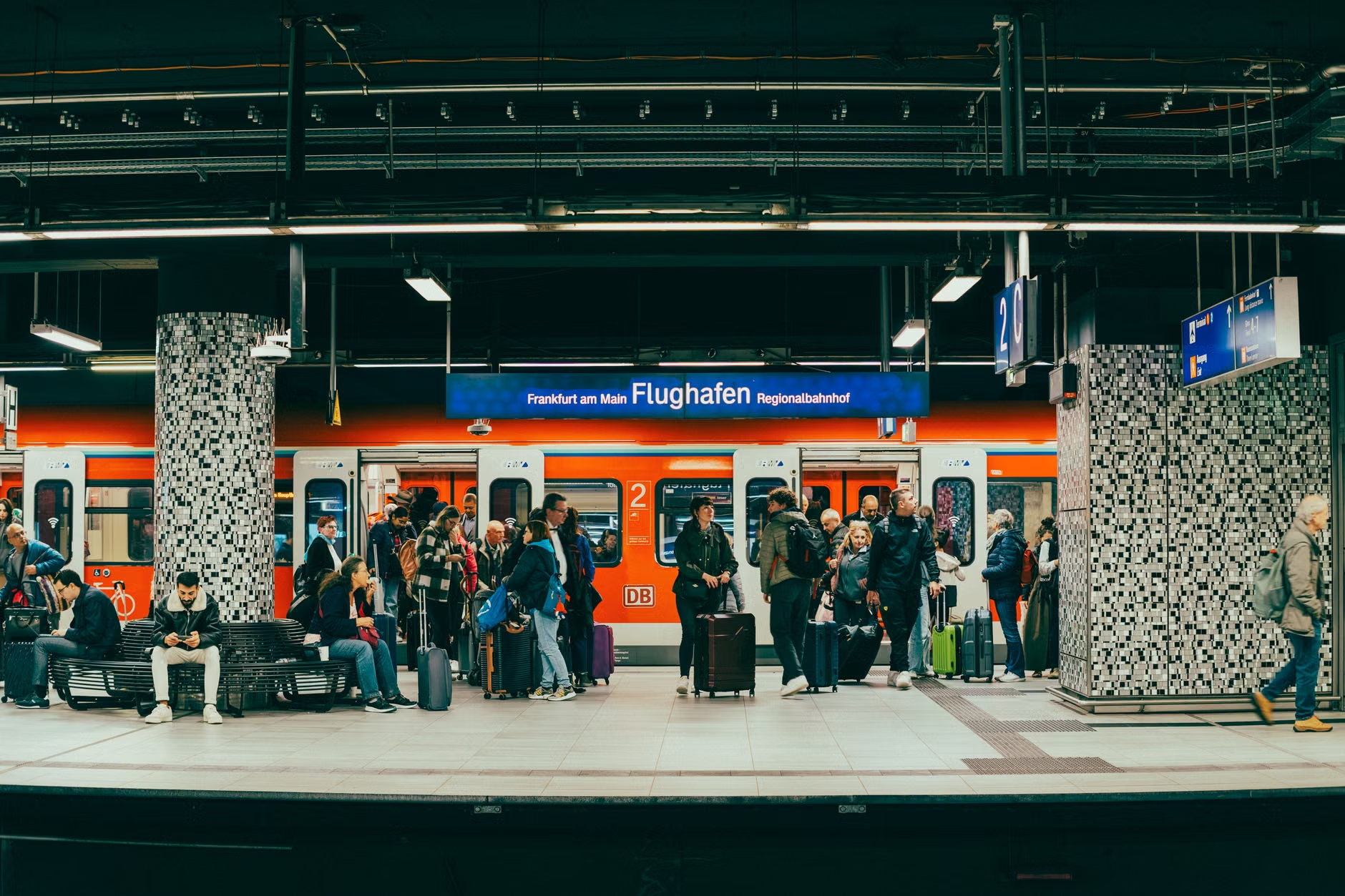
The Platform Variable: In many older European stations, platforms can be long, and your specific carriage number might be at the very far end of the train. Check your ticket for the “Coach” or “Carriage” number. Use apps like Rail Planner to see the platform layout in advance so you aren’t sprinting with a toddler when the train arrives.
The “Last Mile” Reality: Always check the distance from the train station to your accommodation. Even if a train is fast, a 30-minute walk with four suitcases is a recipe for a meltdown. Use Google Maps to check the walking distance. If it’s over 10 minutes, pre-book a taxi or identify the local bus route before you even leave home.
Actionable Steps for Your Next Booking
If you are ready to make the switch, start with a “trial run.” Don’t plan a multi-country expedition for your first rail trip. Pick a route that takes about 2 to 3 hours. This is the sweet spot: long enough to enjoy a snack and a game, but short enough that if everything goes wrong, you aren’t ruined for the day.
When you book, look for “Table Seats.” Many trains offer four seats facing each other with a table in the middle. For a family, this is the gold standard. It provides a workspace for you and a play area for the kids. If your train doesn’t offer table seats, try to book seats in the same row rather than across the aisle, as it makes it significantly easier to share snacks and keep an eye on everyone.
Why Consistency Beats Optimization
In your 30s and 40s, you are likely optimizing for everything—your career, your kids’ activities, your household budget. Travel shouldn’t be another optimization problem. The beauty of rail-first travel is the consistency. You know where you are going to be, you know you have space to move, and you know you won’t be separated by a security line.
The most successful family trips aren’t the ones where you saw the most landmarks; they are the ones where you arrived at your destination feeling like a human being rather than a frazzled, exhausted mess. By choosing the train, you are essentially buying back your family’s patience. You are choosing a mode of transport that respects the fact that you are traveling with children, not just cargo.
Remember that the “slow” travel movement is not about being inefficient; it is about being intentional. When you sit on a train, you see the landscape change. You see the houses, the fields, and the small towns. You get a sense of scale that you simply miss at 30,000 feet. That context is a lesson in itself for your children. It makes the world feel like a connected place rather than a series of disconnected, sterile rooms.
If you encounter a delay, don’t panic. Rail networks have much higher frequency than flights. If you miss a train, there is often another one in an hour. This is the ultimate safety net for parents. You are never truly “stuck” in the same way you are when a flight is canceled and the next available seat is 24 hours away.
Start small, pack light, and prioritize the table seat. Your future self—the one who isn’t standing in a security line at 5:00 AM—will thank you.
Frequently Asked Questions
Q: What if I have a massive amount of luggage for a long-term trip?
A: Most long-distance trains have luggage racks at the end of each carriage and sometimes above the seats. However, if you are traveling for more than two weeks, consider using a luggage forwarding service (common in Japan and parts of Europe) to send your large suitcases directly to your hotel. This allows you to travel light on the train with just a daypack.
Q: Is it really cheaper to book in advance for trains, or is that just for flights?
A: It is absolutely essential for trains. Most national rail operators use “dynamic pricing” similar to airlines. Tickets for high-speed routes are usually released 90 to 120 days in advance. The price difference between an “early bird” ticket and a “day of” ticket can be as much as 300%. Set a calendar reminder for 3 months before your trip to secure the best rates.
Q: How do I handle transfers between trains with kids?
A: Aim for a minimum of 30 minutes for a transfer. While some stations claim 10 minutes is “sufficient,” that is for a solo traveler with a backpack. With a family, you need time to get off the train, locate the next platform, and navigate the crowd. If you are booking a ticket that involves a transfer, the official rail website will typically only show you connections that are realistically achievable.
For more information on planning your next journey, you can check the Seat61 guide, which is widely considered the gold standard for global rail travel advice and logistics.