The core of an effective bedtime routine isn’t about hitting a strict clock-based schedule; it is about creating a predictable, connection-rich environment that signals safety to your child’s nervous system, allowing sleep to occur as a natural byproduct of feeling secure.
- Regulation precedes rest: A child cannot fall asleep if their nervous system is in a state of high alert; your physical or emotional presence acts as an external regulator for their internal state.
- Consistency is about the process, not the time: While a general window is helpful, the specific sequence of events (e.g., bath, book, cuddle) is more important for building the anticipation of sleep than an exact minute on the clock.
- Attachment is not “dependency”: Responding to a child’s need for connection at bedtime builds the secure base necessary for them to eventually gain the confidence to sleep independently.
If you are in your 30s or 40s, you have likely spent years being told that sleep training is a binary choice: either you leave them to cry it out, or you are destined for years of sleep deprivation. The “attachment-first” approach is the middle ground that many modern parents are looking for. It acknowledges that for a human infant or young child, sleep is a vulnerable state. By staying present, you aren’t “creating bad habits”; you are meeting a biological requirement for safety.
Understanding the Biology of Bedtime Resistance
Why does a child who is clearly exhausted turn into a high-energy, defiant negotiator the moment the sun goes down? It is rarely about stubbornness. From a developmental perspective, nightfall triggers a primal response. In the wild, darkness meant danger. For a human child, the separation from the primary caregiver at night can trigger a cortisol spike, which is the exact opposite of what the body needs to produce melatonin.
When we approach bedtime through an attachment lens, we stop viewing resistance as a behavior to be “fixed” and start viewing it as a communication of need. A child who is shouting for “one more cup of water” or “one more story” is often checking to see if their secure base is still there. They are asking, “If I close my eyes and go into this vulnerable state, will you still be here when I wake up?”
This is where the “Attachment-First” methodology differs from traditional behavioral sleep modification. Instead of using timed intervals to teach a child to self-soothe, we focus on co-regulation. Co-regulation is the process where a calm adult helps a dysregulated child return to a state of calm. Over time, the child internalizes this, creating the capacity for self-regulation.
The Physiology of the “Secure Base” at Night
Research into attachment theory, most notably the work surrounding the “Strange Situation” procedure by Mary Ainsworth, highlights that children with secure attachments are better equipped to explore their environment and, eventually, manage their own emotions. At bedtime, the bedroom is the “environment” the child must explore—alone. If they haven’t had their “attachment cup” filled during the day and during the bedtime routine, they will naturally cling to the caregiver to get that need met.
Think of it as a battery. If a child has been at daycare or school all day, they have spent hours in a state of independence. When they get home, they are often “attachment-seeking.” If you try to jump straight into a rigid, task-oriented bedtime routine (bath, brush, bed), you are effectively cutting off their ability to reconnect. This is why many parents find that their child becomes “clingy” or difficult right when they want them to be most independent.

Designing a Routine That Prioritizes Connection
A successful attachment-first routine is built on three pillars: predictability, low-stimulation, and physical proximity.
Step 1: The “Buffer Zone” (30-45 Minutes Before Bed)
This is the transition period. Avoid high-energy play, bright blue-light screens, or complex problem-solving. This is the time to lower the lights in the entire house. If the house is bright and loud, the child’s brain is receiving conflicting signals. Keep the environment calm, which helps the child’s own brain begin the transition toward melatonin production.
Step 2: The Ritual of Connection
Choose an activity that requires zero performance from the child. Reading a book is a classic for a reason: it’s passive. The child doesn’t have to “do” anything. Other options include listening to a soft audiobook, a gentle massage, or simply sitting in the dark and talking about the highlights of the day. The goal is to provide a “check-in” where you are 100% focused on them, not on your phone or the dishes in the sink.
Step 3: The “Bridge” to Sleep
This is where parents often struggle. How do you leave the room without the child panicking? The answer is the “bridge.” If your child is struggling, you don’t have to leave abruptly. You can use the “check-in” method. You tell the child, “I’m going to step out to fold one piece of laundry, and I’ll be back in two minutes to check on you.”
Crucially, you must come back before they start to panic. By coming back, you are proving to their nervous system that you are reliable. You are building their trust. If you are always there, they eventually realize they don’t need to cry to get you, and they can drift off feeling safe.
Common Pitfalls and How to Pivot
Many parents worry that this approach will lead to “nanny-dependency” or that the child will never learn to sleep alone. However, the opposite is often true. Children who are forced into independence before they are neurologically ready often develop “anxious attachment” patterns. They may sleep, but they do so out of a sense of resignation rather than security.
| Strategy | Traditional Behavioral Approach | Attachment-First Approach |
|---|---|---|
| Goal | Child falls asleep alone quickly. | Child feels safe enough to fall asleep. |
| Response to Crying | Timed intervals/Check-ins. | Immediate comfort and reassurance. |
| Role of Parent | Observer/Monitor. | Co-regulator/Secure Base. |
| Long-term Outcome | Sleep independence through habituation. | Sleep independence through trust. |
If you find that your child is still struggling, consider these three common oversights:
- The “Overtired” Variable: If you start the routine too late, the child’s body produces cortisol, which acts like adrenaline. No amount of attachment will override a biological “fight or flight” response. If they are overtired, the routine will be a battle. Shift the whole schedule 30 minutes earlier.
- The “Inconsistency” Trap: If you are attachment-focused on Tuesday but try a “let them cry” approach on Wednesday because you are exhausted, you are sending mixed signals. The child’s brain cannot predict your behavior, which increases anxiety. Pick a path and stick to it for at least two weeks.
- The “Parental Stress” Factor: Children are masters at reading parental tension. If you walk into the room thinking, “Please, just go to sleep so I can watch Netflix,” they will feel that urgency. It signals that the environment is “unsafe” because the caregiver is stressed. Practice a 30-second breathing exercise before you enter the room.
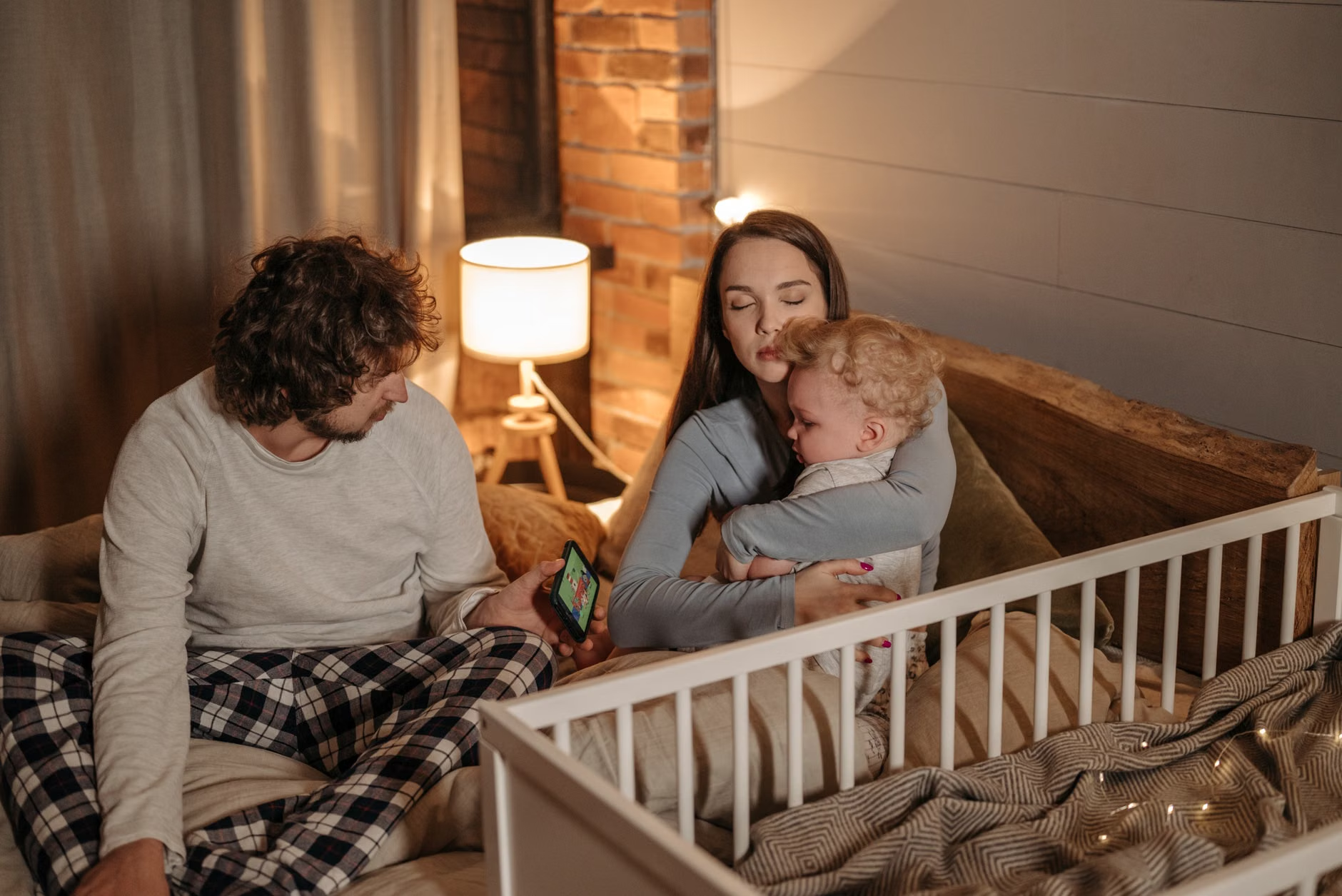
Practical Implementation: A Step-by-Step Guide
To implement this, you don’t need a degree in psychology. You need a plan. Start by auditing your current evening. Where is the friction? Is it the bath? The toothbrushing? The moment you leave the room?
1. Creating the “Visual Anchor”
For children aged 2-6, visual cues are incredibly powerful. Use a simple chart with photos of the steps: Wash, Brush, Book, Bed. This gives the child a sense of control. When they know what comes next, they feel more secure. They aren’t wondering when the “separation” is going to happen because the schedule tells them.

2. The “Ladder of Proximity”
If you currently lie in the bed with your child until they fall asleep, and you want to move toward them falling asleep independently, use the “ladder” method. It is a slow, gradual withdrawal of physical presence over several weeks:
- Weeks 1-2: Lie in the bed with them, physical touch (hand on back).
- Weeks 3-4: Lie in the bed with them, no touch.
- Weeks 5-6: Sit on a chair next to the bed.
- Weeks 7-8: Move the chair toward the door in small increments.
At every step, if the child becomes distressed, you move back one rung on the ladder. This is not “giving in.” This is “respecting the pace of the child’s nervous system.”
3. Addressing the “One More Thing” Negotiation
Children use negotiation to keep you in the room. Instead of saying “No,” which creates conflict, use “The Menu.” Before you start the routine, say, “Tonight, we have time for two books and one cup of water. What would you like?” By giving them agency within boundaries, you satisfy their need for control without letting the routine spiral out of control.
The Hidden Cost of “Quick Fix” Sleep Advice
There is a massive industry built around “sleep training” that promises 12 hours of uninterrupted sleep in three days. While some families find success with these methods, there is a hidden cost that is rarely discussed: the potential for “learned helplessness.” When a child stops crying, it isn’t always because they have learned to “self-soothe.” It is sometimes because they have learned that their caregiver will not respond to their distress.
This is a heavy concept, but it is vital for parents in their 30s and 40s to consider. We are often looking for the most efficient path because our lives are already so compressed. However, the time spent at bedtime is an investment in the long-term relationship. When a child learns that their needs are valid and that they are supported even in their most vulnerable moments, they develop a “secure attachment style.” This style is linked to better emotional regulation, higher self-esteem, and better social outcomes in adulthood.
If you choose to prioritize attachment, you must be prepared for it to take longer. There is no “hack” for human development. You are building a foundation, not just trying to get a quiet house at 8 PM. If you are struggling with your own exhaustion, that is a separate issue that needs to be addressed through support systems, not by forcing your child to grow up faster than they are ready to.
Managing Your Own Expectations and Energy
It is impossible to be a “regulated” parent if you are constantly in a state of exhaustion. If you are the one doing the bedtime routine every single night, you will eventually burn out. Attachment-first parenting doesn’t mean you have to be the only one doing the work. You can rotate with a partner, or if you are a single parent, you can bring in other forms of support.
The goal is to provide a calm, consistent experience. If your partner does the routine, it will look different, and that is okay. The “attachment” is to the process and the predictability, not just to one specific person. If you are the only one who can put the child to sleep, you are actually limiting the child’s ability to feel secure with other caregivers. Encourage your partner to find their own “bedtime ritual” that works for them.
Furthermore, be kind to yourself about the “off” nights. Sometimes the child is teething, sick, or going through a developmental leap (like learning to walk or talk). During these times, the “rules” go out the window. If your child needs extra comfort, give it. You aren’t ruining your progress; you are being responsive. A secure child knows that when they are struggling, their parent is there for them. That is the ultimate goal of the attachment-first approach.
Why This Matters for Your Long-Term Relationship
We often think of bedtime as the end of the “work day” of parenting. But if we reframe it as the final, most important “connective” moment of the day, it changes the entire dynamic. Instead of rushing through the routine to get to your own time, you can view it as a moment of mutual decompression. Your child has had a long day of navigating the world; you have had a long day of navigating your own responsibilities.
By slowing down, you are actually lowering your own stress levels, too. The act of sitting quietly, reading a book, or singing a song is a form of mindfulness. It forces you to stop checking your emails, stop thinking about the next day’s schedule, and simply be present. This is not just good for the child; it is good for your own mental health.
The “attachment-first” routine is not about perfection. It is about intention. It is about choosing to see your child’s needs as valid and choosing to meet them with patience rather than frustration. Over time, this builds a bridge of trust that will last long after they have outgrown their need for a bedtime story.
Resources and Further Reading
For those interested in the science behind attachment and sleep, I recommend looking into the resources provided by the Attachment Parenting International or the Zero to Three organization. They provide evidence-based insights into early childhood development that can help you feel more confident in your parenting choices.
- Zero to Three: Early Connections Matter – Excellent for understanding the science of early brain development.
- Attachment Parenting International – Resources on the principles of secure attachment.
Frequently Asked Questions
1. Does this mean I can never let my child cry?
Not at all. It means you don’t leave them to cry alone. If your child is crying, you provide comfort. You are not “ignoring” their distress; you are actively working to help them regulate it. There is a massive difference between a child crying in a room alone and a child crying in the arms of a parent who is providing a safe, calm presence.
2. How long does it usually take to see improvements?
Consistency is the key. Most parents report a significant shift within 10 to 14 days. If you are inconsistent, it will take much longer. Remember, you are teaching a new way to interact. It takes time for the child to trust that the new, calm routine is the “new normal.”
3. What if my partner and I disagree on this approach?
This is a very common challenge. It is essential to have a conversation outside of the bedroom—not during the bedtime routine itself. Discuss the “why” behind the attachment-first approach. If you aren’t on the same page, the child will feel that tension, which undermines the goal of creating a secure, predictable environment. Aim for a unified strategy, even if your individual styles of interacting during the routine are slightly different.
The path to a peaceful bedtime is rarely a straight line, but by prioritizing the attachment bond, you are setting your child up for a lifetime of healthy sleep associations and emotional resilience. Take a deep breath, start small, and remember that you are the most important part of your child’s world—especially when the lights go out.