- Quality Over Quantity: The post-growth philosophy replaces the “more is better” mindset with a focus on open-ended, durable toys that evolve with the child’s cognitive development.
- The Power of Rotation: Regularly cycling toys in and out of storage prevents sensory overload and reignites interest in existing items without the need for new purchases.
- Economic & Environmental Impact: By curating fewer, higher-quality items, you significantly reduce household waste and long-term spending while teaching children the value of maintenance and intentionality.
The most effective way to improve your child’s play experience is to remove 70% of the toys currently in your living room.
If you feel like you are constantly tidying up a chaotic explosion of plastic, you aren’t alone. Many parents in their 30s and 40s are currently grappling with “toy bloat”—the result of well-intentioned gifts, impulse buys, and the relentless marketing of modern childhood. We are often led to believe that a child’s development is directly proportional to the number of gadgets they own. The data, however, suggests the exact opposite.
The “Post-Growth” toy philosophy is a radical departure from the consumerist treadmill. It borrows from the economic concept of degrowth—the idea that infinite growth on a finite planet is impossible—and applies it to the domestic sphere. In your home, this means shifting focus from accumulating more to cultivating better.
Why More Toys Actually Lead to Less Play
There is a specific phenomenon in child psychology often referred to as “choice overload.” When a child is presented with too many options, their ability to engage in “deep play”—the state of intense, sustained concentration—is severely compromised. Think of it like a streaming service: when you spend 30 minutes scrolling through Netflix, you end up watching nothing. Children do the same with toys. They dump a bin, lose interest in 45 seconds, and move to the next.
Research published in the journal Infant Behavior and Development (Dauch et al., 2018) found that toddlers with fewer toys in their environment showed significantly higher quality of play. They spent longer periods exploring each toy, engaged in more creative problem-solving, and developed better sustained attention spans.
When the environment is cluttered, the child is constantly bombarded with sensory input. For a parent, this creates a double burden: you are spending your limited free time cleaning up, and your child is missing out on the neurological benefits of deep, focused engagement. By adopting a post-growth approach, you aren’t just tidying; you are creating a cognitive environment that allows your child to actually learn.
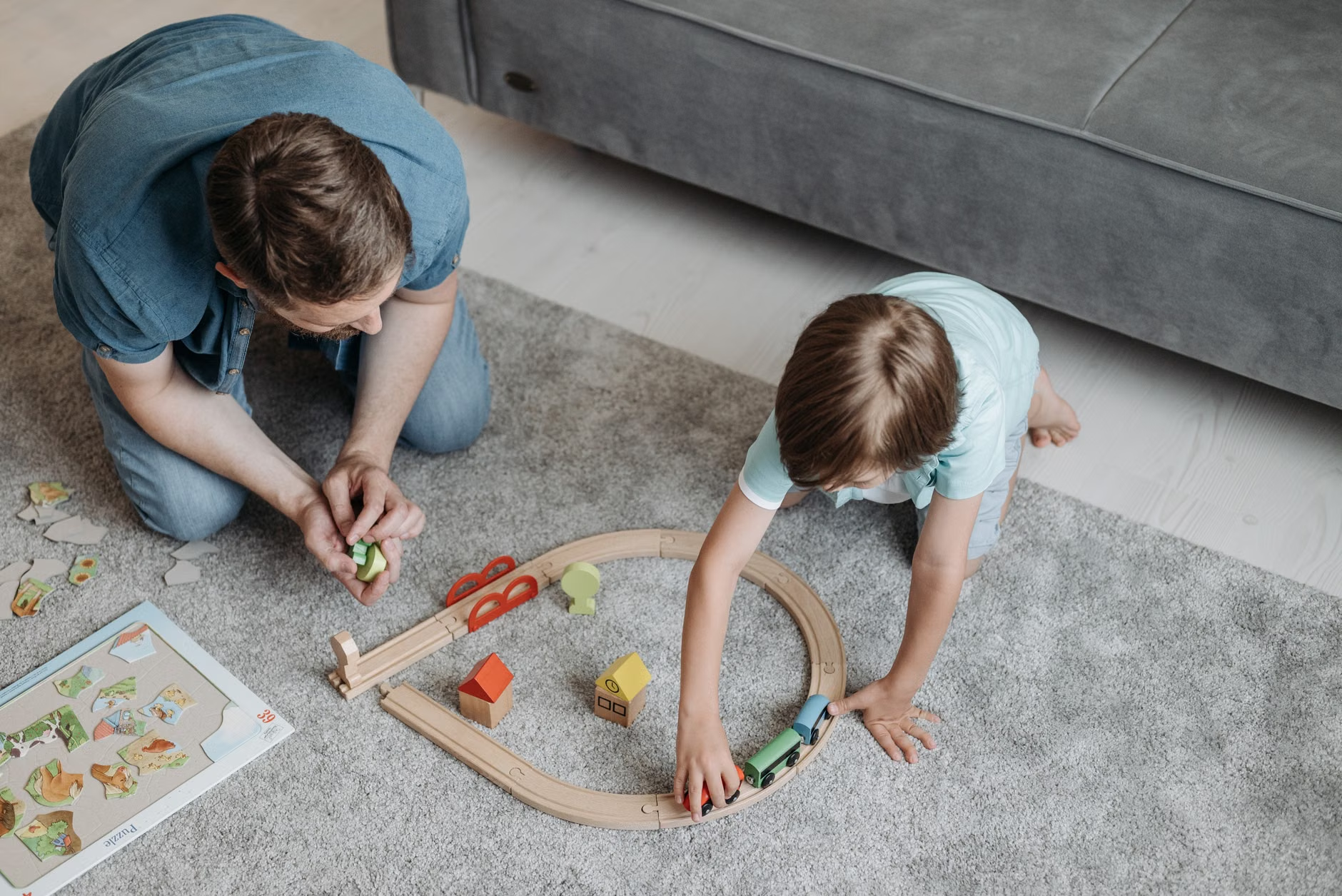
The Anatomy of a Post-Growth Toy Collection
Transitioning to a post-growth toy model requires a shift in how you evaluate what stays and what goes. We need to stop looking at toys as “entertainment” and start viewing them as “tools for development.”
1. Prioritize Open-Ended Toys
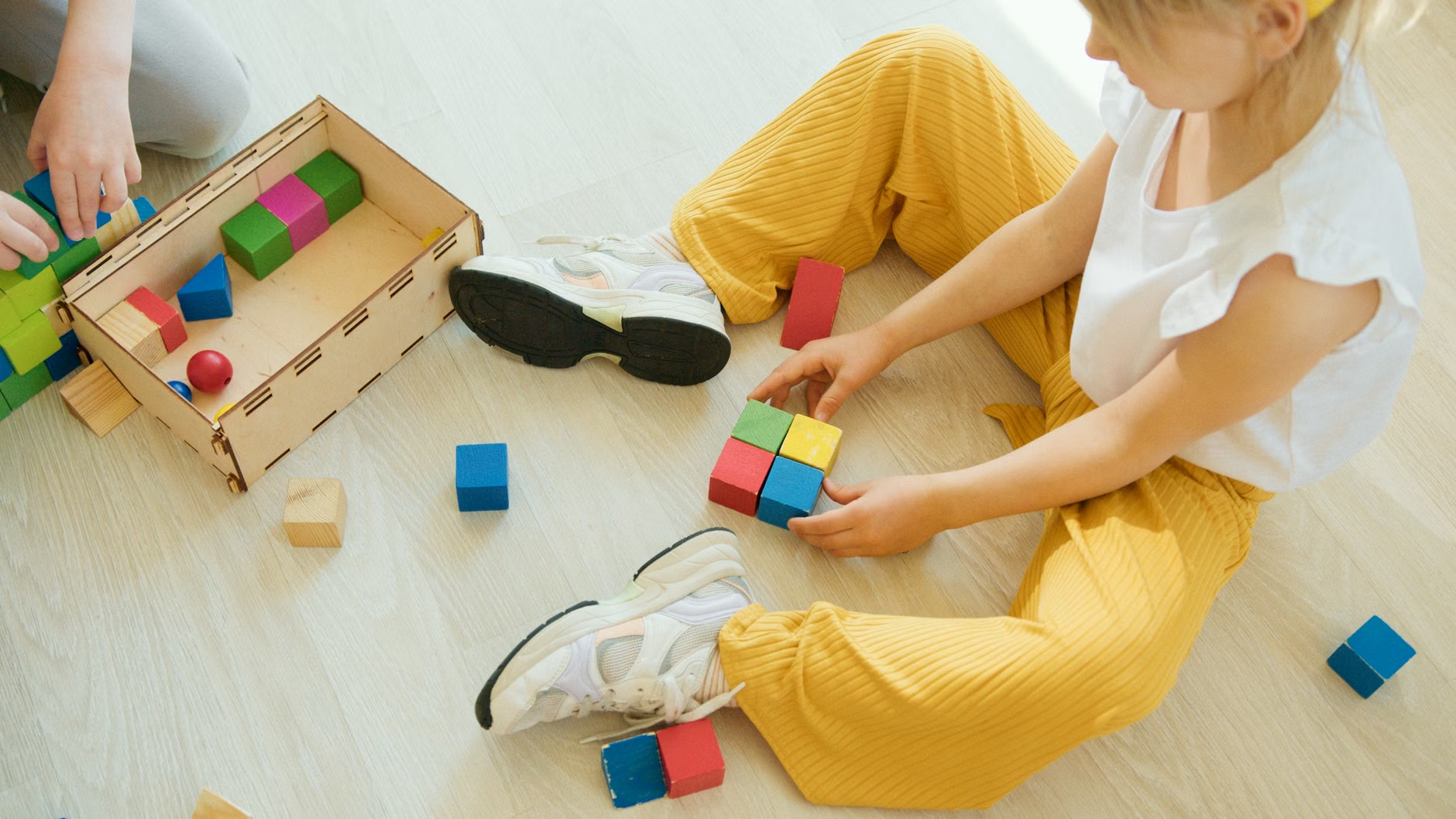
An “open-ended” toy is one that can be used in multiple ways. A plastic battery-operated robot that only does one thing (walks and makes noise) has a very short “play life.” Once the child has seen it walk and heard the noise, the utility is exhausted. Conversely, a set of wooden blocks or silk scarves can be a castle, a river, a bed for a doll, or a structural engineering project. These items grow with the child.
2. The Durability Factor
Post-growth philosophy emphasizes materials that can withstand years of use. If a toy breaks, it becomes trash. If a toy is made of high-quality wood, metal, or natural fabric, it can be passed down or donated. This reduces the “hidden cost” of parenting—the constant need to replace cheap, broken plastic items.
3. Defining Your “Core” Set
Create a curated list of categories rather than specific items. A balanced collection might look like this:
| Category | Purpose | Example |
|---|---|---|
| Construction | Spatial reasoning, fine motor skills | Wooden blocks, magnetic tiles |
| Imaginative | Social-emotional, narrative skills | Simple dolls, kitchen play sets |
| Active | Gross motor coordination | Balance boards, tumbling mats |
| Artistic | Creative expression | High-quality crayons, paper, clay |
This table serves as a decision framework. If you have five different sets of plastic building blocks, you likely only need one that is high-quality. The rest are redundant.
Implementing Toy Rotation: The Step-by-Step Guide
If you try to remove all the toys at once, you might face a significant “rebellion” from your children. The key is to manage the transition through a system of rotation. This keeps the environment fresh without increasing the total number of items in the house.
Step 1: The Audit
Gather all the toys in one place. Categorize them into:
- Keep: High-quality, loved, open-ended.
- Store: Good quality, but currently over-stimulating.
- Discard/Donate: Broken, missing pieces, or “single-use” gadgets that don’t invite creativity.
Step 2: The Storage System
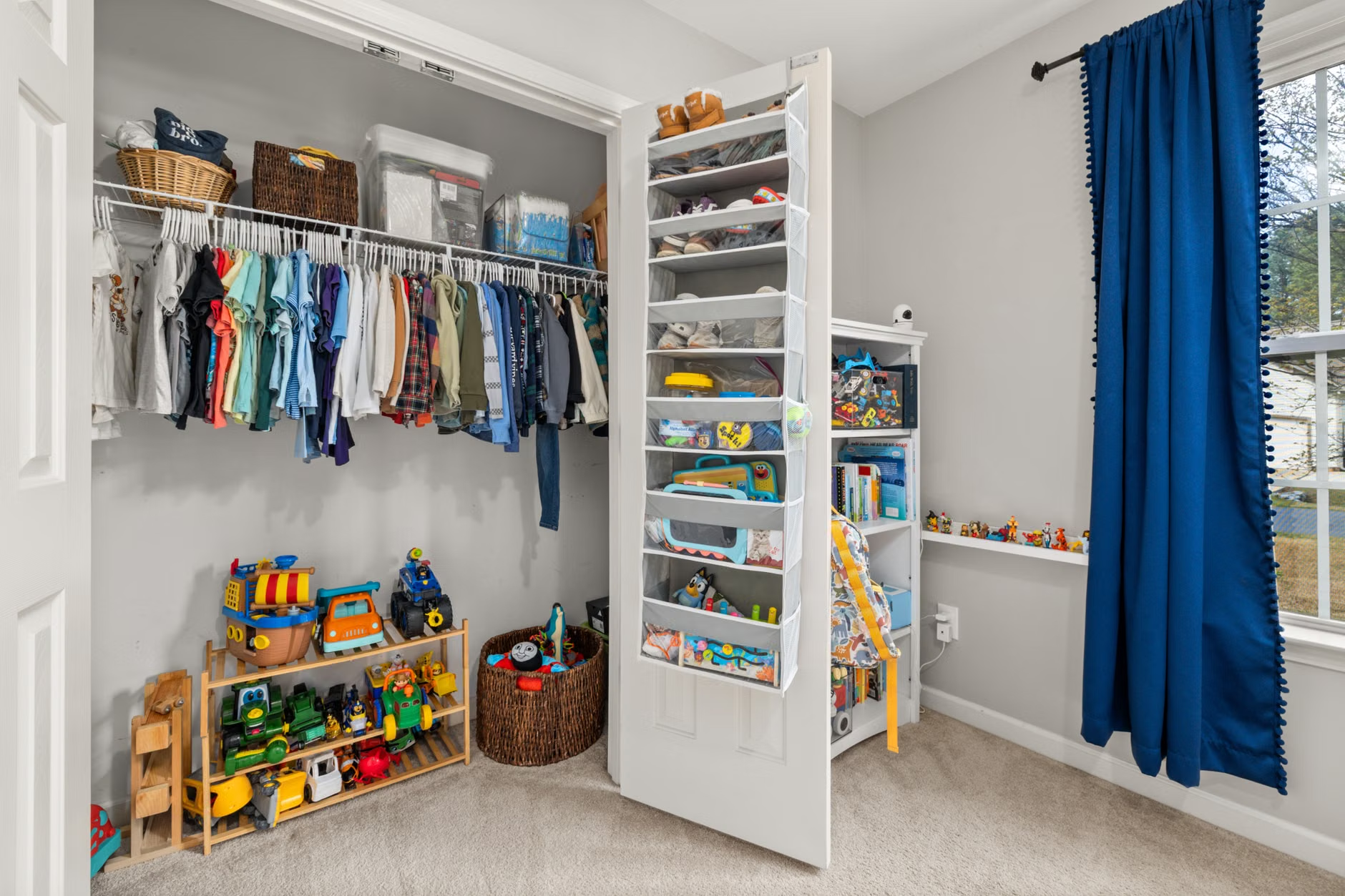
Use opaque bins. The goal is to keep stored toys out of sight. If a child can see a toy, they will ask for it. By removing the visual clutter, you effectively “reset” the playroom.
Step 3: The Rotation Schedule
Set a schedule, such as every two weeks or once a month. When you bring out a new bin, take away the current ones. You will notice that when a toy “returns” from the closet, it is treated like a brand-new gift. This is the “novelty effect” working in your favor without costing a cent.
The Hidden Costs of Modern Toy Culture
Beyond the physical clutter, there is a psychological cost to the “more is better” cycle. We often buy toys as a way to soothe our own guilt—perhaps we were busy working, or we felt we weren’t spending enough “quality time.” We use toys as a pacifier for the child, hoping it will grant us 30 minutes of peace.
However, this creates a dependency. The child learns that they need an external object to be occupied. When you shift to the post-growth model, you are teaching your child something far more valuable: resourcefulness. A child who has fewer toys learns to invent games, to look at a cardboard box and see a spaceship, and to tolerate boredom. Boredom is the precursor to creativity. If you fill every moment with a new toy, you are effectively training out their ability to imagine.
Furthermore, consider the environmental impact. The global toy industry is heavily reliant on virgin plastics and complex manufacturing processes that are difficult to recycle. By curating your collection, you are participating in a circular economy. You are opting out of the “fast toy” culture that mirrors the “fast fashion” crisis.
Addressing Common Misconceptions
Many parents worry that having fewer toys will make their child “deprived.” This is a common fear, often rooted in our own childhood memories of wanting a specific toy. However, there is a fundamental difference between deprivation and intentional curation.
Deprivation implies a lack of access to what is needed for healthy development. Curation implies a selection of the best tools for development. If your child has access to blocks, art supplies, and books, they are not deprived. They are actually in a superior position compared to a child surrounded by battery-operated, singular-purpose toys that do the “thinking” for them.
Another misconception is that minimalism is “boring” or “sad.” Look at high-end Montessori or Waldorf-inspired environments. They are warm, inviting, and highly stimulating, but they are not chaotic. The beauty lies in the space between the items. When a room is not overflowing, the child can focus on the sensory details of the one toy they are holding—the texture of the wood, the weight of the block, the way the light hits the paint.
Practical Tips for Maintaining the Philosophy
How do you keep this up when birthdays and holidays arrive? This is the most common point of failure for parents.
1. The “One-In, One-Out” Rule
Establish a household rule: for every new toy that enters, one must leave. This teaches children the finite nature of space and the importance of giving. It makes them more selective about what they actually want to keep.
2. Communicate with Family
Grandparents and friends often express love through gifts. It is uncomfortable to ask them to stop, but you can redirect them. Suggest “experience gifts”—a trip to the zoo, a museum membership, or a cooking class. If they insist on physical items, maintain a “wish list” of high-quality, long-lasting items that you have vetted.
3. Maintenance as Play
Teach your child to take care of their toys. If a wooden block gets chipped, show them how to sand it. If a book tears, fix it with tape together. This builds a sense of ownership and respect for the objects they possess. It reinforces that these items are not disposable.
The Long-Term Dividend
The post-growth toy philosophy is not just about having a cleaner house. It is about the long-term development of your child’s executive function. By limiting the number of choices and focusing on high-quality, open-ended items, you are helping your child develop the ability to regulate their attention, plan complex tasks, and manage their own emotional state.
When you sit down to play, you will find that you are less stressed. You aren’t constantly picking up pieces, you aren’t frustrated by the “noise” of the environment, and you aren’t worried about the next purchase. You are simply present. That is the greatest gift you can provide for your child—a parent who is engaged, calm, and available.
Start small. Choose one category—perhaps the building blocks or the action figures—and apply the rotation system this weekend. Observe the difference in how your child engages with the space. You will likely find that less, in this case, really is significantly more.
Frequently Asked Questions
What if my child complains that they are bored after I remove half the toys?
Boredom is the first step toward creativity. When a child says they are bored, they are actually telling you that they have run out of “pre-packaged” entertainment. Instead of rushing to provide a new toy, offer an open-ended suggestion like, “I wonder what you could build with those blocks,” or “Do you think we could make a fort with these blankets?” Give them the space to fill the void themselves. They will surprise you with their ingenuity.
How do I handle toys that are “sentimental” but don’t fit the post-growth model?
Sentimental items are the exception to the rule. If a toy holds a genuine memory, it is no longer just a toy; it is a keepsake. Keep these in a “memory box” rather than in the active rotation. This separates the object’s function from its emotional value. You can bring it out for special occasions or look at it together as a way to share family history, but it shouldn’t be part of the daily clutter.
Is this philosophy only for younger children?
Not at all. While it is easiest to implement with toddlers, the principles of curation and rotation work for older children as well. For school-aged kids, it might look more like managing their collections of hobbies—trading card games, art supplies, or scientific tools. The goal is always to keep their environment organized enough that they can actually access and use their tools for deep work or play, rather than being buried by them.
For more insights on child development and the impact of the environment on learning, you may want to explore the resources provided by the Zero to Three Organization, which offers evidence-based guidance on supporting early childhood growth through intentional interaction and environment design.