The most effective way to teach your children about sustainability isn’t by talking about “saving the planet” in the abstract; it’s by showing them exactly where their favorite hoodie comes from and where it goes when they outgrow it.
- The Lifecycle Perspective: Moving from a “buy-wear-toss” mindset to a “buy-wear-mend-repurpose” cycle reduces household waste significantly.
- The Wardrobe Audit: Conducting a seasonal audit with your kids turns a chore into a tangible lesson on resource management and personal style.
- Actionable Repair: Teaching basic mending skills transforms “broken” clothes into “customized” ones, extending the life of every garment.
We’ve all been there. It’s a Saturday morning, you’re staring at a pile of clothes that your children have either outgrown or stained beyond recognition, and the overwhelming urge to just bag it all up and drop it at the nearest donation bin hits you. It’s easy, it’s fast, and it feels virtuous. But have you ever stopped to wonder where that bag actually goes? Most of us haven’t, and that’s precisely why the modern clothing cycle is so broken.
Understanding the Hidden Journey of a T-Shirt
To teach our kids about sustainability, we first have to understand the reality of the textile industry ourselves. The term “textile lifecycle” refers to the entire journey of a garment: from the extraction of raw materials (like cotton or petroleum for polyester) to manufacturing, distribution, usage, and eventually, disposal.
Most children—and honestly, many adults—perceive clothing as something that simply “appears” in a store or arrives in a cardboard box on the doorstep. The environmental cost of the “fast fashion” model is staggering. For instance, it takes approximately 2,700 liters of water to produce the cotton needed for a single conventional t-shirt. That’s enough water for one person to drink for two and a half years. When we frame the conversation this way, a stained shirt isn’t just a piece of laundry; it’s a significant investment of global resources.
When we talk about the lifecycle, we are essentially talking about the Linear vs. Circular Economy. Linear is the “take-make-waste” model. Circular is the “reduce-reuse-repair-recycle” model. Our goal as parents is to shift our household habits toward that circular model, and the best way to do it is to get our kids involved in the audit process.
The Wardrobe Audit: A Practical Family Project
A wardrobe audit is not just about decluttering. It is a data-gathering exercise. It’s about looking at what we own, why we own it, and how we are caring for it. Here is how you can structure this audit with your children to make it educational rather than a tedious chore.
Step 1: The “Everything Out” Approach
Pick a weekend afternoon. Empty the closets and drawers entirely. This might seem chaotic, but it forces you to acknowledge the sheer volume of items. Ask your children to sort their clothes into four categories: Love and Wear, Fits but Don’t Love, Needs Repair, and Outgrown.
This is where the conversation begins. If they have five identical black t-shirts, ask them which ones they actually reach for and why. Is it the fabric? The fit? This teaches them about their own personal preferences, which in turn leads to more mindful future purchases.
Step 2: The “Repair vs. Replace” Analysis
For the “Needs Repair” pile, do not immediately discard these items. Instead, use this as a teaching moment. Does a shirt have a missing button? A small hole in the seam? This is a perfect opportunity to introduce basic sewing or the use of fabric glue. When a child spends 15 minutes sewing a button back onto their favorite jacket, they are far less likely to treat that jacket carelessly in the future.
Table 1: The Lifecycle Audit Checklist
| Category | Action | Lifecycle Lesson |
|---|---|---|
| Outgrown (Good condition) | Donate or Swap | Extending the product’s utility. |
| Needs Minor Repair | Mend at home | Value of preservation over replacement. |
| Stained/Damaged | Repurpose (rags) | Upcycling and waste reduction. |
Why “Donation” Isn’t Always the Answer
We need to address the elephant in the room: the donation bin. Many of us believe that if we donate our clothes, they are finding a new home and living a second life. The reality is much more sobering. According to recent reports, a significant portion of donated clothing ends up in landfills, particularly in developing nations, where it overwhelms local waste management systems.
Teaching kids that “donating” is not a magic wand for overconsumption is a crucial lesson. If a garment is stained, torn, or made of low-quality material that is falling apart, it is likely not useful to a charity shop. It is, in fact, a burden. By showing your children that some items are “end-of-life” and need to be repurposed as cleaning rags or properly recycled (through textile recycling programs, not standard trash bins), you are teaching them to take responsibility for their own waste.
The Importance of Material Literacy
Another layer of the audit is “material literacy.” During the audit, look at the clothing tags together. Teach your kids what polyester, cotton, wool, and rayon are. Explain how these materials behave differently.
For instance, synthetic fibers like polyester are essentially plastics. When we wash them, they shed microplastics into the water system. Natural fibers like cotton are biodegradable but require massive amounts of resources to grow. This isn’t about making them feel guilty for wearing a polyester hoodie; it’s about making them aware of the trade-offs. Awareness leads to better decision-making when they are old enough to choose their own clothes.
Creating a “Repair Culture” at Home
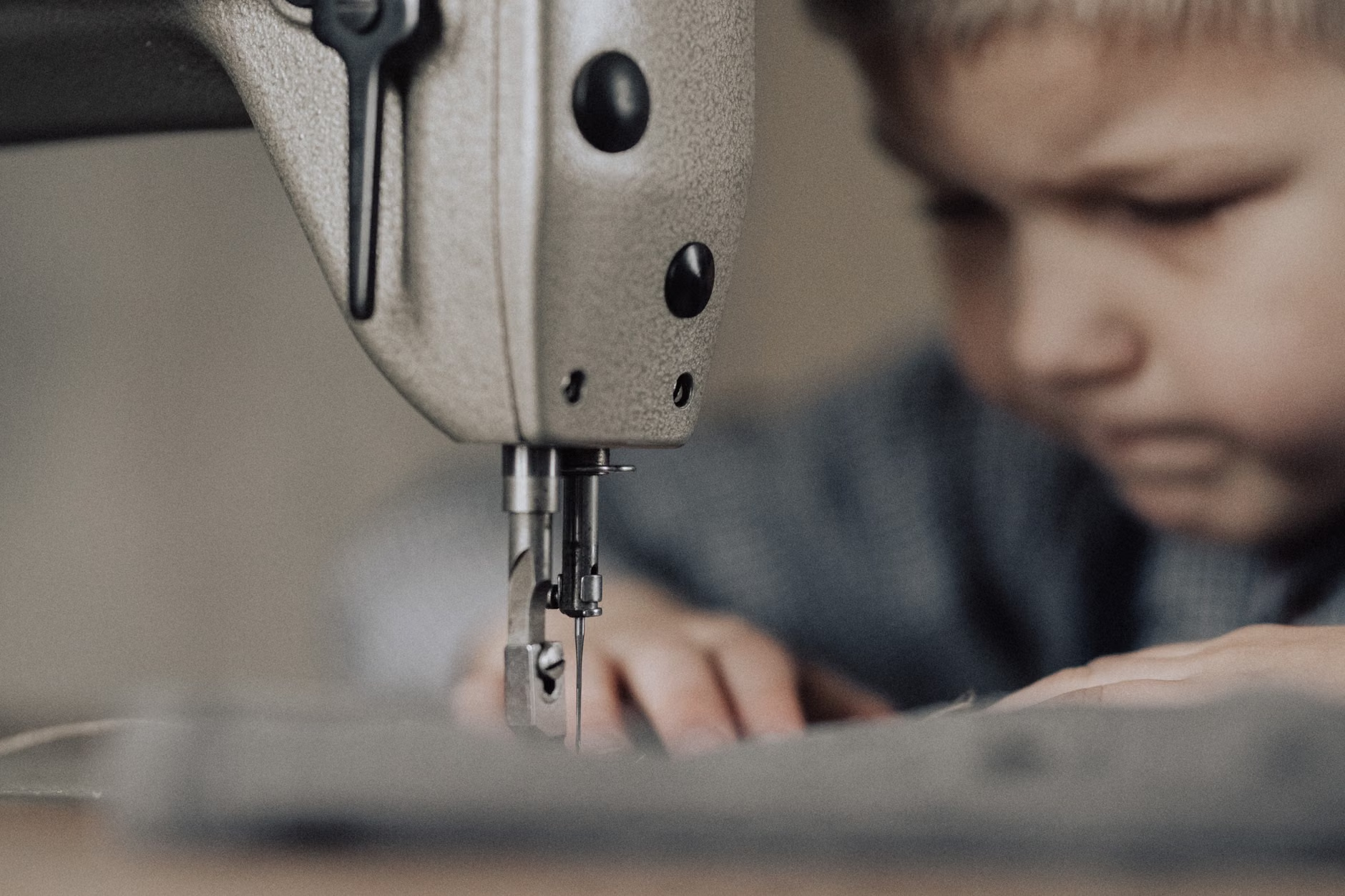
If you want to combat fast fashion, you have to build a repair culture. This is the antithesis of the “dispose and replace” mentality. Keep a small basket in your laundry room designated for repairs. When a garment is identified as needing a fix, it goes into the basket. Once a month, have a “Repair Party” where you sit down with your kids to tackle the items in the basket.
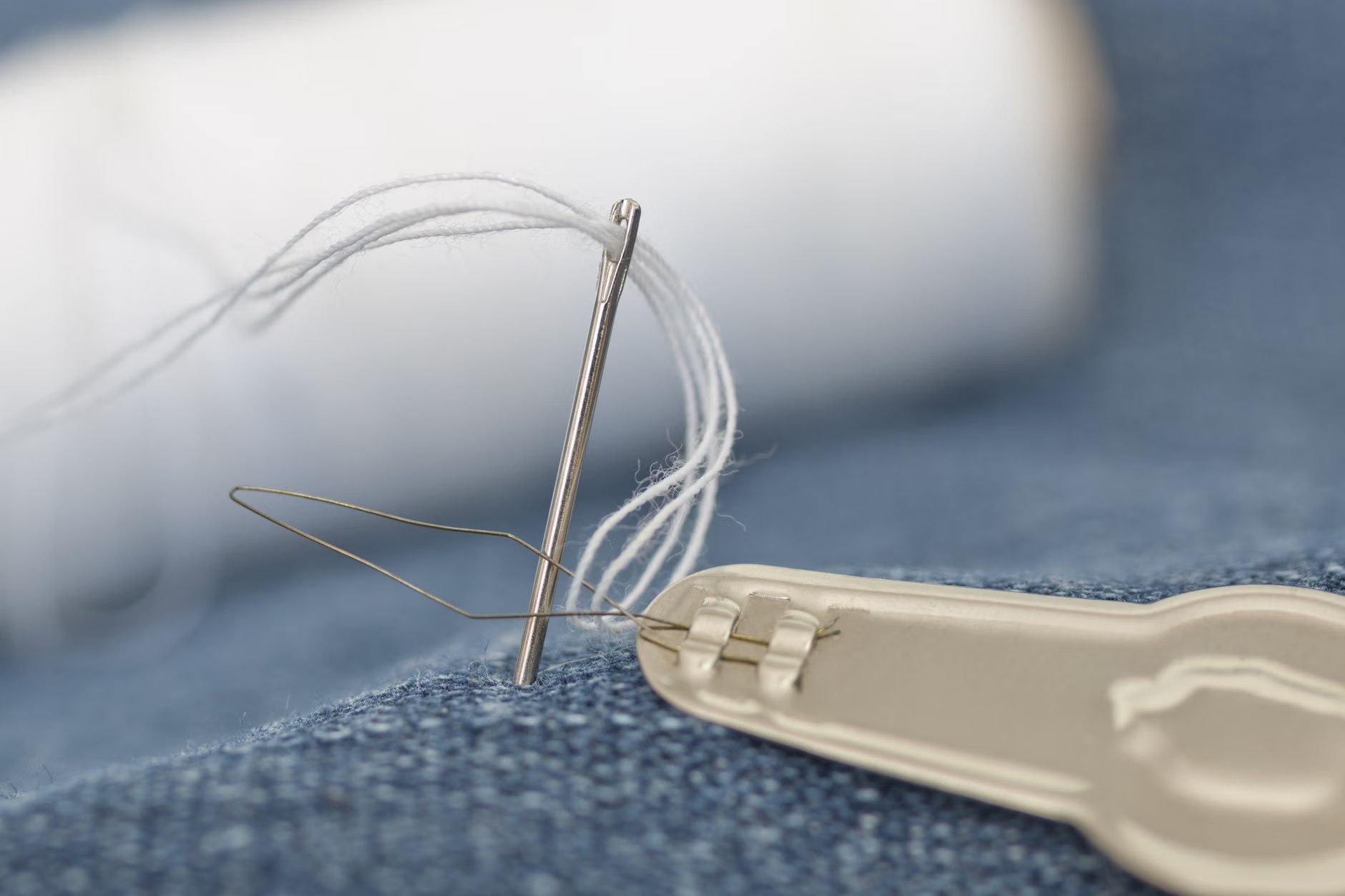
This doesn’t have to be high-level tailoring. It can be as simple as using iron-on patches to cover a hole in a pair of jeans, or learning how to sew a simple running stitch. The point is the process. When a child sees that a piece of clothing can be saved, they gain a sense of agency. They realize they are not just consumers; they are custodians of their own belongings.
Handling the Emotional Attachment
Let’s be honest: kids form deep emotional attachments to their clothes. That tattered shirt with the faded cartoon character on it might be “garbage” to you, but it’s a memory to them. During an audit, be careful not to be overly clinical.
If they refuse to part with something that is clearly too small or ruined, ask them, “What do you love about this?” If it’s the memory, consider taking a photo of them in it, or keeping a small piece of the fabric to include in a memory box. This validates their feelings while still addressing the practical need to clear out the closet.
Integrating Sustainable Habits into Daily Life
Once the audit is done, how do you maintain the momentum? It starts with changing the way you talk about clothing at home. Avoid phrases like “I need to go shopping to feel better” or “This is cheap, let’s just grab it.” Instead, frame shopping as a deliberate act of selecting items that are durable, necessary, and aligned with your family’s values.
Consider the “One-In, One-Out” rule. If a new item enters the wardrobe, an old item must be donated, repaired, or repurposed. This naturally caps the volume of clothing in the house and forces a thoughtful decision-making process for every new purchase. It’s a simple, rhythmic rule that kids can easily understand and help enforce.
Common Pitfalls and How to Avoid Them
One of the biggest mistakes parents make when teaching sustainability is being too rigid. If you make it feel like a punishment or an endless list of rules, your kids will eventually rebel against the concept. Keep it light. If a shirt is truly beyond repair and you have to toss it, don’t make a scene about it. Acknowledge it, explain why it couldn’t be saved, and move on. The goal is progress, not perfection.
Another pitfall is the “shaming” of past purchases. Don’t look at their closet and say, “Look at all this junk you bought.” That’s counterproductive. Instead, say, “Look at how much we’ve learned about our clothes. Let’s see what we can do to make these last longer.” You are on the same team.
The Bigger Picture: Why This Matters for the Future
When our kids grow up, they will be entering a world where resource scarcity is a genuine concern. By teaching them about the lifecycle of their clothes now, we are giving them a toolkit for the future. They will understand that everything has a cost, and that their actions—what they buy, how they care for it, and how they discard it—have a real, tangible impact.
This isn’t just about laundry or closets. It’s about developing a mindset of stewardship. It’s about teaching them that they have the power to slow down the cycle of consumption and that there is profound satisfaction in taking care of what we have. It’s a quiet, daily rebellion against the noise of a culture that tells us we are only as good as our next purchase.
Final Thoughts
Sustainability is not a destination; it’s a practice. It’s the small, repetitive actions—the mending, the organizing, the mindful shopping—that add up over time. By involving your children in the wardrobe audit, you aren’t just cleaning a closet. You are helping them become conscious, thoughtful, and capable individuals who understand their place in the world and their responsibility to it. And really, that’s the most important thing we can pass on.
For more information on the environmental impact of textiles and how to recycle properly, you can visit resources like the EPA’s guide on textile recycling or look into local circularity initiatives in your city.
Frequently Asked Questions
1. At what age should I start involving my kids in a wardrobe audit?
You can start as early as age 4 or 5. At this stage, it’s mostly about sorting by color or type. By age 8 or 9, they can fully participate in the decision-making process regarding what fits, what is broken, and what should be donated.
2. What if my child refuses to let go of items they have clearly outgrown?
It is important to respect their emotional connection. Try the “Memory Box” strategy: take a photo of them wearing the item or keep a small square of the fabric. This honors the memory while freeing up the physical space in the closet.
3. Where can I find reliable information on local textile recycling?
Most municipal waste management websites have a “Recycling A-Z” or similar guide. You can also look for “take-back” programs from specific clothing brands or search for local textile banks that specialize in recycling fabrics that are too damaged for donation.
Note: This article is intended for educational purposes and reflects general best practices for sustainable living. Always check your local waste disposal regulations, as they can vary significantly by region.