You don’t need to move to a warmer climate or invest in a commercial greenhouse to grow plants that seem “out of reach” for your area; by identifying and utilizing the micro-climates already present in your backyard, you can effectively shift your garden’s hardiness zone by one or two levels.
- Hardiness zones are generalized: Official climate maps provide averages, but your specific backyard likely has pockets that are 3-5 degrees warmer or cooler than the local weather report indicates.
- Structural heat storage: Masonry walls, stone paths, and concrete patios absorb daytime heat and release it at night, creating “warm spots” ideal for heat-loving vegetables or Mediterranean herbs.
- Wind and drainage are modifiers: Cold air flows like water and settles in low-lying spots (frost pockets); using natural barriers to deflect wind can prevent plant damage and extend your growing season by weeks.
If you have ever watched your neighbor’s tomatoes thrive while your own struggle despite planting them on the same day, you have already witnessed the power of a micro-climate. For those of us in our 30s and 40s balancing work, parenting, and home maintenance, gardening often feels like a gamble against the weather. We look at the USDA Hardiness Zone (or the equivalent climate map for your country) and assume that if it says we are in Zone 6, we are stuck with Zone 6 plants. That is a myth.
Micro-climate gardening is the art of observation. It is about understanding that your home is not a uniform climate zone; it is a collection of smaller environments. By mapping these out, you can stop fighting the regional climate and start working with the specific geography of your own yard.
Why Your Backyard Isn’t One Single Climate
To understand a micro-climate, think about the last time you walked around your house on a chilly autumn evening. You probably noticed that the air felt noticeably warmer near the south-facing brick wall of your garage compared to the open, shaded patch of lawn on the north side. That, in a nutshell, is a micro-climate.
Micro-climates are influenced by three primary factors: topography, structural thermal mass, and wind exposure.
1. The Impact of Thermal Mass
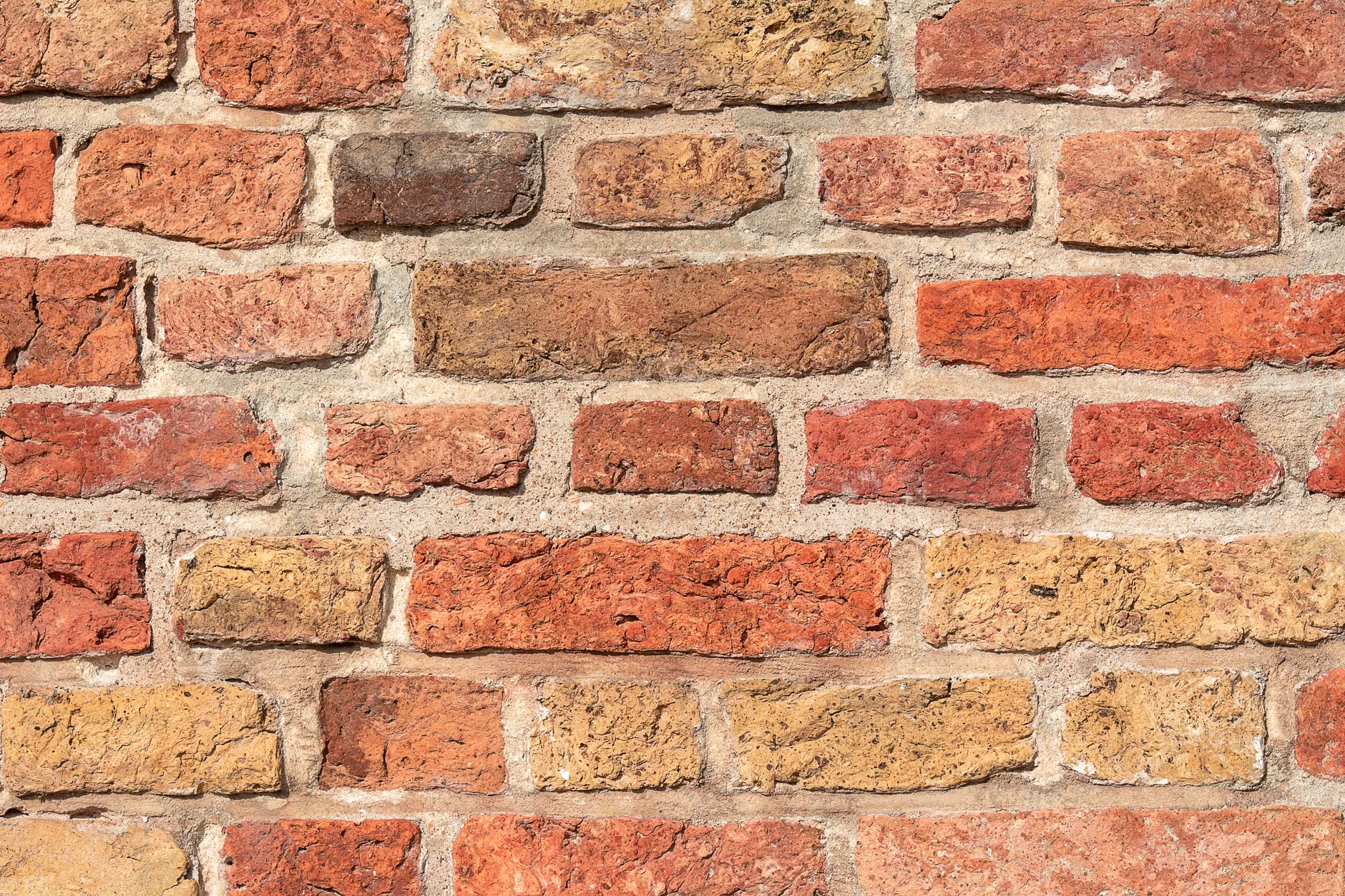
Hard surfaces like brick walls, stone walkways, and concrete patios are effectively “batteries” for the sun. Throughout the day, they soak up solar radiation. As the sun sets and the air temperature drops, these materials release that stored heat back into the immediate environment. This is why you can often grow plants that are one zone “hardier” than your official rating if you plant them directly against a south-facing masonry wall.
2. The “Cold Air Drainage” Phenomenon
Cold air is denser than warm air. It behaves much like water; it flows downhill and pools in low-lying areas. If your yard has a dip or a depression, that spot is likely a “frost pocket.” You might find that your garden suffers from late spring frosts or early autumn freezes in these spots, while plants just twenty feet away on higher ground remain unscathed. Never plant your most sensitive, early-blooming fruit trees in these low spots.
3. Wind and Evapotranspiration
Wind is the silent thief of moisture and heat. Even if your ambient temperature is warm, a persistent wind will strip heat from plant leaves and moisture from the soil. Creating a windbreak—even a small one—can significantly increase the survival rate of tender plants. A simple trellis with climbing vines or a strategic row of shrubs acts as a filter, slowing the wind down and creating a calmer, more stable zone behind it.
Mapping Your Garden: A Step-by-Step Guide
Before you buy another plant, you need a “climate map” of your yard. You don’t need expensive sensors; just a notebook and a few weekends of observation.
Step 1: Morning and Evening Checks
Go outside at 7:00 AM and 7:00 PM. Note where the sun hits first and where the shadows linger. In the northern hemisphere, south-facing areas get the most intense, direct sun. North-facing areas are consistently cooler and shadier.
Step 2: The Frost Test
After a light frost, walk your property. Where is the frost still visible at 10:00 AM? Where has it melted? The spots where frost lingers are your “cold zones.” The spots where it vanishes first are your “warm zones.”
Step 3: Wind Pattern Identification
Observe your trees and shrubs during a windy day. Which way are they leaning? Where do you feel the air “whipping” around the corners of your house? Avoid placing delicate plants in these high-velocity corridors.
| Location Type | Climate Characteristic | Best Use |
|---|---|---|
| South-facing wall | High thermal mass, warm | Tomatoes, peppers, herbs |
| North-facing side | Shady, cool, moist | Hostas, ferns, leafy greens |
| Low-lying dip | Frost pocket, damp | Native wetland plants, trees |
Practical Interventions: How to Manipulate Your Micro-Climate
Once you identify your zones, you can start “engineering” them to suit your gardening goals. You aren’t changing the weather; you are changing how the weather interacts with your plants.
The Power of Verticality and Barriers
If you have a particularly windy corner, don’t just put up a solid fence. A solid fence creates turbulence—the wind hits the wall and “bounces” over, creating a vacuum effect on the other side. A semi-permeable barrier, like a lattice fence or a hedge, slows the wind down gradually, which is much better for plant health.
Using Mulch as a Climate Regulator
Many gardeners use mulch purely for weed control, but it is also a thermal regulator. A thick layer of organic mulch (like wood chips or straw) acts as an insulator for the soil. It keeps the roots cool in the summer and prevents the ground from freezing as deeply in the winter, which can be the difference between a perennial surviving or dying during a harsh cold snap.
Hoop Houses: The Ultimate Micro-Climate Tool
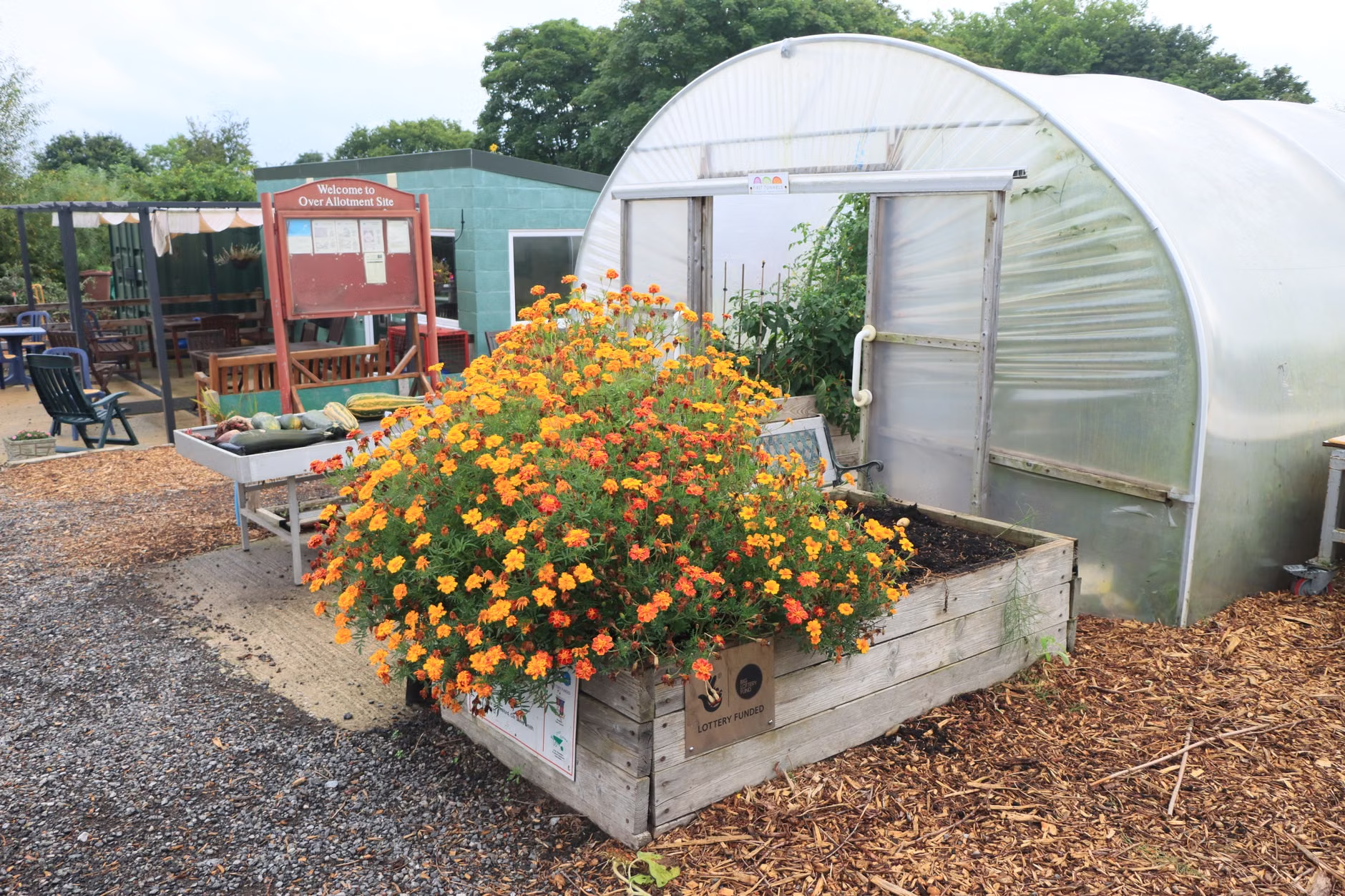
For the busy parent, a simple DIY hoop house is a game-changer. You don’t need a permanent structure. Using PVC pipes and clear greenhouse plastic, you can cover a raised bed in late spring or early autumn. This creates a “mini-greenhouse” effect that can raise the internal temperature by 5-10 degrees Fahrenheit, allowing you to start your season a month early and extend it by another month at the end.
Common Mistakes to Avoid
Even experienced gardeners fall into the trap of over-engineering their micro-climates. Here are a few things to watch out for:
- Ignoring Water Flow: If you build a raised bed in a low-lying area to “fix” the soil, but it sits in the path of heavy rainwater runoff, you might end up with a soggy mess. Always ensure your micro-climate modifications account for drainage.
- Forgetting the “Sun Shift”: A spot that is perfectly sunny in June might be completely shaded by the neighbor’s tree or your own house by September as the sun’s angle changes. When planning your garden, think about the sun’s position throughout the entire growing season, not just when you are planting.
- Over-Protecting Plants: Sometimes we try so hard to keep plants warm that we cut off their ventilation. Plants need airflow to prevent fungal diseases. If you are using covers or windbreaks, ensure they are not creating a stagnant, overly humid environment where mold can thrive.
The Decision Matrix: Which Climate Strategy Works for You?
If you are short on time and energy, you cannot modify every square inch of your yard. Focus your effort where it provides the highest return on investment.
Scenario A: The “I want fresh produce” gardener.
Focus your energy on the south-facing wall. This is your high-value production zone. Use the thermal mass of the wall to extend the season for high-demand crops like tomatoes and peppers. Ignore the “difficult” corners of your yard for now.
Scenario B: The “Aesthetic and Low Maintenance” gardener.
Focus on the north side of your home. The challenge here is shade and moisture. Instead of trying to force sun-loving plants to grow, embrace the cool, damp micro-climate by planting woodland-style perennials that thrive in these conditions. This saves you from the constant battle of pruning and fertilizing plants that aren’t happy in their environment.
Scenario C: The “Climate Resilient” gardener.
Focus on windbreaks and soil insulation. If you live in an area prone to extreme temperature swings, your priority should be protecting the soil and the plant structure. A windbreak and a consistent, thick layer of mulch will do more for your garden’s longevity than any expensive plant food.
Beyond the Basics: Overlooked Variables
One factor that is frequently ignored is light reflection. If you have a light-colored house or a large window that reflects sunlight onto a specific part of your garden, you have created a “high-intensity zone.” This area will be significantly hotter and brighter than the rest of the yard. While this might be perfect for sun-drenched succulents, it could be a death sentence for a plant that prefers partial shade. Always observe if your house itself is “aiming” extra sunlight at certain areas.
Another overlooked variable is urban heat islands. If you live in a dense city or a suburban area with a lot of asphalt, your ambient temperature is likely higher than the official rural weather station reports. This is a benefit for winter survival but a challenge for summer water management. If you live in an area with a lot of concrete, you will need to water more frequently than your neighbors who have larger, greener plots.
Finally, consider the “snow cover” variable. In colder climates, a thick, consistent blanket of snow is actually a great insulator. It prevents the ground from experiencing the “freeze-thaw” cycle that causes plants to heave out of the soil. If you have a spot in your yard that is constantly cleared of snow (like a driveway or a path), the plants in that area are at a higher risk of winter damage than those under a natural snowpack.
Final Thoughts: Start Small
You don’t need to transform your entire backyard in a single season. The beauty of micro-climate gardening is that it is inherently iterative. Start with one bed, one wall, or one corner. Observe how it behaves for a full year. Did the plants survive the winter? Did they get enough sun in July? Did they rot during the wet spring?
Gardening is, at its heart, an ongoing conversation with your specific piece of land. By paying attention to these small, local variations, you take the pressure off yourself to be a “perfect” gardener and instead become a more observant one. The goal isn’t to control nature, but to find the spots where nature is already leaning in your direction.
For more detailed information on regional climate patterns and hardiness zones, you can consult resources such as the USDA Plant Hardiness Zone Map (for US-based readers) or your local horticultural society’s climate guides.
Frequently Asked Questions
Q: How do I know if I have a frost pocket in my yard?
A: A frost pocket is usually a low-lying area where cold air settles. You can identify it by looking for where frost persists the longest in the morning after a cold night. If you notice your plants in a dip or a corner are consistently damaged by early or late frosts while others nearby are fine, you likely have a frost pocket.
Q: Can I really change my hardiness zone?
A: You aren’t changing the climate of your region, but you are creating a “niche” environment. By using structures like walls to capture heat or windbreaks to reduce cold stress, you can successfully grow plants that are rated for one zone warmer than your official rating. It is about creating a safer environment for the plant, not changing the weather itself.
Q: What is the best way to start mapping my micro-climates?
A: Start by taking a simple sketch of your yard and marking it at different times of the day for a week. Note where the sun hits, where the shade lingers, and where the wind feels strongest. This visual map will reveal the “hot” and “cool” spots much more clearly than just trying to remember them from memory.
SoCooly note: Gardening is a long game. Don’t be discouraged by a few failed experiments—each one is just a data point that helps you understand your home’s unique climate even better.