The most effective way to reclaim your weekend sanity as a parent is to trade the high-stress, traffic-clogged highway commute for a coastal rail journey that prioritizes movement over mere arrival.
- The “Rail-First” Advantage: Switching to trains transforms travel time from a high-stress endurance test into a manageable, productive, or relaxing block of time for the whole family.
- Strategic Planning: Success lies in choosing coastal routes with frequent stops and amenities, ensuring you aren’t stranded in transit-deserts.
- The Minimalist Mindset: Rail travel forces you to pack efficiently, which significantly reduces the logistical burden of managing luggage and children simultaneously.
If you are in your mid-30s or 40s, you probably know the specific, sinking feeling of a Friday afternoon. You’ve had a full week of balancing professional responsibilities and the domestic labor of parenting. The prospect of spending four hours behind the wheel, navigating highway congestion with restless children in the backseat, feels less like a “getaway” and more like a punishment. We often mistake travel for the act of driving, but for those seeking a genuine reset, the rail is the superior vehicle for coastal exploration.
Why the Coastal Rail Shift Matters for Modern Families
The appeal of the coastal rail route isn’t just about the scenery, though that certainly helps. It is about the fundamental change in the rhythm of your weekend. When you drive, the parent in the driver’s seat is perpetually occupied. You are scanning for exits, managing fuel, and battling the fatigue of the road. When you are on a train, you are physically present with your family in a way that driving simply does not allow.
Consider the cognitive load of a typical road trip. You are managing navigation, monitoring traffic updates, and trying to mediate disputes from the backseat—all while maintaining the safety of the vehicle. By opting for rail, you outsource the navigation and the vehicle operation to professionals. The “pilot” role is removed from your personal responsibilities, allowing you to actually participate in the journey rather than just facilitating it.
Furthermore, coastal train lines often follow routes that were established in an era when the journey was as important as the destination. They hug cliffs, bypass the modern sprawl of highway industrial parks, and pull directly into the hearts of seaside towns. You aren’t just arriving at a destination; you are arriving in a location where the walk to your accommodation is often shorter than the walk from a long-term parking lot.
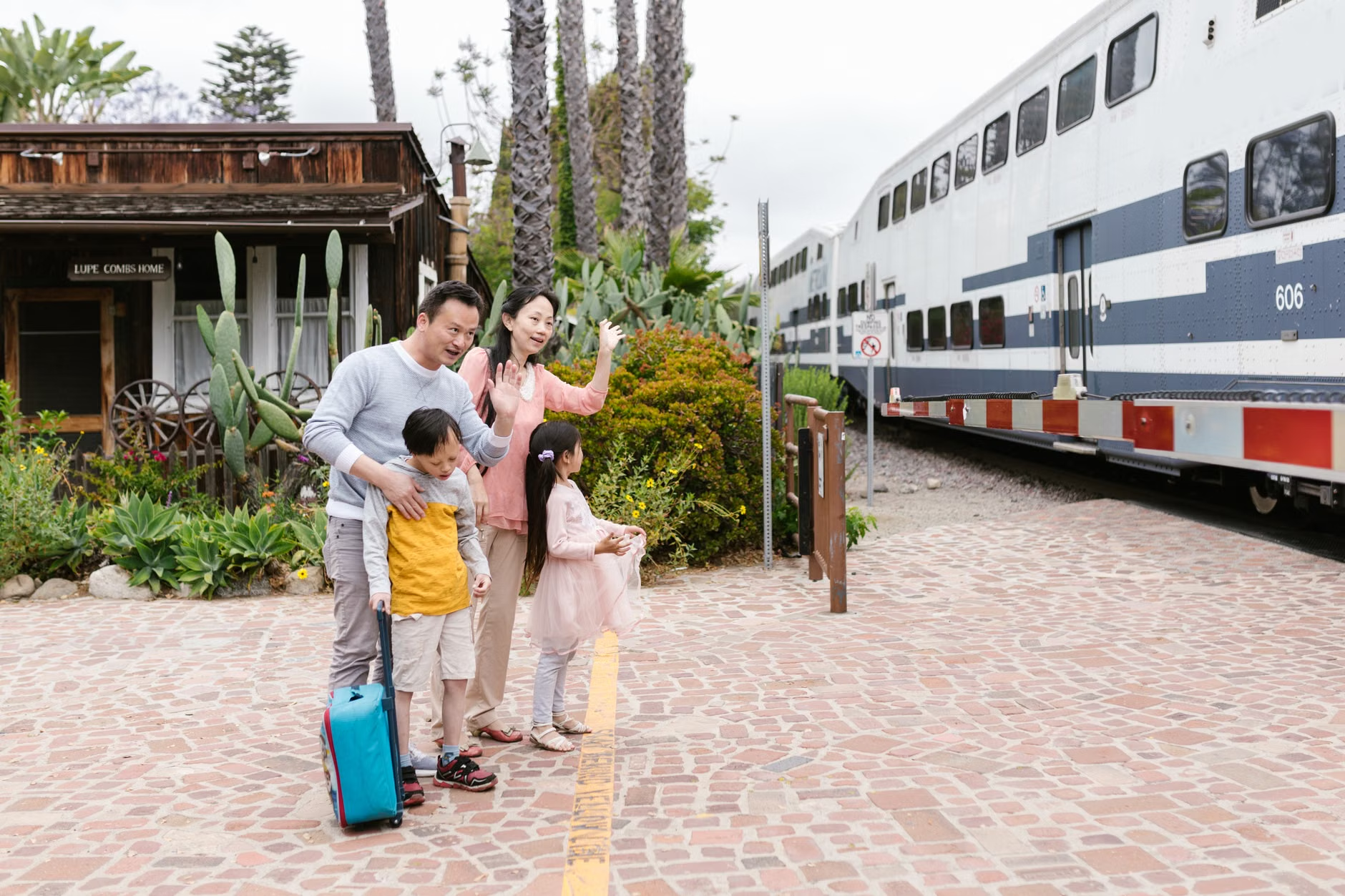
Mapping Your Route: The Logistics of the ‘Weekend-Rail’
The biggest mistake most parents make when planning a rail trip is failing to account for the “last mile.” Unlike a car, which drops you at your hotel door, the train drops you at a station. You need to map out the connectivity between the station and your final destination before you book your tickets.
Start by identifying coastal rail corridors that offer “hub-and-spoke” connectivity. A hub is your major city station, and the spokes are the smaller, local lines that branch off toward the coast. If you are living in a major metropolitan area, look for regional rail authorities that offer weekend excursion fares. These are often cheaper and specifically designed for leisure travel rather than commuting.
The 3-Step Selection Framework
When evaluating a potential route, use this simple framework to determine if it is “parent-friendly”:
| Criteria | What to Look For | Why It Matters |
|---|---|---|
| Duration | Under 3 hours | Anything longer pushes the limits of toddler/young child patience without significant breaks. |
| Frequency | At least every 90 minutes | Provides a safety net if you miss a train or need to adjust your departure time. |
| Connectivity | Station-to-town proximity | Ideally, the station should be within walking distance or a short, predictable bus/shuttle ride to the beach or town center. |
Always verify the “station accessibility” on local transit websites. Are there elevators? Is there a level platform? If you are traveling with a stroller or heavy bags, these details are not optional. A station that requires you to carry a stroller up two flights of stairs is a logistical failure point that will set a negative tone for your entire weekend.
Managing the On-Board Experience: A Survival Guide
Even on a train, parenting remains parenting. The environment is different, but the challenges—boredom, hunger, and physical restlessness—are the same. The difference is that you have more agency to address them on a train than you do in a car.
The “Rail-First” strategy requires a shift in how you pack. When driving, we tend to overpack because we have the trunk space. On a train, you are limited by what you can carry. This is actually a benefit. Use a modular packing system. Pack one “transit bag” that stays with you at your seat, and keep your primary luggage minimized. The transit bag should contain exactly what you need for the duration of the ride: high-protein snacks, a tablet with downloaded content, and at least one manual activity like a coloring book or card game.
One of the best features of modern rail travel is the freedom of movement. If your child needs a change of scenery, you can walk to the café car or simply stand in the vestibule for a few minutes. You cannot do this in a moving car. Use this to your advantage. Treat the train as a mobile living room rather than a transit vessel.
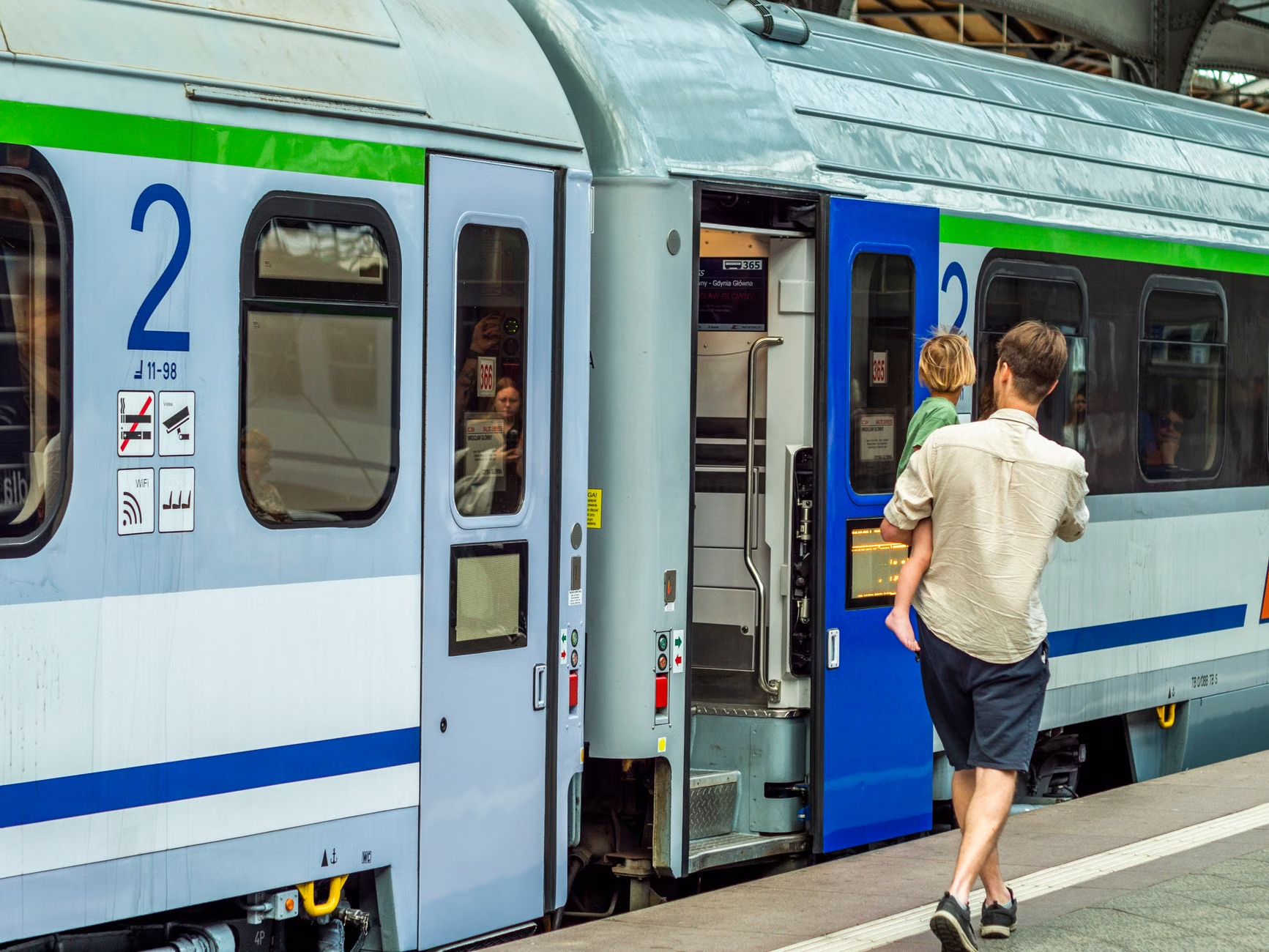
Common Pitfalls and How to Avoid Them
Every seasoned traveler has a “lesson learned” story. In the context of rail travel, most of these stories stem from over-ambition. Here are the three most common mistakes parents make when attempting a coastal rail getaway:
- The Tight Connection Trap: Never book a connection with less than 45 minutes of buffer time. If your first train is delayed, a 15-minute transfer window becomes a source of extreme anxiety. Plan for the delay, not the best-case scenario.
- The “Only One Station” Fallacy: Many families assume the main station in a coastal town is the best one. Often, smaller, secondary stops are closer to the beach or the quieter, family-oriented parts of the coast. Use Google Maps to verify the walking distance from every potential station on your route.
- Ignoring the “Return-Trip Fatigue”: The Sunday afternoon return journey is the most critical part of the trip. Do not plan a high-intensity activity for Sunday morning. Keep the morning low-key so that everyone is calm and organized by the time you head to the station.
Another often overlooked detail is the “station-to-accommodation” gap. Many coastal towns are hilly. If you have children and luggage, a half-mile walk that looks flat on a map might actually be a steep, exhausting climb in reality. Always check the topography or look for local taxi/ride-share availability at the destination station before you leave.
The Economics of the Rail Escape
There is a persistent myth that rail travel is significantly more expensive than driving. When you factor in the “hidden” costs of car travel—gas, tolls, parking fees in coastal towns (which can be exorbitant during peak season), and the inevitable wear-and-tear on your vehicle—the train often comes out as the more economical choice.
Furthermore, consider the “value of time.” The time you spend on a train is not “lost” time. You can work, read, or play games with your children. When you drive, that time is essentially dead time, spent in a state of high-alert vigilance. If you assign a monetary value to your stress levels and the quality of your time, the rail becomes an investment in your mental health.
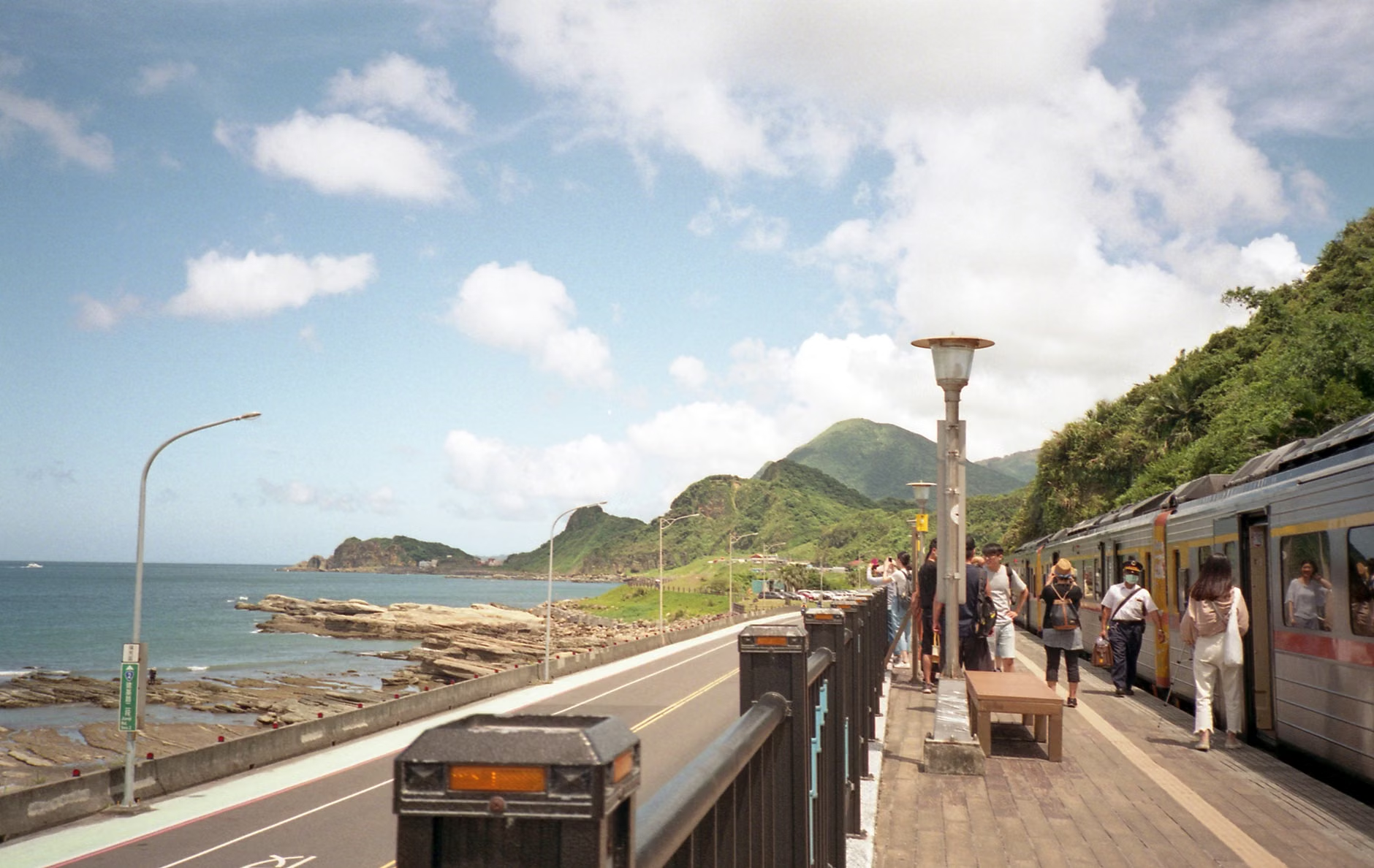
Building the Habit: Why Regularity Beats Intensity
We often treat travel as a rare, high-stakes event. We save up for one massive, stressful vacation a year and wonder why we return feeling exhausted. The “Weekend-Rail” strategy is about frequency over intensity. By taking three or four small, low-stress coastal trips throughout the year via rail, you build a rhythm of rest that is far more sustainable than one big trip.
The beauty of this approach is that it becomes familiar. Once you’ve done the route once, you know the quirks of the station, you know where the good snacks are, and you know exactly how much time you need to get from the platform to the beach. Familiarity removes the friction. When travel is low-friction, you are more likely to actually do it, and you are more likely to enjoy it when you do.
This isn’t about being a “traveler” in the adventurous sense; it’s about being a parent who refuses to be trapped by the logistics of modern life. It’s about recognizing that you deserve a weekend that doesn’t require a recovery period on Monday morning.
Practical Considerations for the Modern Parent
Before you finalize your itinerary, take a moment to look at the digital infrastructure of your chosen route. Does the train line have an app? Does it provide real-time updates on delays? In the world of rail, information is your most valuable asset. If you have the app, you can pivot your plans instantly if a train is cancelled or delayed.
Also, consider the timing of your ticket purchase. Most rail operators offer significant discounts for booking in advance. Unlike airlines, where prices fluctuate wildly, rail pricing is often more predictable. However, the best seats—the ones with tables or extra legroom—sell out first. For a family, the table seats are worth the extra cost. They provide a surface for activities, snacks, and personal items, effectively doubling the usable space of your seating area.
Finally, remember that the goal is not perfection. There will be a crying child. There will be a forgotten charger. There might even be a delayed train. But because you are on a train, these incidents are manageable hurdles rather than road-trip-ending disasters. You can get up, walk around, and reset. That is the true power of the rail.
The Long-Term Impact of Slowing Down
As our children grow, the memories they hold onto aren’t usually the ones associated with high-stress logistics. They remember the quiet moments, the shared experiences, and the feeling of being in a new place. By choosing the train, you are modeling a different way of moving through the world. You are showing them that the journey matters, that slowing down is a valid choice, and that you don’t always have to be in the driver’s seat to enjoy the destination.
There is a quiet dignity in taking the train. It is a choice to disconnect from the frantic pace of the highway and reconnect with the landscape and your family. It is a small rebellion against the expectation that we must always be driving, always pushing, and always arriving as quickly as possible. For parents in their 30s and 40s, this rebellion is not just a luxury; it is a vital component of maintaining a healthy, balanced life.
Start with one weekend. Choose a coastal town you’ve been curious about, look up the rail connections, and commit to the journey. You might find that the train ride itself becomes the highlight of your weekend, and the beach is just a bonus.
Frequently Asked Questions
1. How do I handle heavy luggage while traveling by train with kids?
The golden rule is to minimize what you carry. If you can’t manage it while also holding your child’s hand, it’s too much. Use a backpack-style diaper bag or travel bag to keep your hands free. If you are staying for more than a weekend, look for accommodations that offer laundry services or consider a “station-side” rental so you don’t have to carry your bags far.
2. What should I do if my child has a meltdown on the train?
Don’t panic. The beauty of a train is that you are not confined to a single seat. Take your child to the vestibule (the area between carriages) or the café car. The change of environment and the movement of the train often act as a reset button. Remember, other passengers have been children too; a brief moment of noise is a normal part of life, and you are well within your rights to navigate it at your own pace.
3. Are rail trips actually cheaper than driving?
It depends on your destination and the size of your family, but when you factor in the “hidden” costs of driving—parking, tolls, fuel, and the depreciation of your vehicle—rail travel is often highly competitive. Use online fare calculators to compare the cost of a train ticket against the total cost of a road trip. Don’t forget to check for family rail cards or weekend discount passes, which can significantly lower the price of travel.
If you have questions about specific routes or need help navigating a transit website, feel free to reach out. The goal is to make your next coastal trip as seamless as possible. Remember, the journey is meant to be part of the rest, not another item on your to-do list. Take the train, breathe, and enjoy the view.
For more information on national rail services and planning tools, visit your local government’s transport authority website or international resources such as The Man in Seat 61 for comprehensive global rail travel advice.