- Economic Efficiency: A tool library can save an average household hundreds of dollars annually by eliminating the need to purchase rarely used, high-cost power tools.
- Space Management: Utilizing a tool library solves the common “garage clutter” problem, freeing up square footage in your home for family use rather than storage.
- Skill Building: These libraries serve as community hubs, offering workshops that turn intimidating DIY projects into manageable weekend tasks for parents and homeowners.
You probably know the feeling: you need to hang a heavy mirror or fix a wobbly chair, so you head to the hardware store, buy a drill or a sander, use it for exactly ten minutes, and then spend the next five years tripping over it in the back of your closet. For those of us in our 30s and 40s, balancing the endless demands of parenting, home maintenance, and professional life, this cycle isn’t just annoying—it’s an unnecessary drain on our budget and our precious storage space.
Enter the community tool library. It is essentially a public library, but instead of books, you check out lawnmowers, pressure washers, tile saws, and power drills. It’s a simple, radical shift that moves us away from the “buy-to-own” mentality that dominates modern consumer culture. If you’ve been looking for a way to reclaim your garage, save money, and finally finish those home projects without turning your home into a warehouse, this is your guide.
What Exactly is a Community Tool Library?
At its core, a community tool library is a non-profit or municipal initiative that manages a shared inventory of tools. Most operate on an annual membership model. You pay a modest fee—often between $30 and $100 per year—which grants you access to a catalog of equipment that would otherwise cost thousands to acquire individually.
Think of it as a “sharing economy” model applied to physical infrastructure. While apps like TaskRabbit or local neighborhood groups help you find people to do the work, a tool library empowers you to do the work yourself, but with the professional-grade equipment you usually wouldn’t justify buying. These libraries are often staffed by volunteers or part-time professionals who can provide basic maintenance advice, making them safer and more accessible than shopping at a big-box store where the staff might be more focused on sales than utility.
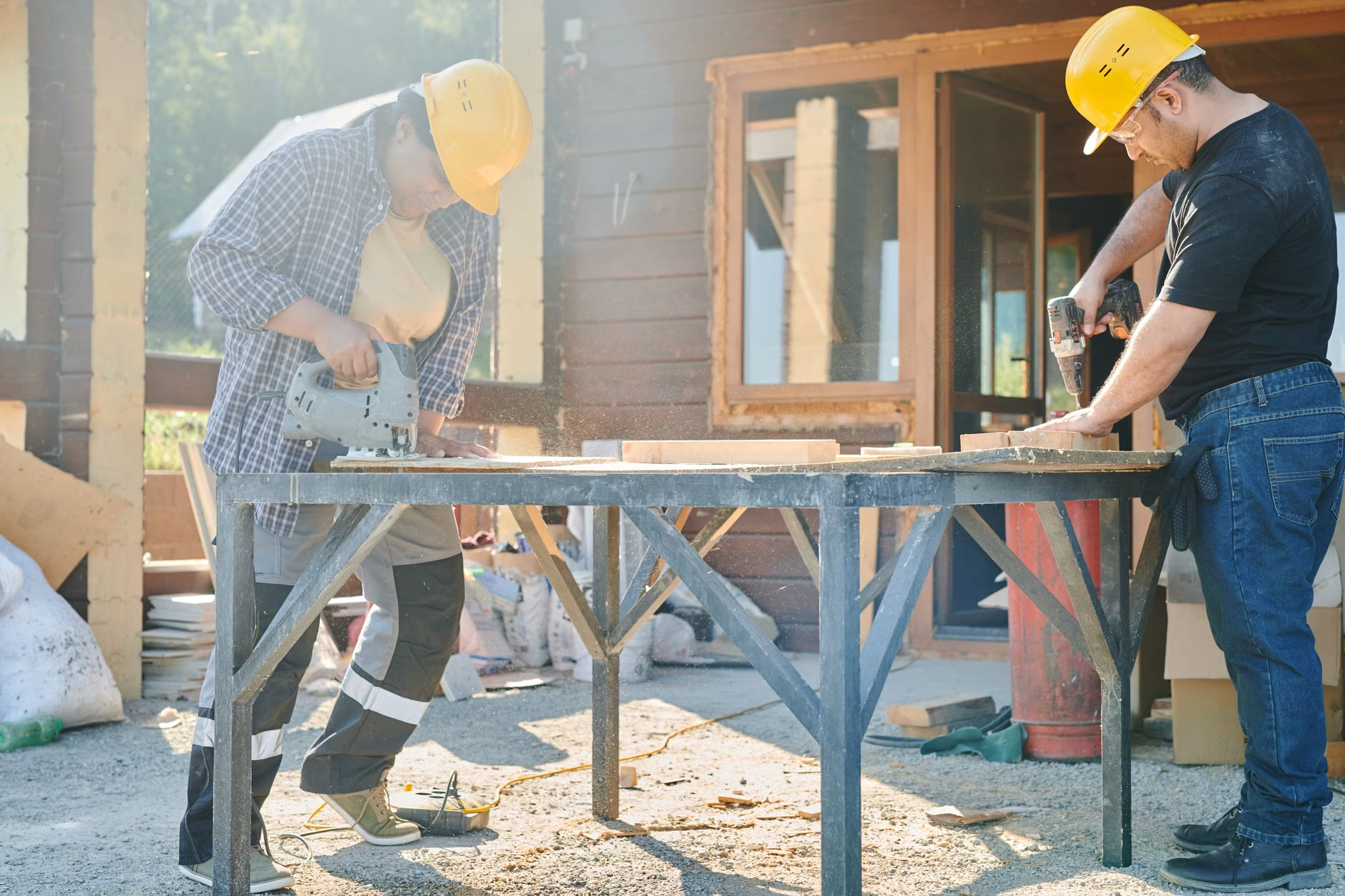
Why It Matters for Your Daily Life
The primary benefit is financial, but the secondary benefits are often more impactful. First, consider the depreciation and maintenance cost. A $200 power washer loses value the moment you take it home. Furthermore, it requires maintenance—oil changes, filter replacements, and space-consuming storage. In a tool library, that burden is handled by the library staff. You show up, sign out the tool, use it for your weekend project, and return it. You are paying for the utility of the tool, not the possession of it.
For parents, space is the ultimate luxury. If you’re living in a suburban home or an apartment, your garage or shed is likely already overflowing with strollers, seasonal decorations, and sports gear. Adding a collection of bulky power tools to that mix is a recipe for clutter-induced stress. By offloading your tool collection to a library, you reclaim that square footage for things that actually serve your family’s daily needs.
The Hidden Costs and Trade-offs of Tool Ownership
It is easy to fall into the trap of thinking that owning a tool is “safer” because it’s always there when you need it. However, let’s look at the reality of the “owning” lifestyle versus the “borrowing” lifestyle. If you own a tool, you are responsible for its lifecycle. When a battery dies in a cordless drill, you have to find a replacement, which often costs as much as a new unit. If the tool breaks, the repair cost is on you. When you borrow from a library, you are essentially delegating that risk to the organization.
Common Mistake: Many people overestimate how often they will use a specific tool. Before you buy, apply the “Rule of Three”: If you don’t anticipate using a tool at least three times a year for the next three years, you should never buy it. Instead, find a tool library or, if one isn’t available, consider a local rental shop or a neighbor-sharing app.
| Factor | Owning | Tool Library |
|---|---|---|
| Upfront Cost | High ($100 – $500+) | Low ($30 – $100/year) |
| Maintenance | Your responsibility | Library responsibility |
| Storage | Requires dedicated space | Zero space required |
| Availability | Instant | Requires planning/booking |
The only significant trade-off is availability. Because community tool libraries rely on a shared pool, you cannot always guarantee that the specific model or tool you want is available on the exact morning you decide to start your project. This requires a shift in mindset: it forces you to plan your home projects. While this might sound like a drawback, it actually helps prevent the “impulse project” trap, where you start a task without having the right materials or enough time to finish it, leading to half-finished DIY disasters.
How to Find or Start Your Own Community Tool Library
If you’re ready to explore this, your first step is a simple search. Use terms like “Tool Library [Your City/Region]” or “Community Tool Shed.” Many of these are run by local municipalities or neighborhood non-profits. If you are in the United States, organizations like the Local Tool Library Network often provide directories of existing spaces. In the UK or Canada, check your local council or borough website, as many green initiatives are now funding these libraries as part of waste-reduction programs.
What if there isn’t one near you?
If you live in an area without a formal tool library, you have an opportunity to be the catalyst. Starting a mini-library doesn’t require a warehouse. You can start small within your own neighborhood or apartment building. Here is a simple, actionable framework to get started:
- Gauge Interest: Use your local community Facebook group or neighborhood app to ask who has tools they would be willing to share. You’ll be surprised how many people are happy to let a neighbor borrow a ladder if it means they can borrow a hedge trimmer in return.
- Establish a Simple Ledger: Use a basic digital spreadsheet (like Google Sheets) to track who has what. Keep it simple: Tool Name, Owner, Borrower Name, Date Out, Date In.
- Set Ground Rules: Decide on a policy for breakages. A good rule of thumb is “you break it, you replace it or pay for the repair.” This simple rule keeps everyone accountable.
- Safety First: If you are sharing power tools, ensure you have basic safety manuals available. You can usually find PDF versions of these online for almost any tool model.

Empowering Your DIY Skills Through Workshops
One of the most overlooked benefits of the community tool library is the educational component. Many libraries host weekend workshops. These aren’t just about how to use a drill; they are about how to fix things. In our 30s and 40s, we are often the primary maintainers of our homes, yet many of us never learned the basics of home repair.
Learning from a pro in a community setting is vastly different from watching a YouTube video. When you are in a workshop, you can ask, “Why is my wall crumbling when I try to insert this anchor?” and get a real-time answer based on your specific situation. This builds confidence. Once you know how to fix a leaky faucet or patch a hole in the wall, you stop being a passive consumer of repair services and start being an active steward of your home.
Pro-tip: Look for workshops that focus on “maintenance” rather than “renovation.” Renovation is expensive and complex. Maintenance—like sharpening blades, changing vacuum filters, or tightening cabinet hinges—is the secret to making your home last longer and look better with minimal investment. These are the skills that save you thousands of dollars over the lifetime of your homeownership.
Managing Expectations and Common Pitfalls
To make the library experience work for you, you have to be realistic about your planning. If you are planning a massive home renovation project, do not wait until the night before to check the availability of your tools. Treat the tool library like a car rental or a hotel booking. Plan your project schedule around the tool’s availability.
Another common mistake is over-borrowing. It is tempting to borrow three or four different power tools because they are free to use. However, if you only have one weekend, you will likely end up overwhelmed and return half of them unused. This creates a “bottleneck” where you are holding onto tools that others could be using. Be respectful of the community aspect. If you aren’t going to use it this weekend, don’t take it.
Lastly, pay attention to the condition of the tool when you pick it up. If you notice a frayed cord or a loose handle, report it immediately to the staff. Don’t wait until you get home to find out the tool isn’t functional. Most libraries have a check-in/check-out process, but it is always safer to verify the tool’s integrity before you leave the premises.

The Long-Term Impact on Your Household
When you stop buying tools, you stop buying into the idea that every problem requires a new purchase. This shift in perspective eventually bleeds into other areas of your life. You start looking at other items—kitchen gadgets, camping equipment, party supplies—and asking yourself if you really need to own them, or if you could find a way to share them with your community.
For parents, this is a powerful lesson to pass on to children. Demonstrating that you don’t need to own everything to have access to everything is a key component of sustainable living. It teaches the value of community, the importance of maintenance, and the joy of solving problems with the tools you have, rather than just throwing money at a new product.
Consider the cumulative impact: if every household in your neighborhood shared their lawnmowers and power tools, you would collectively save thousands of dollars, reduce the amount of waste going into landfills, and create a more connected community. It’s a small, tangible way to combat the isolation that often comes with modern, busy parenting.
Final Thoughts: Your Next Step
The community tool library is more than just a place to borrow a hammer. It is a bridge between the convenience of modern life and the necessity of sustainability. It helps you keep your home organized, your wallet full, and your DIY skills sharp. You don’t need to be an expert carpenter to benefit from this system; you just need to be willing to plan ahead and participate.
If you are feeling the crunch of home maintenance costs or just want to reclaim your garage, start your journey by searching for a local tool library today. If you find one, sign up for an annual membership and test it out with a small project. If you don’t, start a conversation with your neighbors. You’ll be surprised at how many people are waiting for someone to suggest a better way to do things.
Frequently Asked Questions
1. What if I damage a tool while I’m using it?
Most tool libraries have a policy for this. Minor wear and tear is expected and usually covered by your membership fee. However, if a tool is damaged due to negligence or improper use, you will likely be charged for the repair or replacement. Always read the library’s specific waiver and policy document when you sign up.
2. Do I need to be a professional to use these tools?
Absolutely not. Most community tool libraries are designed for the amateur DIYer. The staff or volunteers are usually there to help you understand how to use the equipment safely. If you are unsure about a tool, don’t hesitate to ask for a quick demonstration before you leave the library.
3. How do I know if the tools are safe to use?
Reputable tool libraries have a routine maintenance schedule where volunteers or staff check the tools for safety, test electrical cords, and sharpen blades. While you should always do a quick inspection yourself before use, these organizations prioritize safety as part of their operational mandate.
For further reading on the sharing economy and community initiatives, you can explore resources from the Local Tool Library Network, which provides extensive guides on how these systems function globally.