The most effective way to recover from the exhaustion of modern parenting is to stop treating your vacation like a high-stakes project management task and embrace ‘Quiet Tourism’—a deliberate shift toward low-stimulation, nature-based immersion that prioritizes mental clarity over itinerary density.
- Redefine ‘Activity’: Replace scheduled tourist attractions with ‘open-ended engagement’—activities like forest bathing or simple sketching that have no performance metrics.
- Control the Environment: Choose accommodations based on the ‘Kitchen-to-Wild’ ratio; having a private, simple kitchen reduces stress and allows for flexible, quiet family meals.
- The 70/30 Rule: Dedicate 70% of your time to unstructured downtime and only 30% to planned excursions to prevent the ‘vacation burnout’ common in families with young children.
Why Your Current Vacation Strategy is Likely Backfiring
If you are in your 30s or 40s, you are likely part of the generation that treats leisure as an extension of professional output. We research the “top 10 things to do,” book high-intensity tours, and manage our families like a logistical operation. We return from these trips needing a vacation from our vacation. This isn’t a personal failure; it is a systemic issue of “Experience Overload.”
Quiet Tourism is the antidote. It isn’t just about staying in a cabin; it’s a psychological framework. It acknowledges that parents are already experiencing high levels of cognitive load. Adding a rigid, high-stimulation travel schedule only compounds that stress. By choosing a mountain retreat, you are limiting external stimuli—noise, crowds, and digital distractions—which allows the prefrontal cortex to recover from the constant decision-making required in daily life.

Selecting the Right Mountain Terrain for Your Family’s Needs
Not all mountain retreats are created equal. When planning, the “terrain” is as much about the social environment as it is about the altitude. You need to distinguish between ‘Resort-Style’ mountain areas and ‘Quiet-Zone’ regions. A resort-style area, filled with adventure parks and loud activities, might be fun for a weekend, but it rarely facilitates the deep rest required for a restorative retreat.
For a true quiet tourism experience, look for locations that are classified as ‘Dark Sky Reserves’ or ‘Quiet Parks.’ These areas have specific noise regulations and light pollution controls that naturally force a slower pace of life. When evaluating a location, check the following criteria:
| Feature | Resort-Style (Avoid for Quiet Tourism) | Quiet-Zone (Recommended) |
|---|---|---|
| Proximity to Town | High; constant traffic and noise | Low; 20-30 minutes of winding roads |
| Activity Focus | High-adrenaline, ticketed events | Nature observation, slow hiking |
| Connectivity | Strong cellular/Wi-Fi everywhere | Patchy; encourages unplugging |
The goal is to choose a location where the primary ‘entertainment’ is the landscape itself. If you find yourself checking if a location has ‘kid-friendly adventure centers,’ you are likely drifting back into the high-stimulation trap. Instead, look for locations with ‘interpretive trails’ or ‘visitor centers’ that focus on natural history.
The Art of ‘Non-Scheduled’ Itineraries
The most common mistake parents make is attempting to fill every block of time. If you have a child, you know that transitions are where the stress happens. A “quiet” trip reduces the number of transitions. If you have to get everyone dressed, packed, and in the car twice a day, you are not on a retreat; you are on a military operation.
Instead, adopt the “Anchor Activity” method. Select one anchor activity for the day—a morning hike, a visit to a local stream, or a trip to a nearby lake. Everything else should be unstructured. If the kids decide to spend three hours throwing rocks into a pond, let them. If you decide to sit on the porch and read for two hours, that is the success of the trip.
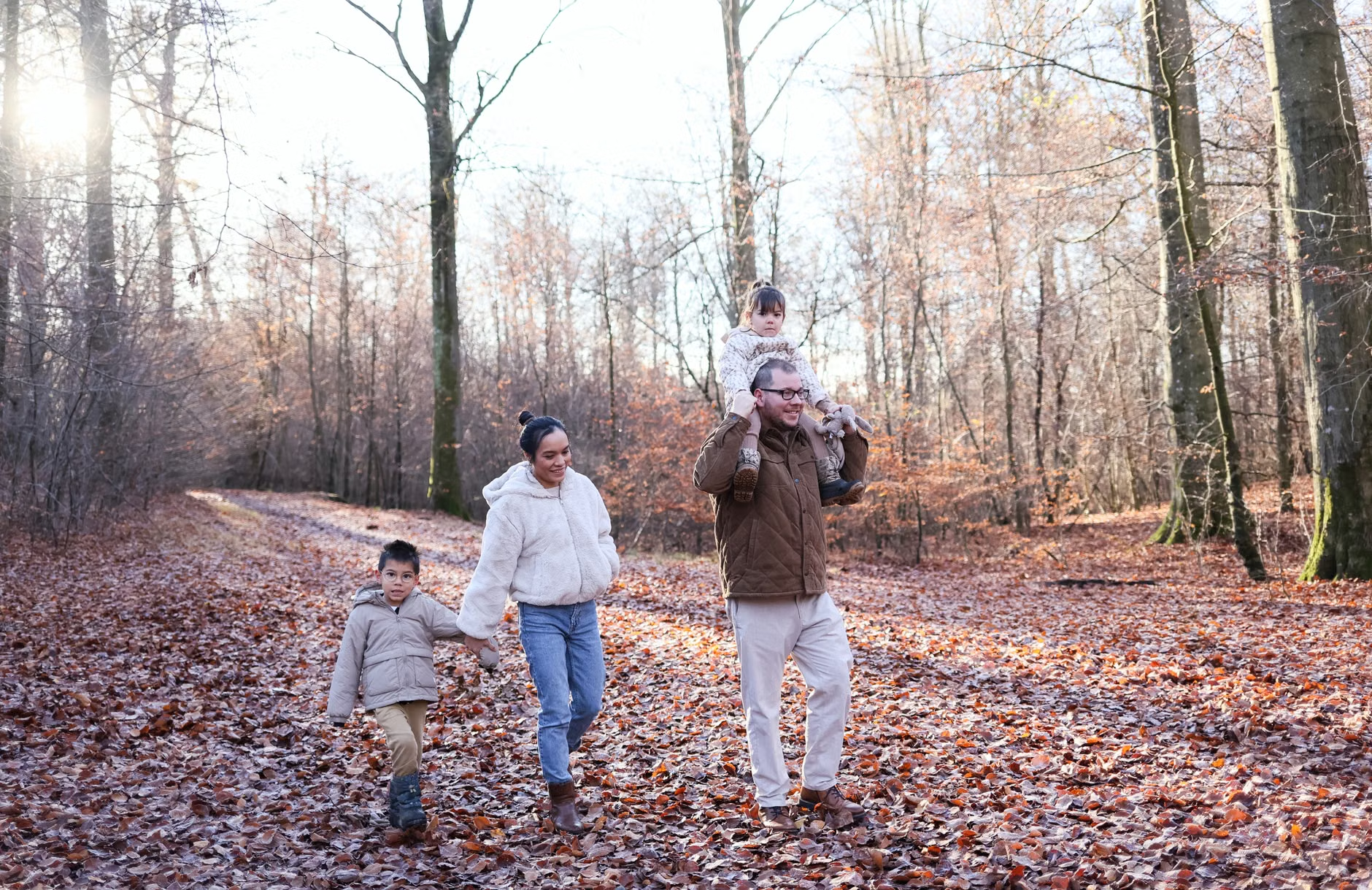
This approach requires a shift in mindset. Parents often fear that if they don’t provide “enriching” experiences, they are failing. In reality, the most enriching experience you can provide for your children in their 30s or 40s is a parent who is present, calm, and not constantly checking a GPS or a schedule.
Logistical Preparations that Reduce Friction
A quiet retreat can be ruined by poor logistics. If you arrive at a remote cabin and realize you have no food, you’ve just created an immediate, high-stress crisis. Quiet tourism requires front-loading the effort so you can back-load the relaxation.
1. The ‘Pre-Stock’ Strategy: If you are renting a cabin, verify the kitchen equipment. Do not assume there is a coffee grinder or a sharp knife. Pack a “kitchen survival kit” if you are driving. This includes basic spices, a reliable chef’s knife, and your preferred coffee method. Having to deal with a dull knife or bad coffee for five days is a persistent low-level irritation that ruins the “quiet” vibe.
2. Digital Boundaries: Set a “Tech-Free Zone” policy before you leave. This applies to parents as much as it does to children. If you are constantly checking work emails or scrolling social media, you are bringing the city to the mountain. Use your phone for GPS and emergency calls only. If you need a camera, bring a dedicated one so you aren’t tempted by notifications.
3. The Clothing Audit: Mountain weather is deceptive. Even in summer, temperatures can drop significantly at night. The “Quiet” philosophy suggests packing for comfort, not fashion. Layers are essential. If you are cold, you are restless. If you are restless, you are not enjoying the silence.
Managing Expectations with Children
Children are wired for stimulation. If you suddenly switch from a high-energy life to a silent cabin, they may become bored or frustrated. Do not force the “quiet” on them. Bring tools that encourage independent engagement: sketchbooks, binoculars, field guides, or simple card games. These aren’t “screens,” but they are engaging enough to bridge the gap between high-stimulation life and the quiet mountain environment.
If you have multiple children, they might feed off each other’s boredom. The best strategy here is to provide them with individual projects. Ask them to “document” the flora or fauna of the area. This turns their need for activity into a quiet, observational task. It also shifts them from being consumers of entertainment to observers of the world.
Overlooked Variables: The “Hidden” Costs of Silence
There are a few things that people rarely consider until they are already in the middle of the woods. First, the “Silence Shock.” If you live in a city, absolute silence can be jarring. It can actually cause anxiety for the first 24 hours. Don’t fight this. It’s your nervous system recalibrating. If you feel restless, go for a walk. Don’t turn on music or TV to “fill the gap.” Sit with the silence for a moment—that is exactly what you paid for.
Second, proximity to medical care. This isn’t about being paranoid; it’s about being prepared. In remote mountain areas, the nearest pharmacy might be an hour away. Pack a robust first-aid kit that includes basics for both adults and children—pain relief, antihistamines, and basic wound care. Knowing you have these items removes the “what if” anxiety that often keeps parents in a state of hyper-vigilance.
Finally, the “Neighbor” variable. Even in “quiet” areas, thin walls exist. If you are renting, look for detached cabins rather than shared lodges. A shared lodge with thin walls can destroy the experience of a quiet retreat if there are loud groups nearby. Prioritize privacy over price.
Implementing Your Quiet Retreat: A Step-by-Step Guide
If you are ready to plan your next retreat, follow this sequence to ensure you don’t drift back into the “busy” trap:
- Booking Phase: Filter your search results by “detached,” “nature-surrounded,” and “low-density.” If a listing uses words like “vibrant,” “central,” or “lively,” keep scrolling.
- The Pre-Departure Week: Three days before leaving, do your grocery shopping. Don’t leave it until you arrive at the destination, as this forces you to visit a grocery store in a new place—a high-stress event.
- Arrival: Upon arrival, do not unpack everything immediately. Spend the first hour just sitting on the porch or walking around the property. Let the environment settle into your senses.
- The Daily Rhythm: Establish a slow routine. Coffee/Tea (Quiet) -> Morning Walk (Active) -> Lunch (Simple) -> Free Time (Individual/Family) -> Dinner (Slow) -> Stargazing (Quiet).
By following this structure, you are not just taking a trip; you are creating a container for your family to reset. You are choosing to value the quality of the interaction over the quantity of the experiences.
Common Misconceptions About Slow Travel
One of the biggest myths is that “Quiet Tourism” is boring. This is a projection of our own inability to be still. When you remove the constant feedback loop of work, school, and social media, you aren’t left with “nothing.” You are left with your family, your own thoughts, and the environment. This is where real connection happens. It might feel uncomfortable at first, but that discomfort is the barrier you need to break through to reach the state of rest you are seeking.
Another misconception is that this is only for people who are “outdoorsy.” You don’t need to be an expert hiker to enjoy a mountain retreat. You just need to be willing to be in a place where the pace is set by nature, not by a clock. If you want to spend your time sitting on a deck with a book, that is a perfectly valid and successful quiet tourism activity.
Final Thoughts on Sustaining the Reset
The success of your mountain retreat shouldn’t be measured by how many photos you took or how many trails you conquered. It should be measured by the “noise level” in your head when you return home. If you find that the silence of the mountains has allowed you to hear your own thoughts again, you have succeeded.
Remember that this is a practice. Just like any other skill, it takes time to get good at being quiet. Don’t be discouraged if the first day feels chaotic. Keep the pace slow, keep the expectations low, and prioritize the physical and mental space that you so rarely get in your everyday life. You deserve the space to breathe, and the mountains are waiting to provide it.
Frequently Asked Questions
1. How do I keep my children entertained without screens or scheduled activities?
Provide them with “open-ended tools” such as sketchbooks, nature journals, or even simple magnifying glasses. The key is to shift their role from ‘consumer’ to ‘explorer.’ When children are given the freedom to observe their environment, they often find their own amusement in the natural details that adults overlook.
2. What should I do if the weather is terrible during our retreat?
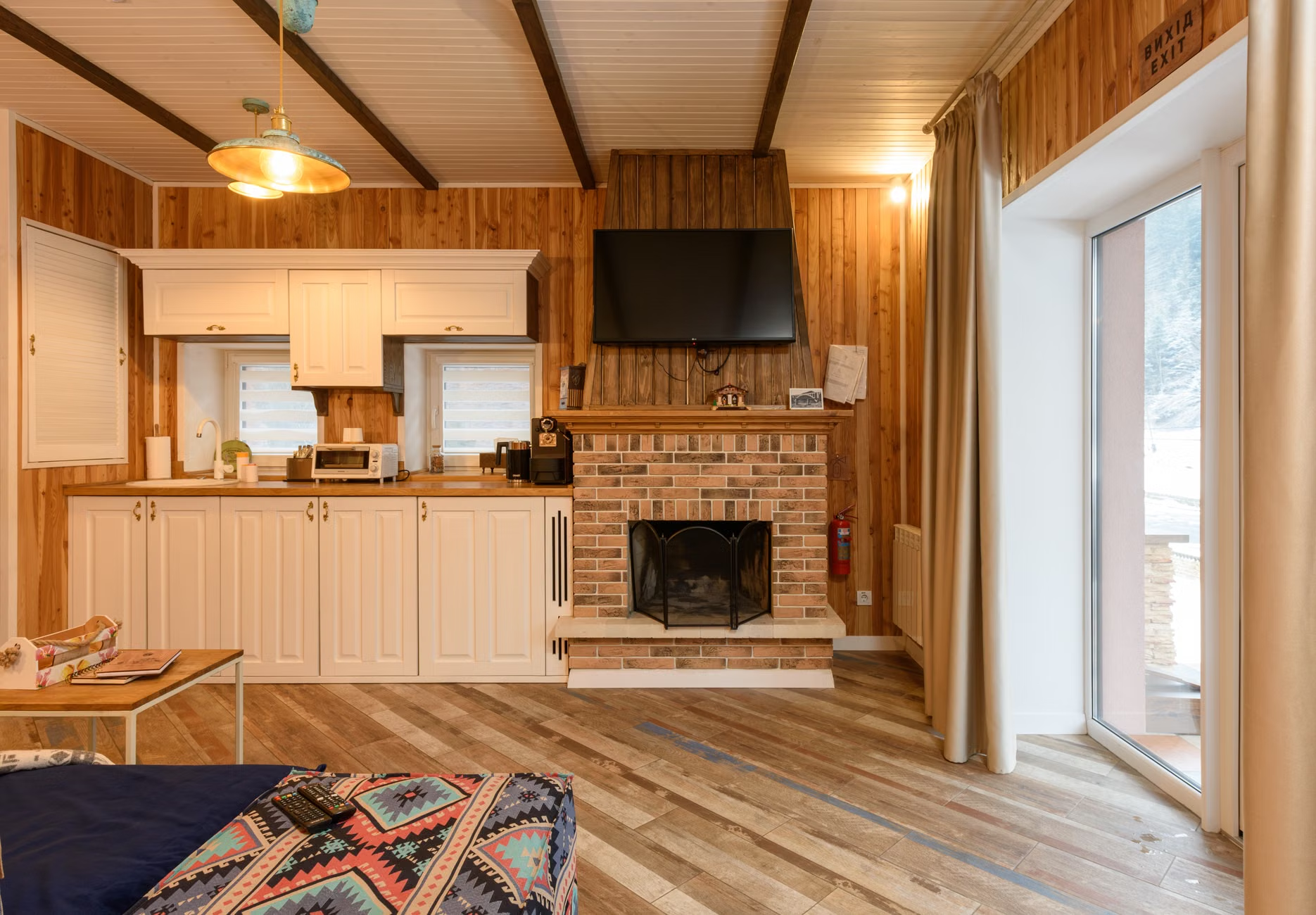
Embrace the ‘Cabin-Life’ experience. Quiet tourism isn’t dependent on perfect sunshine. If you’ve chosen a location with a fireplace or a cozy living area, rain or snow can actually enhance the retreat. Bring board games, books, and ingredients for comfort food. The goal is to be present, and bad weather is just an invitation to go deeper into the comfort of your shelter.
3. Is it possible to have a ‘Quiet Tourism’ experience on a budget?
Yes. In fact, it is often cheaper. By avoiding popular tourist hotspots and high-intensity attractions, you save significantly on entrance fees and dining out. Renting a simple cabin in a less-trafficked area is generally more affordable than staying in a resort town. Focus your budget on high-quality groceries and comfortable, long-term rentals rather than ‘experiences.’
For more information on finding protected, quiet natural areas, you can visit the U.S. National Park Service or your local equivalent environmental agency to look for designated wilderness areas or quiet zones.