Key Takeaways:
- Prioritize “Low-Stimulus” Environments: Choose accommodations that limit digital connectivity and noise pollution to facilitate genuine nervous system recovery.
- The “One-Activity-Per-Day” Rule: Avoid the “tourist trap” of packed schedules by capping your daily itinerary to a single, non-rushed experience.
- Strategic Location Selection: Focus on “second-tier” mountain destinations rather than famous hubs to avoid crowds and inflated costs during peak seasons.
The most restorative mountain trip you will take this year is the one where you do absolutely nothing of note. If you are in your 30s or 40s, balancing the relentless demands of a career with the logistical marathon of parenting, the term “vacation” has likely become synonymous with “a change of scenery where I still do all the chores, just in a different zip code.”
Quiet-tourism is the antidote to the performative, high-octane travel culture that has dominated social media for the last decade. It isn’t about checking off bucket-list peaks or capturing the perfect summit selfie; it is about intentional under-stimulation. When your daily life is defined by back-to-back Zoom calls, school runs, and the constant hum of digital notifications, the most luxurious thing you can do is go somewhere where nothing is happening.
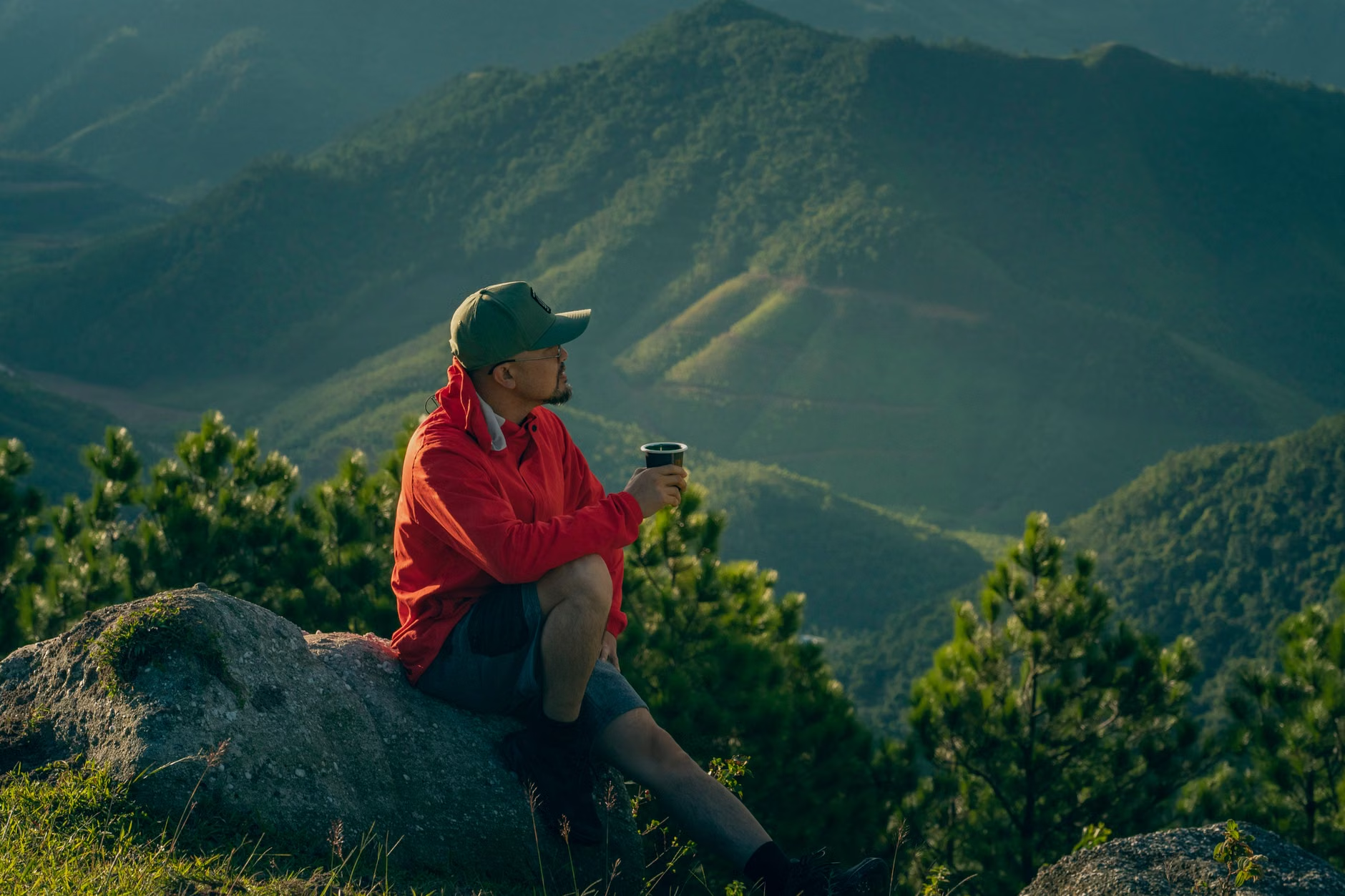
Why Your Nervous System Needs a “Quiet-Tourism” Reset
For parents and professionals, the concept of “rest” is often misunderstood. We tend to think that a vacation requires activity—hiking, sightseeing, dining at the “best” local spots—to be considered a success. However, for a brain that is chronically over-stimulated, these activities are just another form of cognitive load. You are essentially swapping one set of demands for another.
Quiet-tourism focuses on the principle of sensory regulation. Mountain environments are naturally suited for this, provided you choose the right approach. High-altitude air, the visual pattern of tree lines (often called “fractal fluency”), and the absence of urban ambient noise have been shown to lower cortisol levels. But this only works if you stop trying to “conquer” the mountain.
If you find yourself constantly checking your watch or feeling guilty for spending three hours reading a book instead of visiting the local tourist attraction, you are not engaging in quiet-tourism; you are just performing a more expensive version of your normal life. The goal is to move from a state of “doing” to a state of “being.”
The Hidden Cost of “Active” Vacations
When we plan vacations, we often fall into the trap of “opportunity cost maximization.” We think, “I paid for this trip, so I must see everything.” This mindset ignores the biological reality of recovery. When you pack an itinerary, you don’t allow your prefrontal cortex—the part of the brain responsible for complex decision-making and emotional regulation—to recover. By the time you return to work or parenting duties, you are physically exhausted and mentally depleted.
A quiet-tourism itinerary, by contrast, treats your energy as a finite resource. If you spend your energy on a four-hour hike, you have nothing left for a quiet dinner or a deep conversation with your partner. In the quiet-tourism model, you treat your energy budget like a bank account: you don’t spend it all in one place.
How to Architect a Low-Stimulus Mountain Itinerary
Designing a quiet-tourism itinerary requires a different set of planning tools. You aren’t looking for the “Top 10 Things to Do in [Mountain Range]”; you are looking for the “Top 10 Places to Sit and Think.”
| Feature | Traditional Tourism | Quiet-Tourism |
|---|---|---|
| Itinerary Focus | Quantity of experiences | Depth of single experience |
| Pacing | Scheduled, time-bound | Fluid, rhythm-based |
| Logistics | High-traffic hubs | Secluded, low-density |
| Outcome | Memory collection | Nervous system recalibration |
To implement this, start by selecting a location that is at least 30 minutes away from any major tourist “center.” If you are in Europe, skip the famous hubs like Zermatt or Chamonix during peak season and look for the smaller, less-marketed valleys in the Pyrenees or the Slovenian Alps. In North America, avoid the major resort towns in Colorado and instead look for the quieter pockets of the Catskills or the lesser-known regions of the Pacific Northwest.
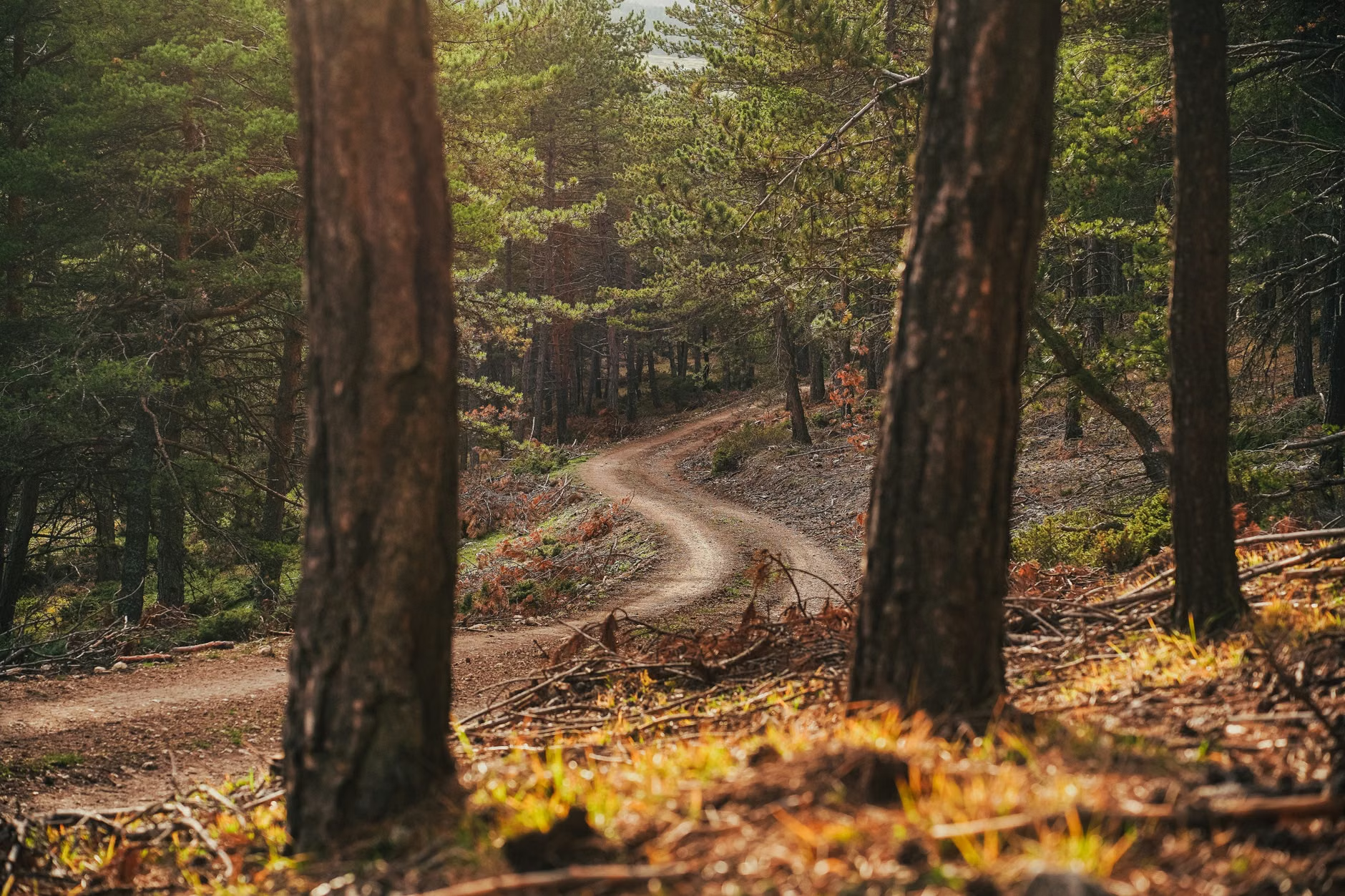
The “One-Activity-Per-Day” Decision Rule
The most effective way to avoid the “vacation burnout” trap is to implement a strict One-Activity-Per-Day rule. This does not mean you have to be busy for that activity. It means that once you have completed one significant engagement—a short walk, a visit to a local bakery, or a scenic drive—the rest of your day is explicitly reserved for “unstructured time.”
Why does this matter? Because decision fatigue is a real phenomenon. When you are on vacation and constantly deciding where to eat, what to see, and how to get there, you are exhausting the very brain power you are trying to restore. By limiting yourself to one planned task, you eliminate the need for constant, low-level decision-making.
Practical Steps for your Itinerary:
- Pre-Arrival Logistics: Do your grocery shopping or dinner reservations before you arrive. Do not arrive in a new town and immediately have to figure out where to find food.
- The Digital “Safe Mode”: If you can’t go fully offline, set your phone to “Do Not Disturb” with an auto-reply that states you are away. This removes the social pressure to respond to messages.
- The “Anchor” Location: Choose one comfortable, quiet base of operations. Packing and unpacking is a significant stressor. Stay in one place for the duration of the trip.
The Overlooked Variable: Why “Where” Matters More Than “What”
There is a common misconception that all mountain environments are equally restorative. However, the acoustic environment is a massive, often overlooked variable. A cabin located near a popular motorcycle route or a busy trailhead will provide a fundamentally different experience than one tucked away in a quiet valley.
When researching your accommodation, look for reviews that specifically mention “silence,” “isolation,” or “peace.” Do not rely on photos alone. Use satellite views on map applications to see how close your rental is to main roads. A 500-meter difference in location can be the difference between hearing the wind in the trees and hearing the hum of highway traffic.
Another factor is accessibility vs. effort. For parents, there is a temptation to pick the most “accessible” spot to make things easier. But often, the most accessible spots are also the most crowded. The “sweet spot” for quiet-tourism is a location that requires a bit of effort to reach but is simple once you are there. This barrier to entry acts as a natural filter, keeping the crowds away.

Common Pitfalls and How to Avoid Them
Even with the best intentions, it is easy to slip back into “productivity mode.” Here are the three most common traps:
- The “Optimization” Trap: Trying to optimize your rest. If you find yourself reading articles on “how to relax” or tracking your sleep quality with a wearable device, you are still in “productivity mode.” Action: Leave the smartwatches and trackers at home, or at least turn off the notifications.
- The “FOMO” (Fear of Missing Out) Trigger: Seeing social media posts of others doing “more” on their vacation. Action: Unfollow or mute accounts that induce this feeling for the duration of your trip.
- The “Unplanned Emergency” Trap: Forgetting that kids or life will still happen. Action: Build a 2-hour “buffer” into every day for the inevitable unexpected issue. This way, it doesn’t ruin your entire schedule.
If you are traveling with children, quiet-tourism doesn’t mean they have to sit still and be quiet. It means you facilitate low-impact engagement. Instead of taking them to a crowded theme park or a busy museum, take them to a stream to throw rocks or a meadow to look for bugs. These activities are just as stimulating for them but vastly more restorative for you.
Moving Forward: The Art of Doing Less
Quiet-tourism is not about laziness; it is about preservation. In a world that demands constant output, choosing to step back and exist in a quiet, mountainous space is a radical act of self-care. You aren’t just going on a trip; you are intentionally recalibrating your relationship with time and space.
When you return, you will likely find that you haven’t “seen” as much as your peers who took the “active” vacation. But you will also find that you are actually rested, which is a far rarer and more valuable commodity. Start small. Pick one mountain weekend where you promise yourself that the only goal is to watch the sunset from a place where you can hear your own thoughts.
For further reading on the psychological benefits of nature immersion, you can review the research compiled by the Environmental Protection Agency on how natural environments impact mental health: https://www.epa.gov/sciencematters/science-spending-time-nature-improves-mental-health.
Frequently Asked Questions
1. How do I convince my partner or family to adopt a “quiet” itinerary when they want to do more?
Frame it as a “recovery-first” trip. Suggest that you spend the first two days in “quiet mode” to recover from the stress of daily life, and then allow for one or two “high-activity” days later in the trip if they still feel the need. Often, once people experience the relief of not having a schedule, they naturally lose the desire for the high-octane itinerary.
2. Is quiet-tourism suitable for families with young children?
Yes, but the definition of “quiet” changes. For young children, quiet-tourism means removing the “entertainment” aspect of travel. Instead of searching for organized kids’ clubs or busy attractions, focus on environments where they can play freely—nature is the ultimate, non-demanding playground. It reduces the stress of managing schedules and crowds for the parents.
3. What if I feel bored? Is that a sign that I’m doing it wrong?
Actually, boredom is the signal that your brain is finally entering the “rest” phase. In our daily lives, we are so addicted to external stimulation that we perceive the absence of it as “boredom.” If you feel bored, it means your nervous system is starting to downregulate. Lean into it. That boredom is the gateway to creativity and genuine mental recovery.
Note: This guide is intended for informational purposes and reflects current trends in slow-travel and mental wellness. Always check local travel advisories and safety regulations for any mountain region you plan to visit.