You can furnish a high-end nursery for a fraction of the retail cost by navigating the second-hand luxury market, provided you prioritize safety certifications and material hygiene over brand-new packaging.
- Safety First: Always verify serial numbers against manufacturer recall databases before purchasing any hard goods like cribs or strollers.
- Material Matters: Prioritize solid wood furniture and high-quality textiles (organic cotton, wool) that can be deep-cleaned or refinished, avoiding particle board that degrades over time.
- The 60% Rule: Most high-end nursery items lose 40% to 60% of their value the moment they leave the store; use this depreciation to your advantage when negotiating prices.
Every parent in their 30s or 40s has felt the sting of a nursery budget spreadsheet. You want the best for your child—the ergonomic stroller that navigates city curbs with ease, the solid wood crib that matches your interior aesthetic, and the high-tech sleep aids that promise just one more hour of rest. But when the retail prices for these “luxury” items start rivaling a small car payment, the math stops making sense.
The solution isn’t necessarily buying cheaper, lower-quality goods. It is about entering the secondary market with the precision of a professional buyer. The luxury nursery gear market is currently seeing a massive shift, driven by eco-conscious parents and the realization that high-quality items are designed to outlive a single child’s infancy.
Why Luxury Nursery Gear is Built for the Secondary Market
There is a fundamental difference between mass-market “fast furniture” and luxury nursery items. Premium brands like Stokke, Bugaboo, or Oeuf utilize materials—solid beechwood, aircraft-grade aluminum, and OEKO-TEX certified fabrics—that are engineered for longevity. While a cheap crib might use plastic-coated particle board that chips and swells with humidity, a luxury crib is essentially a piece of heirloom furniture.
When you buy second-hand, you aren’t just saving money; you are often getting a product that has been “stress-tested.” A stroller that has survived a year of daily urban use without a squeak is a testament to its engineering. If a frame has lasted eighteen months without metal fatigue or hinge failure, it is likely to last through your child’s entire developmental phase. The “break-in” period of these products actually proves their worth.
However, this market requires a discerning eye. You aren’t just looking for a deal; you are looking for an investment that meets modern safety standards. The most common mistake parents make is focusing on the aesthetic—”Does it look cute?”—rather than the structural integrity—”Has the hinge mechanism been lubricated, and are the original bolts accounted for?”
The Hierarchy of Second-Hand Safety: What to Buy and What to Avoid
Not all nursery gear is created equal when it comes to the secondary market. Some items are perfectly safe to buy used, while others carry inherent risks that simply aren’t worth the discount. Understanding this hierarchy is your primary defense against a bad purchase.
Category A: High-Reliability Hard Goods
These are items where the structural components are easily visible and verifiable. Solid wood changing tables, high-end wooden cribs, and metal-frame strollers fall here. If the wood is solid, it can be sanded and refinished. If the metal is sturdy, it can be wiped down and the joints can be tightened. These items rarely have “hidden” failures unless they have been involved in a major impact.
Category B: Items Requiring Technical Verification
Electronic swings, smart monitors, and high-tech bassinets. These are “buyer beware” items. Before purchasing, verify that the software is still supported by the manufacturer. A $500 smart monitor is a paperweight if the app that controls it has been discontinued by the developer. Always ask for a video of the device functioning in real-time before finalizing the purchase.
Category C: The “Never Buy Used” List
Car seats and soft mattresses are the two major exceptions to the second-hand rule. Car seats have an expiration date (usually 6-10 years) because the plastic shell degrades over time, and a seat involved in a crash—even a minor one—can have microscopic structural fractures that render it useless. Similarly, used mattresses pose hygiene risks that are difficult to mitigate, including the growth of mold or bacteria deep within the core that no amount of surface cleaning can remove.
| Item Type | Safety Priority | Actionable Advice |
|---|---|---|
| Solid Wood Furniture | High | Check for lead-free paint and ensure no structural cracks. |
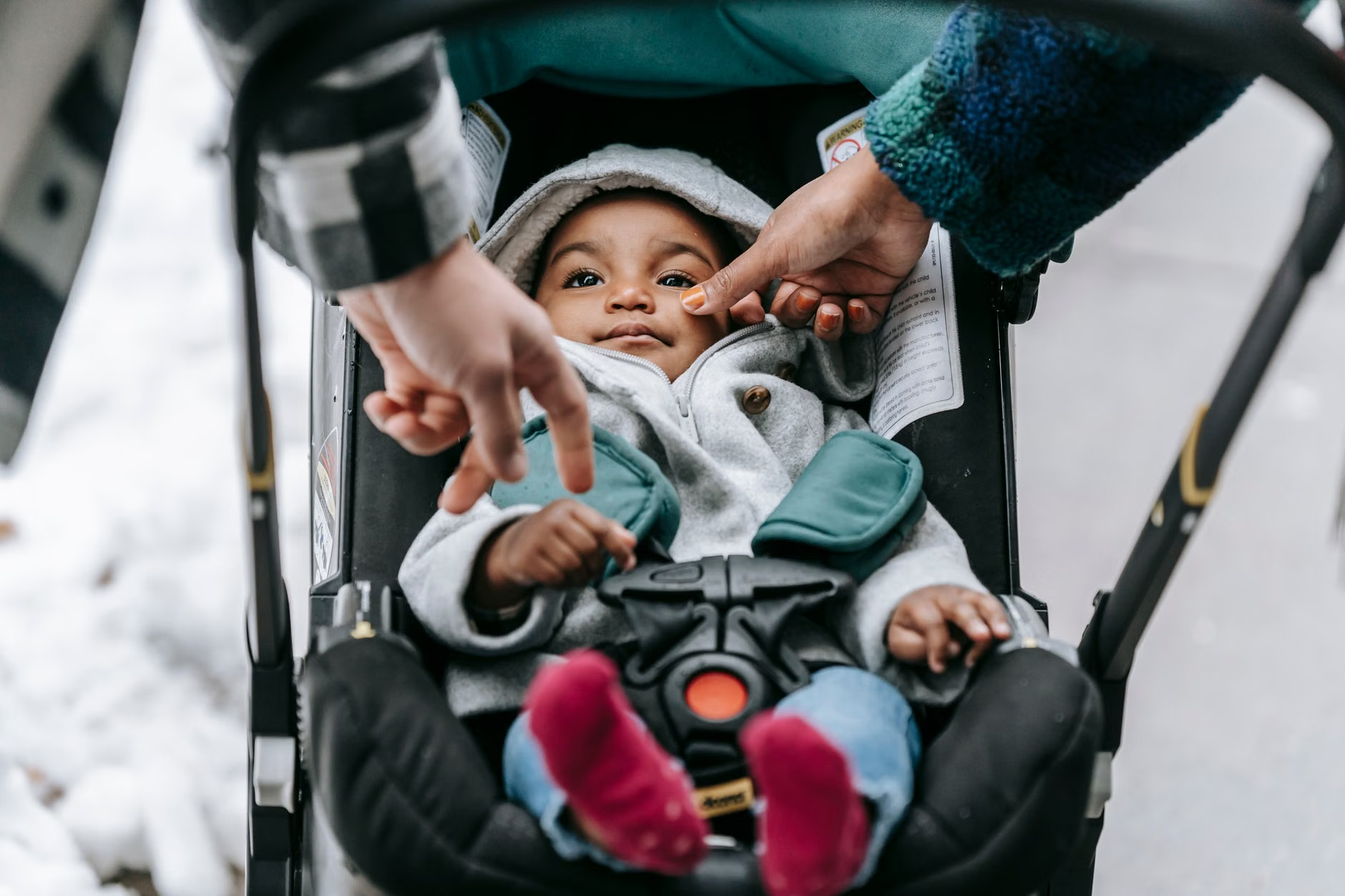
| Strollers | High | Test the brake mechanism and fold/unfold hinges. |
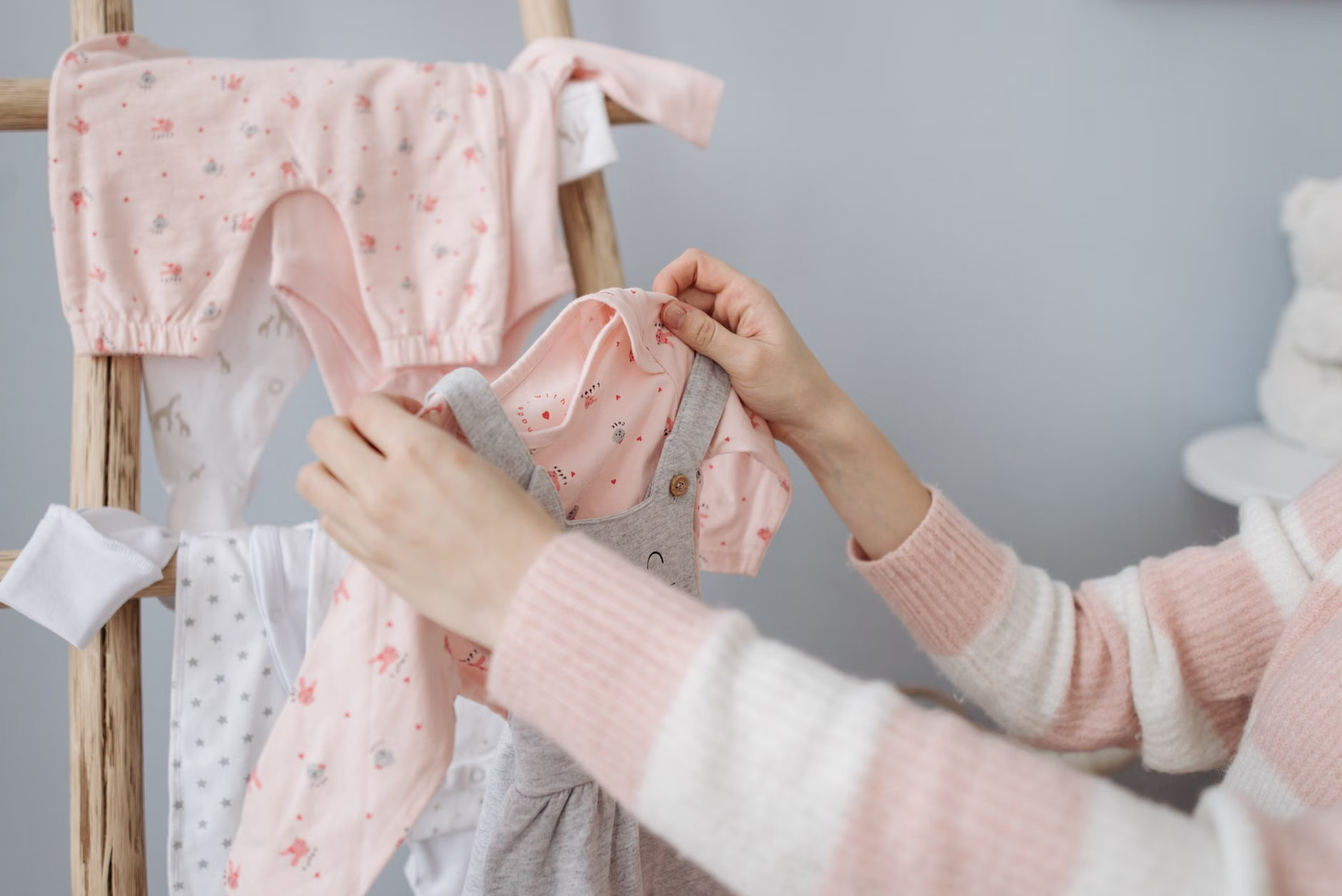
| Textiles/Clothing | Low | Wash on high heat; check for loose buttons/choking hazards. |
| Car Seats | Critical | Do not buy used unless from a trusted, known source. |
The Art of the Inspection: A Step-by-Step Protocol
When you arrive at a seller’s home or meet in a public space to inspect an item, your demeanor should be one of friendly skepticism. You are not being rude by inspecting the product; you are being a responsible parent. Here is the protocol for evaluating luxury gear:
- The Recall Check: Every major piece of nursery equipment has a serial number. Before you leave your house, have the manufacturer’s website open on your phone. If the item is a crib, check the CPSC (Consumer Product Safety Commission) or your local equivalent’s database for recent recalls. If it’s on the list, walk away. No deal is worth a safety violation.
- The “Wobble” Test: For furniture, place it on a flat surface. Does it sway? If it does, the frame may be warped. While a small shim can fix a minor wobble in a living room table, it is a dealbreaker for a crib where stability is non-negotiable for infant safety.
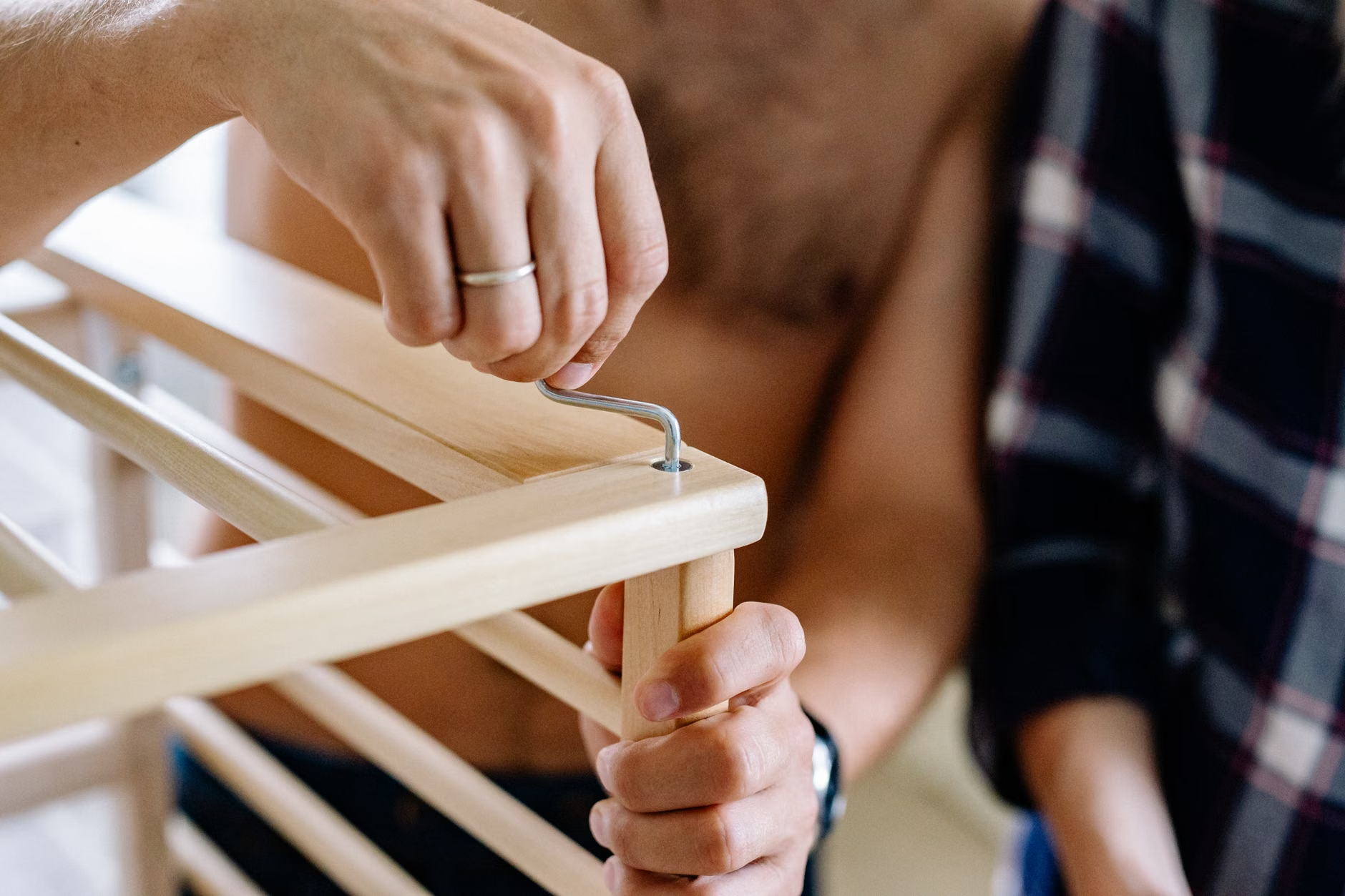
- The Hinge and Bolt Audit: Bring an Allen key or a small screwdriver set. Ask the seller if you can verify that all screws are original. If you find mismatched hardware (like a rusted bolt replaced with a generic one from a hardware store), that is a red flag that the item hasn’t been maintained to factory standards.
The days of scouring garage sales are largely over. The modern second-hand luxury market for parents exists primarily on specialized platforms. Sites like Rebelstork, GoodBuy Gear, and high-end Facebook Marketplace groups or regional “Parents’ Buy/Sell” groups are where the gold is hidden.
When using these platforms, the “negotiation” phase is where you save the most. Don’t just ask “Is this the lowest price?” Instead, show that you have done your research. Say something like, “I see that this model was discontinued in 2022 and the newer version has an updated brake system. Given that, would you accept [X] price?” This shows the seller you are an informed buyer, not just someone looking for a handout, which often leads to a more favorable outcome.
Be wary of “too good to be true” listings. If a $1,200 stroller is being sold for $50, there is a reason. It might be missing a vital connector, or it might be a knock-off. Always ask for photos of the manufacturer’s label or the serial number plate. If the seller is evasive about sending these, move on. Transparency is the currency of the second-hand luxury market.
The Hidden Costs of “Free” or Cheap Gear
There is a common misconception that if you get an item for free, you have “won.” This is rarely true in the nursery world. Often, “free” items come with hidden costs: missing parts that are no longer manufactured, the need for deep professional cleaning, or the cost of replacement accessories (like adapters for a car seat that hasn’t been used in years).
Calculate the “Total Cost of Ownership” (TCO) before you commit. If you buy a $100 stroller but need to spend $80 on a new seat liner, $40 on new wheels, and $30 on a replacement handle, you have spent $250. You could likely have found a perfectly maintained, ready-to-use version of that same stroller for $200 on a high-end resale site. Always factor in the cost of time and parts.
Maintaining Your Investment for Future Resale
If you are buying high-end gear, you are likely in a position to sell it again when your child outgrows it. To keep your resale value high, treat the items as if they were leased, not owned. Keep the original manuals in a dedicated folder. If the item came with a specific tool for assembly, keep that taped to the bottom of the furniture or in a small bag attached to the frame.
Use protective covers for mattresses and seat pads. Stains are the primary reason luxury baby gear loses its resale value. A $600 stroller with a pristine seat pad can sell for $400 in two years; the same stroller with a stained, worn-out seat pad might struggle to fetch $150. By protecting the high-contact surfaces, you are essentially creating a “savings account” for your next purchase.
Beyond the Gear: The Psychological Shift
There is an unexpected benefit to this way of shopping: it forces you to slow down. When you are buying everything new, you are often caught in the “nesting” frenzy—the biological urge to have everything perfect before the baby arrives. You end up buying things you don’t need, or things that don’t fit your actual parenting style.
By opting for the second-hand luxury market, you have to wait for the right item to appear. You have to research what you actually need. You have to compare models. This process naturally filters out the impulse buys. You end up with a nursery that is curated, not just filled. You are building a space that reflects your values—quality, sustainability, and intentionality—rather than just a list of items from a registry.
If you find yourself overwhelmed by the options, start small. Buy a high-end wooden activity gym or a designer carrier second-hand. Once you experience the quality of these items compared to their mass-market counterparts, you will likely find yourself seeking out the pre-loved market for bigger ticket items like cribs and strollers.
Final Thoughts: The Practical Path Forward
The second-hand luxury market isn’t about being “cheap”—it’s about being an efficient allocator of your resources. You are choosing to put your money toward experiences, savings, or better-quality items that you otherwise couldn’t afford. It requires a bit more research and a sharper eye, but the payoff is a nursery that feels both high-end and deeply considered.
Remember: Safety is the only non-negotiable. If you have any doubt about the structural integrity of an item, do not buy it. But for everything else, look for the brands that hold their value, treat your gear with care, and enjoy the process of building a home that is as sustainable as it is beautiful.
Frequently Asked Questions
Q: How do I verify if a second-hand item has been recalled?
A: Most countries have a dedicated government safety portal. In the United States, you can visit cpsc.gov/Recalls to search by product name or manufacturer. Always have the specific model number and manufacturing date (usually found on a sticker underneath the item) ready before you search.
Q: Is it really safe to buy used wooden furniture?
A: Yes, provided the wood is solid and not particle board. Check for “wobble” and ensure all hardware is original. Avoid anything painted with unknown finishes if you are worried about lead, though this is rare in reputable luxury brands manufactured in the last decade. If in doubt, a light sanding and a fresh coat of non-toxic, VOC-free paint can revitalize most wooden pieces.
Q: What is the best way to clean second-hand fabric gear?
A: First, check the manufacturer’s label for washing instructions. For removable covers, use a fragrance-free, hypoallergenic detergent. If the fabric cannot be removed, use a steam cleaner—the heat helps sanitize the material without harsh chemicals. Always allow the item to dry completely in the sun, as UV rays are a natural disinfectant for lingering bacteria.
Disclaimer: This guide is for informational purposes and does not constitute professional safety advice. Always consult official manufacturer guidelines and local safety regulations before purchasing or using nursery equipment.