You can save upwards of 60% on premium nursery essentials by shifting your focus from retail boutiques to the secondary luxury market, provided you prioritize safety certifications and structural integrity over aesthetic trends.
- Safety First: Never purchase car seats or mattresses second-hand unless you have a verified history of their ownership and crash status.
- Depreciation Advantage: High-end nursery gear follows a depreciation curve similar to luxury vehicles; buying items 12–18 months old captures the best value.
- Maintenance is Asset Management: Treat your gear like a high-value asset; keeping original manuals and proof of purchase significantly boosts your resale value later.
The nursery industry is notorious for a specific type of “fast-fashion” cycle. Parents often purchase a $1,500 stroller or a $600 designer bassinet, only to find that their child has outgrown the need for it in under a year. This creates an enormous, high-quality inventory of “pre-loved” goods that are often in near-mint condition, yet priced at a fraction of their original cost. For the parent in their 30s or 40s balancing a tightening household budget with a desire for quality, this secondary market is not just a thrifty choice—it is a strategic financial move.
However, the transition from “buying new” to “curating pre-loved” requires a shift in mindset. You are no longer just a consumer; you are an inspector and a researcher. The goal is to maximize the utility of high-end equipment that was built to last much longer than the average baby uses it.

Understanding the Depreciation Lifecycle of High-End Nursery Gear
To navigate this market, you must understand how value dissipates in the nursery sector. Much like a premium sedan, a luxury stroller or high-tech nursery monitor loses the most value the moment it leaves the store. By the time a product is six months old, it has typically lost 30% to 40% of its market value, even if it has seen minimal use.
Why does this happen? It is largely driven by the “new parent” psychological desire for pristine, untouched items. Once that seal is broken, the emotional premium vanishes. As a savvy shopper, you can capitalize on this “newness premium.” If you find a listing for a stroller that was used for a single child for ten months, you are essentially buying a product that has 80% of its mechanical life remaining for 50% of the price.
The “Sweet Spot” for Purchasing: Focus on items that are between 12 and 24 months old. At this stage, the original owners are often looking to declutter their homes quickly. They are less interested in squeezing out every dollar and more motivated by the convenience of a quick sale. This is when you can negotiate effectively. Avoid items older than three years, as safety standards, recall lists, and material fatigue (especially in plastics and elastic fabrics) become significant concerns.
The Non-Negotiables: Where You Should Never Compromise
While the second-hand market is a goldmine for frames, bassinets, and high-quality wooden furniture, there are specific categories where “used” is simply not an option. Your primary duty is the safety of the child, and some items are compromised by invisible wear and tear.
The Car Seat Rule
Car seats are the most critical piece of equipment you will ever buy. They are designed to withstand one significant impact. Even if a seat looks perfect on the outside, the internal structural integrity may be compromised by a minor fender bender that the seller forgot to mention—or didn’t even realize caused damage. Never purchase a used car seat unless it is from a trusted family member or close friend whose history with the item you can verify 100%.
The Mattress Dilemma
Mattresses are porous. Over time, they accumulate moisture, dust mites, and bacteria that are impossible to fully sanitize. Furthermore, used mattresses may have soft spots or indentations that pose a suffocation risk. Always prioritize a new mattress, even if you are opting for a high-end, second-hand crib frame.
| Item Category | Buy Second-Hand? | Reasoning |
|---|---|---|
| Strollers | Yes | High durability, easy to clean, mechanical parts are replaceable. |
| Car Seats | No | Hidden structural damage risk; expiration dates apply. |
| Wooden Furniture | Yes | Long lifespan, easy to refinish, low hygiene risk. |
| Mattresses | No | Sanitation issues and loss of support integrity. |
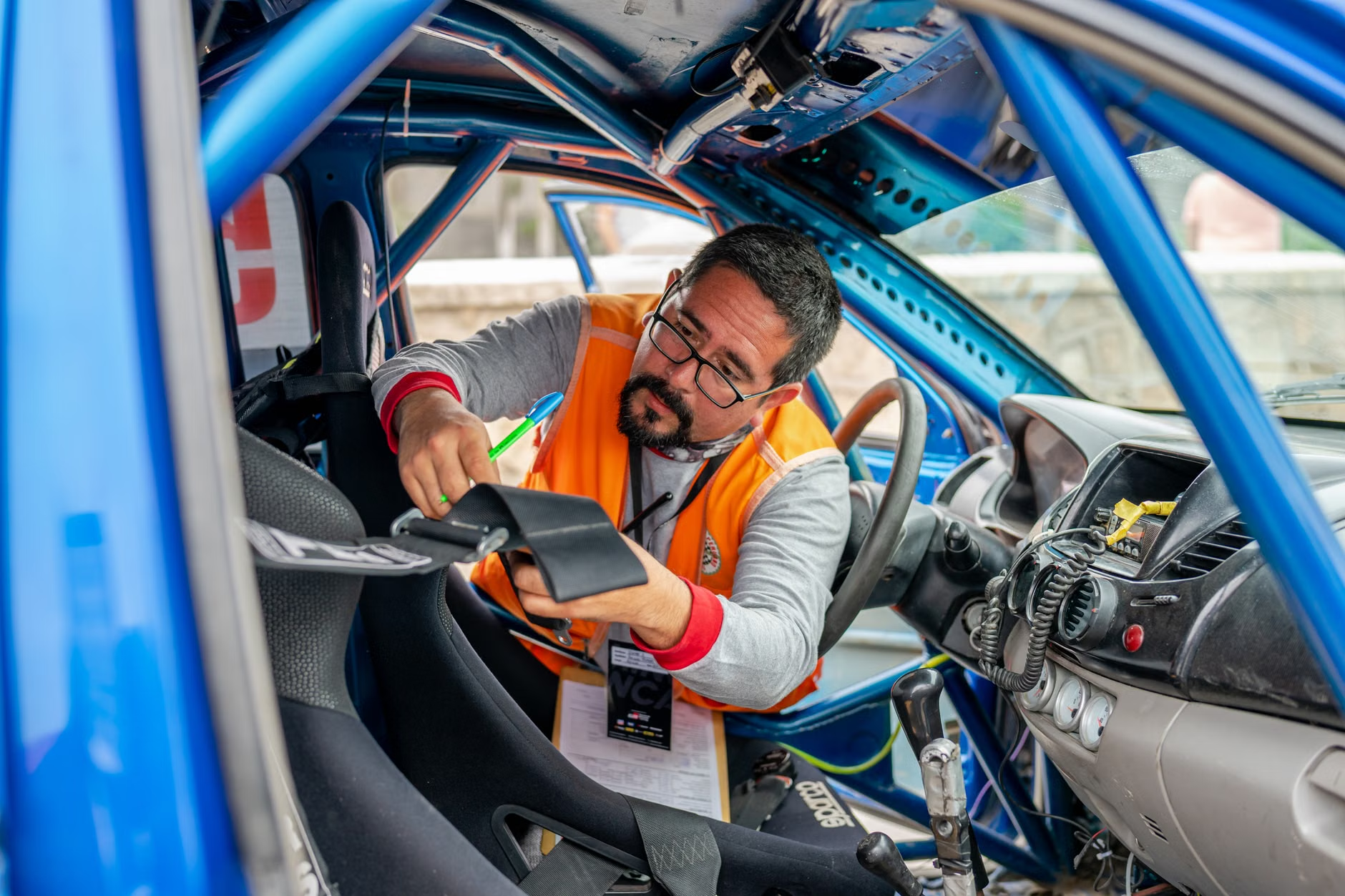
How to Conduct a “Pre-Purchase Audit”
Before you commit to a transaction, you need to act like a professional auditor. Many buyers fall in love with a brand name and ignore the functional state of the item. Here is your step-by-step checklist for evaluating any piece of used luxury nursery gear.
- Check the Serial Number: Every high-end manufacturer keeps a database of product recalls. Before meeting the seller, ask for the serial number or model year. Cross-reference this with the official manufacturer’s website or the CPSC (Consumer Product Safety Commission) database in the US, or the equivalent national safety agency in your country (such as the Office for Product Safety and Standards in the UK).
- The “Wobble Test”: For strollers and high chairs, stability is everything. Place the item on a flat surface and apply pressure. If there is a wobble or a mechanical “creak,” it suggests that the rivets or joints have been stressed.
- Fabric Integrity: Check the stitching, especially near the harness points of a stroller. If the fabric is fraying, it is not just an aesthetic issue—it is a failure point for the safety restraints.
- The “Missing Parts” Tax: Sellers often lose the adapters, rain covers, or cup holders that came with the original package. Calculate the cost of replacing these items from the manufacturer before you agree on a price. Often, the “deal” is negated by the cost of these individual accessories.
Reframing the Ownership Experience
When you purchase luxury items, you are not just buying the object; you are buying the engineering. High-end brands like Uppababy, Stokke, or Bugaboo design their products to be modular. This is a massive advantage for the secondary market. If a wheel on a high-end stroller wears out, you don’t throw the stroller away; you buy a $40 replacement wheel from the manufacturer. This “repairability” is what makes these brands such smart investments for the second-hand buyer.
When you are finished with the item, your goal should be to pass it on in the same, or better, condition. This creates a circular economy within your own family or community. Keep the original boxes if you have the space, and store the manuals in a dedicated folder. When you eventually resell the item, having the original manual and a clean, well-maintained frame can increase your resale price by 15% to 20% compared to a “loose” item sold without documentation.
Common Mistakes That Cost You Money
The most common error is falling for “lifestyle photos” rather than functional reality. Sellers are savvy; they know how to stage a photo to make a stained seat cover look clean. Never accept a “stock photo” from a listing. Always ask for high-resolution images of the specific wear-and-tear areas: the wheels, the harness buckles, and the underside of the seat.
Another mistake is failing to factor in the cost of cleaning. Professional upholstery cleaning for a large stroller can cost upwards of $80 to $100. If you are buying a $200 stroller that requires professional cleaning, you are now at $300. Is it still a good deal compared to a newer, cleaner unit for $350? Always factor in the hidden “refresh” costs—cleaning supplies, replacement parts, and shipping—before finalizing your offer.
Finally, avoid the “impulse buy” trap. The second-hand market is fast-moving. If you see a great deal on a high-end cradle, you might feel the need to rush. However, nursery gear is not a stock market. If you miss one item, another will inevitably appear within a few weeks. The market is constantly being replenished by parents whose children are growing out of their current gear.
Strategic Decision-Making for the Modern Parent
At the end of the day, your decision should be governed by a simple rule: Does the item provide a safety or convenience benefit that justifies its price, and can I verify its history? If the answer is yes, then buying second-hand is a superior financial decision to buying new. It allows you to access premium, ergonomic, and highly engineered gear that you might otherwise avoid due to retail pricing.
Remember that you are balancing the needs of your child with the reality of your household finances. There is no shame in buying pre-loved; in fact, it is a hallmark of a parent who is managing resources wisely. By choosing to invest in high-quality gear that has already taken its initial depreciation hit, you are ensuring that your child has the best equipment available while keeping your financial future—and your sanity—intact.
Always keep a record of your purchases, including the date, the seller, and any safety checks you performed. This is not just for your peace of mind; it is a practical way to manage your household assets. When you are ready to move on to the next phase of parenting, you will have a clear, documented, and valuable inventory that you can either pass down or sell to another family in need.
Frequently Asked Questions
How do I know if a piece of nursery equipment has been recalled?
You can check the official government databases for your region. In the United States, visit the Consumer Product Safety Commission (CPSC) website. In the UK, check the Office for Product Safety and Standards. Simply search by the brand name and model number. If you cannot find a serial number, contact the manufacturer directly via their customer service portal; they are usually very helpful in verifying if a specific unit is affected by a recall.
Is it worth buying “project” furniture that needs sanding or painting?
Only if you have the time and the proper tools. Many parents buy vintage wooden cribs or changing tables thinking they will “upcycle” them. However, safety standards for crib slat spacing and paint toxicity (lead-based paint in older items) have changed significantly over the last few decades. If you choose to refinish furniture, ensure you are using non-toxic, baby-safe finishes and that the structural integrity of the piece meets modern safety standards. For most, the time investment usually outweighs the savings.
What is the best platform for finding high-end second-hand nursery gear?
The best platforms are those that emphasize local pickup. Local marketplaces (like Facebook Marketplace or specialized parenting apps like Peanut) allow you to inspect the item in person before handing over money. Avoid platforms that require shipping for large, expensive items unless they offer robust buyer protection policies. The ability to “see and touch” is your greatest defense against hidden defects.
Disclaimer: Always verify current safety standards in your local jurisdiction. Laws and recall lists change frequently. This article is for informational purposes and does not replace professional advice or official manufacturer guidelines.