The most effective way to experience a major metropolitan hub without the exhausting sensory overload of traditional tourism is to intentionally target “quiet zones”—neighborhoods, timing, and activities that exist outside the standard “must-see” guidebooks.
- The 80/20 Rule of Sightseeing: Spend 80% of your time in residential neighborhoods to reduce stress and cost, while reserving only 20% for major landmarks during off-peak hours.
- Strategic Timing: Visiting major attractions before 9:00 AM or after 6:00 PM isn’t just about avoiding crowds; it is about experiencing the city’s rhythm as the locals do.
- The “Third Space” Priority: Prioritize local libraries, quiet neighborhood parks, and small independent cafes as your primary anchors instead of high-traffic museums or shopping districts.
If you are in your 30s or 40s, you probably know the specific type of fatigue that comes from a “city break.” You arrive in a place like London, Tokyo, or New York, eager to reconnect with the world, only to find yourself jostling for space in a crowded museum or waiting an hour for a table at a hyped-up brunch spot. By day two, the “fun” has been replaced by the same logistical stress you were trying to escape at home.
This is where “Quiet-Tourism” comes in. It isn’t about staying in a hotel room; it’s about shifting your travel philosophy from “collecting landmarks” to “curating environments.” It’s a movement gaining traction among parents and professionals who value the quality of their experience over the quantity of photos in their camera roll.
Why the “Must-See” List is Actually Hurting Your Vacation
We often fall into the trap of “optimizing” our travel. We map out the most efficient route to see the top ten attractions in 48 hours. This is a common mistake. In reality, you are essentially turning your leisure time into a high-pressure project management task. When you focus on the “must-sees,” you are tethered to the most crowded, expensive, and artificial parts of a city.
For a parent, this is doubly taxing. You are managing the logistics of your family—naps, snacks, and meltdowns—while simultaneously trying to navigate a dense, unfamiliar environment. When you move away from the “must-see” list, you remove the pressure to be in a specific place at a specific time. This flexibility is the single most important factor in reducing travel-related anxiety.
Consider the difference in cortisol levels: A family attempting to get through a major city’s central museum at 2:00 PM on a Saturday is fighting against thousands of other people, loud acoustics, and limited seating. Compare that to a family spending their morning in a local neighborhood park in a district like Kichijoji in Tokyo or Hampstead in London. The latter provides the same “travel” experience—seeing a new place, enjoying local architecture—but with the added benefit of silence, space, and local interaction.

The Mechanics of Quiet-Tourism: How to Plan Your Route
To implement Quiet-Tourism, you need to change how you research your destination. Stop looking at “Top 10 Things to Do” lists. Instead, look for “hidden gems,” “local walking routes,” and “community-focused spaces.”
1. The “Anchor” Strategy
Instead of choosing a hotel in the city center where the noise and the crowds are constant, choose an anchor in a quiet, residential-adjacent neighborhood. If you are in Paris, for example, look at the 12th or 15th arrondissements rather than the 1st. You are still within a 20-minute train ride of everything, but your “home base” is quiet, the local bakeries are cheaper, and you are surrounded by people living their daily lives rather than other tourists.
2. The “Early Bird” or “Late Owl” Rule
If you absolutely must visit a major landmark—say, the Louvre or the Empire State Building—use the “off-peak” rule. Most major city attractions are at their worst between 11:00 AM and 4:00 PM. By visiting the moment they open, you get the quietest experience possible. By late afternoon, the crowds usually thin out, but the energy of the city feels different—less frantic and more atmospheric.
3. The “Third Space” Priority
A “third space” is a location that is neither home nor work (or, in this case, neither your hotel nor the tourist trap). For a traveler, these are the best places to recharge. Look for:
- Public Libraries: They are often architectural marvels, free, and strictly quiet.
- University Campuses: These areas have a high density of affordable cafes and green spaces.
- Botanical Gardens: Usually quieter than massive urban parks and better maintained.
Comparing Traditional vs. Quiet-Tourism Approaches
The following table illustrates how a shift in mindset changes the day-to-day reality of a city trip.
| Activity | Traditional Approach | Quiet-Tourism Approach |
|---|---|---|
| Dining | Eating at a “Top 10” restaurant near a monument. | Eating at a local residential neighborhood bistro. |
| Transportation | Taxis/Ubers in gridlocked traffic. | Walking or using local buses to explore side streets. |
| Sightseeing | Checking off major landmarks. | Walking tours of historic residential districts. |
The Quiet-Tourism approach is almost always cheaper. When you exit the tourist bubble, the “tourist tax” on food, drinks, and souvenirs disappears. You aren’t paying for the view of the Eiffel Tower; you’re paying for the quality of the meal in a neighborhood café.

Practical Steps to Execute Your Quiet-Tourism Plan
If you want to start your next trip with a focus on quiet, follow this step-by-step framework to ensure you don’t drift back into “must-see” panic.
Step 1: The “Anti-Itinerary”
Instead of planning every hour, plan only one “anchor” activity per day. This could be a museum visit in the morning or a specific park you want to see. The rest of the day is left open. This eliminates the need to rush from one place to another. If you find a quiet street that looks interesting, you have the time to explore it. If your child needs a break, you aren’t missing your “scheduled 3:00 PM slot” at a cathedral.
Step 2: Neighborhood Mapping
Use platforms like Google Maps to identify neighborhoods that are at least 3-4 kilometers away from the central business district. Look for high concentrations of green space or independent bookstores. These are your “safe zones.” When you feel the sensory overload of the city center, you have a predetermined place to retreat to.
Step 3: The “Local Grocery” Rule
One of the best ways to understand a culture is to visit a local grocery store. It sounds mundane, but for a parent, it’s a lifesaver. You can pick up high-quality, local snacks that your children will actually eat, avoiding the overpriced and unhealthy snacks sold at tourist kiosks. It’s a quiet, low-pressure way to interact with the city’s daily life.
The Hidden Variables: Why This Isn’t Always Easy
Quiet-Tourism requires a shift in expectation. You might not get the “postcard” photo of the most famous monument. You might not be able to tell your friends back home that you visited the “top-rated” museum. If you are someone who feels a need for external validation of your travel experience, this trend will be challenging.
Another common mistake is assuming that “quiet” means “boring.” In many cities, the most vibrant cultural shifts are happening in the residential outskirts, not the centers. Street art, independent music scenes, and authentic culinary movements are often found in the “un-touristy” areas. The trade-off is that these areas aren’t as polished. You might not have English-speaking staff at every corner, or the transit maps might be less intuitive. This is where your research skills come in—learning to navigate these “real” parts of a city is part of the reward.
Managing Expectations with Kids in Tow
Traveling with children in a major city is inherently chaotic. The Quiet-Tourism approach mitigates this by focusing on “low-stimulus” environments. When you visit a massive, crowded museum, you are managing your child’s behavior against the backdrop of thousands of other people. When you visit a quiet neighborhood botanical garden, the stakes are lower. If your child wants to run, they can. If they want to sit and look at a bug for 20 minutes, you aren’t holding up a line.
Decision Rule for Parents: If an activity requires more than 15 minutes of waiting in line, it is likely not a “Quiet-Tourism” activity. Look for alternatives. Almost every major city has a hidden alternative to its most famous sight. Instead of the main central park, look for the smaller, neighborhood-specific squares that are often hidden in plain sight.
Advanced Tips for the Seasoned Traveler
Once you’ve mastered the basics of finding quiet, you can deepen your experience by focusing on the “city’s rhythm.” Every city has a different pulse. In Rome, the afternoon “siesta” is a real, quiet time. In Tokyo, the morning commute is intense, but the early evening in a residential district is incredibly peaceful. Aligning your schedule with these natural rhythms allows you to blend into the city rather than standing out as a visitor.
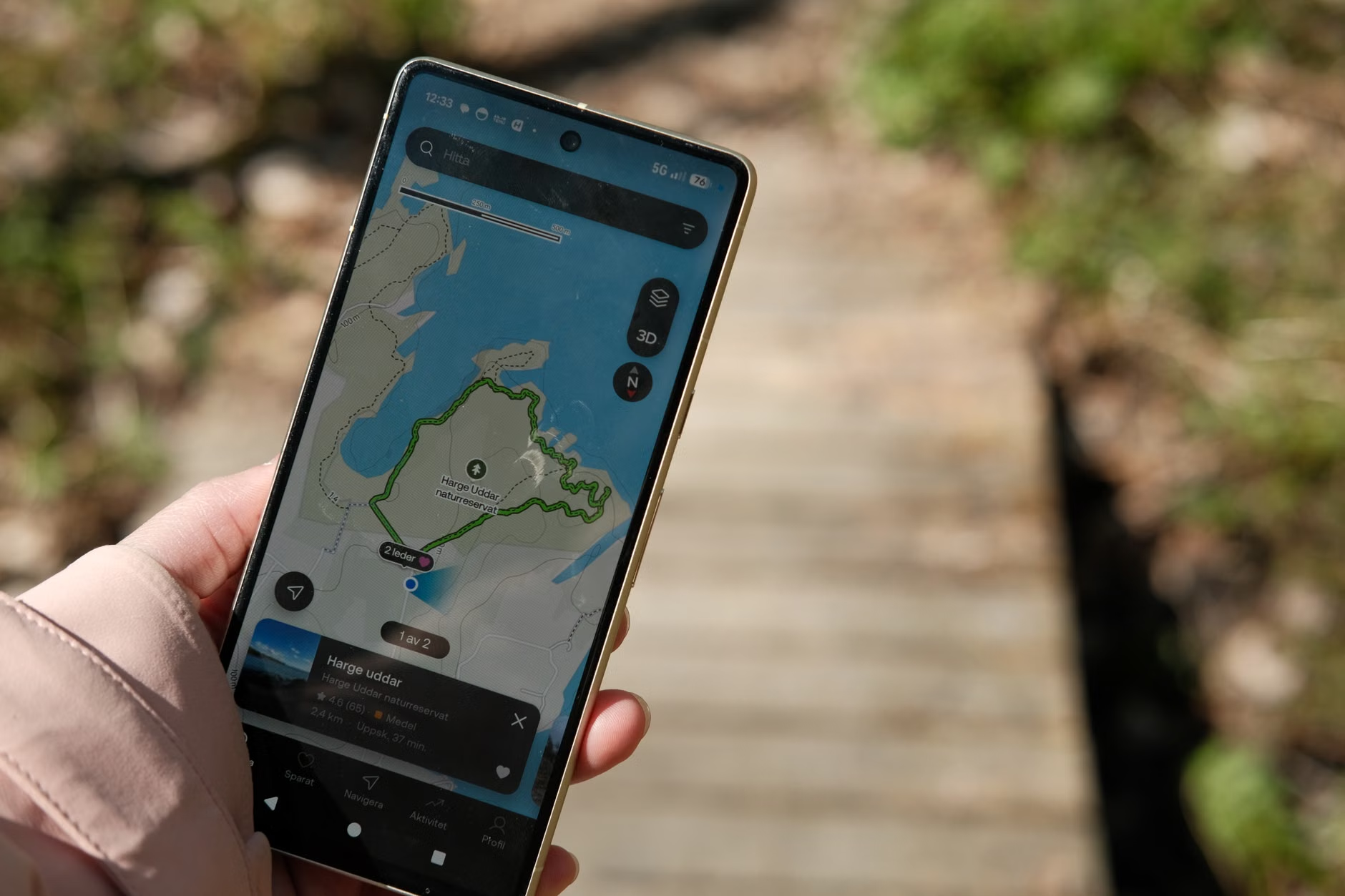
Also, consider the “Digital Detox” aspect of this trend. Quiet-Tourism is difficult to maintain if you are constantly on your phone checking reviews or navigating GPS. Print out a paper map or download an offline version of the area. By removing the digital tether, you become more present, which is the ultimate goal of this travel style.
Final Thoughts: A Sustainable Way to Travel
Quiet-Tourism isn’t just about your personal relaxation; it’s a more sustainable way to travel. Overtourism is a genuine problem in cities like Venice, Barcelona, and Kyoto. By shifting your spending and your presence to residential areas, you are dispersing the economic benefits of tourism more equitably and reducing the strain on the city’s most sensitive infrastructure.
When you return home, you won’t have the standard “tourist” stories of waiting in lines or fighting crowds. Instead, you will have stories of a quiet morning in a local park, a conversation with a shopkeeper in a neighborhood you discovered by accident, and the feeling of having actually rested during your time away. That is the true value of a city break.
Next time you book a trip, ask yourself: “Am I going here to see the city, or am I going here to be in the city?” The answer will dictate whether you end up exhausted or refreshed. Choose the latter.
Frequently Asked Questions
1. Isn’t it risky to explore residential neighborhoods I’m not familiar with?
In most major metropolitan hubs, residential areas are as safe as, if not safer than, the crowded tourist centers. The key is to stay within well-lit, populated areas and use common sense. Stick to neighborhoods that are well-connected by public transit, and do your research online to ensure you have a general sense of the area’s layout before you head out.
2. How do I find “quiet zones” if I don’t speak the local language?
Modern translation tools have made this much easier. Use apps to translate local community websites or blogs. More importantly, look at maps to identify green spaces, universities, and public buildings. These are universal quiet zones. You don’t need to speak the language to enjoy a quiet park or a peaceful library.
3. What if I feel like I’m “missing out” by not visiting the top landmarks?
It helps to reframe the goal. Instead of “missing out” on a landmark, view it as “gaining” a deeper, more authentic experience of the city. You can always visit a famous landmark during the off-peak hours if it’s truly important to you, but prioritize the quality of your overall trip over the checklist of sights.
For more information on sustainable and mindful travel, visit the UN World Tourism Organization’s guidelines on sustainable tourism.