- Ancestral-Roots is not just about names: It is a curated storytelling project that transforms raw genealogical data into a narrative gift, making it far more valuable than standard consumer goods.
- Start with a specific focus: Do not attempt to map every ancestor; focus on a specific branch or a single narrative arc to keep the project manageable and engaging for the recipient.
- Digital-to-Physical bridge: The highest value comes from digitizing loose papers and photos, then presenting them in a high-quality physical format like a photo book or a structured archive box.
If you are in your 30s or 40s, you have likely reached a point where the pile of “stuff” in your home feels more like a burden than a collection of memories. Every holiday season, the pressure to find a “meaningful” gift often results in buying yet another high-end gadget or generic luxury item that ends up in a drawer. This year, the “Ancestral-Roots” project offers a departure from the cycle of consumption. By curating your family’s history into a thoughtful, tangible format, you aren’t just giving a gift; you are passing down a sense of belonging.
Defining the Ancestral-Roots Project
At its core, the Ancestral-Roots project is the intentional curation of your family’s heritage. It is the bridge between the digital data found on ancestry websites and the physical reality of a family’s lived experience. Many people assume this requires a PhD in history or a lifetime of research. In reality, it is a project of editing and presentation.
Why does this matter? For our generation, our parents and grandparents are the final living links to oral histories that are not documented anywhere else. Once that information is gone, it is lost forever. By formalizing these stories now, you create a legacy that your children will value long after the toys of the year are forgotten. It moves the focus from “what we bought” to “who we are.”

Phase 1: The Research Strategy (Avoiding the Rabbit Hole)
The most common mistake people make is trying to trace their family back to the 1600s. While interesting, that is a genealogy hobby, not a gifting project. For a holiday gift, you need a narrative. Focus on a “narrow and deep” approach.
The “Three-Generation Rule”: Focus your research on the lives of your parents, grandparents, and yourself. This is the era for which you can find living witnesses, physical documents, and clear photographs. Anything further back is a bonus, not a requirement.
Start by identifying the “Anchor Story.” Is there a family migration story? A specific trade or craft that defined your family? A house that everyone lived in? Pick one theme. This gives your project a cohesive narrative structure rather than a dry list of dates and names.
| Focus Area | Strategy | Expected Outcome |
|---|---|---|
| Oral Histories | Record 20-minute interviews | Transcribed anecdotes |
| Visual Archive | Scan/Restore 30-50 photos | High-res digital collection |
| Documentary | Digitize letters/certificates | Verified timeline |
When conducting interviews, avoid asking, “What was your life like?” It is too broad. Ask specific questions: “What was the kitchen like in your childhood home?” or “What is the one recipe you remember your mother making every Sunday?” These sensory details are what make the history feel alive.
Phase 2: Organizing the Chaos
Once you have gathered your materials, you will likely be overwhelmed by the volume of stuff. This is where you must act as an editor. Not every blurry photo of a tree is worth keeping. You are looking for “story-anchors”—items that represent a turning point or a defining trait of your family.
The Archival Standard: If you are dealing with physical documents, do not store them in magnetic photo albums. These are the worst culprits for destroying history, as the adhesives break down paper and photos over time. Use acid-free sleeves and archival-quality boxes. This is a small investment that ensures the gift will last another 50 years.
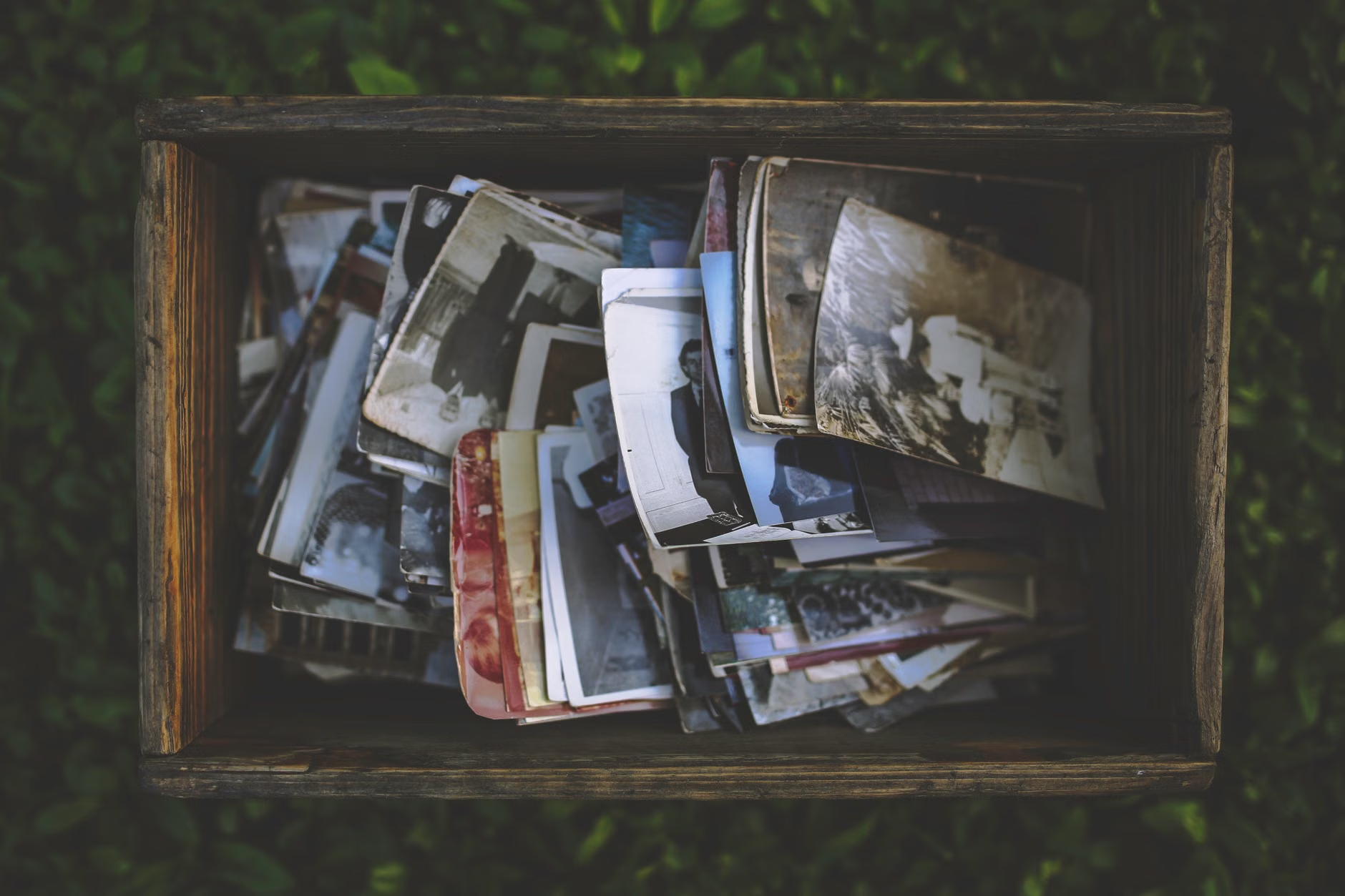
If you have digital files, create a “Master Folder” structure. Use a naming convention that includes the date and subject: YYYY-MM-DD_Subject_Description. This makes it easy to search later. If you are sharing this with family members, host the files on a cloud service with a simple, read-only link so they can view the history without accidentally deleting or moving files.
Phase 3: Crafting the Final Gift
A folder of digital files is not a gift; it is a chore. To make this a true “Ancestral-Roots” project, you need to present it in a way that invites interaction. Here are three formats that work well for the 30s/40s demographic:
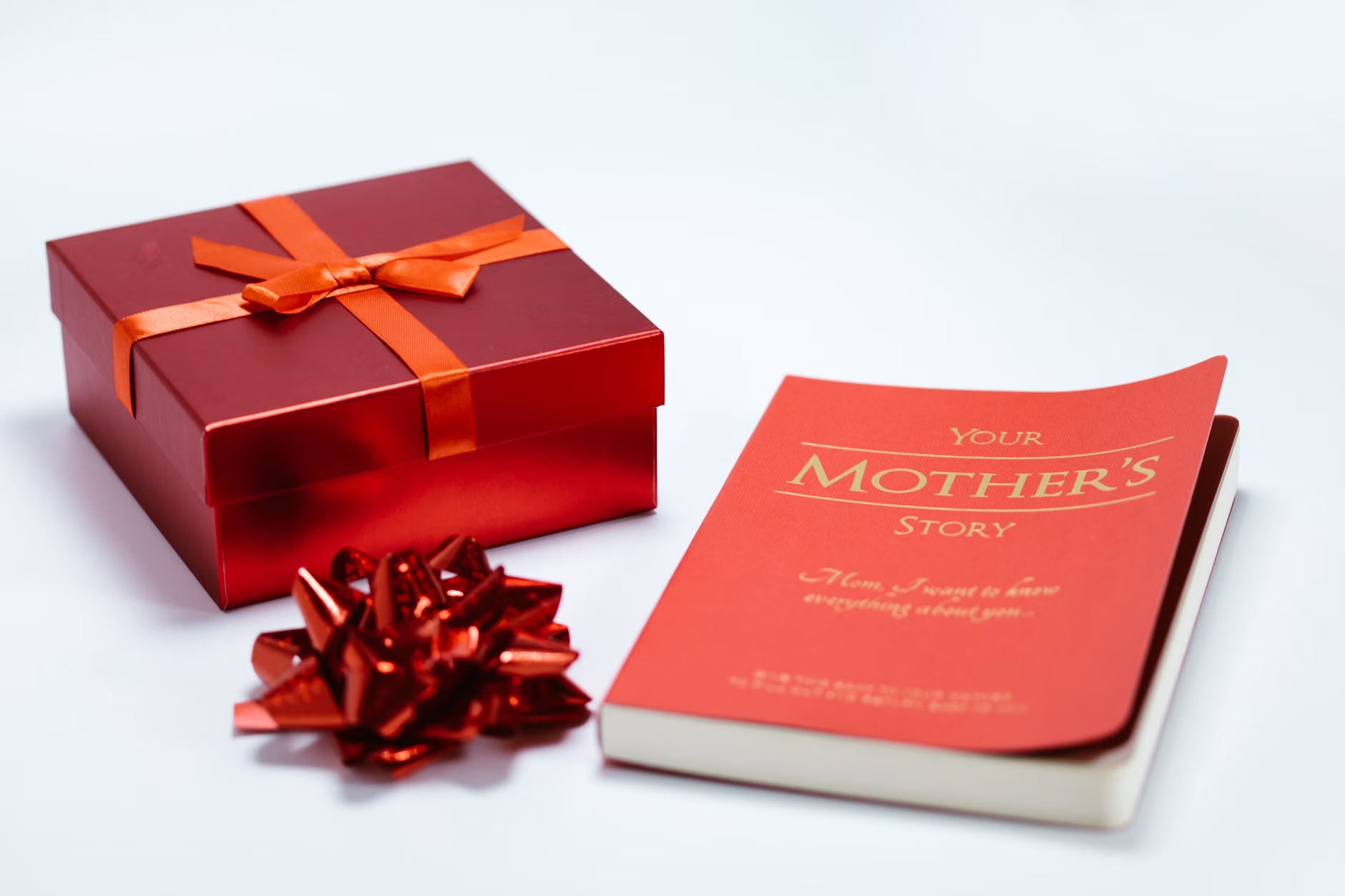
- The Narrative Photo Book: Use a high-quality printing service to create a book that weaves together family photos with the stories you have collected. Don’t just caption the photos; write a paragraph about what that moment meant to the family.
- The “Heirloom Box”: For physical items like old letters or small trinkets, curate a high-quality wooden box. Include a printed “guide” or map that explains what each item is. This is a tactile, museum-like experience that works beautifully for parents or grandparents.
- The Digital Story Map: Use tools like Google Earth or specialized genealogy software to map where your family has lived. Pair this with a high-quality printed poster of the family tree.
Pro-tip: When printing photo books, look for “lay-flat” binding. It allows you to print photos across the center seam without losing detail, which is essential for group shots or historical documents that span two pages.
Overcoming Common Implementation Hurdles
You will face resistance, usually from yourself or family members who “don’t want to talk about the past.” The key is to frame the project as a way to preserve the family’s identity, not as an interrogation of their trauma or secrets. If a family member is hesitant to share, focus on the “lighter” aspects first—traditions, funny mishaps, or travel stories.
Another hurdle is the technical aspect of digitizing. Do not pay for expensive scanning services if you don’t have to. Smartphone apps like Google PhotoScan are remarkably effective for digitizing physical photos without glare. They capture the image, crop it automatically, and correct the perspective. For documents, any reliable document scanner app that exports to PDF will suffice.
Don’t get bogged down in software perfection. If you are using a genealogy site like Ancestry or MyHeritage, remember that their primary goal is to sell subscriptions. Use them for the data, but do not rely on them as your primary archive. Always keep a local copy of your data on your own hard drive or cloud storage. If the company changes its terms or goes out of business, your research remains yours.
The Value of Imperfection
One realization you will likely have is that family history is messy. There will be gaps, conflicting stories, and perhaps some uncomfortable truths. Do not feel obligated to “sanitize” the history. Acknowledge the gaps. A note in your book saying, “We don’t know the full story of this period, but we know this is where the family moved next,” is far more honest and meaningful than a fabricated narrative.
This project is an act of service. It requires time, patience, and the ability to listen. In a world where we are constantly distracted by the immediate, taking the time to look backward is a radical act of connection. Your family will appreciate the effort, but more importantly, you will have created a foundational document that anchors your family’s identity in a concrete, shareable way.
As you wrap up your project, remember that it is never “finished.” This is a living document. Leave a few blank pages at the end of your book or extra space in your archive box for the next generation to add their own stories. This transforms the project from a static gift into an ongoing family tradition.
Frequently Asked Questions
1. What if my family history is sparse or I have no living elders to ask?
If you don’t have oral history, focus on the “archive of the present.” You can still build a powerful project by collecting current photos, writing down the specific traditions your family has today, and digitizing whatever loose documents you do have. Sometimes, the most important history is the history we are actively creating right now.
2. How do I handle sensitive or difficult family secrets?
The goal of a holiday gift is to be inclusive and positive. If there are sensitive topics, the best approach is to either omit them entirely to protect the privacy of the living or to frame them with neutrality and respect. You are the curator; you decide the tone of the narrative. When in doubt, prioritize the stories that build connection rather than those that cause friction.
3. Is it better to give a digital archive or a physical book?
For a gifting occasion, a physical book or a curated box is almost always better. People in their 30s and 40s are often inundated with digital noise. A physical object that can be held and passed around creates a “moment” during a holiday gathering that a digital link simply cannot replicate. Use the digital archive as your working file, but commit to a physical, tangible final product.
For more on best practices for managing your research, visit the National Archives guide to preserving family papers. It provides excellent, non-technical advice on how to keep your documents safe for the long term.
Note: This guide is intended for informational purposes and to help you organize your personal heritage. Always respect the privacy and boundaries of your family members when documenting sensitive information.