The most effective way to manage family projects without burning out is to shift from “command-and-control” parenting to a “Gentle-Leadership” framework that treats household tasks as collaborative team goals rather than a list of chores to be enforced.
- Shared Ownership: Projects succeed when every family member understands the “why” behind the task, moving beyond simple compliance.
- Low-Friction Systems: Use visual, accessible tracking methods that reduce the mental load of managing daily logistics.
- Sustainable Pacing: Gentle-leadership prioritizes the long-term emotional climate of the home over the immediate perfection of a completed task.
If you are in your 30s or 40s, you are likely living in the “sandwich generation” of project management. You are juggling professional deadlines, school runs, extracurricular schedules, and the invisible labor of maintaining a home. Often, the frustration isn’t the work itself—it’s the resistance we face when trying to coordinate other family members. When we approach family projects like a boss at a firm, we get compliance, but we also get resentment and burnout.
Gentle-leadership is not about being “soft” or having no rules. It is about applying the principles of modern, agile management to domestic life. It focuses on transparency, psychological safety, and iterative improvement. Let’s break down how this actually works.

Defining the ‘Gentle-Leadership’ Mindset for Home
In a professional setting, we know that top-down micromanagement kills innovation. At home, the same principle applies. If you constantly dictate every step of a family project—say, the “Spring Garden Cleanup” or “The Great Kitchen Declutter”—you become the sole project manager, the sole worker, and the sole person responsible for failure. That is a recipe for exhaustion.
Gentle-leadership shifts the focus from “Do this because I said so” to “Here is the goal, how can we solve this together?”. This requires a fundamental shift in how we view our children and partners. They are not subordinates; they are stakeholders. If they have a say in the “how,” they are significantly more likely to commit to the “what.”
The Three Pillars of Gentle-Leadership
To implement this, you need to anchor your approach in three specific behaviors:
- Transparency: Everyone should know what the project is and why it matters to the household. A project without a clear “why” is just a chore.
- Autonomy: Give family members agency over the specific tasks they choose. If a child wants to be in charge of the music playlist for the cleaning project, let them. That is their contribution.
- Iterative Feedback: Don’t wait until the project is finished to comment. Check in, celebrate progress, and adjust the plan if it’s not working.
The Anatomy of a Family Project: Moving from Chaos to Clarity
Most family projects fail because they are ill-defined. “Clean the garage” is a project, but it’s a vague one. It’s overwhelming, lacks a clear endpoint, and doesn’t specify who does what. Using the gentle-leadership framework, we break this down into digestible, actionable phases.
Phase 1: The Kick-off (The ‘Why’ Session)
Before you start, gather the team. Keep it short—under 10 minutes. Explain the goal. Instead of saying, “We need to clean the garage because it’s a mess,” try, “Our garage is currently hard to use for bike storage. If we spend an hour Saturday morning clearing the floor, we can easily pull our bikes out for family rides. Who wants to help?”
Phase 2: Task Distribution and Agency
Once the goal is set, break the project into micro-tasks. Use a simple table to track these. Do not assign them; ask for volunteers or rotate responsibilities based on individual strengths.
| Task | Owner | Success Criteria |
|---|---|---|
| Sorting Bins | Partner | All bins labeled and off the floor |
| Sweeping Floor | Older Child | No visible dust or debris |
| Music & Snacks | Younger Child | Playlist playing, water bottles ready |
Notice the “Success Criteria” column. This is crucial. It removes ambiguity. If the task is “sweeping,” the success criteria is “no visible dust.” This prevents the common conflict of “I did it, but you said I didn’t.”
Common Pitfalls and How to Avoid Them
Even with the best intentions, things go sideways. The most common mistake is the “Reflexive Takeover.” This is when you see a family member doing a task incorrectly or slower than you would, and you immediately step in to do it yourself. This destroys trust and autonomy.
The ‘Reflexive Takeover’ Trap
When you take over, you are telling the other person: “Your work is not good enough, and I don’t trust you to do it.” If you do this once, it’s a correction. If you do it every time, you are teaching your family that they don’t need to try because you will eventually finish it for them. This creates a cycle of dependency.
How to Course-Correct
If a task isn’t being done to your standard, use the “Reflective Inquiry” method. Ask: “I noticed the bins aren’t fitting in the corner as we planned. What do you think is the best way to rearrange them so they fit?” This puts the problem-solving back on them, rather than you taking over the labor.
Scaling the Framework: From Weekend Projects to Daily Life
The beauty of the gentle-leadership framework is that it scales. Once you’ve mastered it for a Saturday project, you can apply it to daily routines like school-morning preparations or evening meal cleanup. The key is to reduce friction.
Low-Friction Systems
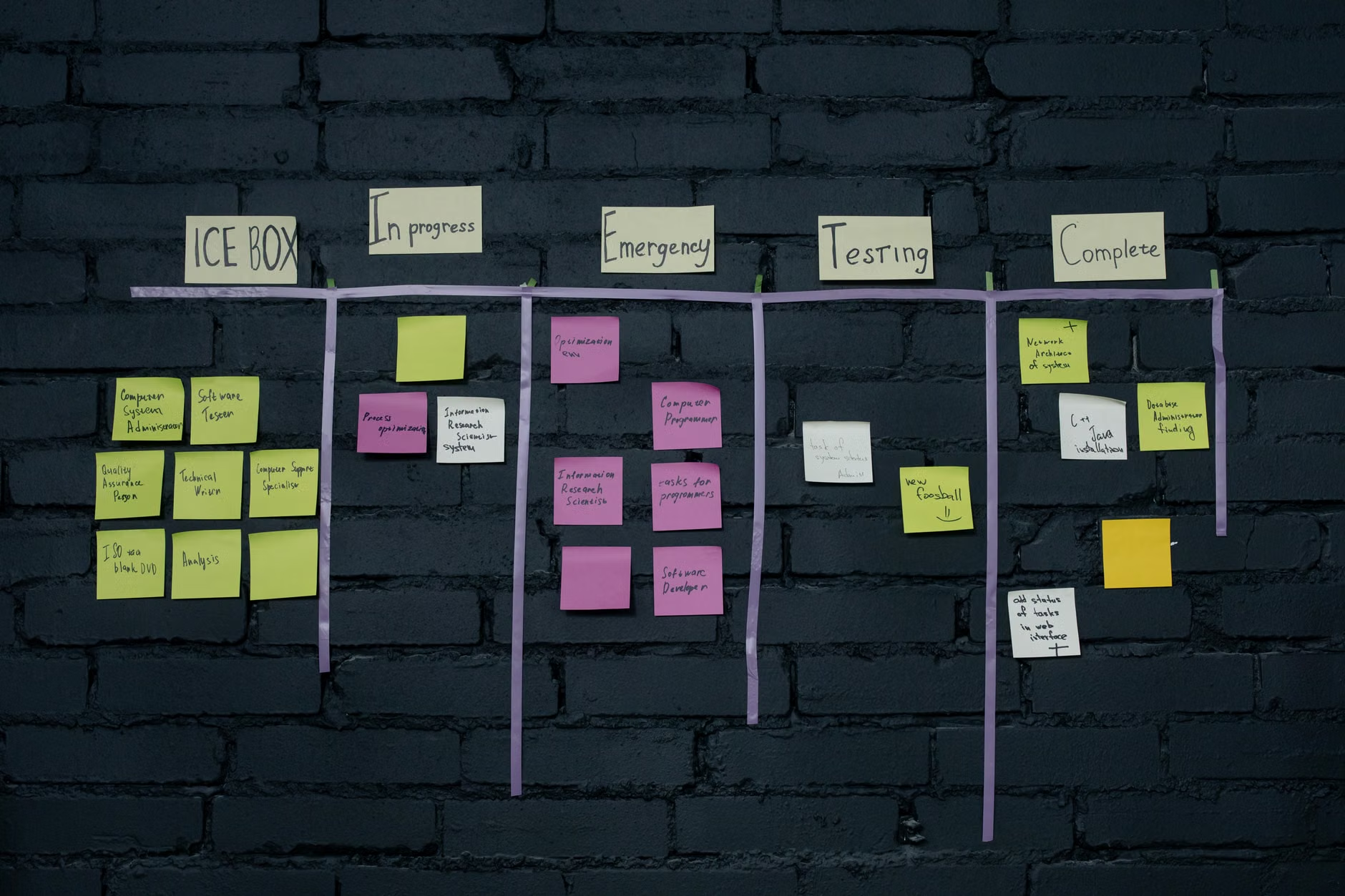
Use visual cues to help maintain momentum. A whiteboard by the front door, a shared digital app, or even a simple physical checklist on the fridge can act as a “source of truth.” When the information is visible to everyone, you no longer have to be the person constantly reminding others what to do. You shift from being the “task manager” to the “facilitator.”
Remember that in your 30s and 40s, your time is your most valuable asset. If you spend your energy managing people, you have less for yourself. By setting up systems that allow others to manage their own contributions, you are reclaiming your mental bandwidth.

The Role of Failure and Iteration
A project will occasionally fail. The schedule will slip, or the quality won’t be there. In a traditional management style, this leads to blame. In the gentle-leadership framework, this is an opportunity for a “Post-Mortem.”
Sit down and ask: “What worked well? What was the hardest part? What should we do differently next time?” By treating failure as data rather than a character flaw, you create a culture where the family feels safe to take risks and improve.
The Hidden Cost of Perfectionism
Many of us fall into the trap of wanting the “perfect” outcome. We want the garage to look like a magazine spread. But if achieving that perfection causes conflict, stress, and resentment, the cost is too high. Gentle-leadership prioritizes the long-term health of your family relationships over the short-term aesthetic of your home.
Actionable Steps for Your Next Family Project
If you’re ready to start, don’t try to overhaul your entire household management strategy in one go. Pick one manageable project this weekend.
- Identify the Project: Choose something that currently causes friction.
- Define the Goal: Be specific. What does “done” look like?
- Call the Team: Explain the ‘why.’
- Distribute Ownership: Let people choose their tasks.
- Check in: Keep the conversation open during the work.
- Celebrate: Acknowledge the effort, not just the result.
This approach requires patience. It is often faster to do it yourself, but it is never more sustainable. By investing time now in building these collaborative muscles, you are setting your family up for years of easier, more harmonious cooperation.
Final Thoughts: The Long Game
The goal of the gentle-leadership framework is to build a home where everyone feels like a contributor. When your children reach adulthood, they won’t remember if the garage was perfectly organized, but they will remember how you handled the stress of trying to organize it. They will learn how to communicate, how to lead, and how to collaborate—skills that are far more valuable than a tidy shelf.
Start small, stay consistent, and remember that you are building a team, not managing a workforce. The results might not be perfect on day one, but the process will be significantly more rewarding for everyone involved.
Frequently Asked Questions
Q: What if a family member refuses to participate in the project?
A: If they refuse, it usually means the “why” isn’t clear or the task is perceived as unfair. Ask them: “What part of this feels like a burden?” Sometimes, you may need to renegotiate the goal or the distribution of labor to ensure everyone feels the trade-offs are balanced. Avoid forcing participation; instead, focus on the natural consequences of the project not being completed.
Q: How do I handle a partner who has a different standard of ‘clean’ or ‘done’?
A: This is a classic source of tension. Use the “Success Criteria” table mentioned earlier. Agree on the criteria before the project begins. If they agree to “clean the kitchen” and define it as “dishes done and counters wiped,” you cannot move the goalposts later to include “everything organized in the cupboards.” If your standards are fundamentally different, you may need to discuss where those standards come from and find a middle ground.
Q: My kids are very young (under 7). Can this really work?
A: Absolutely, but the scope must be smaller. For young children, the project should be very short (15-20 minutes). Use visual aids like pictures or simple checklists. The goal is to build the habit of contributing, not to achieve a high-level outcome. Focus on praising their effort and their role in the “team,” which reinforces their identity as helpful family members.
For further reading on building collaborative family systems, refer to these resources: