- Economic Efficiency: Toy libraries can save the average family $500–$1,200 annually by curbing impulse purchases of short-lived plastic toys.
- Cognitive Development: Access to a rotating library allows children to explore age-appropriate challenges without the clutter, which is proven to improve deep-focus play.
- Neighborhood Resilience: These libraries serve as social hubs that foster community trust and local resource sharing, reducing the carbon footprint of your household.
The most effective way to deal with the inevitable mountain of plastic toys in your living room isn’t a better storage bin—it’s stopping the influx of toys you don’t need to own forever. If you are in your 30s or 40s, you are likely navigating the “peak consumption” phase of parenting. You’ve seen the cycle: a toy is bought, celebrated for three days, and then becomes a permanent, dusty resident of your floorboards. The circular-economy toy library is the antidote to this cycle, transforming how we view ownership and play.
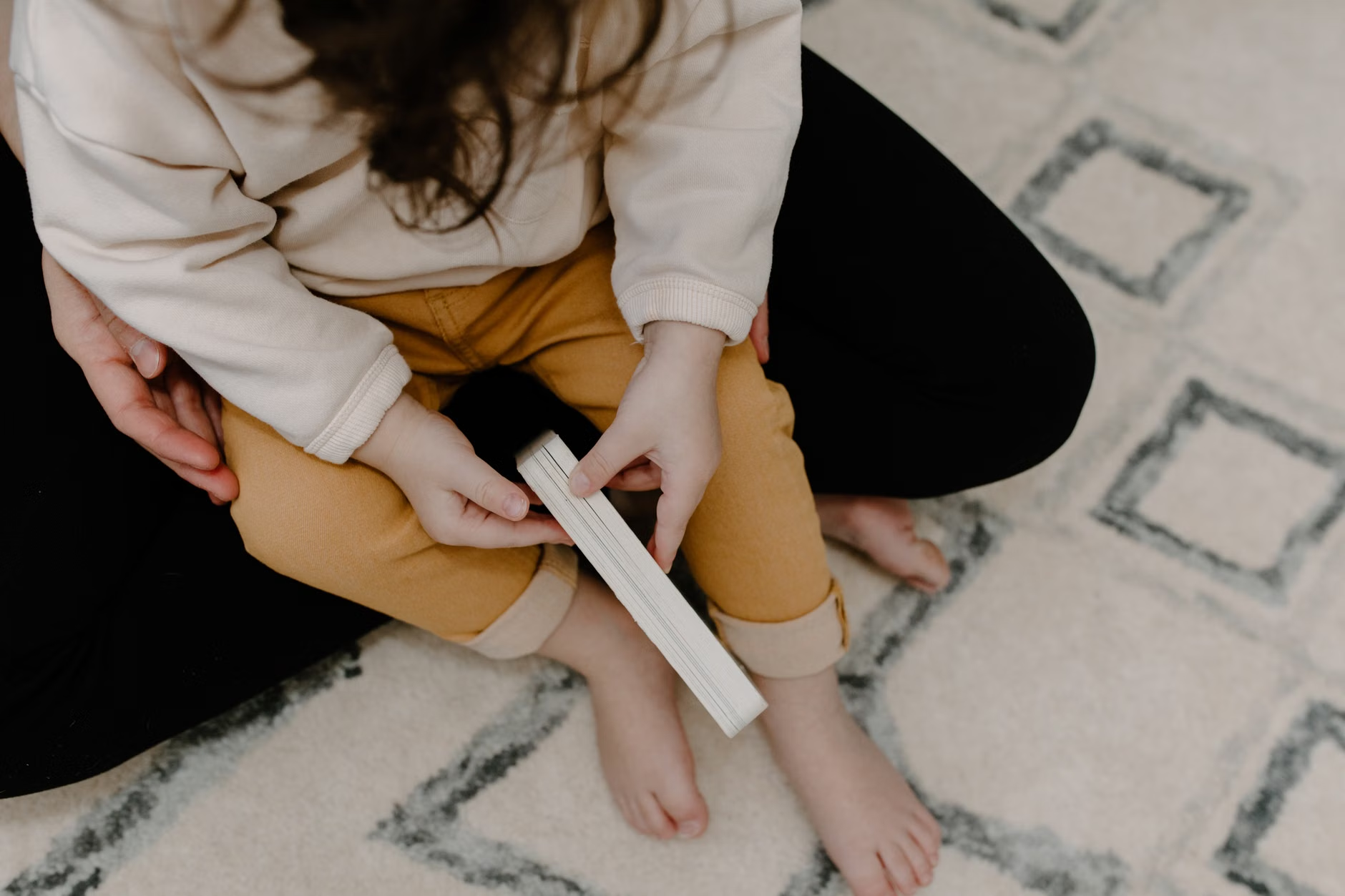
Why Your Living Room Feels Like a Toy Graveyard
We often treat toys as “assets” for our children, but in reality, most mass-market plastic toys are depreciating liabilities. They occupy expensive square footage in your home, require constant cleaning, and eventually end up in landfills because they are difficult to recycle due to mixed-material construction. The psychological impact of clutter is well-documented; for both parents and children, excessive toy volume leads to decision fatigue and reduced creative play.
When a child has too many options, they tend to flit from one object to another without engaging deeply. This is the opposite of the “deep work” or “flow state” we hope to foster. By shifting to a library model, you aren’t just saving money; you are curating the environment. You are moving from a state of “abundance of junk” to “intentionality of experience.”
The Financial Reality of Toy Ownership
Consider the math: An average high-quality developmental toy costs between $30 and $80. If your child moves through five developmental stages in their first decade, the cost of keeping them constantly stimulated with new, “appropriate” toys can easily exceed $3,000. Membership at a local toy library typically costs $50–$150 per year. The math isn’t just favorable; it’s transformative for your monthly budget.
| Feature | Traditional Ownership | Toy Library |
|---|---|---|
| Capital Cost | High (Per unit) | Low (Membership fee) |
| Storage | Permanent clutter | Temporary rotation |
| Sustainability | High waste | Circular reuse |
How Toy Libraries Build Community Resilience
Resilience isn’t just about having supplies; it’s about having social capital. In an era where many of us live in neighborhoods where we barely know our neighbors, a toy library acts as a “third space.” It is a neutral ground where parents from different backgrounds cross paths. When you volunteer at a library, you aren’t just cleaning pieces; you are building a network of support.
During times of economic instability, these networks are vital. A community that knows how to share, repair, and maintain resources is a community that can weather shocks. When you participate in a toy library, you are essentially participating in a micro-economy that prioritizes long-term value over short-term consumption. This is the definition of building resilience from the ground up.
What Does the “Circular Model” Actually Look Like?
The circular economy is often discussed in abstract terms, but in the context of toys, it follows a simple, repeatable loop: Acquisition, Play, Sanitization, Return.
Unlike a retail store, a library operates on a closed-loop system. When a toy enters the library, it is cataloged. When it leaves, it is checked out by a member. When it returns, it is inspected for missing parts and sanitized. This is the “hidden” labor of the circular economy, and it’s why these libraries are so effective at keeping high-quality items in circulation for years rather than months.
The “Quality vs. Quantity” Trade-off
One of the biggest misconceptions is that libraries only have “old” or “broken” toys. In reality, most successful toy libraries prioritize high-quality, durable, often wooden or ethically sourced plastic toys. These are items designed to last. Because the library buys for the community, they often have access to higher-end brands that individual parents might find too expensive to purchase for a single age-stage. This allows your child to play with premium items that would otherwise be out of reach.
Step-by-Step: How to Start (or Join) Your Local Library
If you are looking to integrate this into your life, start by identifying if a library already exists. Use resources like the USA Toy Library Association (for North America) or local community boards. If one doesn’t exist, you can start small.
- Find a space: A community center, church basement, or even a local school library can host a pilot program.
- Curate the inventory: Start with donations of high-quality, clean toys. Avoid battery-operated items that are prone to mechanical failure.
- Establish a system: Use simple inventory management software or even a spreadsheet to track who has what.
- Create a sanitization protocol: This is the most important step for member trust. Use child-safe, non-toxic cleaners and have a clear “quarantine” bin for returned items.
The most common mistake is trying to grow too fast. Start with a small “toy swap” event once a month. This tests the interest level in your neighborhood without requiring a massive initial investment in shelving or insurance.

Addressing the “Germ” and “Breakage” Concerns
Let’s address the elephant in the room: What if your child breaks a toy, or you worry about hygiene? These are valid concerns, but they are easily managed with standard policies. Most libraries have a “replacement fee” policy for lost pieces, which is usually quite reasonable. Regarding hygiene, the reality is that most children’s toys at home are not cleaned as frequently as library toys. The rigorous cleaning schedule of a library often makes these items cleaner than the ones currently sitting in your toy box.
If a toy is broken through normal wear and tear, that is part of the cost of doing business. It provides a teaching moment for your child about responsibility and the nature of shared goods. If a toy is damaged through negligence, the small fee acts as a deterrent and a way to fund the replacement.
Beyond Toys: The Philosophy of Less
Ultimately, the circular toy library is about shifting the mindset of your entire household. It teaches your children that “new” is not synonymous with “better.” It teaches them that they can have access to a vast array of resources without needing to own them exclusively. This is a powerful lesson in a world that is constantly pushing for more consumption.
As parents in our 30s and 40s, we are the bridge between the hyper-consumerist past and a more sustainable future. By choosing to borrow instead of buy, you are making a deliberate choice for your wallet, your home environment, and the planet. It’s a small, daily act of rebellion against the clutter that threatens to overwhelm our modern lives.
Final Thoughts: Take the First Step
You don’t need to commit to a total lifestyle overhaul today. Start by identifying one category of toys—perhaps large items like play kitchens or climbing structures—that you can rent or borrow instead of buying. Look for local Facebook groups, community centers, or neighborhood apps that facilitate sharing. The friction of the first step is always the hardest, but once you experience the relief of a decluttered home and a happy, stimulated child, you will wonder why you didn’t start sooner.
Remember: Your home is a place for your family to grow, not a warehouse for the toy industry’s latest plastic output. Reclaim your space, save your money, and build a stronger community in the process.
Frequently Asked Questions
- Are toy libraries safe regarding germs and bacteria? Yes. Reputable toy libraries follow strict cleaning protocols using non-toxic, child-safe disinfectants. Most items are cleaned upon return and often undergo a “quarantine” period before being placed back on shelves, making them arguably more hygienic than toys that have sat at home for months.
- What happens if my child loses a small piece of a set? Most libraries have a “grace” system for minor missing pieces. If a significant part is lost, a small replacement fee is standard. This encourages children to learn the value of keeping track of shared items, which is a valuable life lesson in itself.
- How do I find a toy library in my area? Start by checking the USA Toy Library Association (at toylibraries.org) or your local municipal website. If none exist, search for “tool libraries” or “community swap groups,” as these often have toy-sharing components or can provide a template for starting your own.
For further reading on circular economy principles and community resilience, visit the Ellen MacArthur Foundation’s resources on the circular economy at ellenmacarthurfoundation.org.