The “Blue Economy” isn’t just a buzzword for policymakers; it is the fundamental shift in how your next coastal vacation is being built, managed, and priced to ensure that the ocean stays healthy enough for your children to enjoy in their own adult lives.
- Economic Value: The Blue Economy prioritizes long-term ocean health over short-term tourist volume, meaning you will see more “restricted access” or “entry fee” models in popular coastal areas.
- Hidden Costs: Expect to pay a “sustainability premium” in the form of environmental levies or mandatory eco-taxes, which are increasingly common in regions like the Balearic Islands or parts of the Caribbean.
- Actionable Choice: You can identify truly sustainable operators by looking for specific marine-certified certifications (like Blue Flag) rather than generic “eco-friendly” marketing claims.
If you have spent any time planning a beach trip lately, you have likely noticed that the experience is changing. It is no longer just about finding the cheapest resort with an all-inclusive buffet. You might have seen notices about plastic bans, mandatory “tourist taxes” that claim to fund coral restoration, or websites emphasizing “low-impact” stays. This is the Blue Economy in action.
For those of us in our 30s and 40s, balancing the desire for a relaxing family getaway with the creeping realization that our travel habits have an environmental price tag, this shift is both necessary and a bit confusing. How do you distinguish between a genuine effort to save a reef and a marketing campaign designed to justify higher prices?
What Is the Blue Economy and Why Should You Care?
At its simplest, the Blue Economy is the sustainable use of ocean resources for economic growth, improved livelihoods, and jobs, while preserving the health of ocean ecosystems. In the context of tourism, this means moving away from the “mass tourism” model—where thousands of people descend on a beach, use the water, leave their trash, and depart—toward a model where tourism revenue actively funds the protection of the very beach you are visiting.
Why does this matter for your family? Because the “mass tourism” model is failing. We are seeing more frequent beach closures due to pollution, rising prices in degraded areas, and a loss of the unique local culture that made these destinations worth visiting in the first place. When a destination adopts Blue Economy principles, the goal is to limit the number of visitors to ensure the environment doesn’t collapse under the weight of the demand.
For a parent, this creates a trade-off. You might have to book your trip further in advance because the destination has capped its daily visitor numbers. You might pay a higher price. But in exchange, you are likely to experience less crowding, cleaner water, and a more authentic connection to the local community.
The Financial Reality: Understanding the “Sustainability Premium”
One of the most noticeable changes in coastal travel is the rise of environmental levies. These are not just “tourist taxes” in the traditional sense; they are often ring-fenced funds used specifically for coastal management. If you are traveling to places like the Balearic Islands (Spain) or various islands in the Caribbean, you have likely encountered these.
The common mistake: Many travelers assume these fees are just another way for governments to squeeze extra profit. While it is always wise to verify where the money goes, these taxes are often the only way a small island community can afford to manage the waste and sewage systems required to handle tens of thousands of visitors.
When comparing destinations, use this simple decision matrix to determine if the “premium” you are paying is legitimate:
| Indicator | What to Look For | Sign of Genuine Blue Economy |
|---|---|---|
| Transparency | Fee breakdown | The website explicitly states the tax funds conservation projects. |
| Certification | Third-party badges | Blue Flag, EarthCheck, or LEED certifications. |
| Supply Chain | Local sourcing | The hotel prioritizes local food and labor over imported goods. |
If a hotel claims to be “eco-friendly” but still uses single-use plastic bottles in every room, ignores local water scarcity, and has no verifiable certification, the “green” label is likely just marketing. The Blue Economy is about systemic change, not just switching from plastic straws to paper ones.
How to Spot “Greenwashing” in Coastal Resorts
Greenwashing is rampant in the travel industry. It is the practice of spending more time and money on marketing an image of sustainability than actually minimizing environmental impact. For a parent, this is frustrating because you genuinely want to make better choices for your family, but the information is often intentionally opaque.
A major red flag is the “towel reuse” program. While well-intentioned, it is often the only environmental initiative a hotel has. If a resort highlights its towel reuse policy but has no mention of energy efficiency, waste management, or local community support, it is likely greenwashing. A true Blue Economy operator will show you, not just tell you.
Look for these concrete indicators instead:
- Water Management: Does the hotel have a greywater recycling system? In coastal areas, water scarcity is a massive issue. A hotel that flushes toilets with desalinated water while the local community struggles for drinking water is not operating in the spirit of the Blue Economy.
- Energy Sourcing: Are they using solar or wind power? Many coastal resorts are now transitioning to renewable energy to offset the high costs of grid electricity in remote locations.
- Marine Protection: Do they have a “no-touch” policy for coral reefs? Do they provide reef-safe sunscreen? Do they actively participate in or fund local marine protected areas (MPAs)?
Practical Steps for the Mindful Traveler
You don’t need to be a marine biologist to travel responsibly. Small, consistent actions are more effective than grand, performative gestures. If you are planning your next family vacation, here is a step-by-step approach to align your trip with Blue Economy principles:
Step 1: Research the destination’s policy. Before booking, look up the destination’s official tourism board website. Do they have a “sustainability charter”? Destinations like Palau (with the Palau Pledge) have made sustainability a literal requirement for entry. If a government is taking this seriously, it’s a good sign.
Step 2: Prioritize certifications over marketing. Don’t look for the words “eco” or “green” in the hotel’s name. Look for the Blue Flag certification for beaches and marinas. This is a globally recognized standard that requires strict compliance with water quality, safety, and environmental education criteria.
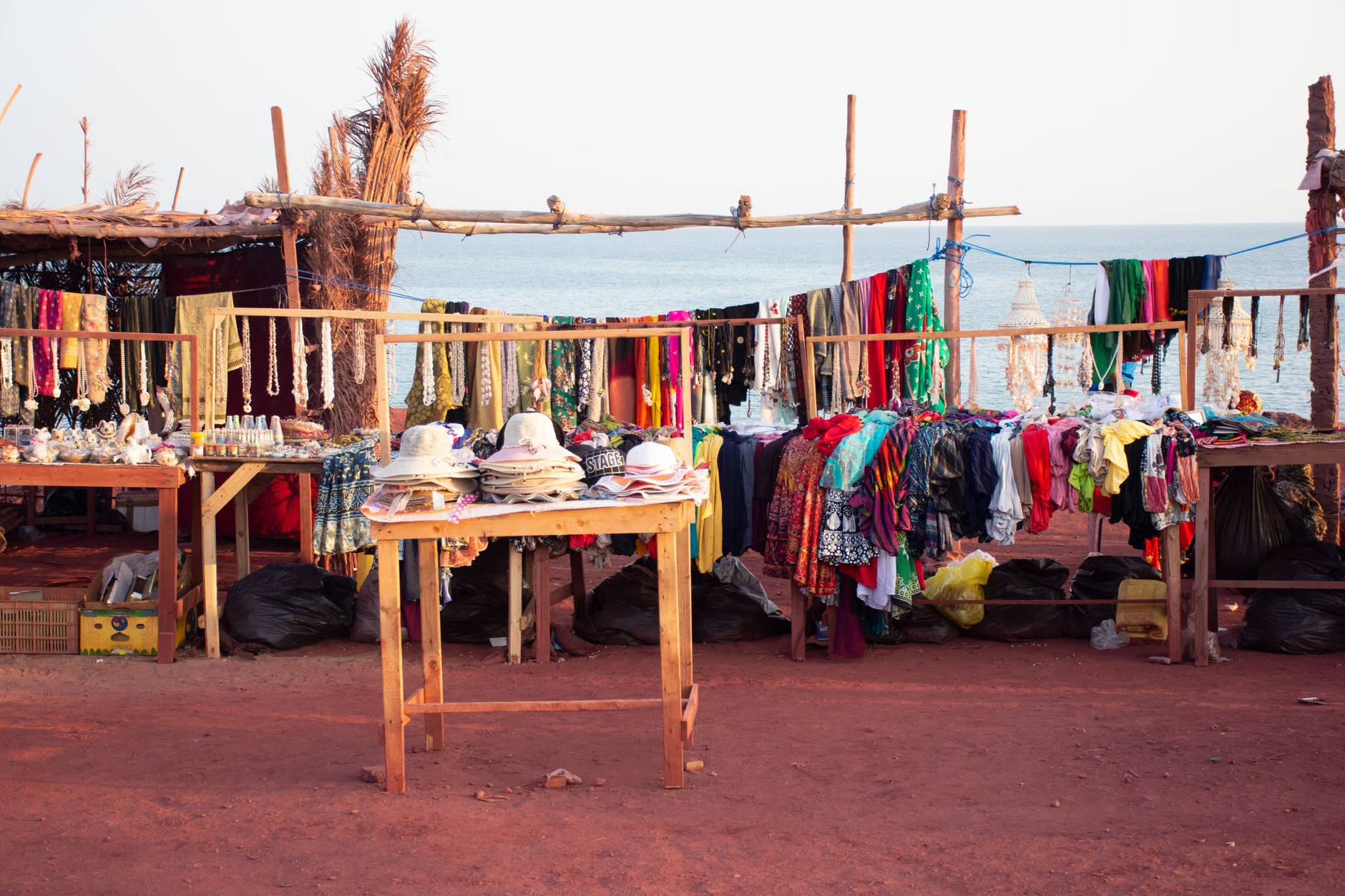
Step 3: Choose local. The Blue Economy is inherently tied to local livelihoods. Eat at locally owned restaurants, hire local guides for snorkeling or boat trips, and buy souvenirs made by local artisans. This keeps the money within the community, which in turn gives the community more resources to protect their natural assets.
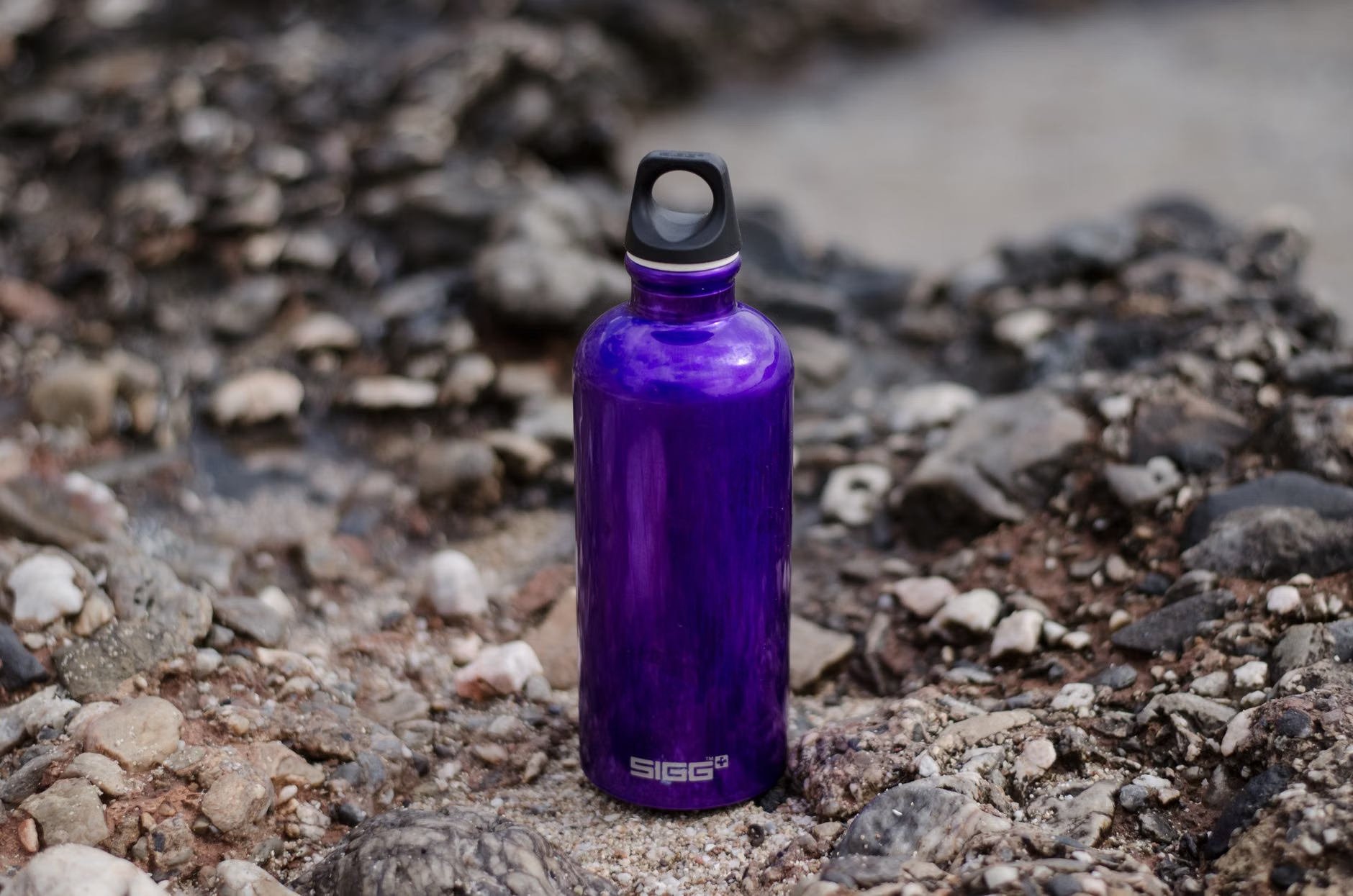
Step 4: Pack for impact. Bring your own reef-safe sunscreen, a reusable water bottle, and a compact set of reusable utensils. Many coastal areas are struggling with plastic waste management; by reducing your personal output, you directly lower the burden on the local infrastructure.
The Hidden Trade-off: Accessibility vs. Preservation
There is an uncomfortable truth that we have to address: the Blue Economy will eventually lead to decreased accessibility. As we recognize the carrying capacity of certain ecosystems, we will see more “lottery” systems for entry, higher prices to manage demand, and stricter regulations on what you can and cannot do.
For families, this means the days of “last-minute cheap beach trips” are likely numbered for the most fragile and beautiful locations. You will need to plan further ahead. You will need to budget for higher costs. You will need to be prepared for rules that might feel restrictive—like not being allowed to wear certain types of sunscreen or being limited in where you can walk on a reef.
Is this a bad thing? Not necessarily. It shifts the value of travel from “consumption” to “experience.” Instead of visiting five different beaches in a week, you might spend a week in one location, truly getting to know the area, the people, and the marine life. It is a slower, more intentional way of traveling that often results in less stress for parents and a more educational experience for children.

Common Misconceptions About Blue Tourism
There is a lot of noise surrounding “eco-travel.” Let’s clear up a few things that often trip up well-meaning travelers:
Misconception 1: “It’s all about recycling.” Recycling is the bare minimum. The Blue Economy focuses on the circular economy—reducing waste before it enters the system. A hotel that focuses on eliminating single-use plastics entirely is doing more than a hotel that just provides a recycling bin.
Misconception 2: “Sustainable travel is always more expensive.” While the “sustainability premium” exists, it is often offset by the quality of the experience. You are paying for a location that isn’t overcrowded, for food that is fresh and local, and for a staff that is treated fairly. When you factor in the value of a high-quality experience, the price difference often becomes negligible.
Misconception 3: “One family doesn’t make a difference.” This is the most dangerous myth. The tourism industry is driven by demand. Every time you choose a sustainable operator over a non-sustainable one, you are signaling to the market that there is a financial incentive for sustainability. When enough of us do it, the industry follows.
Looking Ahead: The Future of Your Coastal Getaways
The shift to the Blue Economy is not a passing trend; it is a response to the reality of a changing climate and the degradation of our oceans. For those of us in our 30s and 40s, we are the generation that will see the most significant changes in how we experience the world’s coastlines. We are the ones who need to decide whether we want to be part of the problem or part of the solution.
The next time you open a booking site, don’t just filter by price or star rating. Look for the signs of a destination or operator that respects the water. Check their environmental policies. Read reviews from a sustainability perspective. It takes a little more effort, yes, but it ensures that the beach you love today will still be there for your children to explore in twenty years.
Ultimately, the Blue Economy asks us to be better guests. It asks us to recognize that we are not just consumers of a destination, but temporary stewards of it. If we can make that mental shift, our vacations won’t just be a break from our routines—they will be a contribution to a healthier planet.
Frequently Asked Questions
1. How can I verify if a “reef-safe” sunscreen is actually safe?
Marketing labels like “reef-safe” are currently unregulated in many countries. To be sure, check the ingredient list for Oxybenzone and Octinoxate. These are the two most common chemicals known to damage coral reefs. Look for mineral-based sunscreens that use non-nano Zinc Oxide or Titanium Dioxide as their active ingredients.
2. What is the most effective way to support local communities while traveling?
The best way is to keep your money within the local economy. Eat at restaurants that source food from local farmers, hire guides who are residents of the area, and choose locally owned accommodations (guesthouses or boutique hotels) over large, international chains that often repatriate their profits to corporate headquarters abroad.
3. Are “carbon offset” programs for flights actually worth it?
Carbon offsets are a complicated topic. While they can help fund reforestation or renewable energy projects, they shouldn’t be seen as a “get out of jail free card” for high-impact travel. If you choose to use them, look for projects that are certified by the Gold Standard or the Verified Carbon Standard (VCS) to ensure the funds are actually achieving measurable results.
For further reading on how international policies are shaping the future of our oceans, you can visit the United Nations World Oceans Day portal or explore the World Bank’s Blue Economy program, which outlines how these initiatives are being implemented globally.