The “Carbon Border Tax”—most notably the European Union’s Carbon Border Adjustment Mechanism (CBAM)—is quietly reshaping the global supply chain, and your grocery bill is likely the next place you will feel the impact. While it sounds like a bureaucratic policy for manufacturers, it fundamentally alters the cost structure of imported goods, meaning that everything from your morning coffee to your mid-week pasta dinner could see a price adjustment as companies pass on the costs of “greening” their production processes.
- The Carbon Tax is a leveler: It forces foreign producers to pay for the carbon emissions generated during production, effectively erasing the “price advantage” of high-pollution manufacturing.
- Direct impact on imports: Foods sourced from countries with lax environmental regulations will face higher tariffs, specifically targeting carbon-intensive items like fertilizers and processed goods.
- Strategic shopping matters: As prices fluctuate, shifting toward locally sourced produce or products from regions with mature carbon-reduction policies will become a more effective way to manage your household food budget.
What Exactly is the Carbon Border Tax and Why Now?
If you have been keeping an eye on the news, you might have heard the term “CBAM” thrown around. At its core, the Carbon Border Adjustment Mechanism is a trade policy designed to prevent “carbon leakage.” Think of it this way: if a country like the EU enforces strict carbon taxes on its own factories to fight climate change, those local companies might struggle to compete with cheaper imports from countries where factories can pollute for free. The Carbon Border Tax acts as a wall, ensuring that goods entering the region carry a carbon price equal to what they would have paid if they had been produced locally.
For a parent in their 30s or 40s trying to balance a monthly grocery budget, this policy represents a structural shift in global trade. It is no longer just about the cost of labor or materials; it is now about the cost of the carbon footprint left behind. When a manufacturer in an overseas market has to pay for their emissions to clear customs, they don’t just absorb that cost—they pass it down the chain to the distributor, the retailer, and eventually, to you at the checkout counter.
Why is this happening now? The global consensus on climate change is shifting from voluntary targets to mandatory financial accountability. Governments realize that if they don’t tax the carbon content of imports, they are essentially outsourcing their pollution—making their own environment cleaner while ignoring the carbon emissions generated elsewhere to produce the coffee, rice, or chocolate we consume daily.
The Hidden Costs in Your Grocery Basket
You might be wondering: “Does this mean my apples are going to cost double?” The answer is nuanced. The tax is applied based on the carbon intensity of the product. This means that highly processed foods or goods that require heavy use of fertilizers—which are often produced using high-emission processes—will face the steepest cost increases.
Consider the fertilizer factor. Many agricultural products, particularly grains and staples like wheat and corn, rely on ammonia-based fertilizers. The production of these fertilizers is extremely energy-intensive and carbon-heavy. Under the new border tax regimes, exporters who haven’t transitioned to green energy for their fertilizer production will face a surcharge. When you see a jump in the price of bread or breakfast cereal, it might not just be “general inflation”; it could be the specific cost of the carbon tax being integrated into the supply chain.
The “Carbon Premium” on Imported Produce
Fresh produce is another area to watch. If you live in a region that imports a significant portion of its fruits and vegetables, you are effectively “importing carbon.” Shipping, refrigeration, and the energy used in greenhouses all contribute to the carbon footprint. While the tax mainly targets the production phase, the tightening of environmental regulations means that every stage of the journey is coming under scrutiny. The “carbon premium” is the extra cost added to account for these environmental externalities.
| Product Category | Likelihood of Price Increase | Primary Driver |
|---|---|---|
| Processed Grains & Cereals | High | Energy-intensive fertilizer and production |
| Imported Tropical Fruits | Moderate | Shipping emissions and regulatory compliance |
| Seasonal Local Produce | Low | Short supply chains, minimal transit |
| Luxury/Specialty Imports | High | High-value processing and logistics |
This table illustrates a general rule of thumb: the more “processed” or “industrialized” the food, the more exposed it is to carbon-related price hikes. Fresh, locally grown produce remains the most insulated from these specific trade policies.
Real-Life Scenarios: How to Adapt Your Household Budget
For a family juggling busy schedules, the last thing you need is another complex variable at the grocery store. However, understanding the shift allows you to make smarter, more resilient choices. Let’s look at a hypothetical scenario: The Smith family, who typically buys a specific brand of imported organic rice and cereal. If the country of origin has not yet invested in green production technology, the “carbon-inclusive” price of those goods will rise.
What should the Smiths do? They shouldn’t necessarily panic or change their entire diet overnight. Instead, they can look at their spending patterns through a “carbon-efficiency” lens. If an imported staple becomes noticeably more expensive, it is often an indicator that the supply chain is inefficient. This is the perfect time to explore domestic alternatives. Often, local growers are not hit by these taxes, making them a more stable and cost-effective choice in the long run.
Common Mistakes to Avoid
One major mistake is assuming that “organic” automatically equals “low carbon.” It does not. An organic product shipped from the other side of the world may have a significantly higher carbon footprint—and thus a higher risk of future tax-related price hikes—than a conventionally grown product from a farm two towns over. When shopping, prioritize “local” and “seasonal” alongside your other preferences.
Another pitfall is trying to track every single item’s carbon footprint. That is a recipe for mental burnout. Instead, focus on the big-ticket items. If you are buying bulk staples like flour, rice, or sugar, pay attention to the country of origin. If you see a sudden, sustained price jump in a specific brand, it is a cue to investigate whether there is a local equivalent that offers better long-term price stability.
The Long-Term Impact: Why This is Actually Good for the Future
While the immediate prospect of higher grocery bills is frustrating, the Carbon Border Tax serves a critical purpose. By making carbon-intensive production expensive, it forces global industries to innovate. Over the next decade, we will likely see a surge in investments in green technology, renewable energy, and more efficient agricultural practices. This means that, eventually, the “carbon premium” will disappear because the production methods themselves will become cleaner.
Think of it as a transition period. We are currently paying the “early adopter tax” for a more sustainable future. For those of us in our 30s and 40s, we are the generation that has to navigate this shift while balancing the immediate needs of our children and our households. The goal isn’t to stop buying the things you love, but to be aware of why the prices are changing and how you can adapt your habits to mitigate the impact.

Strategic Shopping: A Step-by-Step Guide for the Busy Parent
If you want to stay ahead of these changes, you don’t need a degree in economics. You just need a few simple, actionable strategies. Here is how you can manage your grocery shopping in this new climate-conscious era:
- Audit your pantry staples: Identify which items you buy in large quantities that are imported. Check the labels. Are they coming from regions that are currently under heavy carbon-tax scrutiny?
- Prioritize “near-shore” sourcing: Whenever possible, choose products sourced from your continent or neighboring countries. These supply chains are generally shorter and less susceptible to the volatility of global carbon-border adjustments.
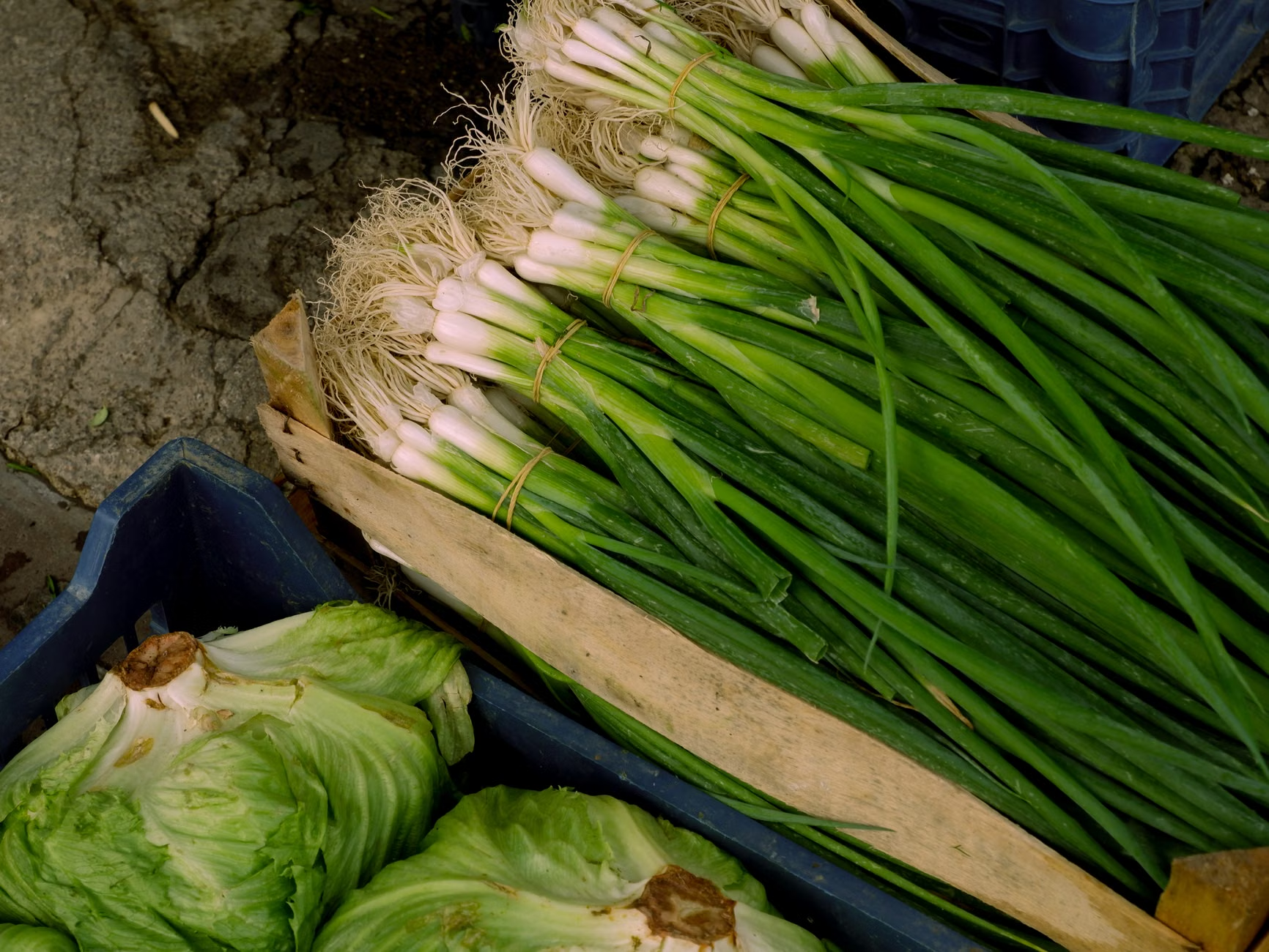
- Embrace seasonality: Buying produce that is currently in season locally is the ultimate way to avoid the hidden costs of international logistics and carbon-heavy transport.
- Watch for “Greenwashing”: Some brands may use the “carbon tax” as an excuse to raise prices unnecessarily. Compare prices between brands to ensure you aren’t paying a premium based on empty claims.
- Leverage loyalty programs for staples: Use your local supermarket’s app to track price trends. If you notice a consistent upward trend in an imported staple, set a price alert or look for a viable substitute.
Understanding the Trade-Offs
It is important to acknowledge the trade-off here: sustainability comes with a price tag. In the short term, the Carbon Border Tax will likely contribute to food price inflation. However, the alternative—unregulated, unchecked carbon emissions—carries a much higher cost in the form of climate instability, which ultimately threatens food security and leads to even more dramatic price spikes due to crop failures and supply chain disruptions.
When you see a slight increase in the price of your favorite imported coffee or chocolate, try to view it as a necessary adjustment. It is a signal that the real cost of production is finally being accounted for. For the savvy shopper, the key is to balance these necessary increases by being more deliberate with other parts of your budget. For example, by reducing food waste—which is essentially throwing away money and carbon—you can offset the slightly higher costs of more responsibly produced goods.
Practical Implications for Your Household
What does this mean for your weekly routine? It means that “shopping local” is no longer just a lifestyle trend or a way to support small businesses—it is a legitimate economic strategy to protect your family’s purchasing power. As global trade policies tighten, the local farmer’s market or the local produce aisle will become a hedge against the volatility of international carbon pricing.
Don’t be afraid to ask questions at your local store. Managers are increasingly aware of consumer preferences. If you start asking for more locally sourced alternatives, they will listen. Retailers want to keep their customers happy and loyal, and if they see a trend toward locally sourced products, they will adjust their supply chains accordingly.
Finally, remember that this is a marathon, not a sprint. We are in the early stages of a global economic transformation. There will be bumps, price fluctuations, and moments of frustration. The most important thing is to stay informed, remain flexible with your shopping list, and prioritize the long-term health of both your family budget and the planet.
Frequently Asked Questions
1. Will all imported food items see a price increase?
No. The tax is specifically targeted at products that are carbon-intensive to produce, such as those relying on high-emission fertilizers or energy-heavy manufacturing. Many low-impact imported goods may see little to no direct impact from carbon border taxes.
2. Is there a way to tell if a product is subject to these carbon taxes?
Currently, there is no standardized “carbon label” on grocery items that tells you exactly how much tax was applied. However, you can generally assume that highly processed, long-distance imports are more likely to be affected than fresh, raw, or locally grown products.
3. Should I stop buying imported goods altogether?
Not necessarily. The goal is not to eliminate imports, but to be mindful of your consumption. If you love a specific imported product, keep buying it, but perhaps look for ways to reduce waste in other areas of your kitchen to balance the potential cost increases.
Official Resources for Further Reading:
– European Commission: Carbon Border Adjustment Mechanism (CBAM) Overview
– OECD: Carbon Pricing and Trade Policy
The information provided here is for educational purposes and reflects current economic trends. As global policies evolve, stay tuned to official government announcements regarding trade and environmental regulations in your specific country.