You might have noticed that your weekly grocery bill has been creeping upward, but there is a new, complex factor entering the conversation that could change how we look at food prices in the coming years: the Carbon Border Adjustment Mechanism, or CBAM. In simple terms, this is a policy designed to put a price on the carbon emissions generated during the production of goods imported from countries with looser environmental regulations. While it sounds like a high-level political move, it has very real implications for your household budget as global trade shifts to accommodate a greener economy.
- Long-term Price Pressure: While current carbon taxes focus heavily on industrial materials like steel and cement, food and agriculture are likely the next frontier, which could lead to increased costs for imported exotic produce and processed goods.
- The “Green Premium” Reality: As international producers switch to low-carbon methods to avoid these taxes, the initial investment costs will likely be passed down the supply chain to consumers.
- Strategic Shopping: You can mitigate potential price hikes by shifting toward locally sourced seasonal produce, which bypasses the international carbon-taxed supply chain entirely.
What Exactly is a ‘Carbon Border Tax’ and Why Now?
To understand why a tax on carbon at the border matters to your family, we first have to strip away the jargon. Think of it as a “leveling of the playing field.” Currently, many companies in countries with strict climate policies (like those in the European Union) pay a premium to reduce their emissions. If they compete against a company in a country where environmental regulations are lax—and therefore cheaper—they are at a competitive disadvantage. A carbon border tax imposes a fee on those cheaper imports to match the cost of the carbon emitted during their production.
For a parent balancing a household budget, this represents a fundamental shift in how global trade works. For decades, we have benefited from “cheap” imports. Much of that low price was only possible because the environmental cost of shipping, production, and high-emission manufacturing wasn’t reflected in the price tag. Now, that is changing. As governments worldwide scramble to meet climate targets, they are increasingly looking at trade-based mechanisms to force global supply chains to clean up their act.
The “why now” is driven by urgency. International climate agreements are no longer just about voluntary corporate pledges; they are becoming legally binding frameworks. The European Union’s implementation of CBAM is the most prominent example, but other nations are watching closely. If you live in a region that imports a significant portion of its food, you are essentially at the end of a long, carbon-heavy supply chain. When that chain is taxed, the costs don’t just disappear—they move to the shelf.
The Hidden Mechanics of Grocery Pricing
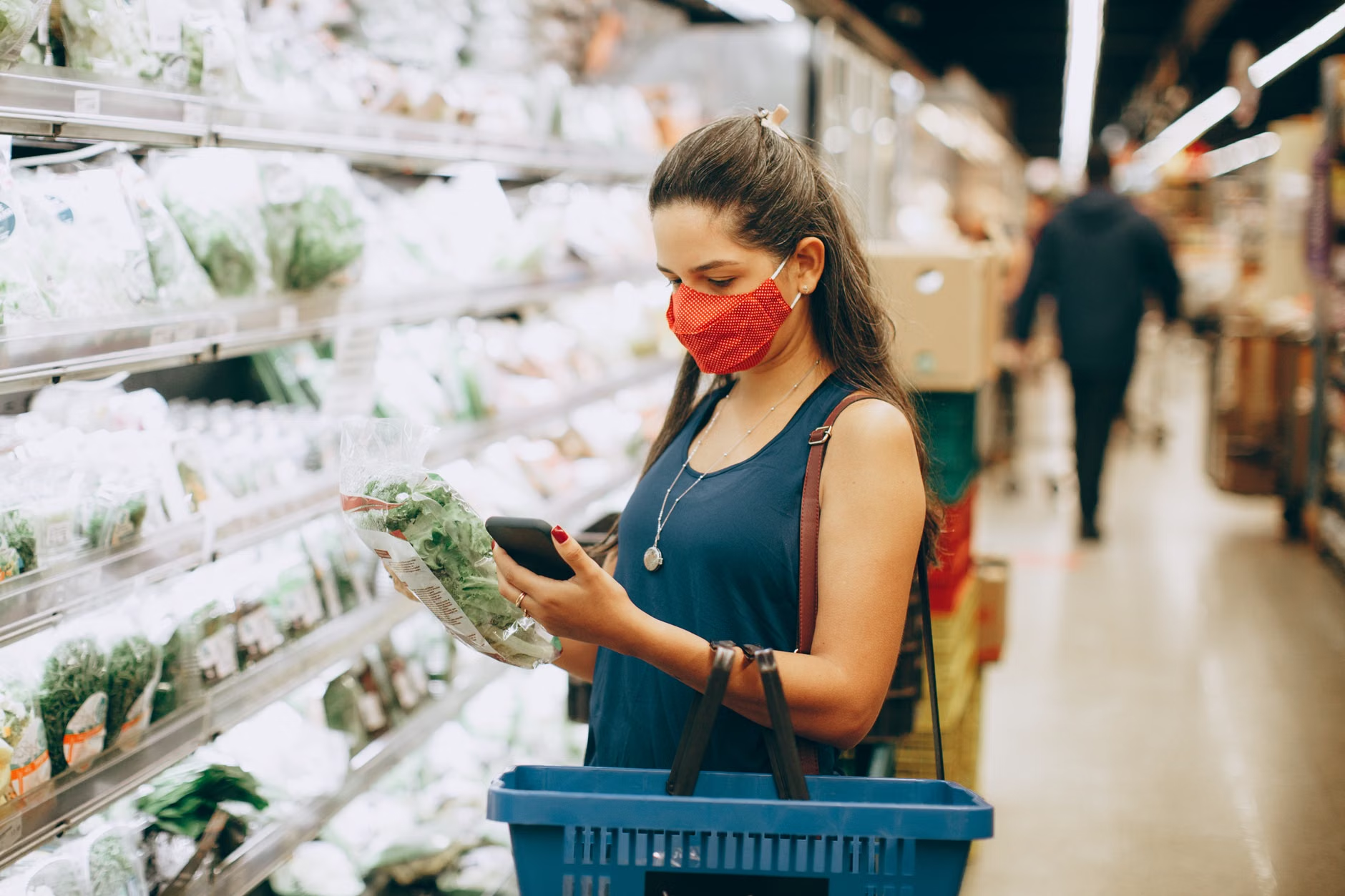
Most of us don’t think about the carbon footprint of a banana or a bag of coffee beans while we’re pushing our cart through the aisle. However, the price you pay at the register is a composite of several factors: production, processing, packaging, and logistics. When we talk about carbon taxes hitting the grocery sector, we are talking about two specific “leakage” points:
1. The Logistics Tax
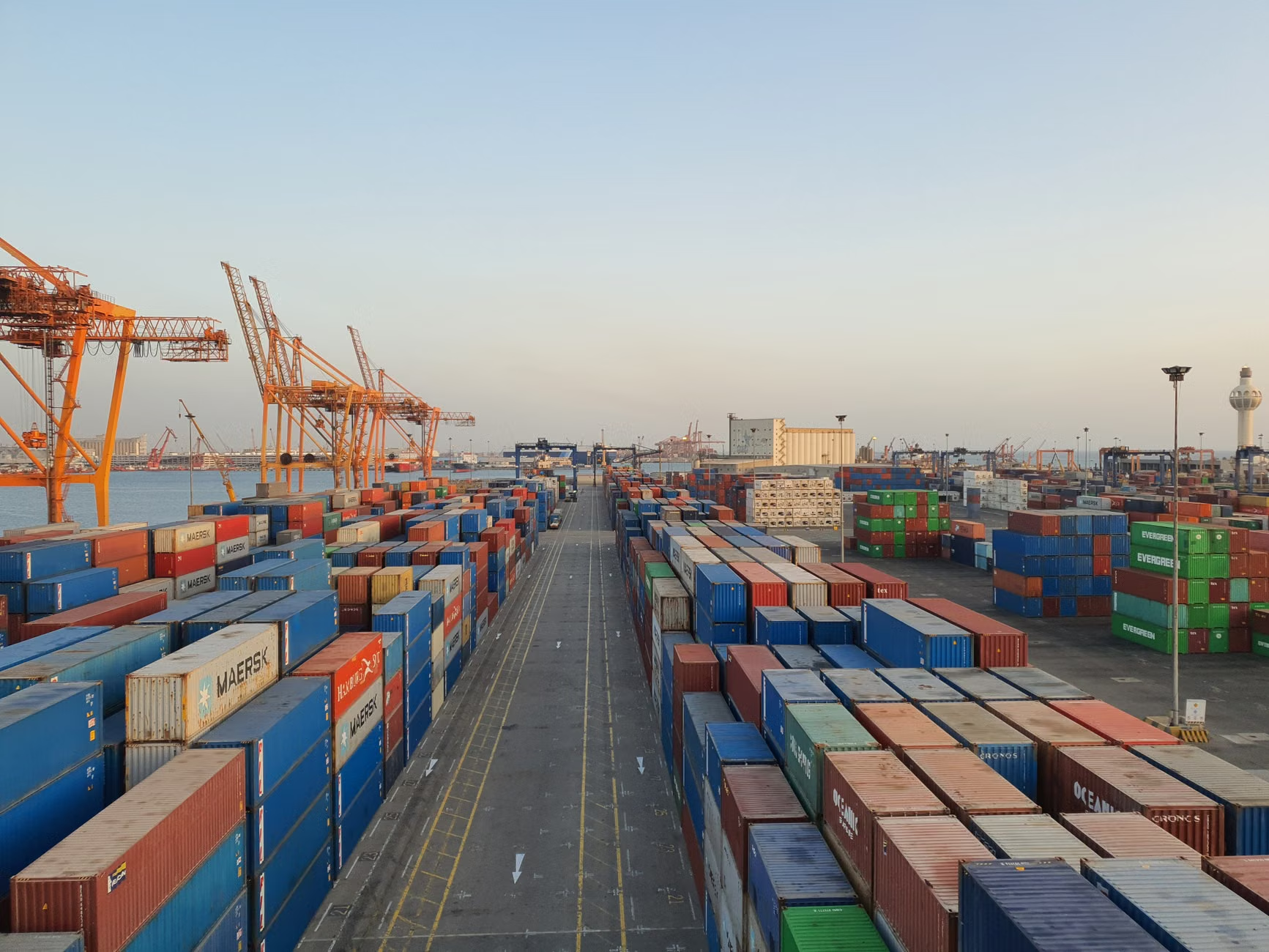
Shipping food across oceans is incredibly carbon-intensive. If a carbon tax is applied to maritime fuel or aviation, the immediate effect is an increase in freight costs. If a shipping company has to pay for the carbon footprint of moving a container from South America to Europe or North America, those costs are passed directly to the distributor, then the wholesaler, and finally, the retailer.
2. The Embedded Emissions Tax
This is the more complex part. This isn’t just about the ship; it’s about how the food was grown. If a country uses high-emission fertilizers or energy-intensive processing methods to package food, those “embedded” emissions could soon be subject to border adjustments. If a producer in an exporting country doesn’t upgrade their technology to be more efficient, their goods become more expensive to export into markets with carbon border taxes.
Common Misconception: Many shoppers assume that “organic” or “fair trade” labels will protect them from these price increases. In reality, these products often have complex, international supply chains that are just as susceptible—sometimes even more so—to carbon-related logistics costs than mass-produced items.
Comparing the Impact: Local vs. Imported Goods
If you want to insulate your household budget from the volatility of international carbon pricing, you need to understand the difference between local and imported cost structures. The following table breaks down the vulnerability of different grocery categories.
| Category | Vulnerability to Carbon Tax | Why? |
|---|---|---|
| Imported Tropical Fruits | High | Long-distance air/sea freight + high cooling requirements. |
| Processed Packaged Foods | Medium-High | Energy-intensive manufacturing + multi-step international transport. |
| Seasonal Local Produce | Low | Minimal transport footprint + often lower regulatory exposure. |
| Grains/Staples | Medium | Often bulk-shipped, but price is highly sensitive to fuel surcharges. |
The table above suggests that the most effective way to manage your budget is to prioritize “low-mileage” foods. When you buy locally, you aren’t just supporting a local economy; you are choosing a supply chain that is inherently insulated from the geopolitical and environmental taxes being placed on international trade lanes.
What Should You Do? A Practical Strategy for Parents
It is easy to feel overwhelmed by global policy, but your role as a consumer is actually quite powerful. You don’t need to become an economist to protect your family’s finances from these shifts. Here are three actionable steps you can take starting this week.
Audit Your Weekly Basket
Take your last three grocery receipts and highlight the items that come from overseas. Look at the country of origin for your coffee, your fruit, and your packaged snacks. If you see a trend of high-cost, high-distance items, start looking for domestic alternatives. For example, if you buy imported berries out of season, consider switching to frozen local berries, which often have a lower carbon footprint and a more stable price point.
Embrace the Seasonal Calendar
We have become accustomed to having every fruit and vegetable available 365 days a year. This is a luxury, not a necessity. By eating according to the seasons, you naturally reduce your reliance on long-distance, high-carbon logistics. This isn’t just about saving money; it’s about rediscovering the quality of food that hasn’t spent weeks in a shipping container.
Watch for “Green” Inflation
Be aware that some retailers may use the excuse of “sustainability” or “environmental compliance” to raise prices across the board. While some price increases are legitimate due to the factors we’ve discussed, others may be opportunistic. Continue to compare prices between stores. Often, smaller, independent grocers source from local farmers and may be less impacted by the specific international trade policies that affect big-box retailers.
The Long-Term Outlook: Is This Just Inflation in Disguise?
There is a valid concern that carbon border taxes will simply become a new form of inflation. If the global economy is taxed at every step of production, the cost of living will naturally rise. However, there is a counter-argument: innovation. If producers are forced to pay for their emissions, they are incentivized to innovate. We are already seeing a massive surge in agricultural technology—vertical farming, precision agriculture, and renewable energy adoption in food processing.
In the long run, these technologies could actually make food production more efficient and less reliant on volatile fossil fuel prices. For a family in their 30s or 40s, this means the next decade might be a transition period. You might see prices fluctuate as the market adjusts to these new environmental costs, but eventually, the supply chain will likely become more resilient.
A Note on Resilience: Don’t try to change your entire lifestyle overnight. That is a recipe for frustration. Instead, focus on the “big-ticket” items. If you find your coffee or specialized imported snacks are consistently rising in price, look for a local roaster or a bulk-buy alternative. Small shifts in your purchasing habits can act as a hedge against the broader economic trends of the decade.
Common Misconceptions About Green Taxes
There is a lot of noise surrounding climate policy, and much of it is confusing. Let’s clear up a few things that often trip up the average consumer.
- “The tax will make everything unaffordable.” While prices will likely rise for specific high-emission goods, it is unlikely to lead to a catastrophic increase in the cost of basic nutrition. Governments are generally aware that food inflation is a major political risk and will likely introduce subsidies or exemptions for essential food items.
- “I can’t do anything about it.” You absolutely can. Your dollar is a vote. When you choose to support producers who are investing in low-carbon technology, you are signaling to the market that sustainability is a priority.
- “This only affects the super-rich.” Actually, the opposite is often true. Lower-income households are often more affected by food price volatility, which is why understanding these trends is vital for anyone managing a household budget.

Taking Control of Your Grocery Budget
The transition to a carbon-conscious global economy is inevitable, but it doesn’t have to be a source of constant stress for your family. By understanding that these taxes are essentially a reflection of the “true cost” of the food we consume, you can make smarter decisions. Focus on what you can control: your consumption of seasonal, local, and minimally processed goods. These choices aren’t just better for the planet; they are increasingly the most logical choice for your wallet as well.
Remember, the goal is not to eliminate all imported goods from your life, but to be intentional about them. If you are going to pay a premium, make sure it’s for something that truly adds value to your family’s life, rather than just paying for the carbon footprint of a long-haul flight. Stay informed, keep an eye on your receipts, and don’t be afraid to experiment with new, local culinary habits.
Frequently Asked Questions
Does a carbon border tax apply to all grocery items?
Currently, most carbon border mechanisms, such as the EU’s CBAM, are focused on energy-intensive industrial products like steel, iron, aluminum, and fertilizers. While food is not the primary target yet, the indirect impact is felt through the cost of fertilizers and the logistics of shipping. It is not a blanket tax on every single apple or box of cereal at this stage.
How can I tell if my grocery store is passing on these costs?
It is difficult to distinguish between general inflation and specific carbon-related price increases. However, if you see a consistent, sharp rise in the price of imported goods compared to locally sourced alternatives, there is a high probability that transport and environmental compliance costs are being passed down. Watching the “Country of Origin” label is your best tool for tracking this.
Is it cheaper to grow my own food to avoid these costs?
Growing your own food is a fantastic hobby, but it is rarely a replacement for your entire grocery budget. However, starting a small herb garden or growing high-yield vegetables like tomatoes or zucchini can definitely offset the cost of buying those items at the store. Treat it as a supplement to your shopping rather than a replacement for it.
For further reading on how international climate policies are evolving and their impact on global trade, you can visit the official European Commission’s page on the Carbon Border Adjustment Mechanism (CBAM). Understanding these frameworks helps you stay ahead of global economic shifts that affect your daily life.