The most effective way to manage school uniform costs while reducing your household’s environmental footprint is to shift from a “buy-new-every-year” mindset to a circular model that prioritizes resale, repair, and standardized quality.
- The Circular Shift: Moving away from linear consumption (buy-use-discard) saves an average of 30-50% on annual uniform costs by leveraging resale platforms and school-led swap shops.
- Quality Over Quantity: The “circular” approach relies on selecting high-durability fabrics that can withstand multiple years of wear, which lowers the cost-per-wear ratio significantly.
- Actionable Strategy: Implementing a “repair-and-pass-on” system at home is more effective than waiting for systemic changes; start by labeling items for specific seasonal donation or resale cycles.
If you have spent a Saturday afternoon frantically searching for a specific shade of navy blazer or an iron-on badge three days before the school term starts, you know the uniform struggle is real. It is a recurring expense that feels disconnected from the actual value of the clothing. We buy it, our children outgrow or ruin it, and then we repeat the cycle. But a quiet revolution is happening in school hallways: the circular economy.
You might have heard “circular economy” tossed around in sustainability webinars, but in the context of your laundry room and your bank account, it is much simpler. It is about keeping clothing in use for as long as possible. Instead of treating a uniform as a disposable necessity, we are beginning to treat it as a renewable resource. For parents in their 30s and 40s, this shift offers a way to regain control over the household budget and reduce the stress of the “back-to-school” rush.
The True Cost of the “Buy-New” Cycle
To understand why the circular shift matters, we first have to look at the math. A typical school uniform set—consisting of blazers, shirts, trousers or skirts, and gym kits—can set a family back anywhere from $200 to $500 per child, per year, depending on the school’s requirements. When you multiply that by the number of years a child is in school, you are looking at a significant financial drain. Most of these items are discarded after less than twelve months of use, often while they are still in perfectly good condition.
This is where the “linear” model fails us. In a linear economy, we extract resources, make products, and then dispose of them. It is inherently wasteful. By contrast, the circular model keeps materials in circulation. Think of it as a loop: the uniform you buy today should eventually be worn by another student, repaired, or repurposed, rather than ending up in a landfill.
Why does this matter for you? Because the traditional retail model for uniforms is often built on low-quality mass production. Manufacturers know the items will be replaced annually, so there is little incentive to prioritize longevity. By opting for better-made items or participating in circular programs, you aren’t just saving money; you are opting out of a system that relies on planned obsolescence.
How to Evaluate Quality for the Long Haul
The first step in participating in the circular economy is changing how you purchase. If you intend for a garment to be passed on or resold, it needs to survive the playground. When you are shopping, look beyond the price tag and the logo. The fabric composition is the single most important variable in whether a piece of clothing will last long enough to be part of a circular loop.
Look for higher percentages of natural fibers like cotton, which tend to hold up better to repeated washing than cheap, thin polyester blends that pill and lose shape after five cycles. However, a small percentage of synthetic fiber (like nylon or polyester) can actually increase durability in high-friction areas like knees and elbows. Aim for a balance. Check the seams—if the stitching is loose or the fabric is see-through when held up to the light, it won’t survive a second child.
Decision Rule: If the item is intended to be used for more than one year, the “cost-per-wear” is the only metric that matters. A $50 blazer that lasts for three years is significantly cheaper than a $20 blazer that must be replaced every year. When you calculate the annual cost, always divide the purchase price by the expected years of use. If you plan to resell it, subtract the estimated resale value from the initial cost to get a true picture of your investment.
The internet has made the circular economy accessible to anyone with a smartphone. Gone are the days of relying solely on the school’s physical lost-and-found or a dusty bin in the hallway. Today, various platforms facilitate the trade, sale, and donation of school uniforms.
Most major regions now have localized platforms, such as Vinted, Depop, or Facebook Marketplace groups, specifically dedicated to school gear. If you haven’t used these before, the process is straightforward but requires a bit of discipline. The secret to success here is timing. Don’t wait until the week before school starts to look for second-hand items. The best inventory hits these platforms at the end of the term, when parents are clearing out closets to make room for the next size up.

When using these platforms, consider these three tips:
- Set Search Alerts: Most apps allow you to save searches for specific items like “School Name Blazer Size 10.” You will get a notification the moment someone lists it, which is essential for high-demand items.
- Bundle Your Purchases: Shipping costs often eat up the savings on a single shirt. Look for sellers who have multiple items listed so you can pay for shipping once.
- Standardize Your Photos: If you are selling, take clear, well-lit photos. A uniform that looks crisp and clean sells significantly faster than one that looks wrinkled or stained.
The Role of School-Led Swap Shops
Some schools are now taking the initiative to host their own “swap shops.” These are often the most efficient way to participate in the circular economy because they eliminate the need for shipping and ensure that the items meet the specific school’s dress code requirements. If your school doesn’t have one, consider proposing it to the Parent-Teacher Association (PTA).
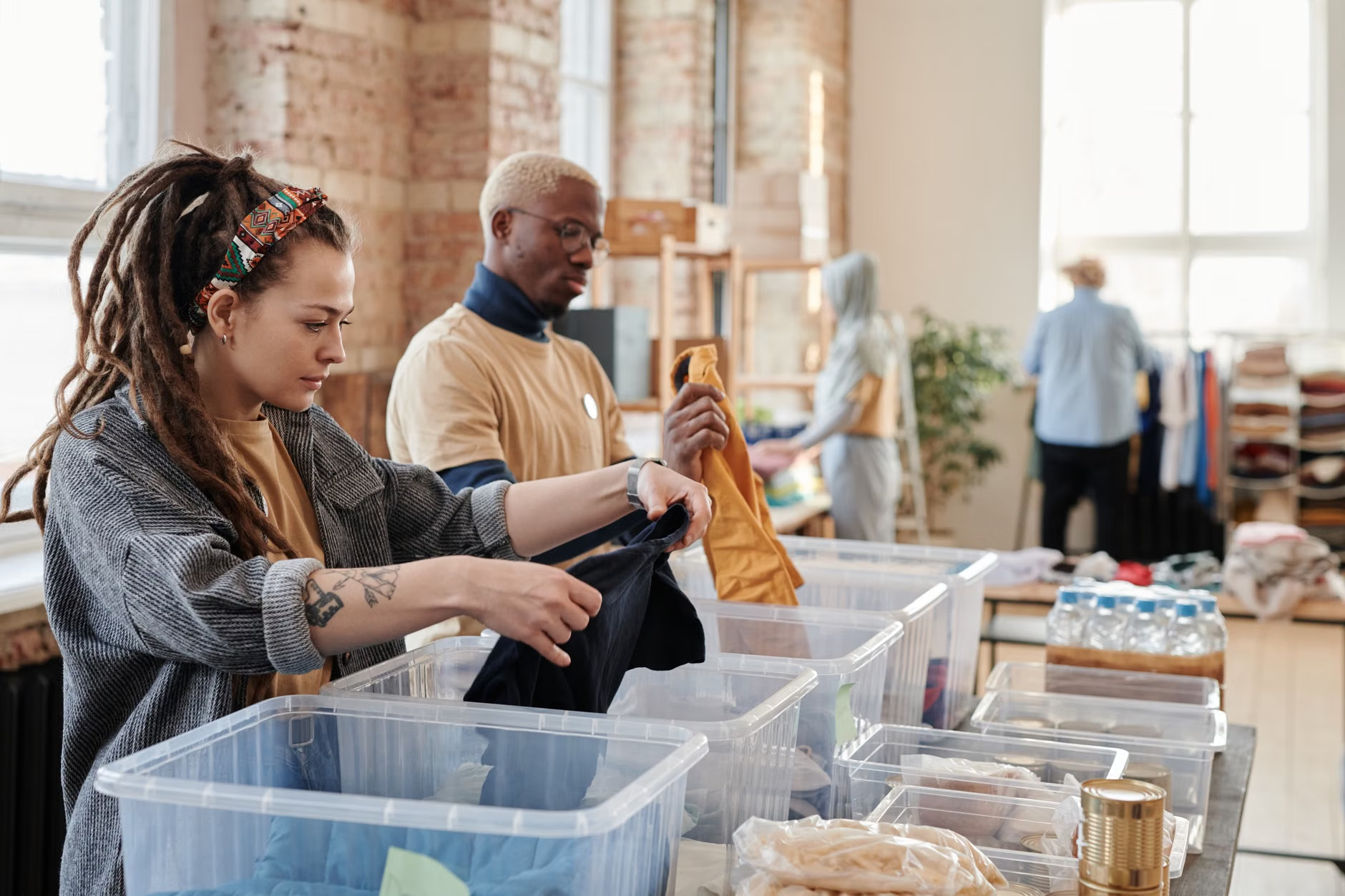
A successful swap shop requires a simple structure: a collection period, an organization day, and a “shop” day. Parents donate items that are still in good condition, and the PTA (or a group of volunteers) sorts them by size and type. This removes the “stigma” of second-hand clothing, as it becomes a community-led effort to support families rather than a charitable act for those in need. It is a practical way to foster community while solving a shared problem.
Maintenance: The Hidden Key to Circularity
We often talk about buying and selling, but the most important part of the circular economy happens in your own home: maintenance. If you want a garment to last, you have to treat it like a long-term asset. This means changing how you approach laundry and minor repairs.
Most school uniforms are washed far too frequently and at temperatures that are too high. High heat breaks down the fibers and fades the colors, making the garment look worn out long before it actually is. Try washing uniforms in cold water and hanging them to air dry. Not only does this save electricity, but it significantly extends the life of the fabric.
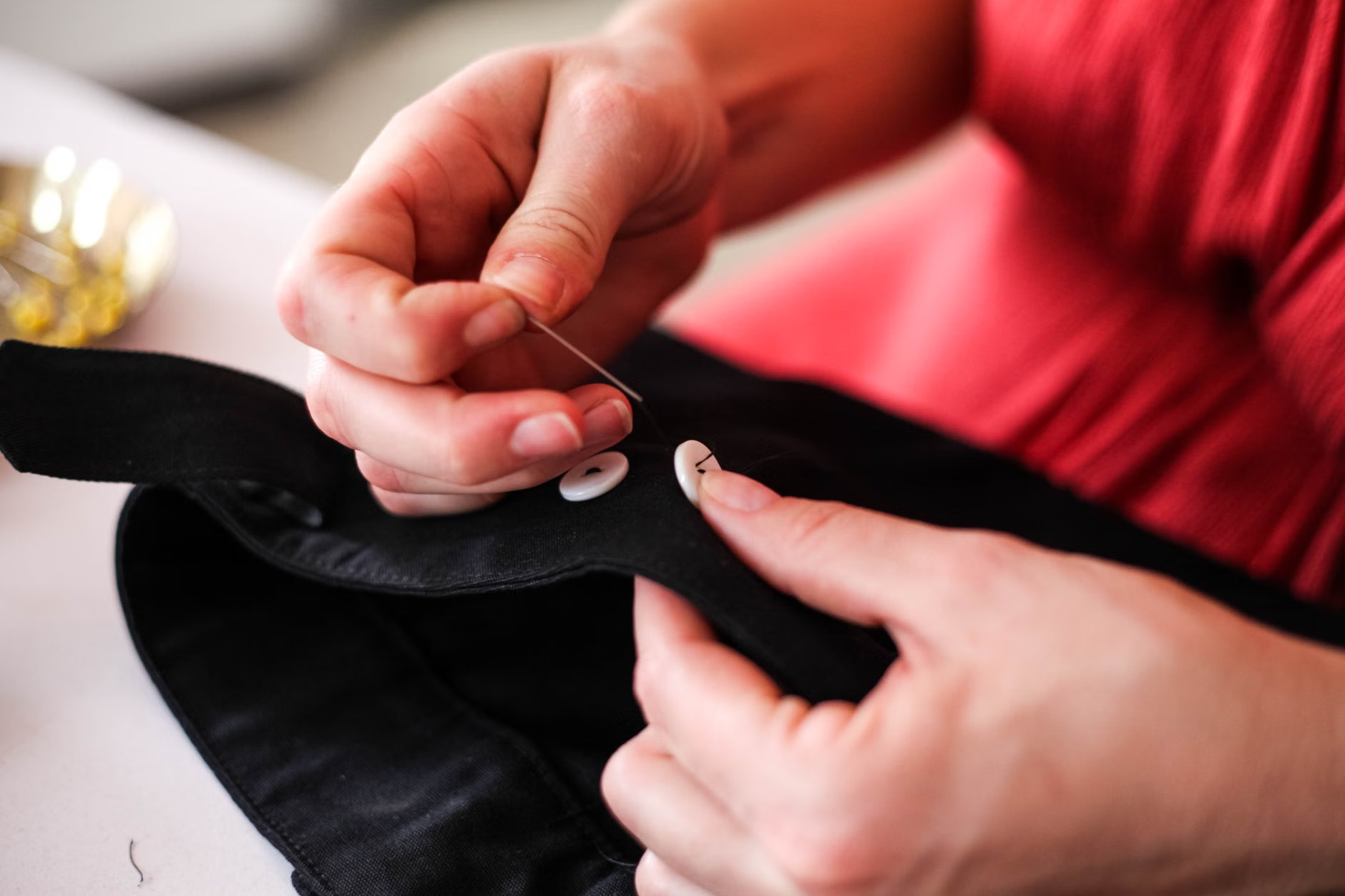
Learn the basics of garment repair. A missing button or a small tear in a hem is not a reason to throw away an entire blazer. There are countless 5-minute tutorials online that can teach you how to re-attach a button or perform a simple whip stitch. If you teach your children how to do these minor repairs, you are also teaching them the value of the items they wear, which is a lesson that lasts much longer than the uniform itself.
| Strategy | Effort Level | Financial Impact | Best For |
|---|---|---|---|
| Resale Platforms | Medium | High Savings | Specific branded items |
| School Swap Shops | Low | Very High Savings | Daily staples like shirts |
| At-Home Repair | Low | Moderate Savings | Extending life of blazers |
Overcoming the Stigma of “Used” Clothing
One of the biggest hurdles to the circular economy is the outdated notion that wearing used clothing is a sign of financial hardship. This is a cultural relic that is rapidly disappearing. In the world of high-end fashion, “vintage” and “pre-loved” are status symbols. We need to apply that same mindset to school uniforms. When we normalize the use of second-hand uniforms, we reduce the pressure on parents to keep up with the “new-everything” expectation.
If you find yourself feeling hesitant, remember that these are just textiles. A blazer that has been washed and worn is often softer and more comfortable than a stiff, brand-new one fresh from the store. By choosing to participate in the circular economy, you are modeling sustainable behavior for your children. You are showing them that value is not tied to the “newness” of an item, but to its utility and care.
The Future: Subscription and Rental Models
As the circular economy matures, we are seeing the emergence of subscription models for school uniforms. Similar to renting a tuxedo or a high-end dress, some companies are beginning to offer “uniform-as-a-service.” You pay a monthly fee, and the company provides the uniforms in the sizes your child needs. As they grow, you return the old ones and receive the new sizes. The company then cleans, repairs, and passes those items on to the next family.
While this is still in the early stages and may not be available in every district, it represents the next logical step in the circular evolution. It shifts the burden of inventory management and waste from the parent to the provider. If you see such a service popping up in your area, evaluate it by comparing the total annual subscription cost against your current total spend. It might not always be cheaper, but the convenience of never having to shop for new sizes again is a strong value proposition for busy parents.
Final Thoughts: Starting Your Circular Journey
You don’t need to overhaul your entire life to participate in the circular economy. Start small. The next time your child outgrows a pair of trousers or a shirt, don’t throw it in the trash. Check the condition—if it’s still wearable, list it on a local group or set it aside for the school’s next swap event. If it’s beyond repair, look for textile recycling bins in your area rather than tossing it in the general waste.
The goal is not perfection; it is a shift in habits. By choosing to reuse, repair, and resell, you are making a conscious decision to value resources over convenience. It’s a small, practical way to manage the chaos of parenting while contributing to a more sustainable future. Start with one item, one repair, or one swap. You will be surprised at how quickly the savings—and the sense of accomplishment—add up.
For more information on sustainable textile practices, you can refer to resources from organizations like the Ellen MacArthur Foundation, which provides comprehensive insights into the circular economy, or check your local government’s waste management guidelines for textile recycling programs.
Frequently Asked Questions
How do I ensure second-hand uniforms are hygienic?
Most uniforms are made of durable fabrics that can withstand high-temperature washes. A standard wash cycle with a high-quality detergent is sufficient to sanitize most garments. If you are concerned about specific items, you can use a laundry sanitizer additive or, for items that cannot be washed hot, simply leave them in direct sunlight for a few hours, as UV rays are a natural disinfectant.
What if the school has a strict “new-only” policy?
Some schools may have rules about the condition or source of uniforms. Always check your school’s dress code policy first. However, even if they require specific brands, they rarely mandate that the item must be purchased “new from the store.” If they do, consider working with your PTA to present the financial and environmental benefits of a school-sanctioned second-hand shop to the administration.
Is it really worth the time to repair clothes for school?
It depends on the item. Repairing a button or a small hem tear takes less than five minutes and saves you the cost and time of buying a replacement. However, if an item has major damage, such as a large rip in a high-friction area or permanent structural failure, it may be more cost-effective to replace it. Use your judgment: if the repair takes longer than a trip to the store or costs more in materials than the item is worth, it is time to retire that piece.