- Prioritize sensory deprivation: True restorative travel for burnt-out parents isn’t about checking off sights; it’s about reducing decision fatigue and sensory input.
- The “Three-Day Threshold”: Research suggests that the physiological benefits of stress reduction during nature retreats often peak after 72 hours of disconnect.
- Avoid the “Activity Trap”: Your goal is to replace a high-stimulation home environment with a low-stimulation, high-comfort environment, not to maintain a busy itinerary.
If you are in your 30s or 40s, your version of a “vacation” likely feels like an extension of your daily to-do list: managing logistics, keeping everyone fed, and optimizing every hour for “memorable experiences.” We often return from trips feeling more exhausted than when we left. Quiet-tourism is the antidote. It isn’t about being bored; it is about intentional withdrawal from the high-stimulation, hyper-connected lifestyle that currently defines parenting and professional life.
Why Mountain Retreats Are the Ultimate Reset for the Modern Nervous System
When you spend your days juggling Slack notifications, school run schedules, and the relentless mental load of household management, your nervous system stays in a state of low-level, chronic “fight or flight.” This is what psychologists call sympathetic nervous system dominance. A mountain retreat provides a specific environmental intervention: the “soft fascination” of nature.
The concept of Attention Restoration Theory suggests that urban environments drain our cognitive resources because they require constant, directed attention—navigating traffic, filtering noise, and making micro-decisions. Nature, conversely, engages our “soft fascination,” where the environment holds our attention without requiring effort. Looking at a forest canopy or a mountain silhouette allows the prefrontal cortex—the part of your brain responsible for executive function and decision-making—to power down and recharge.
For a parent in their 30s or 40s, this isn’t just a “nice-to-have.” It is a biological necessity. When you remove the constant need to manage other people’s needs, you create a vacuum that allows your own cognitive baseline to reset. The difference between a standard vacation and a quiet-tourism retreat is the absence of the “shoulds.” You aren’t there to climb the highest peak or visit every local attraction; you are there to be in a space that doesn’t demand anything from you.

The “Three-Day Threshold” and Why Short Trips Often Fail
There is a common misconception that a weekend away is enough to recover from months of burnout. While any time away is better than none, there is a specific timeline for physiological recovery. Many experts in environmental psychology point toward the “three-day threshold.”
On Day One, you are likely still in “transition mode.” Your brain is still processing the stressors of the week, your cortisol levels are still spiked, and you might find it difficult to sit still. You might feel an urge to check your email or worry about the kids’ schedules. This is normal. Your body is essentially experiencing withdrawal from the high-stimulation environment of your daily life.
By Day Two, the physical symptoms of stress—tight shoulders, shallow breathing, and racing thoughts—begin to subside as you settle into the rhythm of the mountain. You start noticing the details: the way the light hits the trees, the temperature of the air, the silence. This is when the cognitive “defragging” begins.
Day Three is where the true restoration happens. This is when you can actually think clearly about your life, your goals, and your needs, rather than just reacting to the immediate environment. If you can only manage a two-day trip, accept that you will likely spend most of it decompressing. If you can stretch to a three- or four-day stay, you will find that the final 24 hours provide the psychological clarity that makes the return to daily life much more sustainable.
How to Choose the Right Retreat Space: Aesthetics vs. Function
Not all mountain cabins are created equal. When booking, you need to be brutal about your requirements. A common mistake is prioritizing “Instagram-worthy” aesthetics over functional comfort. For a restorative break, your priority should be low-stimulation design.
| Feature | Why It Matters for Restoration |
|---|---|
| Soundproofing | Reduces cortisol spikes caused by unexpected noise (e.g., thin walls in multi-unit lodges). |
| Lighting Control | Essential for regulating your circadian rhythm; aim for blackout curtains or natural morning light. |
| Seating Ergonomics | You will be sitting more than usual; a chair that hurts your back will keep your body in a state of tension. |
| Connectivity | The ability to turn off Wi-Fi entirely is a feature, not a bug. |
When searching for a rental, look for properties that emphasize “isolation” or “seclusion” rather than “proximity to town center.” If the listing highlights “vibrant nightlife” or “close to local attractions,” skip it. You are looking for a place where the primary sound is wind in the trees, not the sound of a nearby road or a busy tourist strip.
Check the floor plan. If you are traveling with a partner, ensure there is a space where you can be alone, even if you are in the same building. Sometimes, the most restorative part of a retreat is the ability to read in a different room without having to converse or coordinate plans with someone else.
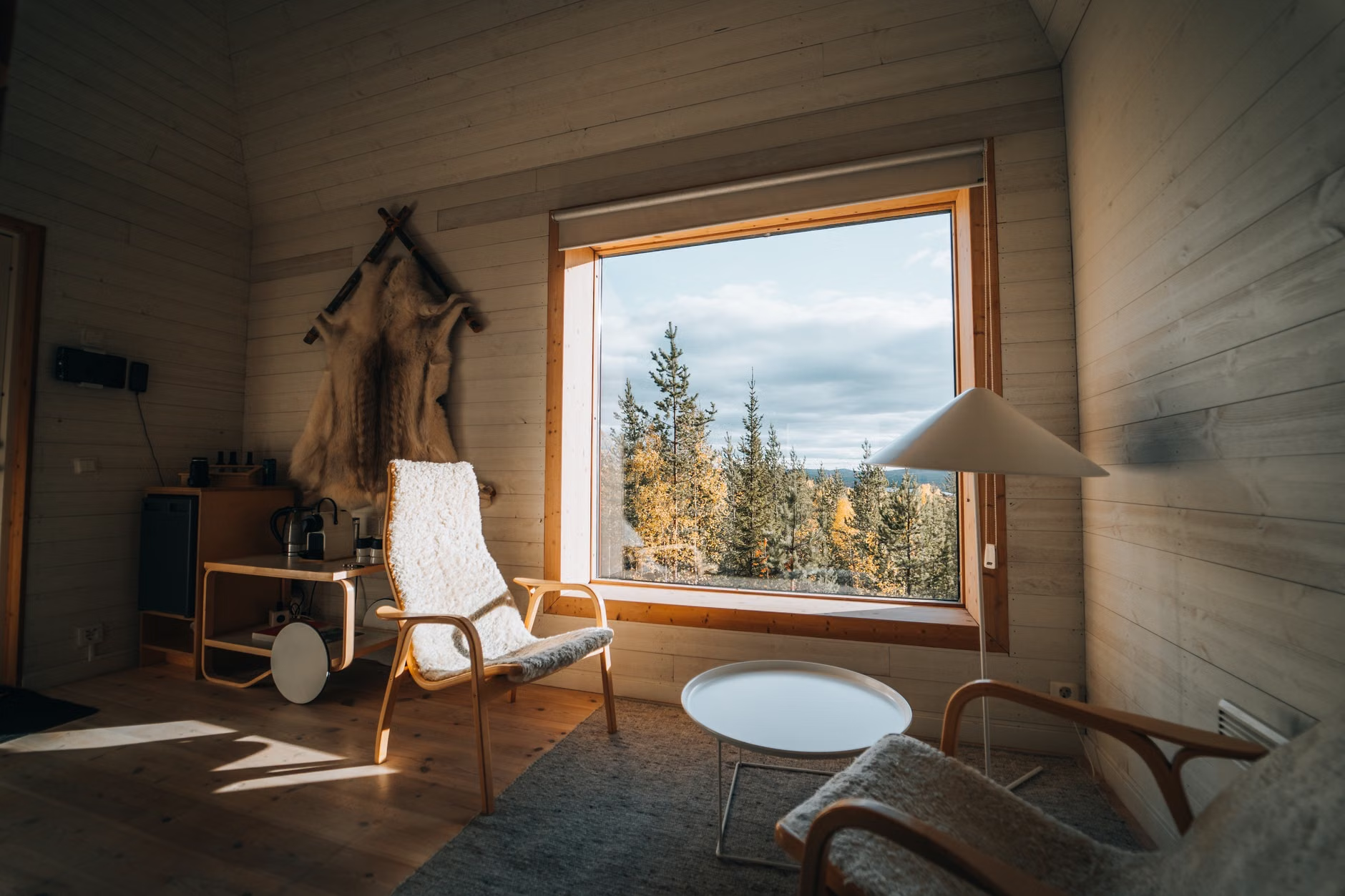
The “Low-Stakes” Itinerary: A Case Study in Doing Nothing
The biggest enemy of the restorative retreat is the “optimization mindset.” If you arrive at your mountain cabin with a list of hiking trails, restaurants to visit, and photo opportunities, you have simply moved your stress to a different location. Here is how to structure a truly quiet-tourism day:
- Morning: No alarms. Wake up naturally. Spend the first hour without a screen. If you drink coffee or tea, do it while looking out a window. This is your “sensory calibration” time.
- Mid-day: Engage in one low-intensity physical activity. This isn’t a “workout.” It’s a walk to a nearby lookout, a slow wander through a forest path, or simply moving your chair to a sunny spot on the porch. The goal is to move the body just enough to feel it, without straining it.
- Afternoon: This is for “cognitive drifting.” Read a book that has nothing to do with your career or parenting strategies. Listen to music or a podcast that you find calming. If you want to nap, nap. There is no guilt in a 2:00 PM nap.
- Evening: Focus on low-light environments. As the sun sets, dim the lights. Prepare a simple meal. Avoid complex recipes that require multiple timers and constant supervision. If you are with someone, keep conversation light and unpressured.
This structure works because it removes the “decision fatigue” that plagues parents. By not having to decide where to eat, when to be somewhere, or how to navigate a busy area, you free up your brain’s limited daily bandwidth for recovery.
Common Pitfalls and How to Avoid Them
Even with the best intentions, it is easy to slip back into old habits. Here are three common traps and how to handle them.
1. The “Productive” Guilt
You might feel guilty for “doing nothing.” You might think, “I should be writing, or exercising, or planning the kids’ next school term.” Recognize this as a symptom of the very burnout you are trying to escape. Your productivity is not your worth. When the guilt arises, acknowledge it, and then physically change your activity—go for a walk, wash your face, or open a book. Do not try to “work through” the guilt; just let it pass.
2. The “FOMO” (Fear of Missing Out)
Social media is the enemy of quiet-tourism. Seeing other people’s “adventurous” trips can make your quiet, stationary trip feel inadequate. Delete the social media apps from your phone before you leave. If you must keep them for emergency contact, hide them in a folder on the last screen of your phone. You are not there to document your trip; you are there to live it.
3. The “Last-Minute” Logistics
If you have to spend your retreat worrying about whether you packed the right gear or if you have enough food, the stress will persist. The “Preparation Phase” is part of the retreat. Do your grocery shopping two days before you leave. Pack simple, comfortable clothes that don’t require ironing or styling. The goal is to arrive at your destination and have zero logistics left to manage.

The Long-Term Impact: Carrying the Silence Back Home
The goal of a quiet-tourism mountain retreat isn’t to escape your life forever; it is to return to your life with a slightly larger buffer against stress. When you spend time in absolute silence, you recalibrate your baseline for what “normal” feels like. This makes it easier to notice when your daily life at home is becoming too loud, too fast, or too demanding.
Think of this retreat as a “calibration.” You are resetting your internal thermostat. When you go back home, you might find that you are more sensitive to noise, more aware of your need for boundaries, and more willing to say “no” to non-essential obligations. This is the real benefit. It is not just the 72 hours of peace; it is the newfound awareness of what your nervous system needs to stay healthy in the long run.
If you find that the silence is uncomfortable, lean into that. Discomfort is often a sign that you have been operating at a high-stimulation level for too long. Your brain is essentially “boredom-starved.” Let it be bored. After a few hours, the boredom will turn into curiosity, and then into rest. It is a process, and it is entirely worth the effort.
Practical Next Steps for Your First Quiet Trip
If you are ready to book, start by looking for “off-grid” or “slow-stay” listings on reputable vacation rental platforms. Use filters to exclude properties with televisions or high-speed internet if you have the discipline to handle the disconnect. If you are worried about safety, choose a location that feels remote but is within a 30-minute drive of a small town where you can get supplies if needed.
Before you go, have a conversation with your partner or family about the “rules” of the trip. If you are traveling as a couple, agree that you don’t need to be together 24/7. If you are going alone, tell your family you will only be checking in once a day. Setting these expectations early prevents the “guilt-trip” that often happens when you try to unplug.
Finally, remember that this is a practice. Your first quiet-tourism trip might feel strange or even frustrating. That is okay. Like any other skill, the ability to rest deeply and exist in silence takes practice. The more you do it, the easier it becomes to drop into that restorative state, and the more resilient you will feel in the face of your daily responsibilities.
Frequently Asked Questions
Q: Is quiet-tourism just another word for a solo trip?
A: Not necessarily. You can practice quiet-tourism with a partner or even a friend, provided you both agree on the “low-stimulation” rule. The key is that the primary purpose of the trip is not social interaction or shared activity, but shared stillness and recovery.
Q: What if I have children? How can I possibly have a “quiet” trip?
A: This is the most common hurdle. If you are a parent, the most effective quiet-tourism trip often involves a “handoff.” This could mean taking turns with a partner to go away for three days alone, or arranging for family members to watch the kids while you prioritize a solo retreat. If you must travel with your children, the strategy changes: look for “slow parenting” destinations where the environment is safe enough for them to play independently, allowing you to supervise from a distance while you rest.
Q: How do I know if I’m actually “burnt out” or just tired?
A: Fatigue is usually resolved by a good night’s sleep or a relaxing weekend. Burnout is a chronic state of emotional, physical, and mental exhaustion that doesn’t go away with a standard vacation. If you find that you are feeling cynical, detached, or overwhelmed by small tasks that used to be easy, you are likely dealing with burnout and should prioritize a more intensive, long-form restorative break.
For further reading on the science of nature and mental health, check out the resources provided by the American Psychological Association on the benefits of nature, or explore the research on the relationship between time spent in nature and health outcomes.