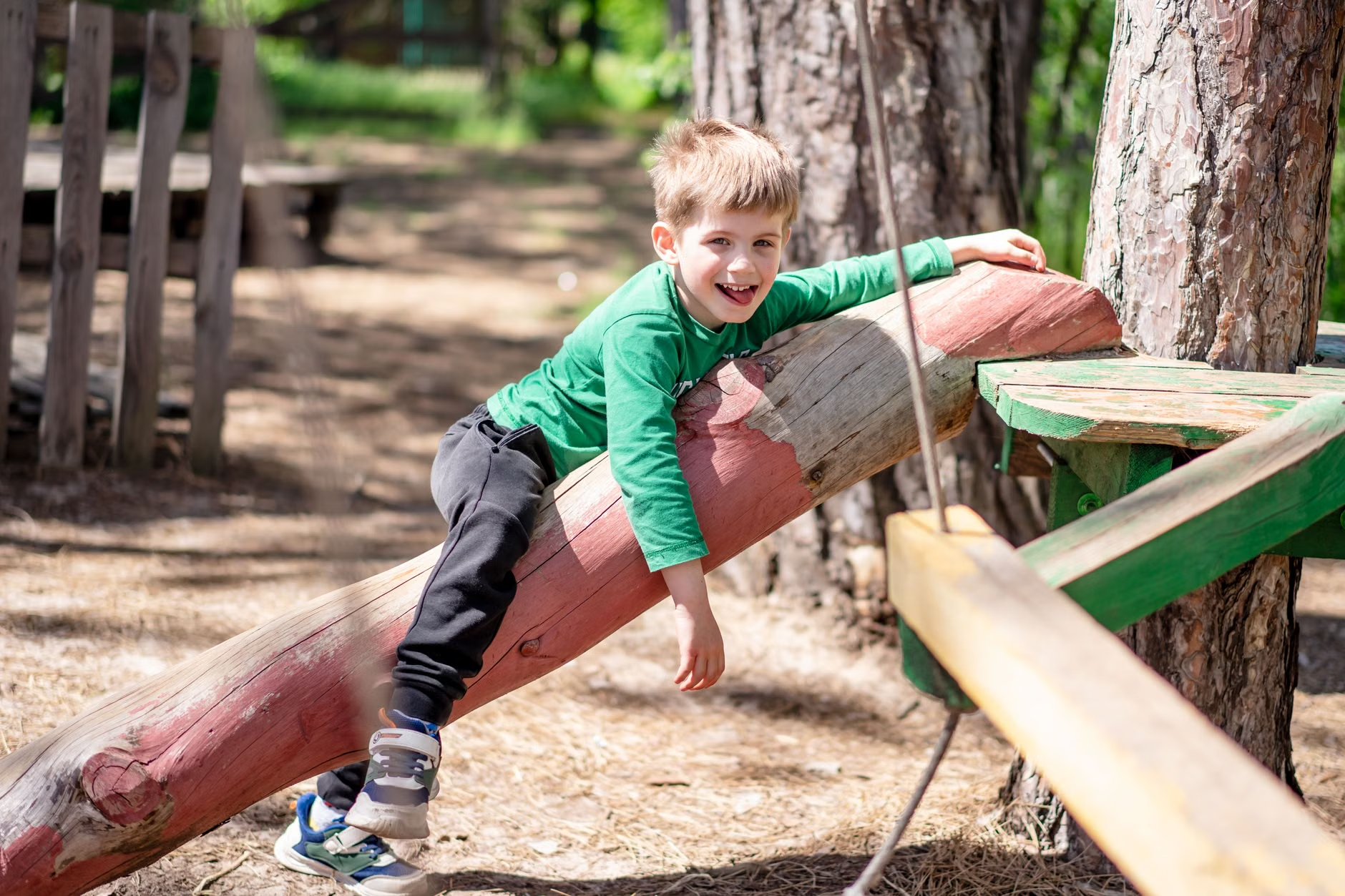
The most important thing to understand about “nature-play” isn’t about avoiding danger, but about distinguishing between a hazard, which should be removed, and a risk, which your child needs to navigate to build resilience and motor skills.
- Hazard vs. Risk: A hazard is an invisible danger (like broken glass or rusted metal); a risk is an obvious challenge (like a high climbing log) that teaches a child their physical limits.
- The “Risk-Benefit” Ratio: Playgrounds that feel slightly “dangerous” actually reduce long-term injury rates by helping children develop better spatial awareness and decision-making skills.
- Active Supervision: You don’t need to hover. The best approach is “stand-back supervision,” where you remain within earshot but allow the child to solve the physical problem themselves.
If you live in a city, you’ve likely noticed the shift. The old-school, brightly colored plastic playgrounds are slowly being replaced or augmented by “nature-play” areas. These spaces use logs, boulders, hills, and loose sand instead of standardized slides and swings. It looks more aesthetic, sure, but for many of us in our 30s and 40s, it raises an immediate, gut-level question: Is this actually safe?
Understanding the Shift: Why Natural Playgrounds Are Replacing Plastic
For decades, urban playground design was governed by a philosophy of “zero tolerance for injury.” If a child could potentially trip, fall, or scrape a knee, the equipment was deemed faulty. This led to the standardized, rubber-matted, plastic-tube landscapes that define most urban parks today. However, research from groups like the International School Grounds Alliance suggests that these “cushioned” environments have unintended consequences. When a playground is perfectly predictable, children stop paying attention to their surroundings, which ironically leads to more frequent, clumsy injuries when they eventually step onto a real-world surface like a sidewalk or a hiking trail.
Nature-play, or “risky play,” is designed to be unpredictable. A log might be slightly slippery when wet. A rock might wobble. These aren’t design flaws; they are deliberate features intended to engage a child’s proprioception—the body’s ability to sense its position in space. When a child navigates these elements, they are constantly performing an internal risk assessment: “If I step here, will I slide? If I grab this branch, will it hold my weight?”
The “Hazard vs. Risk” Framework: A Practical Decision Rule
To avoid becoming a “helicopter parent” while still keeping your child safe, you need a simple, repeatable framework for assessing the environment. Use this mental table the next time you arrive at a new playground.
| Feature | Hazard (Avoid/Report) | Risk (Encourage/Supervise) |
|---|---|---|
| Surface | Broken glass, needles, exposed concrete rebar, deep holes hidden by leaves. | Uneven terrain, loose wood chips, sloping grass, tree roots. |
| Structures | Unstable, rotting wood, rusted metal edges, loose bolts. | High logs, boulders for climbing, steep inclines, heavy ropes. |
| Environment | Blind spots near busy roads, toxic plants, stagnant water. | Dense brush, tall trees, natural water features (shallow streams). |
The Rule of Thumb: If you can see the danger clearly—like a high rock—it is a risk. Your child can see it too, and they will adjust their behavior accordingly. If the danger is hidden, like a rusted bolt underneath a slide or broken glass in the sand, that is a hazard. You remove the child from hazards; you let the child negotiate the risks.
Why “Risky Play” Is Actually a Safety Investment
It sounds counterintuitive, but the data suggests that children who are exposed to age-appropriate risks are less likely to end up in the emergency room as they grow older. A study published in the Journal of Environmental Psychology found that children who have access to natural, challenging environments develop better “physical literacy.” They learn how to fall, how to grip, and how to judge speed and distance.
Think of it like learning to drive. If you spend your entire life driving on a straight, empty highway with soft guardrails, you will panic the moment you face a winding mountain road with no barrier. By allowing your child to climb a slightly wobbly rock at age seven, you are teaching them how to manage their body weight and balance. By age ten, they will have the subconscious reflexes to avoid a serious fall when they trip on a school playground or a flight of stairs.
How to Practice “Stand-Back Supervision” Without Anxiety
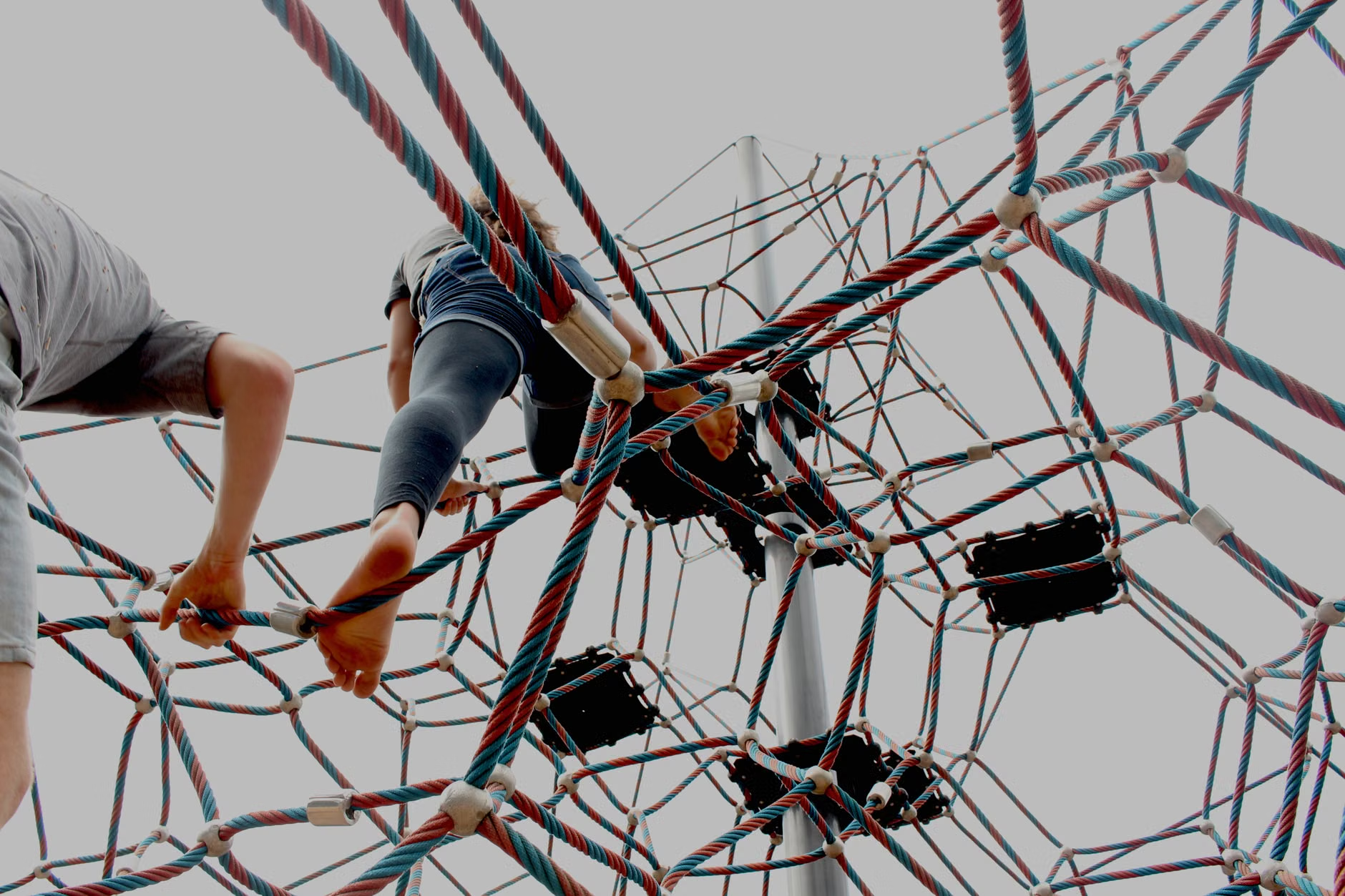
The hardest part of nature-play isn’t the playground itself—it’s the parent’s internal state. We are conditioned to intervene the moment a child looks unstable. However, research into “attentional focus” shows that when a parent shouts “Be careful!” or “Watch out!”, it often causes the child to break their concentration and actually increases the likelihood of a fall. The child is focused on the movement; your shout shifts their focus to the fear of falling.
Step-by-Step Guide to Effective Supervision:
- The Five-Minute Rule: When you arrive, don’t let your child jump in immediately. Spend five minutes walking the perimeter. Point out the “risky” spots together. “Hey, look at that log—it looks a bit slippery today. How are you going to get across it?” This engages their brain before their muscles.
- The “Check-In” Distance: Stay close enough to hear them, but try to stay out of their direct line of sight if possible. If they can see you staring at them, they will seek your validation for every move. If they can’t, they will rely on their own judgment.
- Replace Warnings with Questions: Instead of saying “Don’t climb that, you’ll fall,” try asking, “Does that rock feel stable to you?” or “How are you planning to get down once you get up there?” This forces the child to perform their own risk assessment.
Common Mistakes Parents Make in Nature-Play Environments
One of the biggest mistakes is assuming that “natural” means “soft.” A tree root is harder than a plastic mat. A rock is harder than a rubberized floor. When we move from traditional playgrounds to nature-play, we often forget to adjust our expectations for clothing and footwear. Sandals or flip-flops are fine for a plastic slide, but they are a recipe for a twisted ankle on uneven forest floors or rocky terrain.
Actionable Tip: Ensure your child is wearing closed-toe shoes with decent grip whenever you head to a nature-focused park. It’s a minor adjustment, but it significantly changes the risk profile of the environment. Another common mistake is assuming that because a playground is “natural,” it has been safety-inspected to the same standards as a municipal park. In some regions, community-led natural playgrounds may not undergo the same rigorous biannual safety audits as traditional parks. Always do a quick physical check of the area before letting your child loose.

The Hidden Costs and Trade-offs
Nature-play comes with a few “hidden costs” that aren’t about safety, but about lifestyle. First, there is the mess. Natural playgrounds involve dirt, mud, sand, and wood chips. If you are heading to a nice restaurant or a formal event immediately afterward, you are going to be frustrated. Keep a “playground kit” in your car: a change of clothes, a towel for wiping off mud, and a pair of slip-on shoes for the ride home.
Second, there is the issue of inclusivity. While nature-play is excellent for the average child, it can be significantly more challenging for children with mobility issues or sensory processing disorders. If your child requires a wheelchair or has specific balance needs, traditional, ADA-compliant (or equivalent local standard) playgrounds often provide a more predictable and accessible experience. Don’t feel pressured to force “nature-play” if it isn’t serving your child’s specific needs.
It is important to note that playground regulations vary significantly by region. In the United States, the Consumer Product Safety Commission (CPSC) provides the “Public Playground Safety Handbook,” which sets the standard for public park safety. In the UK, the Royal Society for the Prevention of Accidents (RoSPA) provides similar guidance. These organizations are increasingly recognizing the value of “managed risk.”
If you are visiting a municipal park in your home country, rest assured that the equipment—even if it looks like a “natural” log—has likely been assessed by a certified playground safety inspector. They don’t just look at it; they test it for “entrapment” (where a child’s head could get stuck) and “crush points” (where fingers could get caught). If you are at a private school or a community-built park, these standards might be looser. When in doubt, look for signage that mentions compliance with local safety standards, such as ASTM F1487 in the US or EN 1176 in Europe.
The Long-Term View: Developing a Resilient Child
Ultimately, our role as parents is to work ourselves out of a job. We want our children to be able to navigate the world without us constantly hovering, whether that means walking to school, climbing a tree, or negotiating a busy sidewalk. Nature-play is a controlled laboratory for that independence. It is a place where the stakes are low—a scraped knee or a bruised shin—but the lessons are high.
By shifting your mindset from “keeping them safe from everything” to “helping them learn to keep themselves safe,” you are doing more than just letting them play on a log. You are fostering a sense of agency. When a child successfully navigates a risky situation, their confidence grows. They learn that they are capable, that they can assess their environment, and that they can handle the consequences of their choices. That is a skill set that will serve them far beyond the playground, into their teenage years and adulthood.
Frequently Asked Questions
What should I do if my child gets hurt in a nature-play area?
First, stay calm. A scraped knee or a minor bump is often a natural part of the learning process. Check for signs of serious injury—inability to move a limb, loss of consciousness, or severe bleeding. If the child is crying but can move and respond, offer comfort, clean the wound with a portable first-aid wipe, and then, crucially, ask them what happened. Helping them identify the cause of the fall—”I stepped on the mossy part instead of the dry part”—turns a painful moment into a learning opportunity.
Are there specific ages where nature-play is inappropriate?
Nature-play is scalable. Toddlers benefit from simple, low-level sensory experiences like digging in sand or crawling over flat, stable stones. As children grow, their capacity to handle higher, more uneven terrain increases. The key is to match the environment to their current ability. If your child is constantly struggling or visibly terrified, they aren’t learning; they are just overwhelmed. Take them to a space that feels like a “stretch” rather than a “leap.”
How can I advocate for better, more natural playgrounds in my city?
Local government and park departments are often more open to change than you might think. Many cities are currently looking to update their aging infrastructure to be more sustainable and climate-resilient. Reach out to your local parks and recreation department or attend a town hall meeting. Focus your argument on “physical literacy” and “child development” rather than just “fun.” Pointing to successful examples in other cities can be very persuasive for budget committees.
Resources for Further Reading:
- CPSC Public Playground Safety Handbook (USA)
- RoSPA Play Safety Advice (UK)
- International School Grounds Alliance
The next time you head out to the park, take a breath. Look at the logs, the rocks, and the uneven ground not as threats, but as tools. Your child is building the resilience they need for the real world, one slightly wobbly step at a time.