- Contextual Learning: Cooking provides a real-world, sensory-rich environment that reinforces vocabulary far more effectively than rote memorization or digital apps.
- The ‘Heritage Language’ Bridge: Grandparents are the most effective linguistic mentors for preserving heritage languages because they provide natural, high-frequency immersion in a low-pressure setting.
- Executive Function Boost: Following a recipe involves sequencing, planning, and focus—cognitive skills that directly support language acquisition and general academic performance in children.
If you have ever tried to get your seven-year-old to practice a second language using a screen-based app, you know the struggle: the glazed-over eyes, the repetitive taps, and the inevitable “I’m bored” after five minutes. We often treat language learning as a chore—a subject to be mastered—rather than a living, breathing social tool. But what if the best classroom in your house isn’t a desk, but the kitchen counter, and the best teacher isn’t a subscription service, but your child’s grandparent?
Intergenerational cooking is more than just a way to get dinner on the table. It is a powerful, science-backed method for language acquisition. When a child cooks with an elder, they aren’t just following instructions; they are engaging in a dialogue that requires immediate, practical application of language. Whether it is asking for the “sifter” or listening to a story about a traditional family dish, the kitchen turns vocabulary into an essential part of the child’s survival and joy.
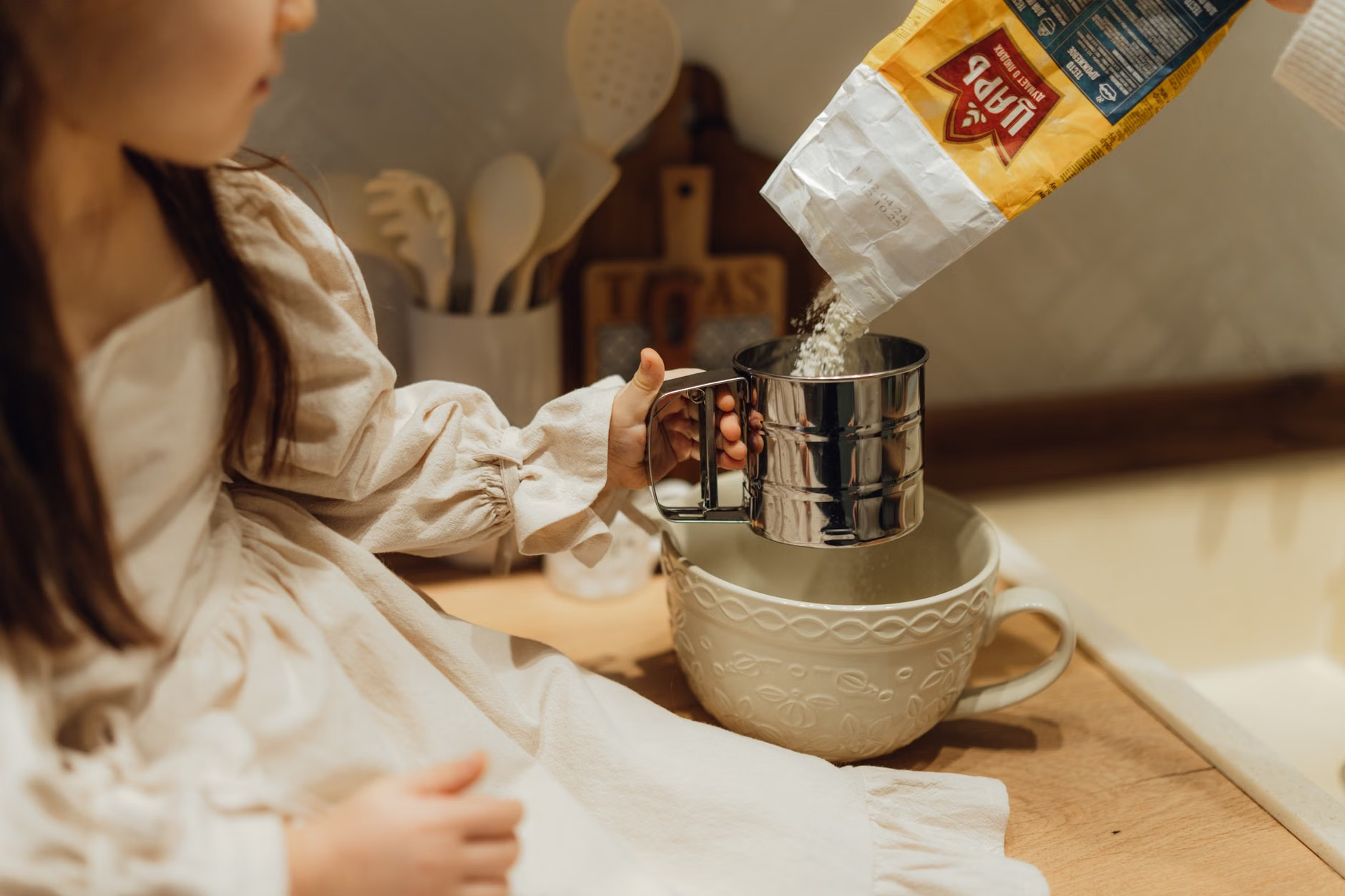
The Science of Sensory-Based Language Acquisition
The reason language apps often fall short is the lack of “situated cognition.” In cognitive science, this refers to the idea that knowledge is best acquired when it is embedded in the activity and culture in which it is used. When a child learns the word “whisk” while actually holding one and using it to beat eggs, the brain creates a multisensory map—the sound of the word, the feel of the tool, the sight of the eggs changing texture, and the smell of the kitchen.
For parents in their 30s and 40s, this is a goldmine. You don’t need to be a linguist to facilitate this. You simply need to step back and let the grandparent-child dynamic take over. Research shows that children are more likely to retain vocabulary when they interact with native speakers who have a high emotional investment in them. Grandparents naturally use a slower cadence, more repetition, and more expressive gestures—all of which are hallmarks of high-quality language instruction.
Consider the difference between a classroom setting and the kitchen:
| Feature | Standard Language Class | Kitchen Classroom |
|---|---|---|
| Motivation | External (grades, assignments) | Internal (hunger, curiosity, connection) |
| Vocabulary | Abstract, context-less | Concrete, action-oriented (pour, stir, chop) |
| Feedback | Correction-heavy | Natural, conversational (rephrasing) |
Why Grandparents Are the Ultimate Linguistic Mentors
Many of us are worried about our children losing their connection to their heritage or failing to pick up a second language. We often look for expensive tutors or specialized schools. However, we often overlook the “native speaker” living in our own family tree. Grandparents often possess a wealth of linguistic nuance—idioms, regional dialects, and cultural references—that modern textbooks simply cannot replicate.
When an elderly family member shares a recipe, they aren’t just sharing a list of ingredients. They are sharing a narrative. “My mother used to make this soup when the winter was harsh,” is a sentence that contains history, emotional weight, and complex grammatical structures. A child listening to this is not just learning a language; they are learning the soul of the language. This emotional connection is the strongest predictor of long-term language retention.
The “Heritage Language” Advantage: If you are trying to raise a bilingual child, the kitchen is where the “language of the heart” is spoken. Even if a grandparent is not fluent in the child’s primary language, the process of cooking together encourages a “bridge” language—a mix of both tongues that creates a unique family dialect. This is not a failure of language learning; it is the evolution of it.
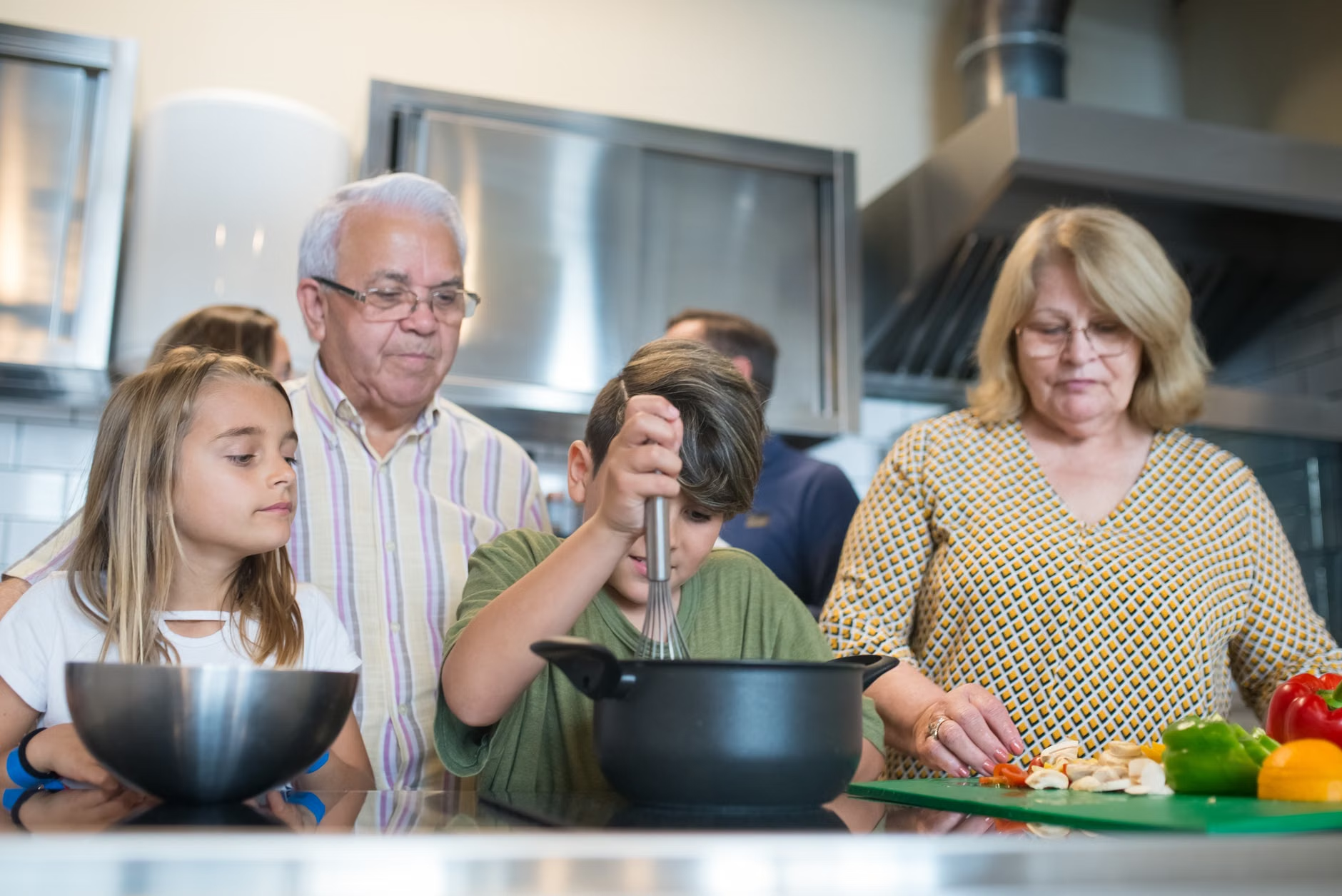
Structuring the Kitchen Classroom for Success
To turn your kitchen into a learning space, you don’t need a curriculum. You need a strategy. The goal is to maximize verbal interaction while minimizing frustration. Here is a step-by-step approach to making this work, whether you are in a small apartment or a large home.
Step 1: The “Ingredient Hunt”
Before the cooking starts, involve the child in gathering the materials. Use this time to label items. Instead of saying “get the flour,” ask the child, “Can you find the white powder we need for the bread?” or, if they are older, use the specific target language terms. This builds spatial awareness and vocabulary simultaneously.
Step 2: The Narrative Recipe
Encourage the grandparent to explain the “why” behind the steps. “We don’t put the salt in now because it will kill the yeast.” This introduces causal language (because, if/then, therefore). These are complex linguistic structures that children often struggle with in formal education but pick up naturally when explaining a culinary process.
Step 3: The “Wait and Listen” Rule
As a parent, your hardest task will be to stay quiet. Let the grandparent and child navigate the communication. If the child doesn’t understand a word, the grandparent will naturally find a way to demonstrate it, perhaps by pointing, miming, or showing the object. This is “comprehensible input”—a cornerstone of linguistics where the learner understands the gist of the message even if they don’t know every single word.
Common Pitfalls and How to Avoid Them
The most common mistake parents make is “testing” the child. Avoid asking, “What is this called?” or “Say this word in [Language].” This turns the kitchen into an interrogation room. Instead, model the language yourself. If the child says, “I want the red thing,” you can say, “Ah, you want the tomato. Let’s wash the tomato together.”
Another pitfall is focusing on the end result rather than the process. If the dough is messy or the cookies are uneven, don’t rush to fix it. The linguistic value is in the negotiation of the task. The mess is just a byproduct of the learning process. If you find yourself stressing over the cleanup, designate a “cleanup phase” where the language focus shifts to naming cleaning tools and actions, which is just as valuable.
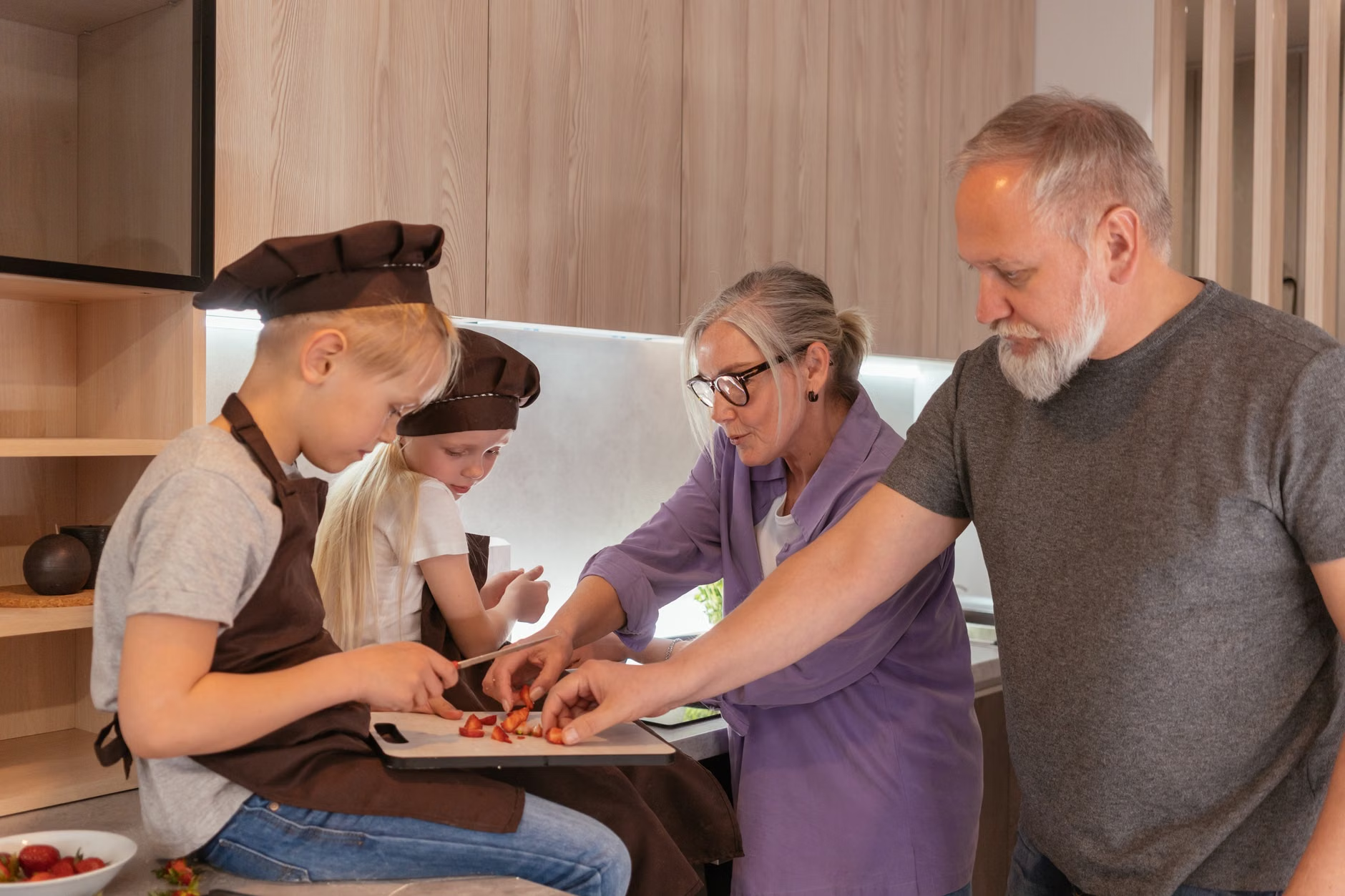
Cognitive Benefits Beyond Language
Beyond the obvious linguistic gains, cooking with grandparents develops executive function. This includes working memory (remembering the steps), inhibitory control (waiting for the oven to preheat), and cognitive flexibility (adapting when you run out of an ingredient). When a child is forced to toggle between two languages while managing these cognitive loads, their brain becomes more efficient at switching tasks and filtering out distractions.
This is especially beneficial for the 30-40 age demographic, as you are likely juggling your own high-stress schedules. By outsourcing this “educational” time to grandparents, you aren’t just getting a break; you are facilitating a high-value developmental activity that is better for the child than any passive screen time. It is a win-win scenario that builds family legacy while sharpening the child’s mind.
Practical Tips for Modern Families
If you live apart from your parents, you might wonder how to apply this. Technology is your friend here. A video call while cooking the same dish—”Grandma is making the pasta in Italy, and we are making it in London”—is a fantastic way to bridge the distance. The shared activity provides a focal point for the conversation, reducing the awkwardness that often accompanies video calls with young children.
Keep a physical “family recipe book.” Writing down the steps together is a great literacy activity. Even if the child only writes the title or draws a picture, they are engaging with the concept of documentation. This physical artifact becomes a treasure that will likely be passed down, cementing the importance of the language and culture associated with it.
Addressing Potential Challenges
What if the grandparent is impatient or the child is stubborn? It is important to set the stage beforehand. Have a quick chat with the grandparent about the *intent* of the session. Frame it as “quality time” rather than “language lesson.” If the focus is on the connection, the language learning will happen as a side effect. If the focus is on performance, the child will likely resist.
If the child is truly not interested, do not force it. Cooking should be an invitation, not a requirement. Try changing the task—maybe baking is too technical, and assembling fruit skewers is better for a younger child. Match the complexity of the cooking task to the child’s developmental stage to ensure they feel successful and capable, which in turn fuels their desire to communicate.
The Long-Term Impact on Family Identity
Finally, consider what this does for the child’s sense of self. Language is not just a tool for communication; it is a gateway to identity. By learning the language of their grandparents through the medium of food, children develop a sense of belonging. They realize that their family history is something they can actively participate in, not just read about in a book or hear about in a story.
In our increasingly fragmented world, these small, consistent rituals are the glue that keeps families together. You are giving your child more than just a recipe or a vocabulary list; you are giving them a connection to their roots that will serve them for the rest of their lives. When they are in their own 30s and 40s, they won’t remember the language apps they used, but they will remember the smell of their grandparent’s kitchen and the words they learned while making that special dish.
Start small this weekend. Pick one recipe that has meaning, invite the grandparents, and clear the table. You might be surprised at how much language flows when you stop trying to teach it and start living it.
Frequently Asked Questions
1. My child refuses to speak the target language, even with their grandparents. Should I force them?
Absolutely not. Forcing a child to speak can create negative associations with the language. Instead, focus on “passive immersion.” Let the child listen to the grandparent speak and respond in their dominant language. Often, children will eventually start using the target language when they realize it is the only way to get a specific result in the kitchen or when they feel comfortable enough to try without fear of correction.
2. How often should we do these “kitchen classrooms” to see real results?
Consistency beats intensity. Even one session every two weeks can yield results if it is a recurring event. The key is to make it a tradition—a “Sunday morning bake” or a “Friday night soup session.” The brain builds neural pathways through repetition and anticipation, so turning it into a predictable ritual is more important than the frequency.
3. What if my parents don’t speak the language I want my child to learn?
If your parents speak a different language, that is actually a gift! Multilingualism is a spectrum. If they speak a heritage language and you want your child to learn a different second language, you can still use the kitchen for the heritage language. Language exposure is additive. Any interaction that involves a child using a language in a meaningful, social context is a massive boost to their cognitive development and cultural awareness.
For further reading on the benefits of sensory-based learning and intergenerational bonding, you can explore resources from the Zero to Three organization, which provides evidence-based insights into early childhood development and the importance of family interactions.