The secret to a successful family island-hopping trip isn’t a massive budget or endless time; it is the radical decision to leave the rental car behind.
- Prioritize Accessibility: Choose islands with high-frequency public ferry networks, such as the Cyclades in Greece or the islands of the Seto Inland Sea in Japan, to avoid being stranded.
- The “One-Bag” Rule: Every family member must be able to manage their own gear; if you cannot carry it on a bus or a crowded ferry gangway, you have packed too much.
- Buffer Zones are Non-Negotiable: Always build a two-hour “buffer” into your transit schedule to account for ferry delays or unpredictable toddler meltdowns.
You’ve seen the photos: the pristine beach, the winding cobblestone streets, and the family that looks like they haven’t had a single argument all week. Then you look at your own reality: the stress of finding parking in a foreign country, the nightmare of installing car seats in a rental vehicle that is barely held together by duct tape, and the constant navigation anxiety. For parents in their 30s and 40s, the “rental car” model of travel is often more of a headache than a convenience.
Island hopping without a car feels counterintuitive at first. You wonder, “How will we carry the snacks? What about the emergency nap gear? How do we get to the remote cove?” The truth is that by removing the car, you remove the biggest logistical hurdle of your trip. You trade the stress of the steering wheel for the freedom of the deck, but it requires a specific set of rules to keep the peace.
Choosing the Right Islands: The “Connectivity-First” Filter
Not every island destination is built for a car-free family. Before you book a single flight, you need to apply the “Connectivity-First” filter. Some islands are designed for tourists to rent scooters or SUVs; others are designed for people to walk, cycle, or use local bus networks. If you choose the former, you will feel like a second-class citizen. If you choose the latter, you will feel like a local.
When evaluating a destination, look for these three markers:
- High-Frequency Ferry Ports: Does the island have at least three connections per day to the mainland or neighboring islands? If the ferry only runs once a day, a single missed connection ruins your entire itinerary.
- Pedestrian-First Infrastructure: Are the main towns car-free or highly walkable? Look for “ZTL” (Zona Traffico Limitato) areas in Europe or islands with dedicated cycle paths.
- Integrated Public Transit: Is there a reliable, public-facing bus or water-taxi system that links the port to the major beaches or towns?
For instance, in the Greek islands, Naxos is a far superior choice for car-free families than many smaller, isolated islands. It features a robust public bus system that operates on a schedule designed for tourists, connecting the main port to the major beaches like Plaka and Agia Anna. In contrast, if you head to a remote island where the only transport is a taxi that costs 40 euros per trip, you are effectively trapped.
The Comparison: Car-Rental vs. Car-Free Logistics
| Feature | Rental Car Approach | Car-Free Approach |
|---|---|---|
| Daily Cost | High (Rental + Fuel + Parking) | Low (Public Transit + Walking) |
| Flexibility | High (Go anywhere) | Medium (Fixed by schedules) |
| Stress Level | High (Navigation/Parking) | Low (Relaxation on transit) |
| Family Bonding | Low (Parent focused on road) | High (Shared transit experiences) |
The trade-off is clear: you lose the ability to drive to a secret beach on a whim, but you gain a massive reduction in daily stress and financial overhead. For families with children under 10, the “flexibility” of a car is often a fallacy—you end up spending hours in traffic or circling for a parking spot while the kids grow restless in the backseat.
Packing Strategies for the Mobile Family

If you aren’t loading your bags into a trunk, you are carrying them. This is the moment most parents realize their packing habits are broken. The standard “bring it just in case” mentality is your worst enemy when you are hopping between ferries and walking to your accommodation.
The rule of thumb is the “Carry-On Capacity Rule.” Every family member, including children who are school-aged, should be responsible for their own backpack. If a child cannot carry their own bag for 15 minutes, it is too heavy. For infants and toddlers, you should aim for one high-quality, collapsible, lightweight stroller and one ergonomic carrier.
Common Packing Mistakes:
- The “What If” Wardrobe: You do not need three pairs of shoes for a week-long trip. Pack one pair of comfortable walking sandals and one pair of versatile sneakers.
- Full-Size Toiletries: Even if you are staying in a hotel, buy local. It is a fun cultural experience to visit a local pharmacy or market to buy sunscreen or shampoo.
- Ignoring the “Laundry Gap”: Assume you will do laundry once during a week-long trip. Pack for four days, not seven. Use packing cubes to compress items and keep them organized by family member.
Why does this matter? Because ferries are not designed for massive suitcases. You will be expected to leave your luggage in a communal rack near the ferry entrance. The smaller and more consolidated your bags are, the less likely they are to be damaged or misplaced, and the easier it will be to move through tight, crowded corridors.
Mastering the Transit Schedule: The Art of the Buffer
The most common failure point for families traveling without a car is the “tight connection.” You assume the ferry arrives at 2:00 PM and you can be at your hotel by 2:30 PM. In reality, the ferry arrives at 2:15 PM, it takes 15 minutes to disembark, and the local bus is currently stuck in traffic. Suddenly, you are stressed, the kids are crying, and you are rushing.
The “Two-Hour Rule” is a non-negotiable management strategy. Never schedule a transit connection or an activity that requires a hard deadline within two hours of your expected arrival time. If you land at a port at 10:00 AM, do not plan to meet a tour guide or check into a remote villa until 12:00 PM. This window is your safety net for delays, bathroom breaks, and the inevitable “I’m hungry” moment that occurs the second you step off the boat.
Use digital tools to your advantage, but do not rely on them exclusively. Apps like Ferryhopper or Rome2Rio are excellent for planning, but keep a screenshot of the schedule on your phone in case you lose data coverage. Furthermore, always check the local bus company’s official website or Twitter feed on the morning of your travel. Changes in schedules are frequent and rarely updated on third-party aggregators.
The Hidden Reality of Walking with Kids

Walking is the primary mode of transport when you don’t have a car, but it is rarely a flat, paved experience. Island towns are often built on hillsides with cobblestone streets that are notoriously difficult for strollers. If you are bringing a stroller, ensure it is a “travel-ready” model—specifically, one with larger wheels that can handle uneven terrain. A cheap, plastic-wheeled umbrella stroller will likely snap or get stuck within the first hour of a European island holiday.
If you have an infant, prioritize a structured baby carrier. It allows you to navigate stairs, narrow alleys, and rocky paths that are completely inaccessible to wheels. For parents in their 30s and 40s, this is also a physical reality check. If you aren’t used to carrying a child for long periods, build up your stamina before the trip. It is a rewarding way to see a destination, but it is a workout.
Decision Rule: If the walk from the port to your hotel is more than 15 minutes with luggage, or if it involves significant elevation gain, book a transfer in advance. Do not attempt to walk it with all your gear. That extra 20-30 euros for a pre-booked shuttle will save your sanity and ensure the first impression of your vacation is positive, not exhausting.
Managing Expectations and the “Meltdown Factor”
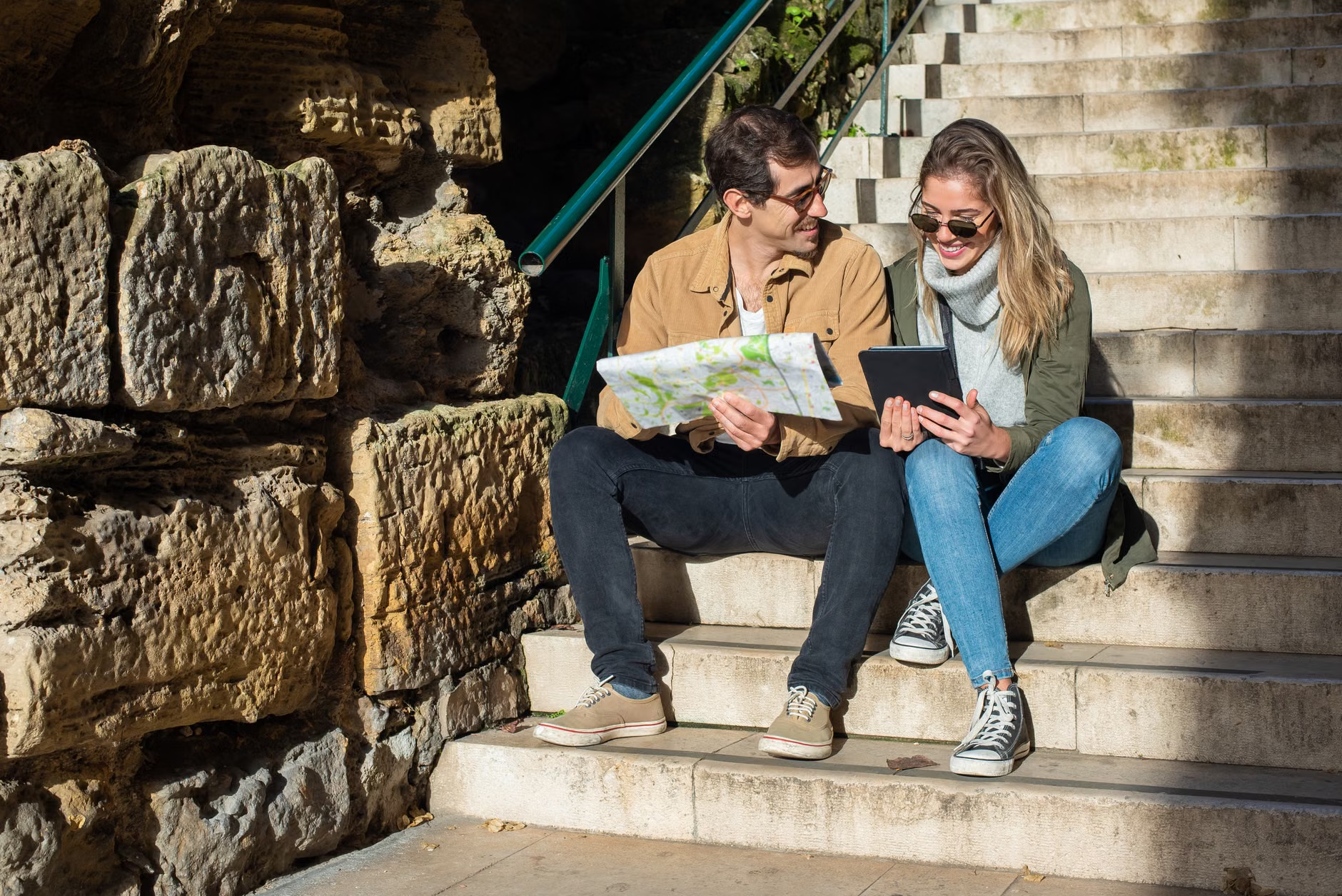
Traveling without a car means you are constantly in the public eye. You are on the bus, on the ferry, and walking through town. This can be intimidating for parents who are used to the “bubble” of a private car. The key is to lean into the public nature of the experience rather than fighting it.
When you are in a car, you are isolated. When you are on a bus or a ferry, you are part of the local flow. Teach your children that the transit is the travel. Instead of seeing the ferry ride as a means to an end, use it as an opportunity to look for marine life, read a book together, or plan the next day’s adventure. If you view the transit as a chore, your children will mirror that frustration. If you view it as an adventure, they will, too.
One overlooked variable is the “snack-to-transit ratio.” Always carry 20% more snacks than you think you need. Public transit schedules can change, and you do not want to be stuck at a port with a hungry, tired child and no nearby options. Pack high-protein, non-perishable snacks like nuts, dried fruit, or granola bars that can survive a hot day in a backpack.
Why This Matters for Your Family
Choosing to travel without a car is more than just a logistical preference; it is a way to reclaim the rhythm of your vacation. When you drive, the goal is to get from Point A to Point B as quickly as possible. When you take the bus, the ferry, or walk, the journey becomes the focus. You see the local grocery store, you hear the local language, and you engage with the environment in a way that is impossible from behind a windshield.
This approach also teaches children valuable lessons about patience, planning, and sustainability. They see that travel isn’t just about arriving at a destination; it is about navigating the world in a way that is respectful of the local environment and manageable for the family unit. It forces you to slow down, which is often the very thing we are all seeking when we book a trip in the first place.
Refining Your Itinerary: A Step-by-Step Checklist
- Map the Ports: Identify every ferry port you will use. Check the distance from the port to your accommodation.
- Check the “Last Mile”: For every island, look up the local bus or taxi situation. Does the bus run on Sundays? Is there a taxi rank at the port?
- The 48-Hour Test: Once you have your itinerary, look at it 48 hours before you leave. If you are changing locations every single day, you are moving too fast. Aim for a minimum of 3 nights per island.
- Digital Prep: Download offline maps (Google Maps is great for this) for every island you are visiting. Do not rely on local Wi-Fi or data roaming.
Ultimately, the car-free lifestyle on an island is about reduction. By reducing the complexity of your logistics, you increase the capacity for enjoyment. You will return home not just with photos of a beach, but with the memory of navigating a new place as a team. That is the true value of the effort.
Frequently Asked Questions
1. Is it realistic to do this with an infant or a toddler?
Yes, but it requires a shift in mindset. You must prioritize accommodation that is within walking distance of the main port or on a major bus line. If you are staying in a remote location, a car becomes almost mandatory. Focus on “urban” islands or islands with established, tourist-friendly transit hubs. Always opt for a high-quality baby carrier over a stroller if you plan to explore historic, cobblestoned centers.
2. What should I do if the ferry is delayed or cancelled?
This is the most common fear, and it is a valid one. Always have a “Plan B” accommodation booked for the night of your departure or arrival if you are traveling during peak season. If a ferry is cancelled, go immediately to the ticket office or the ferry company’s local agent. They are the only ones who can rebook you on the next available vessel. Keep a list of local contact numbers for your accommodations so you can inform them of any delays immediately.
3. How do I handle heavy luggage on public transport?
The only solution is to pack less. If you find yourself struggling to move your luggage, you will struggle to enjoy the trip. Use hard-shell, four-wheel spinner suitcases if you are sticking to paved areas, or high-quality, lightweight hiking backpacks if you are going to be moving between buses and ferries frequently. Remember: if you can’t carry it yourself, you are bringing too much.
For more information on planning your ferry routes, you can check official resources such as the Ferryhopper portal for European routes or specific national tourism board websites for local transit maps. Always verify schedules with the ferry operator’s direct website for the most current, real-time data.
Safe travels, and remember: the best part of the trip is often the part you didn’t plan for. Keep your snacks handy, your buffer times long, and your expectations grounded. You’ve got this.