A dedicated “Independent-Play Zone” is not about giving up more square footage; it is about creating a psychological boundary that allows children to lead their own activities while parents reclaim their mental and physical space.
Key Takeaways:
- Visual Boundaries Over Walls: Using rugs or low shelving creates a “Yes-Space” where children know they can play freely without constant parental correction.
- Acoustic Management is Essential: In high-density apartments, impact-resistant flooring (like 2cm+ EVA foam or cork) is the primary tool for preventing noise complaints from downstairs neighbors.
- The “Less is More” Rule: Displaying only 4–6 toys at a time reduces “choice paralysis” in children and keeps the apartment from feeling cluttered.
If you live in a high-density city like New York, London, Singapore, or Seoul, you know the “Lego-creeping” phenomenon. It starts in a corner of the bedroom and, within three hours, has successfully colonized the kitchen, the hallway, and the precise spot where you step when you get out of the shower. For parents in their 30s and 40s balancing remote work and domestic life, the lack of physical boundaries isn’t just a mess—it’s a constant drain on cognitive load.
The solution isn’t a bigger apartment. In the current real estate market, that is often a financial impossibility. Instead, the solution is the “Independent-Play Zone.” This is a curated, safe, and semi-autonomous “micro-environment” within your existing floor plan. When done correctly, it fosters a child’s ability to focus on a task without needing a parent to “entertain” them, effectively buying you the 20 minutes you need to finish an email or simply drink a coffee while it’s still hot.
The Psychology of the “Yes-Space” in Small Quarters
Why do children constantly follow us into the kitchen or the bathroom? Often, it is because the “adult” areas of the home are the most interesting, while their own toys are buried in a deep, dark toy box where they can’t see them. A “Yes-Space” flips this dynamic. It is a zone where every single thing the child can reach is something they are allowed to touch, move, and explore.
In a high-density apartment, we don’t have the luxury of a separate playroom. This means the play zone must coexist with the living room or home office. The psychological benefit for the parent is the removal of the word “No.” When a child is in their zone, you don’t have to worry about them pulling down a heavy vase or drawing on an expensive sofa. This reduces “parental hovering,” which research suggests is key to developing a child’s internal motivation and problem-solving skills.
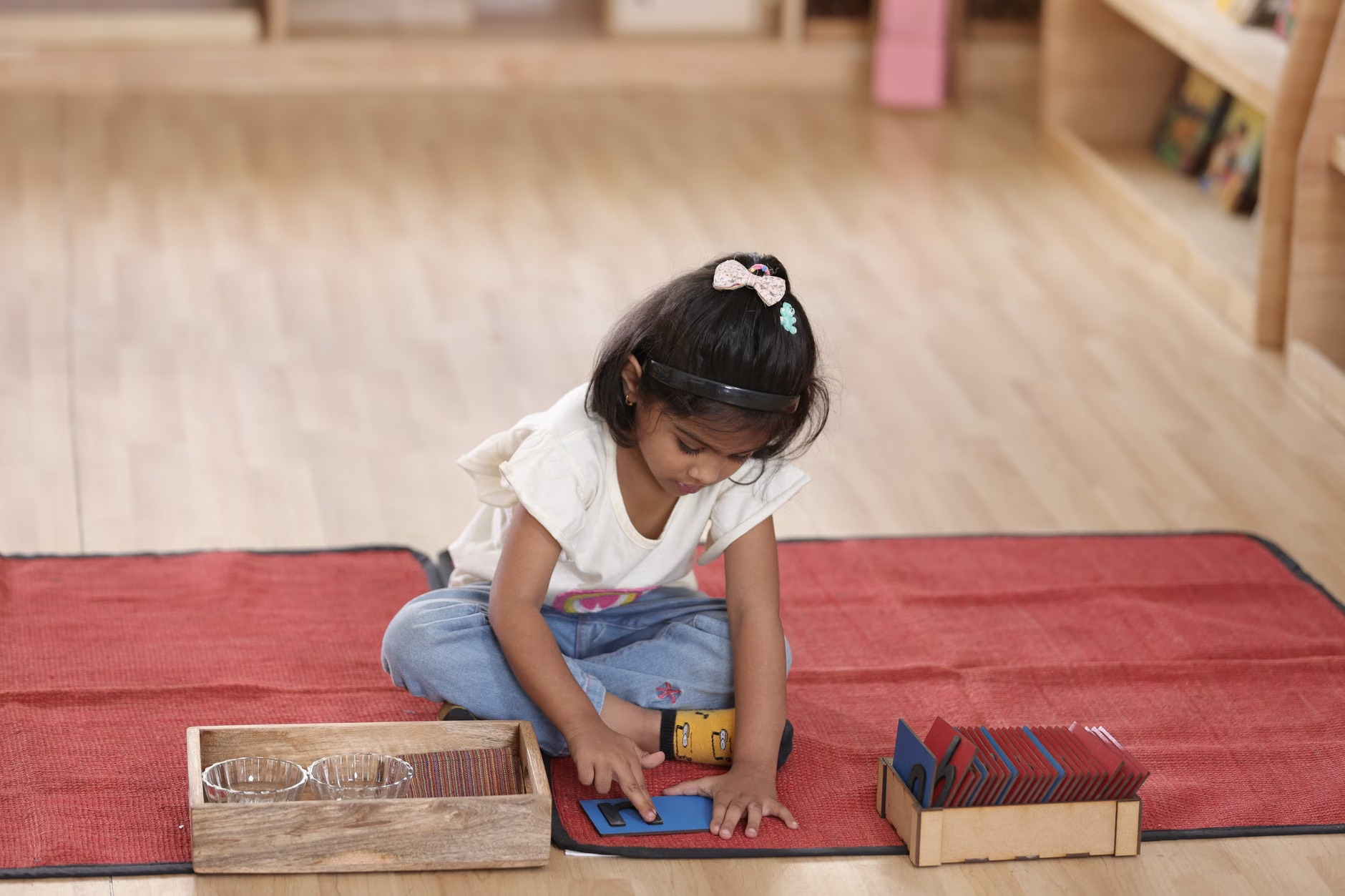
What it looks like in real life: Imagine a corner of your living room marked by a distinct, low-pile rug. On a low shelf, there are three baskets. One has wooden blocks, one has three animal figures, and one has a magnifying glass and some large pinecones. The child enters this space and knows exactly what their options are. Because the space is “theirs,” they feel a sense of mastery over it.
Zoning Without Walls: The “Micro-Territory” Strategy
The biggest mistake urban parents make is “toy scattering”—having a few toys in every room. This makes the entire apartment feel like a nursery. Instead, you should concentrate play into a “Micro-Territory.” Here is how to define that territory without building a single wall.
1. The Rug as a Border
A rug isn’t just decor; it’s a structural element. Choose a rug with a texture or color that contrasts sharply with your main flooring. This provides a tactile “stop” sign for the child. You can tell a toddler, “The cars stay on the blue rug,” and they will eventually internalize that boundary far better than a verbal command to “keep it in the corner.”
2. Low-Profile Shelving
In an apartment, vertical space is gold, but for a child, horizontal accessibility is the priority. Use open shelving that is no higher than the child’s chest. Avoid deep bins where toys go to die. If a child has to dig to the bottom of a bin to find a toy, they will likely just dump the whole bin on the floor. Open shelves allow them to see the “invitation to play” immediately.
3. The “Two-Thirds” Rule for Furniture
When selecting furniture for the play zone, ensure it serves a dual purpose or can be easily tucked away. A small table and chair set is vital for independent art or snack time, but if space is tight, look for a “nests” design where the chair slides completely under the table to save floor space when not in use.
Managing the “Thump”: Acoustic Engineering for Neighbors
Living in a high-density building means your floor is someone else’s ceiling. The sound of a toddler jumping or a wooden block hitting hardwood can sound like a structural failure to the person living below you. This is the #1 source of friction for urban parents.
To create a truly independent zone, you need to “hush” the space so you aren’t constantly shushing the child. High-density EVA foam mats are the standard, but they often look like a primary-school classroom. For a more “SoCooly” aesthetic, look for non-toxic TPU mats that mimic the look of Persian rugs or minimalist stone, but provide 20mm of impact absorption.
| Material | Sound Absorption | Aesthetics | Durability | Best For… |
|---|---|---|---|---|
| Standard Rug + Pad | Low | High | Medium | Older children, quiet activities |
| EVA Foam Tiles | High | Low | High | Toddlers, high-impact play |
| Cork Flooring | Medium-High | High | Medium | Eco-conscious, permanent zones |
| TPU Memory Foam | Very High | Medium-High | Medium | Urban apartments, all-age play |
Pro-Tip: If you use wooden toys, which are louder than plastic, consider adding a felt or cork lining to the top of the play table. This dampens the “clack” of toys and keeps the peace with the neighbors.
The 10-Minute Reset: Systems for High-Density Living
In a small apartment, a mess that takes 30 minutes to clean is a mess that will never be cleaned. The independent-play zone must be designed for a “10-minute reset.” This is the process of returning the zone to its baseline state before bed or before the “adult” hours of the evening begin.
Step 1: Toy Rotation (The “Secret Closet” Method)
You do not need 50 toys out at once. In fact, research shows that children play longer and more creatively when they have fewer options. Keep 80% of your toys in a high-up closet or under-bed storage. Every Sunday night, swap out two items from the play zone with two from storage. It feels like “new toy day” every week without spending a cent.
Step 2: Shadow-Boarding or Labeling
For children aged 3 and up, use simple visual labels (a picture of a block, a picture of a crayon) on the shelves. This turns “cleaning up” into a matching game. If the child can’t put it back themselves, the zone isn’t truly independent yet.
Step 3: The “Catch-All” Basket
Always have one empty basket in the zone. This is for the “strays”—the random pieces that don’t seem to belong anywhere. During the 10-minute reset, anything you aren’t sure about goes in the basket. It clears the floor immediately and can be sorted once a week.
Safety and Autonomy: The Fine Balance
In a high-density apartment, we often have hazards that aren’t present in larger suburban homes: floor-to-ceiling windows, radiators, and heavy furniture that isn’t bolted to a stud wall (because of rental agreements). To have an independent-play zone, the child must be safe without your constant intervention.
- Anchor Everything: Even if you are renting, you must anchor bookshelves to the wall. Use “No-Drill” furniture anchors if your lease is strict, but a few small holes are a small price to pay for safety.
- Cord Management: In small apartments, we often have a tangle of chargers and cables behind the sofa. Use cable management boxes to hide these entirely. A child in an independent zone will eventually get curious about a “snake” of wires.
- Corner Protection: If your play zone is in a living room with a sharp-edged coffee table, consider swapping it for a round ottoman. This removes a major “No” from the space.
Tech vs. Tactile: The “Screen-Free” Anchor
It is tempting to put the play zone in front of the TV, but this defeats the purpose of “independent play.” Independent play is about active engagement, whereas screens are passive. To encourage deep play, the zone should be oriented away from the television.
Instead of a screen, consider a “Tactile Anchor.” This could be a small sensory bin (filled with dried beans or kinetic sand—if you have a good vacuum!) or a simple “busy board” mounted to the wall. Wall-mounted activities are the ultimate urban apartment hack because they take up zero floor space. A pegboard with various locks, latches, and gears can keep a toddler occupied for significant stretches of time.
Adapting for Different Apartment Layouts
Not all high-density apartments are created equal. Depending on your floor plan, your “zone” will look different.
The Studio/Junior-1 Bedroom
In a studio, your “living” and “sleeping” areas are often the same. Here, mobility is key. Use a rolling cart (like the famous IKEA Råskog) as your play zone. When it’s play time, roll the cart to the rug. When it’s bedtime or you have guests, roll it into a closet or behind a screen. This prevents the “nursery” vibe from taking over your sleeping space.
The Long Hallway Layout
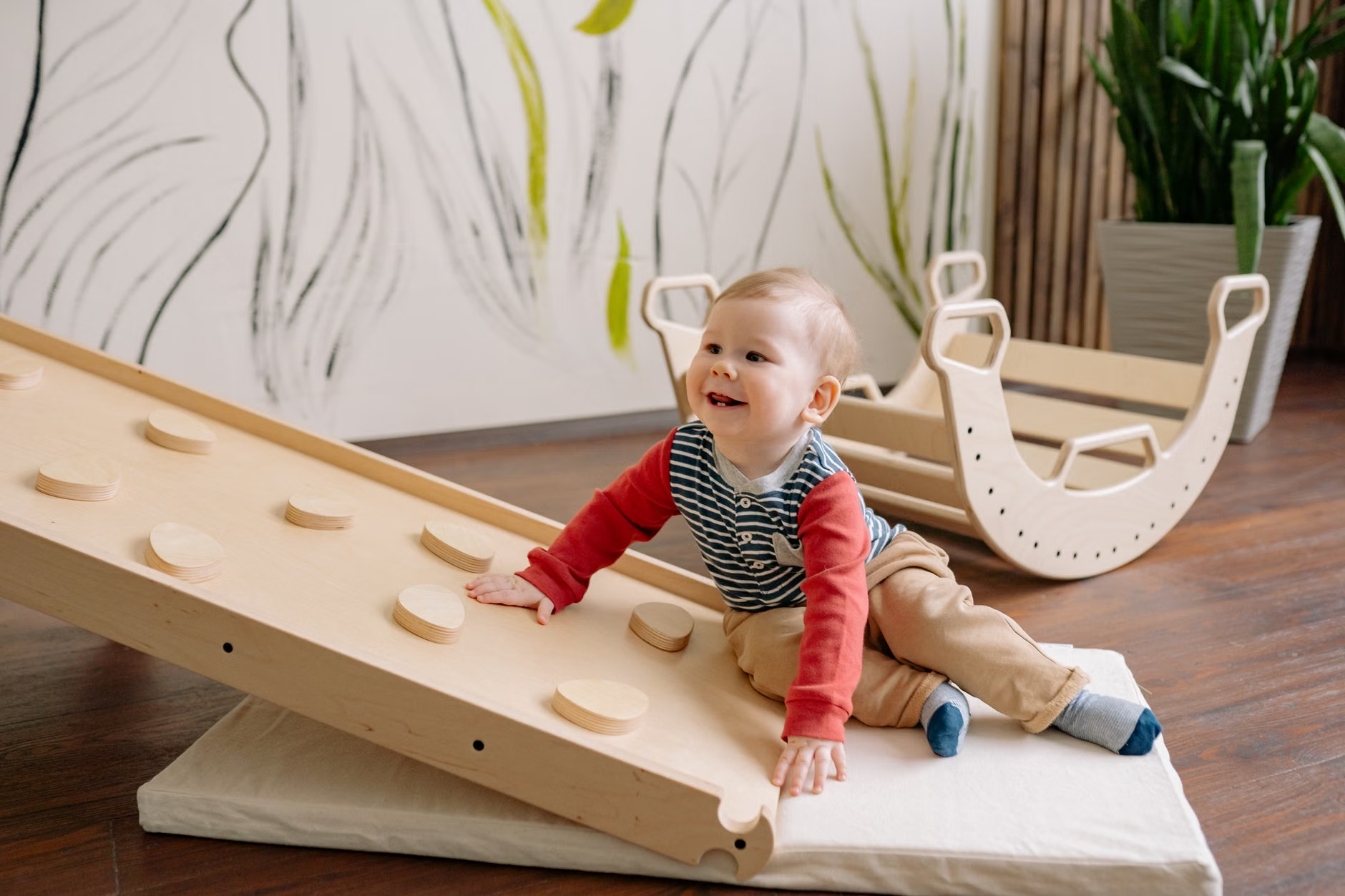
Many older urban apartments have long, narrow hallways that feel like wasted space. This is actually a perfect spot for a “Movement Zone.” A low-profile balance beam or a set of “stepping stones” (flat rubber discs) can be placed along the hallway. It allows the child to burn off energy in a space that doesn’t interfere with the main living area.
The Open-Plan Condo
In a modern open-plan space, the challenge is the lack of “corners.” You have to create a corner. Use the back of a sofa as a “wall.” Place a low shelf against the back of the sofa, facing away from the TV and toward a rug. This creates a cozy “nook” feeling that makes children feel secure and focused.
The Hidden Cost of “Cheap” Play Mats
When you’re in your 30s and 40s, you start to realize that “cheap” often costs more in the long run. Many inexpensive foam mats are made from EVA that off-gasses VOCs (Volatile Organic Compounds). In a small, high-density apartment with limited ventilation, air quality matters. Investing in Oeko-Tex certified or medical-grade TPU mats is a health decision as much as a design one. They don’t smell, they are easier to clean, and they don’t disintegrate into tiny foam pieces that your child (or pet) might ingest.
Decision Framework: Is Your Zone Working?
How do you know if you’ve successfully built an independent-play zone? Use this checklist once a month:
- The “20-Minute Test”: Can the child play in the zone for 20 minutes without asking for help or a snack? (If no, look at toy accessibility).
- The “Trip Hazard” Check: Is the play staying within the rug/boundary? (If no, the boundary might be too small or too vague).
- The “Parental Sanity” Check: Do you feel a sense of relief when the child goes to the zone? (If no, the zone might still be too messy or “loud” for your comfort).
The Final Takeaway: Creating an independent-play zone in a small apartment is an act of love for both your child and yourself. It respects the child’s need for autonomy and your need for a home that doesn’t feel like a chaotic daycare. Start small—one rug, one shelf, four toys—and watch how the energy of your home shifts from “surviving the mess” to “coexisting with the play.”
For more information on child development and space design, you can consult these official resources:
- UNICEF Parenting: Play Ideas for Development
- Association Montessori Internationale: The Prepared Environment
- American Academy of Pediatrics: The Power of Play
Frequently Asked Questions
Q1: My apartment is tiny. Can I still have a play zone if I don’t have a spare corner?
Absolutely. In very small spaces, use “vertical real estate.” A wall-mounted fold-down desk or a “busy board” takes up zero floor space. You can also use a “Play-in-a-Box” system where a specific rug and a small bin of toys are brought out at specific times, creating a “temporary zone” that is packed away completely when finished.
Q2: How do I stop my child from dragging toys out of the zone and into the kitchen?
This is usually a sign that the zone is too isolated or the toys are “stale.” Try moving the zone closer to where you usually hang out (like the edge of the kitchen) so they feel connected to you while playing. Also, implement a “one-in, one-out” rule: they can bring a toy out, but they have to put another one back in the zone first.
Q3: Won’t a dedicated play zone in the living room ruin my “adult” decor?
Not if you choose the right materials. Modern “play aesthetics” have come a long way. Look for neutral-toned TPU mats, wooden Montessori shelving, and canvas bins instead of bright plastic. When the toys are curated and the furniture matches your home’s palette, the zone looks like a deliberate design choice rather than an accidental mess.
Stay cool, stay organized, and remember: a little boundary goes a long way.