Toddlers raised in multigenerational households often develop advanced social empathy and linguistic complexity up to six months ahead of their peers due to constant exposure to diverse adult relationship dynamics.
Key Takeaways:
- Theory of Mind Acceleration: Regular interaction with grandparents helps toddlers understand that different people have different perspectives, a core pillar of social intelligence.
- Linguistic Diversity: Exposure to the “elder vocabulary”—idioms, slower speech patterns, and storytelling—significantly expands a child’s expressive language beyond what busy parents provide.
- The Buffer Effect: Having multiple caregivers reduces “parental burnout,” which creates a lower-stress environment that directly improves a toddler’s emotional regulation.
Let’s be honest: the idea of moving your parents or in-laws into your spare bedroom can sound like a recipe for a sitcom-style disaster. We value our independence, our “house rules,” and our right to eat cereal for dinner without judgment. But as many parents in their 30s and 40s are discovering—whether by choice or economic necessity—the “village” isn’t just a metaphor. It’s a social laboratory for our children.
When a toddler lives with both parents and grandparents, they aren’t just getting extra snacks; they are getting a front-row seat to the complexities of human interaction. While we are busy juggling Zoom calls and laundry, the presence of an elder provides a different pace of engagement that modern parenting often lacks. This isn’t just about free childcare; it’s about a fundamental shift in how a child’s brain maps out the social world.
The Cognitive Leap: Developing “Theory of Mind” Through Multiple Perspectives
In a standard nuclear household, a toddler’s world is relatively binary: Mom and Dad. In a multigenerational home, that world becomes a triangle or a square. This added complexity is the secret sauce for developing Theory of Mind (ToM). ToM is the ability to understand that others have beliefs, desires, and intentions different from one’s own. It is the foundation of empathy.
Imagine a toddler, Leo, who wants a cookie. Mom says no because it’s nearly dinner time. In a nuclear home, the story often ends there. In an intergenerational home, Leo might see Grandma’s face soften, but she also respects Mom’s decision. Leo observes a silent negotiation. He learns that Grandma has a different internal state (she wants to give the cookie) than Mom (who wants him to eat broccoli). Observing these micro-interactions helps Leo realize much earlier that “what I want” is not the same as “what everyone else thinks.”
Research indicates that children in extended family environments are forced to navigate more social “nodes.” They learn to code-switch. They speak differently to a sibling than they do to a grandfather. This constant adjustment is like a gym workout for the social brain. By age three, these children often show a higher capacity for conflict resolution because they’ve seen more examples of it happening in real-time between the adults they love.
The Vocabulary Vault: How Elders Break the “Parental Command” Cycle
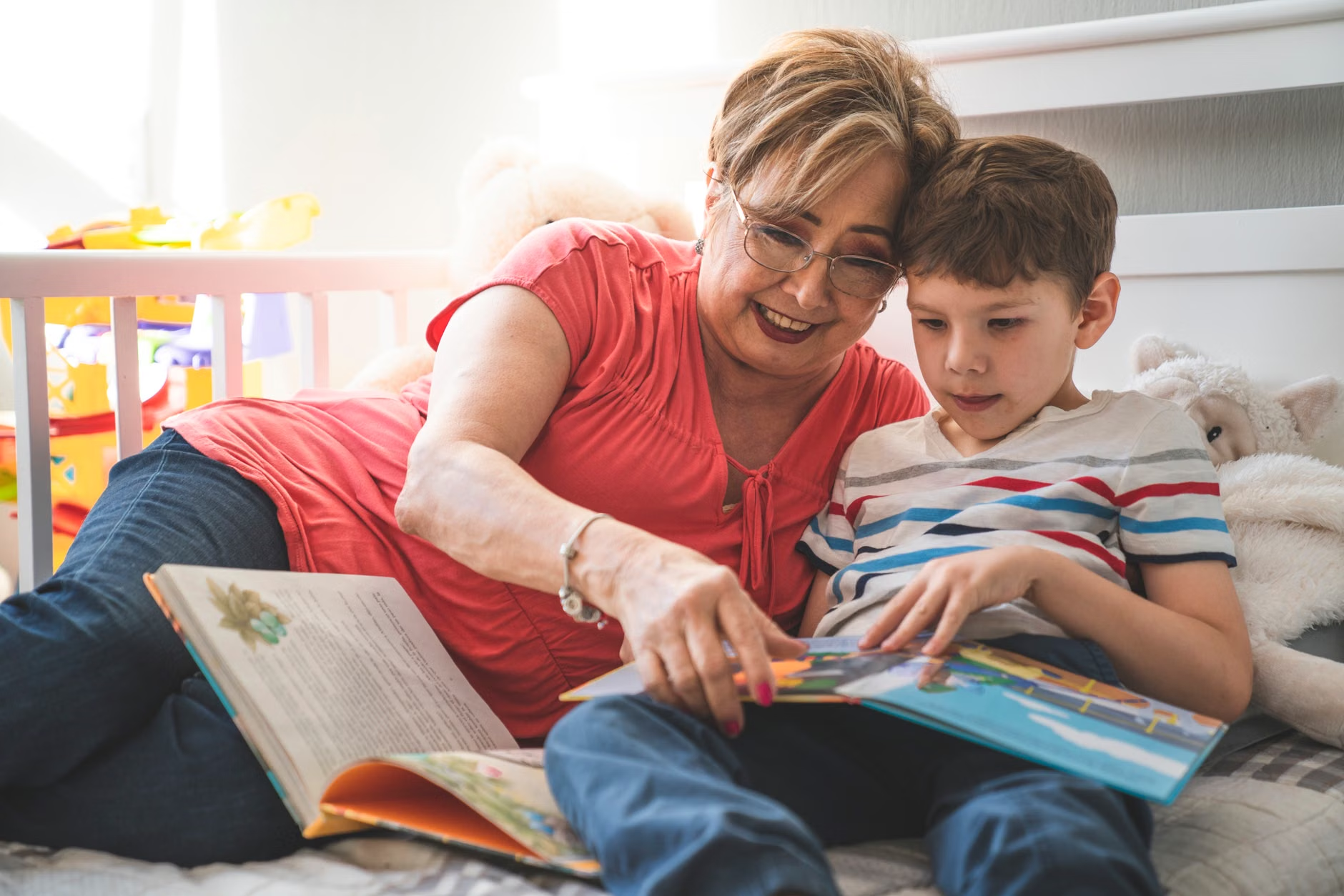
As parents, our speech to toddlers is often functional. “Put your shoes on,” “Eat your peas,” “Don’t touch that.” We are in management mode. Grandparents, however, are often in narrative mode. Because they are typically not the primary disciplinarians, their interactions are frequently centered around storytelling, reminiscence, and observation.
This creates a “Vocabulary Vault” for the toddler. Elders tend to use more descriptive language and archaic idioms that have fallen out of fashion but are rich in nuance. A parent might say, “It’s raining hard,” while a grandparent might say, “It’s a real cloudburst out there.” This isn’t just “cute” talk; it expands the child’s phonemic awareness and semantic range.
The following table compares the typical interaction styles and their developmental impact:
| Feature | Parental Interaction (Management) | Grandparent Interaction (Mentorship) | The “Social Win” for the Toddler |
|---|---|---|---|
| Speech Goal | Efficiency and safety. | Connection and storytelling. | Broader vocabulary and context. |
| Pacing | Fast, multi-tasking. | Slow, single-tasking. | Improved focus and listening skills. |
| Topic Range | The immediate “now.” | Past experiences and nature. | Historical awareness and curiosity. |
| Conflict Style | Direct authority. | Negotiation or distraction. | Learning diverse resolution tactics. |
The takeaway here isn’t that parents are doing it wrong; it’s that the combination of these two styles provides a balanced “social diet.” The toddler learns that communication serves multiple purposes: it can get things done, but it can also be used to share a feeling or a history. This makes them more versatile communicators when they eventually enter the preschool environment.
The “Buffer Effect” and Emotional Resilience
One of the most overlooked variables in toddler development is the stress level of the primary caregiver. We know that toddlers are like sponges for cortisol. When we are stressed, they are stressed. In an intergenerational home, the presence of a second or third set of hands acts as a biological buffer.
This is known as Alloparenting—a term used by evolutionary biologists to describe childcare provided by individuals other than the parents. When Grandma takes the toddler for a 20-minute walk, the mother’s heart rate drops, her patience resets, and her subsequent interaction with the child is more “attuned.”
For the toddler, this means they experience more “high-quality” interactions. They aren’t constantly dealing with a burnt-out parent. Furthermore, having multiple “secure bases” (attachment figures) makes the child more resilient. If Mom is sick or Dad is working late, the child doesn’t feel their world is collapsing because the “village” is still intact. This sense of security translates into social confidence; these children are often less prone to separation anxiety because they have learned that “care” is a distributed resource, not a single point of failure.
Managing the “Too Many Cooks” Syndrome: A Practical Framework
Now, let’s address the elephant in the room: the friction. Intergenerational living is only a social superpower if the adults aren’t constantly at war. If a toddler spends all day watching Mom and Grandma argue about sugar intake, the child isn’t learning social skills; they are learning how to manipulate adult tension.
To make this work, you need a Grandparent-Parent Contract. This isn’t a legal document, but a set of non-negotiables that ensure the toddler receives a consistent social message. Without this, the child becomes “socially confused,” leading to behavioral outbursts as they test which adult’s rules actually stick.
The 3-Step Protocol for Household Harmony
- The Hierarchy of Health and Safety: Establish that on matters of safety, health, and core discipline (e.g., hitting, car seats, bedtime), the parents’ word is final. No exceptions.
- The “Grandparent’s Prerogative”: Give the grandparents a “zone of influence” where they can be the “fun ones.” Maybe they are allowed to give one extra treat, or they are the ones who handle “messy play” like painting. This gives them a sense of role and value without undermining the parents.
- The Weekly “Pulse Check”: Sit down for 15 minutes once a week—without the kids—to discuss any boundary crossing. Do not do this in front of the toddler.

The “Digital Gap” Advantage
A fascinating, and often accidental, benefit of intergenerational living is the reduction in passive screen time. Most grandparents (the “Baby Boomer” or “Gen X” elders) grew up in a pre-digital or early-digital world. Their default mode of entertaining a child often involves physical objects: cards, blocks, gardening, or simply “helping” with chores.
While we might be tempted to put on a YouTube video so we can finish an email, a grandparent is more likely to engage the toddler in “analog play.” This is crucial for social development. Analog play requires joint attention—the ability to look at an object and then back at the person, sharing the experience. This is the bedrock of human social connection. Studies from the Harvard Center on the Developing Child suggest that “serve and return” interactions (like a grandparent responding to a toddler’s babble or gesture) are the most important factor in building brain architecture.
In a multigenerational home, these “serve and return” moments happen more frequently because there are more “receivers” available to catch the toddler’s “serve.”
The impact of intergenerational living varies significantly based on cultural expectations. In many Asian, Middle Eastern, and Latin American cultures, this is the default. In these regions, social development is often framed through the lens of collectivism. The toddler learns “we” before “I.”
In Western societies (the US, UK, Australia), the shift toward multigenerational living is often driven by the “sandwich generation” phenomenon—parents in their 40s caring for both kids and aging parents. Here, the challenge is often reconciling independence with co-habitation.
Common Mistake: Assuming that your parents will parent exactly like you do. They won’t. And as long as they aren’t violating safety rules, that’s actually a good thing. The goal isn’t to have three identical parents; the goal is to have three different, loving adults who provide a spectrum of social interaction.
Decision Rule: Is This Right for Your Child?
Not every family is suited for this. If there is a history of trauma, toxic boundary-crossing, or fundamental lifestyle clashing, the “social boost” for the toddler will be negated by the emotional stress of the household.
Move forward with intergenerational living if:
- The adults can disagree without yelling or stonewalling.
- The grandparents are physically and mentally capable of engaging (even if it’s just reading books).
- There is enough physical space for everyone to have a “retreat” zone.
Reconsider if:
- The grandparents actively undermine your authority in front of the child.
- The primary motivation is only financial, with no shared values on child-rearing.
- The household tension causes the toddler to become withdrawn or excessively anxious.
The Long-Term Payoff: Beyond the Toddler Years
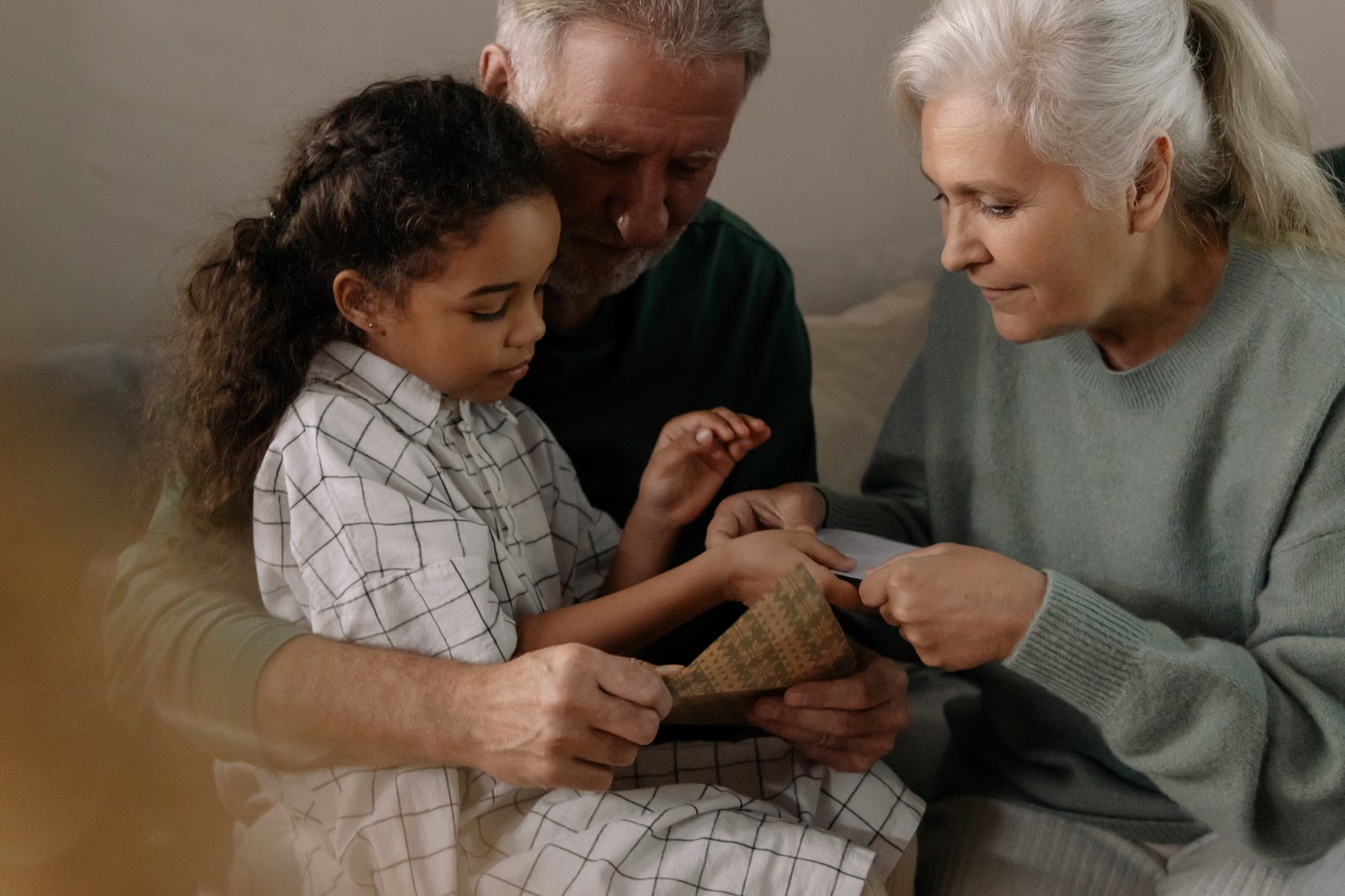
The social skills baked in during the toddler years don’t disappear. Children who grow up with strong intergenerational bonds often show higher levels of prosocial behavior in adolescence. They are more likely to respect elders, show patience with those who are different from them, and possess a stronger sense of family identity.
By living with grandparents, the toddler learns that aging is a natural part of life. they see that everyone has strengths and weaknesses. They see Mom helping Grandma with her phone, and Grandma helping Mom with the toddler. This reciprocal caregiving model is the ultimate social lesson: we take care of each other.
So, the next time Grandma gives your toddler an extra slice of toast after you said no, take a deep breath. Look at the bigger picture. Is a little extra butter worth the fact that your child is learning to navigate the beautiful, messy, complex world of human relationships? Usually, the answer is a resounding yes.
The most important takeaway: Intergenerational living is a “social accelerator” because it provides a high-density environment for empathy, language, and conflict resolution. To maximize this, focus on adult communication first. When the adults are a team, the toddler wins.
For more data on how family structures impact early development, you can explore resources from the Pew Research Center and the University of Oxford research archives.
Frequently Asked Questions
1. Will my toddler get confused by having different sets of rules?
Toddlers are surprisingly good at “situational rules.” They quickly learn that “At Grandma’s house (or in Grandma’s room), we do X, but with Mom, we do Y.” As long as the core safety rules are consistent, these minor variations actually help them develop cognitive flexibility.
2. What if the grandparents are too permissive and “spoil” the child?
This is the most common friction point. Use the “80/20 Rule.” If the child is following your core rules 80% of the time, the 20% “spoiling” from grandparents is unlikely to cause long-term behavioral issues. In fact, it can help the child associate elders with warmth and safety.
3. How do we maintain our privacy as a couple while living intergenerationally?
Privacy is the “hidden cost” of this arrangement. You must establish physical and temporal boundaries. For example, “After 8:00 PM, the living room is for the parents only,” or ensuring that the grandparents have their own television or seating area. Social development for the toddler shouldn’t come at the expense of the parents’ marriage.
Living together isn’t always easy, but the social “head start” it gives your toddler is a gift that keeps on giving. Take it one “pulse check” at a time, and remember: you’re building a village, not just sharing a kitchen.
Stay cool,
SoCooly
Official Sources:
– Harvard Center on the Developing Child: https://developingchild.harvard.edu/science/key-concepts/serve-and-return/
– Pew Research Center – Multigenerational Living: https://www.pewresearch.org/social-trends/2022/03/24/the-financial-and-social-stakes-of-multigenerational-living/