- Focus on narrative, not just dates: Children remember stories about character and struggle, not birth years. Use the “Why” and “How” of your ancestors’ lives to build emotional resonance.
- The 30-minute rule: Avoid overwhelming relatives with “interview” sessions. Keep recording sessions to 30 minutes to capture authentic, high-quality audio without fatigue.
- Digitize for access, not just storage: A cloud folder of unorganized photos is a digital graveyard. Curate and share a “Living Heritage” folder that is accessible to family members today.
Most of us treat family heritage like a museum exhibit: we keep the old photos in a dusty box, the names of great-grandparents in a distant corner of our memory, and the stories somewhere between “forgotten” and “maybe I’ll tell the kids one day.” But if you are in your 30s or 40s, you are currently the bridge between the generation that holds the memories and the generation that needs them to build their identity.
The truth is, family heritage isn’t about genealogy charts or expensive DNA kits. It is about intergenerational storytelling—the active process of passing down the values, mistakes, and triumphs that shaped who you are. This article isn’t about preserving the past; it’s about using the past to help your children navigate their present.
Why Your Children Need Stories More Than Records
Psychologists have long noted that children who know their “family narrative”—the stories of how their ancestors overcame hardships, made mistakes, or celebrated small wins—exhibit higher levels of resilience and self-esteem. This is often referred to as the “Do You Know?” scale, developed by researchers at Emory University. The scale measures how much a child knows about their family history, and the results consistently show that those who know more about their family tree are better equipped to handle the stresses of modern schooling and social pressure.
Why does this happen? It’s not because your ancestors were perfect. It’s because the stories provide a roadmap. When a child learns that their grandmother failed a math test, moved to a new country with nothing, or had to work two jobs to support the family, they learn that struggle is a normal part of life. It removes the stigma of failure. It teaches them that their current frustrations are part of a larger, evolving story.
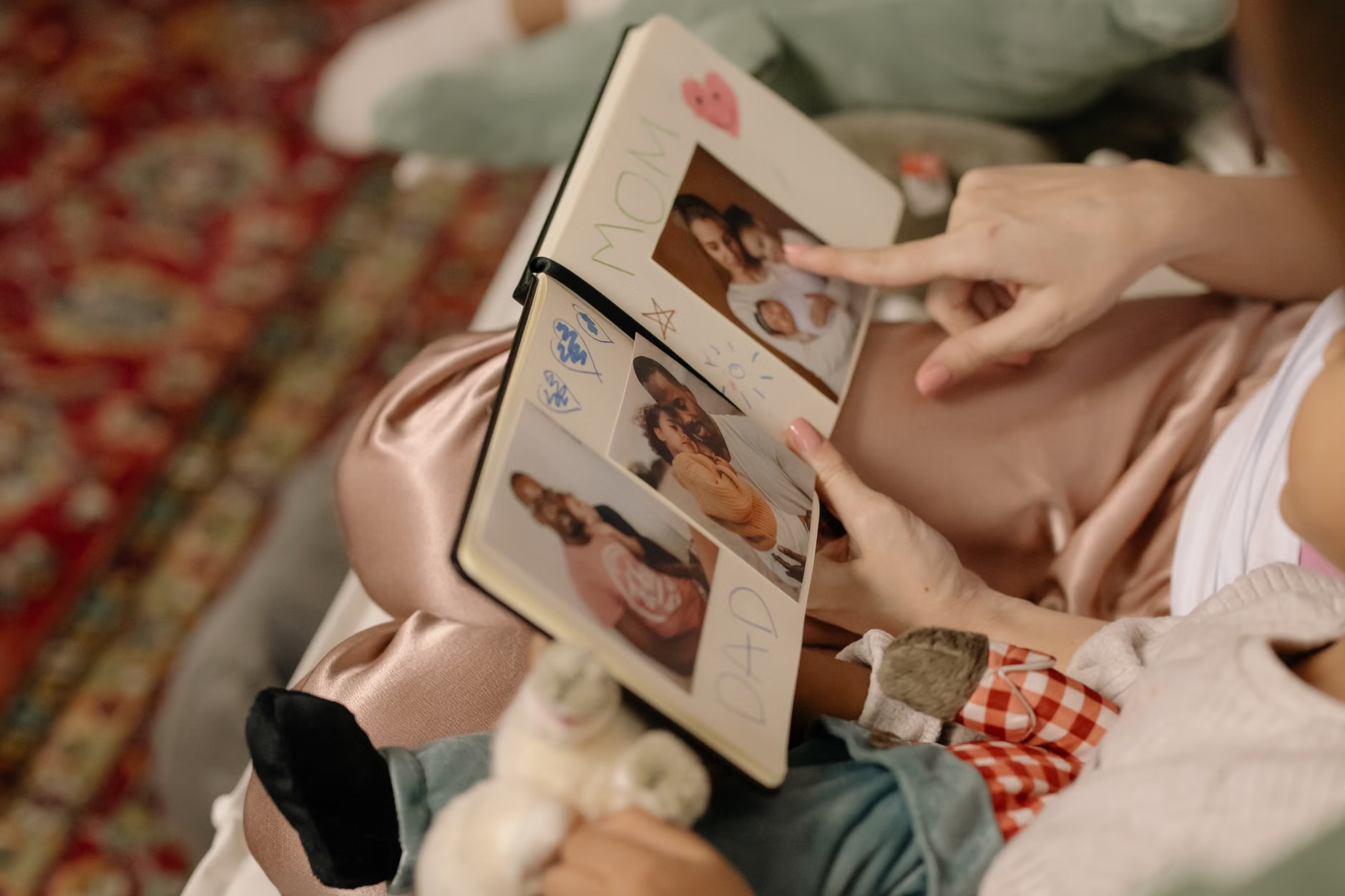
The 30-Minute Rule: Capturing Oral Histories Without the Stress
The biggest mistake most people make when trying to document family history is approaching a relative with a clipboard and a list of 50 biographical questions. This turns a conversation into an interrogation. Your goal is to capture the “texture” of their life, not the raw data.
The Strategy: Use the 30-minute rule. If you try to extract a whole life story in one sitting, you’ll get generic, rehearsed answers. Instead, focus on specific “anchors” during shorter, more frequent sessions. Here is how to structure these sessions to ensure success:
| Focus Area | Question Example | Why it Matters |
|---|---|---|
| Early Childhood | “What was the house you grew up in like? What did it smell like?” | Sensory details trigger deeper, more authentic memories. |
| Turning Points | “Was there a moment where everything changed for you?” | Reveals resilience and decision-making patterns. |
| Family Traditions | “What was the one meal everyone hated but we ate anyway?” | Humor connects generations better than formal history. |
Practical Tip: Use a high-quality voice memo app on your phone. Don’t worry about professional video equipment. Audio is more intimate, and it allows the speaker to focus on the conversation rather than the camera. Keep the phone on the table, hit record, and forget it’s there. If you are worried about sound quality, a simple lapel microphone (costing around $20) will improve audio quality significantly compared to a built-in phone mic.
Curating the Digital Legacy: Avoiding the “Data Graveyard”
We are the most documented generation in history, yet we are at risk of leaving behind the least useful archives. Thousands of photos in a cloud storage account, unorganized and unlabeled, are essentially digital noise. If your children cannot find the story behind the photo, the photo is just a colored square on a screen.
To move from hoarding to curating, you need to apply a “Living Heritage” framework. This isn’t about archiving every single photo you took at a birthday party in 2018. It is about creating a “Core Narrative” folder. This folder should contain:
- The Anchor Photos: High-resolution scans of the 10-20 most important family photos (e.g., grandparents’ wedding, a parent’s first day of school, a significant family gathering).
- The Audio Clips: The 30-minute oral history sessions you’ve recorded, trimmed to the best 5-minute segments.
- The “Manual”: A simple document explaining who is who in the photos and the context behind them.
The mistake here is thinking you need to do this all at once. This is a project for the next decade, not the next weekend. Set a recurring calendar invite for once a month—perhaps on a Sunday morning—to curate just five photos or transcribe one short clip. This keeps the process sustainable and prevents the burnout associated with massive, one-time “archiving” projects.

Integrating Heritage into Everyday Parenting
Once you have gathered these stories, how do you actually use them? If you force a lecture on your kids about “how good they have it,” they will tune you out. The key is to weave these stories into the fabric of daily life, particularly during times of transition or challenge.
The “When I Was Your Age” Pivot: Instead of offering unsolicited advice, try to frame it as a shared experience. If your child is struggling with a friend, don’t say, “You should do X.” Instead, say, “You know, when I was 10, I had a friend who stopped talking to me, and I felt exactly like you do right now. Let me tell you how I handled it—and the mistake I made.”
This approach does three things: it validates their feelings, it provides a non-judgmental space for them to learn, and it humanizes you. It shifts your role from “authority figure” to “fellow traveler.”
Handling Difficult or Traumatic History
Many families have chapters that are painful—divorce, loss, poverty, or displacement. You may wonder if you should shield your children from these stories. The research suggests that while you should tailor the complexity to their age, you should not lie or omit the reality of these events. Children are incredibly perceptive; they often sense when there is a “secret” in the family, and that uncertainty can be more unsettling than the truth itself.
When discussing difficult topics, use the “Age-Appropriate Truth” method:
- Ages 5-8: Focus on the emotions and the outcome. “Grandpa had a hard time finding a job, and he felt sad, but he worked hard to take care of us.”
- Ages 9-12: Focus on the context and the choices. Explain the circumstances, the challenges faced, and the specific actions taken to navigate the situation.
- Ages 13+: You can engage in more nuanced discussions about the systemic issues or personal failings that contributed to the situation.
Common Pitfalls and How to Avoid Them
As you embark on this, it is easy to fall into traps that make the process feel like a chore. Here are the three most common pitfalls and how to navigate them:
- The Perfectionism Trap: You feel you need to hire a genealogist or buy expensive software before you start. Reality check: Your kids don’t care about a perfect family tree; they care about the stories they can relate to. Start with a notebook and a phone.
- The “Only the Good Stuff” Trap: You only want to talk about the successes. Reality check: Resilience is built on failure. If you hide the struggles, you are hiding the most important lessons.
- The Accessibility Gap: You store everything in a format that only you can open. Reality check: If you use a proprietary app or a password-protected file that no one else knows how to access, the legacy dies with you. Use standard file formats (like .mp3 for audio, .jpg for photos, and .pdf for documents) and keep them in a shared family cloud folder.

The Technical Side: Organizing Your Digital Legacy
In our 30s and 40s, we are often the “digital gatekeepers” of our families. Managing the data isn’t just about storage; it’s about accessibility. If you are using platforms like Google Photos or iCloud, you are halfway there, but you need to go further.
Step-by-Step Digital Organization:
- Step 1: The Master Folder. Create a folder in your cloud storage titled “Family Legacy.” Within it, create sub-folders by person or by era.
- Step 2: Metadata matters. When you scan an old photo, rename the file immediately. Instead of “IMG_001.jpg,” name it “1985_Grandpa_Joe_HighSchool_Graduation.jpg.” This makes searching for it years later possible.
- Step 3: The “Legacy Contact.” Most major cloud services (like Apple and Google) now have a “Legacy Contact” feature. Ensure you have set this up so your family can access your digital life if something happens to you. This is a crucial, often overlooked step for anyone in their 30s or 40s.
A note on physical heirlooms: Don’t just keep them in a box. If you have an object—a watch, a book, a tool—that has a story, write a small tag or a digital note attached to it. Tell the story of how it was acquired or why it was kept. An object without a story is just an object. An object with a story is a legacy.
The Role of Technology in Modern Storytelling
We are living in an era where technology can actually facilitate deeper human connection, provided we use it as a tool rather than a distraction. Beyond simple voice recording, consider these modern approaches to intergenerational storytelling:
Collaborative Family Wikis: For larger families, a private wiki or a shared Notion page can act as a living repository. Everyone can contribute photos, stories, and fact-checks. It turns the “heritage” project into a family group activity rather than a solitary burden on one parent.
Digital Storytelling Apps: There are services like StoryWorth or similar platforms that send weekly prompts to elderly relatives, who then reply via email. These are then compiled into a book. While these are excellent, they can be impersonal if they replace the actual conversation. Use them as a starting point, but don’t let them be the end of your engagement.
Video Essays: If you are tech-savvy, consider creating short, 5-minute video “essays” for your kids. Combine old photos, short clips of interviews, and a voiceover of you explaining why this specific story matters to your family. These are incredibly powerful for kids to watch during birthdays or milestones.
Beyond the Obvious: The Hidden Costs and Trade-offs
It is important to acknowledge that this process can be emotionally taxing. Digging into the past can bring up unresolved conflicts or sad memories. As a parent, you need to manage your own emotional capacity. If you find that interviewing a relative is consistently leaving you drained or frustrated, take a break. You don’t have to be the sole historian of your family.
Also, consider the privacy of others. When you are documenting family stories, you are often documenting the lives of others who might not want certain things shared. Always ask for permission before including others’ personal stories in a shared family document, especially if those stories involve sensitive subjects.
Finally, avoid the “Comparison Trap.” You will see other families on social media with beautiful, perfectly curated family history books. That is their version of the story. Your version is yours. It doesn’t need to be polished or professional; it just needs to be authentic.
Practical Next Steps for This Weekend
If you’re feeling inspired, don’t try to do everything at once. Start this weekend with one of these three actions:
- The 30-minute test: Pick one relative you’ve been meaning to talk to. Call them, tell them you’re interested in a specific part of their life, and record the conversation. Keep it to 30 minutes.
- The “Five-Photo” Audit: Go to your phone’s photo app. Find five photos of your parents or grandparents that you know almost nothing about. Message or call them and ask for the story behind those specific images.
- The “Legacy Contact” Setup: Spend 15 minutes today setting up your legacy contact on your primary cloud account. It’s an unglamorous but vital step in protecting your family’s digital future.
Building your family’s living heritage is a long-term commitment, but it is one of the most rewarding investments you can make in your children’s future. You are giving them a sense of place, a sense of perspective, and a sense of belonging that will stay with them long after they leave home. Start small, be curious, and most importantly, listen.
For more information on preserving family memories and managing digital legacies, you can explore these resources:
- National Archives: Preserving Family Heritage
- Library of Congress: Tips for Oral History Interviews
- Apple Support: How to add a Legacy Contact
Frequently Asked Questions
Q: My parents refuse to talk about the past. How do I get them to open up without being pushy?
A: Often, people refuse to talk because they think their lives weren’t “interesting” enough, or they fear being judged. Try shifting the focus from “biography” to “curiosity.” Ask about specific, small things—like what a specific holiday was like in their childhood—rather than asking for their “life story.” If they still resist, respect their boundaries; sometimes, simply sharing your own stories can encourage them to share theirs later.
Q: Is it better to write things down or record audio?
A: Both have value. Audio captures the tone, the laughter, and the pauses, which are essential for emotional connection. Writing is better for organizing dates, names, and specific facts. The best approach is a combination: record the conversation for the “feeling,” and use the transcript or your notes to build a factual timeline.
Q: How much should I tell my kids about the “bad” parts of our history?
A: Honesty is usually the best policy, but it must be calibrated to their age. The goal is not to burden them with adult anxieties, but to show them that life is complex and that people they love have made mistakes and recovered from them. Frame these stories around the concept of “lessons learned” rather than “people judged.”
SoCooly note: Remember, your goal isn’t to be a professional historian. It’s to be a bridge. Every story you save and share is a thread in the tapestry of your family’s identity. Keep going.