By 2027, the way you discard your family’s old clothing will no longer be a simple “toss it in the bin” decision; new EU-led circular economy mandates will require separate textile collection, fundamentally shifting the responsibility for waste from the consumer to the supply chain and local governance.
- Mandatory Separation: By January 1, 2025 (with full enforcement ramping up toward 2027), EU member states must have separate collection systems for textiles, meaning your local council will likely stop accepting clothes in general waste bins.
- Extended Producer Responsibility (EPR): Brands will soon pay fees based on the volume and recyclability of the clothes they sell, which will eventually influence the price and durability of the items you buy for your kids.
- The “Repair-First” Shift: Because recycling mixed-fiber fabrics is technically difficult, the economic incentive is moving toward repairing and reselling, making high-quality, durable garments a smarter financial investment than cheap “fast fashion.”
If you have spent any time recently trying to clear out a closet full of clothes your children have outgrown, you know the frustration: you have a pile of worn-out leggings, stained t-shirts, and mismatched socks, and you honestly have no idea what to do with them. Throwing them in the landfill feels wrong, but finding a recycling center that actually takes “rags” is a part-time job in itself.
The good news—or at least the change—is that the “Circular Economy” isn’t just a buzzword for corporate boardrooms anymore. It is becoming a regulatory reality. For those of us in our 30s and 40s, this means our daily habit of “buying, wearing, and dumping” is about to hit a legal wall. Let’s break down exactly what this means for your living room and your laundry room.
What Exactly is the 2027 Textile Mandate?
At the heart of these changes is the EU’s Strategy for Sustainable and Circular Textiles. While the specific rollout varies by country, the core directive is clear: by 2025, separate collection for textiles became a requirement across EU member states, and by 2027, the focus shifts heavily toward “Extended Producer Responsibility” (EPR) schemes.
Think of EPR like a “pollution tax” on fashion companies. If a company produces a low-quality, synthetic-heavy shirt that is impossible to recycle, they have to pay a higher fee to the governing body to cover the cost of managing that waste. If they produce a shirt made from a single, recyclable material, their fee is lower. This is designed to force brands to change how they design clothes from the ground up.
But why does this matter to you? It matters because the “cheap” clothes we often buy for growing children—which are frequently made of complex, blended fibers like cotton-polyester-elastane—are becoming the most expensive items to manage. As these costs are passed down, we are going to see a shift in the market value of durability versus disposability.
The Hidden Reality of “Recycling” Your Old Clothes
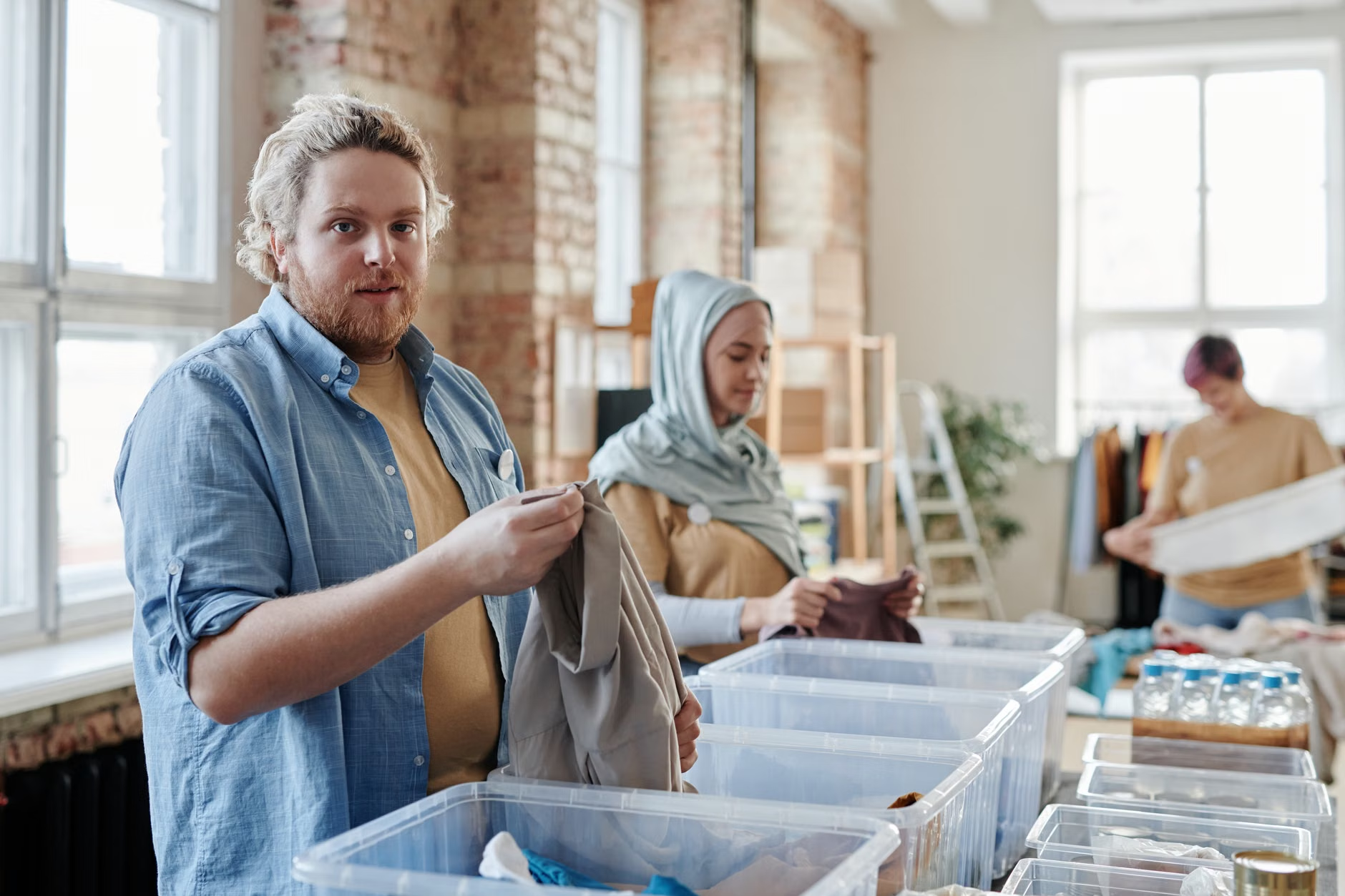
A common misconception is that if you drop your old clothes into a charity bin, they are automatically “recycled” into new fabric. In reality, most of the clothes donated to charity shops or textile banks are exported to developing nations or, if they are damaged, sent to landfills or incinerators. Only a tiny fraction of global textile waste is ever turned back into new clothing fibers.
This is because of the “fiber blend” problem. If you have a t-shirt that is 60% cotton and 40% polyester, it is incredibly difficult to separate those fibers to recycle them. As of today, the technology for large-scale chemical recycling of these blends is still in its infancy. This is why the 2027 mandates are so focused on preventing waste through better design and repairability rather than just trying to recycle our way out of the problem.
For your household, this means that the “recycling bin” is not a magic solution. The most effective way to handle textile waste is to stop it from becoming waste in the first place. This is where the shift toward “circularity” hits the family budget.
How to Adjust Your Family’s Wardrobe Strategy
If you are tired of the cycle of buying cheap clothes that fall apart after five washes, the upcoming regulations are actually going to make your life easier. Here is how to start thinking like a circular consumer.
1. The “Cost-per-Wear” Metric
When you are shopping for your children, stop looking at the price tag alone. Start looking at the composition label. If a garment is 100% cotton or 100% wool, it is significantly easier to recycle or compost at the end of its life. Blended synthetic fabrics are essentially plastic; they are durable in one sense, but they are an environmental dead-end.
2. The Repair-First Mindset
Because the cost of textile disposal will eventually be baked into the price of new clothing, repairing a button or patching a knee is no longer just a “thrifty” hobby—it is a financial strategy. If you have a sewing machine gathering dust, now is the time to learn the basics. If not, look for local “repair cafes” which are becoming increasingly popular in urban areas as part of this circular shift.
3. Resale and Hand-Me-Downs
The most circular item is the one that stays in use. Platforms like Vinted, Depop, or local Facebook community groups are not just for saving money; they are the frontline of the circular economy. By extending the life of a garment by even nine months, you reduce its carbon, water, and waste footprint by up to 30%.
Comparing Your Disposal Options: A Practical Guide
When you have clothes that are truly at the end of their life, you need a clear decision framework. Not all “disposal” is equal.
| Condition of Item | Recommended Action | Why? |
|---|---|---|
| Gently used, good brand | Resale (Vinted/Consignment) | Keeps the item in the “first-use” cycle, maximizing value. |
| Worn, small holes | Repair or Repurpose | Extends life; keeps synthetic fibers out of the landfill. |
| Stained, unwearable (Natural fibers) | Home Compost (if 100% cotton/wool) | Natural fibers break down; ensure all buttons/zips are removed. |
| Synthetic, ruined | Specialized Textile Recycling Point | Municipal bins are becoming more common; check your local council website. |
Common Mistake: Many people throw “rag” items into general recycling bins (the ones for paper and plastic). This is a major mistake. Textiles can jam sorting machinery, potentially causing the entire load to be sent to the landfill. Always keep textiles separate from your curbside recycling.
What to Expect from Local Councils and Brands
By 2027, you will likely see three major changes in your local area:
- Dedicated Textile Bins: Similar to how we currently separate glass or food waste, your council will likely provide a specific bag or bin for textiles.
- In-Store Collection Points: Many major retailers are already launching “take-back” schemes. While these are convenient, be aware that not all of them are transparent about what happens to the clothes. Use these only if you cannot find a municipal recycling option.
- Digital Product Passports (DPP): This is a future-facing technology. Eventually, you will be able to scan a QR code on a clothing label to see exactly what the item is made of and how it should be recycled. This will be a game-changer for knowing if a garment is truly “recyclable” or just “greenwashed.”
The “Hidden Cost” of Fast Fashion
One of the most overlooked variables in the 2027 mandate is the “hidden cost” of cheap fashion. When you buy a €5 t-shirt, you are not paying the full cost of the garment’s life cycle. You are not paying for the water used to grow the cotton, the chemicals used in dyeing, or the eventual cost of disposing of that shirt when it loses its shape after two washes.
As the circular economy matures, companies will be forced to internalize these costs. This means that in the coming years, we should expect a bifurcation in the market. On one hand, there will be “circular-ready” clothing that is built to last, easier to repair, and easier to recycle. On the other hand, there will be “disposable” clothing that becomes significantly more expensive to produce and, eventually, to purchase.
For a parent on a budget, this is a wake-up call. Buying fewer, higher-quality items is becoming the most logical financial decision. If you buy a pair of jeans that lasts for three years and can be resold for 40% of its value, that is a much better deal than buying three pairs of cheap jeans that fall apart in six months and cost you in disposal effort.
Taking Action: A Step-by-Step Plan for Your Home
You don’t need to overhaul your entire life overnight. Start with these manageable steps to get ahead of the 2027 regulations:
- Audit Your Closet: Spend one weekend going through your family’s clothes. Separate them into “Wear,” “Repair,” “Resell,” and “Recycle.”
- Find Your Local Hub: Visit your local council’s website and search for “textile collection points.” If they don’t have one, write to your local representative. The 2027 mandate requires them to provide this, and public pressure accelerates the process.
- Learn One Repair Skill: Spend 30 minutes on YouTube learning how to sew a button or use iron-on patches. It sounds simple, but it is the single most effective way to keep your clothes out of the waste stream.
- Check the Label: Before your next purchase, check the material. If it’s a 100% natural fiber, it’s a safer bet for the long term than a complex synthetic blend.
The transition to a circular economy is not just about environmental policy; it is about changing our relationship with the things we own. It is about moving away from the “disposable” mindset that has defined the last few decades and reclaiming the value of well-made, long-lasting items. It might feel like a chore now, but in the long run, it will result in less clutter, less waste, and a much more thoughtful approach to family consumption.
Frequently Asked Questions
1. Will I be fined for throwing clothes in the general waste bin?
Currently, most regions are focusing on infrastructure and education rather than punitive fines for households. However, as the 2027 mandates become fully enforced, some municipalities may implement “pay-as-you-throw” systems where waste is weighed, or they may simply stop picking up household waste that contains prohibited items like textiles. It is best to get into the habit of separating textiles now to avoid future friction.
2. Are “take-back” schemes at clothing stores actually recycling my clothes?
It depends. Some retailers have sophisticated systems that turn old clothes into new yarn, while others simply use these programs as a marketing tool to encourage you to buy more new clothes. If you want to be sure, look for third-party certifications or check the brand’s annual sustainability report. If they don’t explicitly state what happens to the garments, assume the outcome is less than ideal.
3. What if I can’t afford “high-quality” sustainable clothing?
The most sustainable choice is always to use what you already have. You don’t need to buy expensive “eco-friendly” brands to participate in the circular economy. Buying secondhand, repairing what you own, and choosing natural fibers when you do need to buy new (even at budget stores) are all highly effective ways to align with circular principles without breaking your budget.
For more information on the evolving regulations, you can check the official progress updates on the European Commission’s official circular economy portal. Stay informed, start small, and prioritize the items that have the longest life ahead of them.
Ultimately, the 2027 mandate is a nudge—a push toward a world where we treat our clothes as resources rather than garbage. It is an adjustment for all of us, but it is also an opportunity to simplify our lives and reduce the constant cycle of consumption that defines modern parenting. Start sorting, keep repairing, and remember that every item you keep in circulation is a win for your wallet and the planet.