If you are struggling to finish a single long-form article or book without checking your notifications, an E-Ink reader is the single most effective hardware upgrade you can make to your daily workflow. Unlike tablets or smartphones that are designed to keep you scrolling, E-Ink devices use electrophoretic display technology to mimic real paper, effectively removing the digital “noise” that fragments your attention span during your busiest years.
- Cognitive Friction: E-Ink devices lack the high-frequency refresh rates and notification engines that trigger dopamine loops, making them ideal for sustained deep work.
- Eye Fatigue Mitigation: Because E-Ink reflects ambient light rather than projecting it directly into your eyes, it significantly reduces the digital eye strain common in professionals over 30.
- Workflow Integration: Modern E-Ink readers support PDF annotation, cloud syncing, and specialized reading formats, turning them into professional research hubs rather than just leisure devices.

The Neuroscience of Why Your Phone is Killing Your Reading
In our 30s and 40s, we are often at the peak of our professional responsibilities while simultaneously managing the cognitive load of parenting or household management. When we try to read a report or a long-form essay on a smartphone, we are fighting against a device engineered for fragmentation. Every time a banner notification slides down, your brain undergoes a “context switch.” Research in cognitive psychology suggests that it can take up to 23 minutes to return to a state of deep focus after an interruption. When you multiply that by the number of pings you receive in an hour, you realize why you feel exhausted by the end of the day despite “reading” for hours.
The E-Ink display changes the architecture of your interaction with information. Because these screens refresh slowly—taking a fraction of a second to change pixels—they are physically incapable of displaying high-speed video or rapid-fire social media feeds. This “slowness” is a feature, not a bug. It forces your brain to slow down to the speed of the text. By removing the possibility of multitasking, you create a dedicated “reading container” where your brain knows it is time to consume information, not react to it.
Comparing Display Technologies: Why E-Ink Outperforms LCD/OLED for Text
To understand why E-Ink feels different, it helps to look at how these screens function at a physical level. Most of our devices—laptops, phones, and tablets—use backlit LCD or OLED screens. These act like tiny flashlights pointed directly at your retinas. While this is great for high-definition video, it is taxing for long-term reading because the constant blue light emission can suppress melatonin production and contribute to digital eye strain.
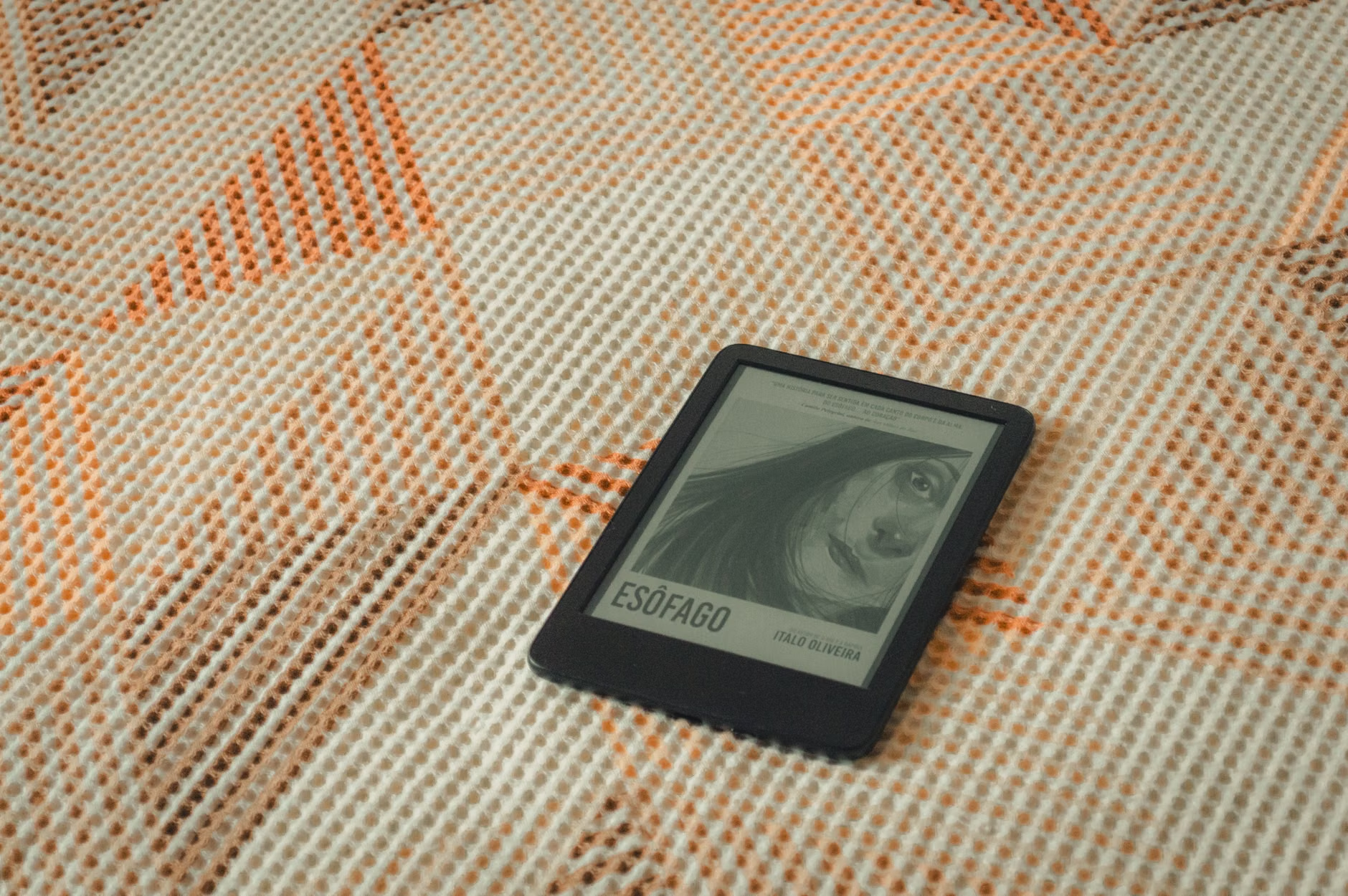
E-Ink, or electronic paper, works differently. It consists of millions of tiny microcapsules filled with positively charged white particles and negatively charged black particles. When an electric charge is applied, these particles move to the surface of the screen to form text. Once the image is formed, the screen requires no power to maintain it. It relies on reflected ambient light, just like a physical book. This is the primary reason why reading on an E-Ink device feels “calmer” to the eyes.
| Feature | Smartphone/Tablet (LCD/OLED) | E-Ink Reader |
|---|---|---|
| Light Source | Direct (Backlit) | Reflective (Front-lit or ambient) |
| Refresh Rate | High (60Hz+) | Low (Static) |
| Distraction Level | High (Notifications, Apps) | Near-Zero |
| Battery Life | Hours to a day | Weeks |
When you are choosing a device, consider your primary use case. If you need to read academic papers, professional journals, or long-form industry analysis, the E-Ink reader is superior. If you are consuming interactive multimedia or need to respond to emails in real-time, it is not a replacement for your laptop or phone—it is a companion device for deep work.
Real-Life Integration: Building a “Deep Reading” Ritual
For those of us juggling a career and family, the biggest hurdle to reading is not a lack of interest; it is the lack of a dedicated time and space. An E-Ink reader is a portable ritual. Because the device is lightweight and has a battery that lasts for weeks, you can keep it in your bag as a “portable library.”
Consider the “15-minute commute” or the “waiting room” scenario. Instead of opening a news app to doom-scroll, you pull out your E-Ink reader. Because the device is already on the page where you left off, you are instantly back in the flow. This reduces the friction of starting a task. If you are a parent, using an E-Ink reader in the evening instead of a phone also sets a better example for children. They see you engaging with long-form content rather than mindlessly swiping, which is a subtle but powerful signal about the value of sustained attention.
Common Mistake: Many people treat their E-Ink reader like a tablet, cluttering it with hundreds of books they “intend” to read. This creates a “paradox of choice” that leads to procrastination. Instead, treat your reader like a focused workspace. Limit the number of active documents or books on the device to a maximum of three at any given time. This creates a sense of completion and encourages you to finish what you start.
Not all E-Ink devices are created equal. When shopping in the current market, look for three specific technical criteria that affect your daily experience:
- Screen Resolution (DPI): Aim for at least 300 PPI (pixels per inch). This ensures that text looks crisp and resembles high-quality print, which is crucial for preventing eye fatigue.
- Front-Light Technology: While E-Ink uses reflected light, modern devices include “warm light” front-lighting. This allows you to adjust the color temperature from a cool blue-white to a warm amber. If you read before bed, the warm setting is essential to avoid blue light exposure.
- File Compatibility: If you are reading professional PDFs, look for devices that offer “reflow” capabilities or landscape mode optimization. Managing large PDFs on a small screen can be frustrating, so prioritize devices with a larger screen size (e.g., 8 inches or higher) if you work primarily with technical manuals or complex reports.
The Hidden Costs and Trade-offs
It is important to be realistic about what an E-Ink reader cannot do. If your workflow requires high-speed navigation through color-coded charts, massive spreadsheets, or video-based training, E-Ink will likely frustrate you. The ghosting effect—where faint traces of previous pages remain—is a limitation of the hardware. While software improvements have mitigated this significantly, it is not a replacement for a high-performance monitor.
Furthermore, there is the issue of “device fatigue.” In our 30s and 40s, we are already managing multiple screens. Adding another device to your inventory means another item to charge, update, and protect. However, the trade-off is the quality of your focus. If you find that your current screen-based reading is yielding poor comprehension or high stress, the “cost” of the device is easily offset by the gain in professional output and mental clarity.
Actionable Steps to Reclaim Your Focus
If you decide to invest in an E-Ink reader, follow this three-step implementation plan to ensure it becomes a tool for productivity rather than another gadget in your drawer:
- The Digital Cleanup: Use a tool like “Pocket” or “Instapaper” to aggregate long-form articles from the web. Sync these to your E-Ink reader so you have a curated list of high-quality reading material waiting for you, rather than a disorganized pile of browser tabs.
- The “No-Notification” Zone: Keep the device in “Airplane Mode” by default. This is the most critical step. By physically removing the ability for the device to connect to the internet, you remove the temptation to check emails or slack messages.
- The Review Cycle: Once a week, spend 10 minutes cleaning up your device. Delete the books you have finished and the articles you no longer care about. A clean, uncluttered library screen makes it much easier to pick up the device and start reading.
The Role of E-Ink in Professional Development
For professionals in their 30s and 40s, staying competitive requires the constant synthesis of new information. Whether it is keeping up with industry trends, reading white papers, or studying new management frameworks, the ability to digest long-form information is a competitive advantage. The distraction-free nature of E-Ink allows you to move from “skimming” to “deep reading.”
When you skim, you lose the nuance. When you read deeply, you gain the ability to synthesize ideas—a skill that becomes increasingly important as you move into senior roles. By dedicating your E-Ink reader to “high-value” content, you are essentially training your brain to prioritize depth over breadth. This habit, over the course of a year, can be the difference between a superficial understanding of your field and a deep, intuitive mastery.
Addressing Common Concerns
A frequent question is whether an E-Ink reader is worth the investment compared to just printing out documents. While printing is the gold standard for focus, it is environmentally wasteful and physically cumbersome for travel or long-term storage. An E-Ink reader provides the “focus” of paper with the “convenience” of digital storage. It is the middle ground that solves the logistics problem without sacrificing the cognitive benefit.
Also, consider the longevity of the hardware. Unlike a smartphone, which often feels slow after two or three years of software updates, an E-Ink reader’s primary function—displaying text—rarely changes. A well-maintained device can easily last five to seven years, making it a highly sustainable investment in your professional toolkit.
Final Thoughts on Sustaining Your Attention
The challenge of our era is not a lack of information, but the erosion of our ability to engage with it. For the busy parent or the career-focused professional, an E-Ink reader is not just a piece of technology; it is a boundary. It is a way of telling yourself that your time is valuable and that your focus is worth protecting.
Start by identifying the one or two areas of your professional or personal life where you feel you are “skimming” too much. Perhaps it is the industry reports you never quite finish, or the books you buy but never open. Move those to an E-Ink device and commit to reading them in a space where your phone is not allowed. You will likely find that your retention improves, your stress levels decrease, and you finally start finishing the things you start.
For further reading on the impact of screen technology on cognitive function, you may find the following resources helpful:
- Nature: The impact of digital media on the human brain
- American Psychological Association: Digital Wellbeing and Cognitive Load
Frequently Asked Questions
- Does an E-Ink reader help with eye strain if I wear glasses? Yes. Because E-Ink does not emit blue light, it reduces the glare that often exacerbates eye strain for those who already wear corrective lenses. It provides a more natural, paper-like contrast that is easier for the eyes to process during long sessions.
- Can I use an E-Ink reader for my child’s schoolwork? Absolutely. It is an excellent tool for children to read digital versions of school assignments without the distractions of games or videos. It encourages a focus on the text, which can be particularly helpful for building reading stamina in students.
- Is it hard to transfer files to an E-Ink reader? Most modern devices use simple drag-and-drop methods via USB or cloud-based apps. Many also support email-to-device features, where you can send a document to a specific email address, and it automatically appears on your reader.
Note: This article provides general guidance based on current technology trends. Always verify specific device features against the manufacturer’s official specifications before making a purchase, as software and hardware capabilities can vary by model and region.
Taking control of your focus is a deliberate act. Whether you choose a high-end tablet or a budget-friendly reader, the goal remains the same: to create a space for your mind to thrive amidst the noise of modern life. Start small, keep it simple, and prioritize the quality of your attention above all else.