The “Right-to-Disconnect” isn’t just a trendy labor policy—it’s the legal recognition that your time outside of working hours belongs to you, not your employer. If you’ve ever felt that phantom vibration in your pocket while trying to help your kids with homework or finish a meal, you know the struggle of the “always-on” culture. While laws are shifting globally to protect your downtime, the real power to disconnect still rests in your daily habits and communication strategies.
Three Things You Need to Know About Disconnecting
- Legislation is localized: Laws like Australia’s or France’s “Right to Disconnect” provide a legal shield, but they rarely mean you can ignore emergencies; they target systemic, constant after-hours contact.
- Boundaries require design: If you don’t explicitly define your “offline” hours, your brain will default to checking emails, which creates a habit of stress that is hard to break.
- The “Wait-to-Send” strategy: You can still work when it suits you, but use scheduling tools to ensure your output only reaches colleagues during their actual working hours.

What the Right-to-Disconnect Actually Means for You
For those of us juggling careers, school drop-offs, and household management, the boundary between “home” and “office” has become dangerously porous. The “Right-to-Disconnect” is a policy movement designed to stop the expectation that employees must be available 24/7. It isn’t a law that says you can never answer a phone; it’s a law that says you shouldn’t be penalized for not answering.
In countries like France, which pioneered this approach in 2017, companies with more than 50 employees are required to negotiate the terms of this “right.” More recently, countries like Australia have introduced similar measures. But here is the catch: these laws are often about preventing a toxic culture of overtime. They are not designed to stop you from working late if you choose to, but rather to stop your manager from demanding it as a standard operating procedure.
If you live in a region without these specific labor protections, you are effectively a “remote freelancer” in your own home. You have to be your own HR department. This means you must treat your off-hours with the same professional rigor you apply to your project deadlines. If you don’t define when the workday ends, your employer—wittingly or not—will continue to expand it until it consumes your personal time.
Why Your Brain Needs a Hard Stop
The “always-on” work culture isn’t just annoying; it’s neurologically taxing. When you are constantly scanning for notifications, your brain stays in a state of “vigilance.” This is the same stress response you’d have if you were walking through a forest at night, listening for predators. In the modern office, the “predator” is an urgent Slack message or a late-night email that requires an immediate response.
For parents in their 30s and 40s, this is particularly damaging. When your attention is split between a child’s story and a work notification, you aren’t fully present in either. This leads to “attention residue”—a concept where your brain remains preoccupied with the previous task while trying to focus on the current one. Over time, this makes you less productive at work and less engaged at home.
To combat this, you need to implement a “shutdown ritual.” This doesn’t have to be complex. It could be as simple as closing your laptop, clearing your desk, and physically walking away from your workspace. If you work from a kitchen table, pack your laptop away in a bag. The act of hiding the “work” from your sight is a powerful psychological cue that tells your brain, “The shift is over.”
The Practical Guide to Setting Boundaries
Setting boundaries is often terrifying because we fear being seen as “uncommitted” or “lazy.” However, the most successful professionals I’ve researched are often the ones who are the most rigid about their time. They understand that their value is in their output, not their availability.
1. Use the “Wait-to-Send” Feature
If you are a night owl and do your best work after the kids go to bed, that is fine. But do not hit “Send” at 10:00 PM. If you send an email at night, you are training your colleagues to expect responses at night. Use the “Schedule Send” feature in Gmail, Outlook, or Slack to have your messages arrive at 8:30 AM the next morning. This preserves your flexibility without creating a culture of urgency.
2. The “Communication Charter”
If you are a manager or a team lead, you have the power to set the tone for your entire group. Create a simple document that outlines how your team communicates. For example: “We use Slack for quick, non-urgent questions, email for formal documentation, and the phone only for genuine, time-sensitive emergencies.” When everyone knows the rules, the stress of constant monitoring disappears.
3. Digital Hygiene
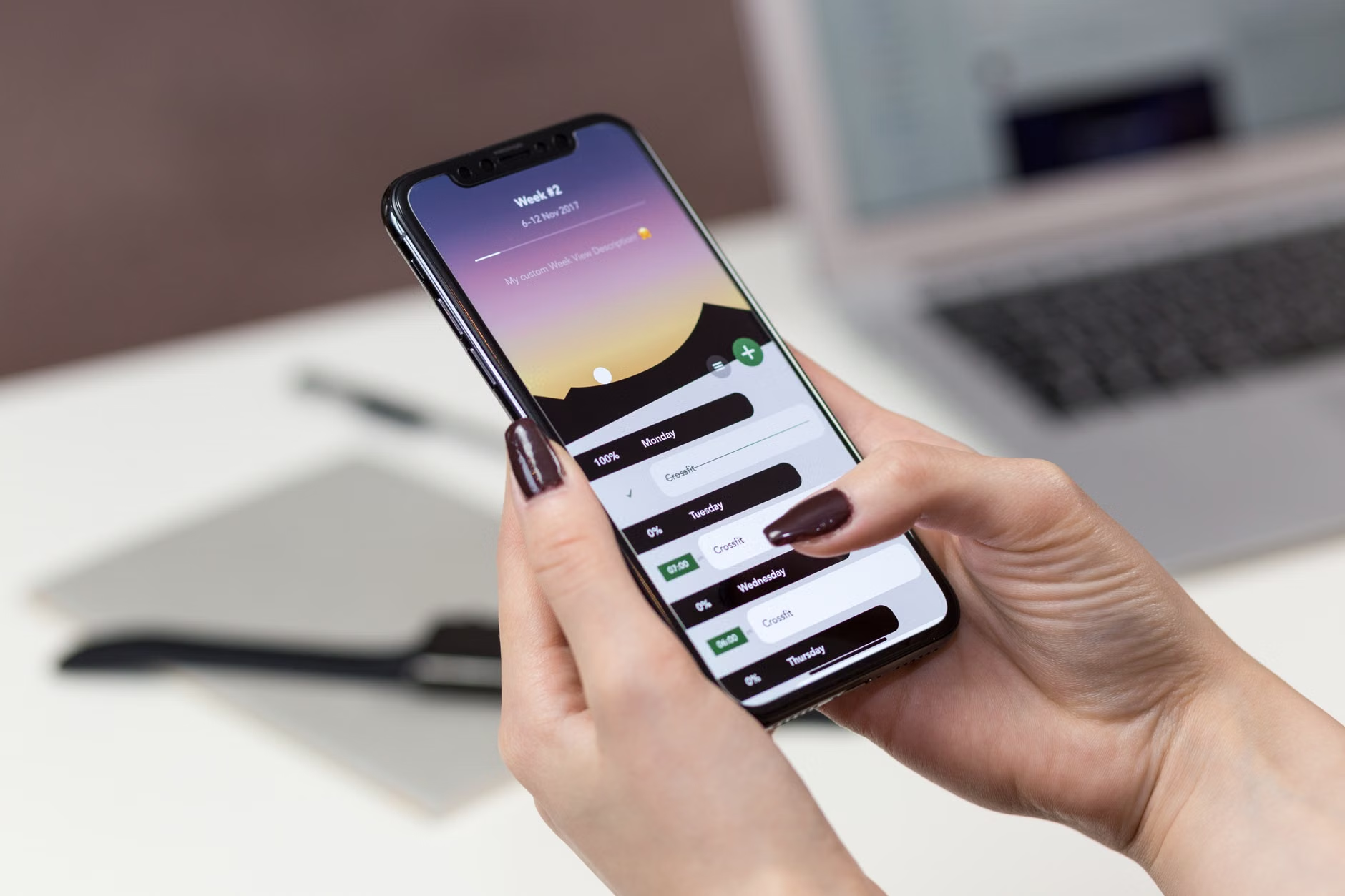
Most modern phones have “Focus” or “Work” modes. Configure these so that work-related apps are hidden or silenced once your workday ends. If you must have work email on your phone, move it to a folder that isn’t on your home screen. If you have to dig through three menus to find your email, you’ll be much less likely to check it while you’re trying to watch a movie or play with your kids.
Common Mistakes That Keep You “On”
Even with the best intentions, we often sabotage our own downtime. Here are three common traps to avoid:
| The Mistake | The Consequence | The Fix |
|---|---|---|
| “Just checking” | You see an email that requires thought, and you start “mentally working.” | Turn off notifications entirely after 6:00 PM. If it’s a true emergency, they will call. |
| The “Slack” addiction | Constant pings keep your brain in a state of high alert. | Use status indicators. Set your status to “Offline” and trust that people will respect it. |
| The “Always-Available” persona | You reply instantly to everything, signaling that you are always free. | Wait at least 30-60 minutes to respond to non-urgent requests. |
The biggest mistake is thinking that being “responsive” equals being “valuable.” In reality, being responsive to every ping just makes you an expensive notification-clearing machine. Your value to your employer comes from your ability to deliver high-quality work, solve problems, and lead projects. If you are burned out, you cannot do those things effectively.
Managing Expectations with Your Employer
If you work in a high-pressure environment, you might feel that you don’t have the “luxury” of disconnecting. This is a valid concern, but it’s often based on a misunderstanding of how communication works. Most people don’t actually expect an immediate reply; they just want to get the thought out of their head and onto your screen.
When you start setting boundaries, do it clearly and professionally. You don’t need to apologize for not being available. Instead, frame it as a strategy for better work. For example, say: “I’m going to be offline from 7:00 PM to 7:00 AM to focus on my family. If there is a genuine emergency, please call me, but otherwise, I’ll be back to everything first thing in the morning.”
Most reasonable managers will respect this. If they don’t, you have a management problem, not a productivity problem. In that case, start documenting the expectations. If your company culture demands 24/7 availability, you need to decide if that aligns with your long-term goals for your health and your family life. Sometimes, the most important career move is realizing that the culture you are in isn’t sustainable.
The Hidden Costs of Always Being “On”
We often talk about “burnout,” but we rarely talk about the specific costs of the “always-on” lifestyle on our personal identity. When your work life bleeds into every hour of your day, your sense of self begins to shrink. You stop being a parent, a hobbyist, or a person with interests, and you start being an employee who happens to live in a house.
This is a subtle, creeping loss. You might find yourself losing interest in books, exercise, or simple conversation because your mental bandwidth is entirely occupied by work. This isn’t just about “time management”; it’s about “energy management.” You only have a limited amount of high-quality cognitive energy each day. If you spend it all on work emails at 9:00 PM, you have nothing left for the people who matter most to you.
The Right-to-Disconnect isn’t just about labor laws; it’s about protecting your humanity. It is about acknowledging that you are a multifaceted person, not just a unit of production. By drawing a hard line, you aren’t being “less productive”—you are being more intentional about how you use your limited human resources.

Step-by-Step: How to Reclaim Your Evening
If you are ready to make a change, start with these four steps. Don’t try to do them all at once; pick one and stick to it for a week.
Step 1: The “Digital Sunset”
Pick a time—say, 8:00 PM—where you commit to turning off all work-related devices. No exceptions. If you need to check the weather or read a book, use a device that doesn’t have your work email account on it.
Step 2: Communicate the Change
Tell your team what you are doing. You don’t need to make it a big deal. Just mention: “I’m trying to be more focused in the evenings, so I’ll be offline after 8:00 PM from now on.” You’ll be surprised how many people say, “That’s a great idea, I should do that too.”
Step 3: Audit Your Notifications
Go into your phone’s settings. Which apps are actually “work” apps? Disable their notifications for the evening. If you need to see them, you should have to actively open the app. The “push” notification is the enemy of your peace of mind.
Step 4: The “Emergency” Protocol
Define what an emergency actually is. Is a typo in a slide deck an emergency? No. Is a server crash that takes down the entire company an emergency? Yes. If you have a clear definition of an emergency, you won’t feel guilty about ignoring everything else.
The Reality of Cultural Shifts
We are currently in a transition phase. For decades, the “hustle” was glorified, and being the last one to leave the office was a badge of honor. Now, the tide is turning. We are realizing that the “hustle” was actually just a slow-burn recipe for unhappiness. The Right-to-Disconnect is the formalization of this realization.
However, laws only set the floor, not the ceiling. You can still choose to be a person who values their time. You can choose to be a person who is fully present for their children. You can choose to be a person who rests. These choices are yours to make, regardless of what your local labor laws say.
Remember that your employer is renting your time, not buying your life. The value you provide is your expertise, your creativity, and your effort during the hours you have agreed to work. Once those hours are done, you are free. If you find yourself struggling to make that transition, don’t blame yourself. It’s a hard habit to break. But keep practicing. The more you reclaim your time, the more you will realize how much you were missing.
Final Thoughts
The goal of disconnecting isn’t to be “anti-work”—it’s to be “pro-life.” You want to be a great employee, but you also want to be a great partner, a great parent, and a healthy individual. These things are not mutually exclusive; in fact, they are mutually reinforcing. When you rest well, you work better. When you work better, you feel more confident in setting boundaries. It is a virtuous cycle.
Start small. Turn off one notification. Schedule one email. Close your laptop ten minutes earlier than usual. You will find that the world does not end, your career does not implode, and your life actually begins to feel like your own again. And really, isn’t that the whole point?
Frequently Asked Questions
- What if I am in a leadership position and I need to check in?
Leadership is about modeling behavior. If you check in at 10:00 PM, your team will feel pressured to do the same. If you absolutely must work late, use “Schedule Send” for your communications. Your team will respect your leadership more if you show them that it’s possible to have a life outside of work. - How do I handle clients who expect 24/7 access?
Set expectations early. During the onboarding process, clarify your working hours. If a client expects 24/7 access, they need to pay a premium for “on-call” support. If they aren’t paying for it, they aren’t entitled to it. Most clients will respect a clear, professional boundary. - Does the Right-to-Disconnect apply to remote workers specifically?
While the laws vary by region, they generally apply to all employees. However, remote workers are at higher risk because their home is their office. If you work from home, you have to be even more vigilant about creating physical and psychological barriers between your work and your personal life.
For further reading on labor rights and workplace policies, you can consult your local government’s labor department website or the International Labour Organization (ILO) for global standards on working time and rest periods.
Note: This article is for informational purposes and does not constitute legal advice. Labor laws vary significantly by country and specific employment contract. Always check your local regulations and your specific company handbook.