The core of modern education has shifted from the textbook to the algorithm, and if that algorithm is biased, your child’s potential might be unfairly capped before they even finish their homework. Algorithmic equity is the standard ensuring that educational AI treats every student fairly, regardless of their zip code, language nuances, or cultural background.
Key Takeaways:
- Bias is baked into data: Educational AI often learns from historical data that contains human prejudices, which can lead to “adaptive learning” paths that pigeonhole students based on demographics rather than ability.
- The ‘Invisible Tutor’ effect: Algorithms act as gatekeepers, deciding which students get advanced material and which are stuck in remedial loops, often without teachers or parents realizing the criteria being used.
- Advocacy is essential: Parents must move beyond checking screen time to auditing the *quality* and *fairness* of the software schools adopt, demanding transparency from EdTech providers.
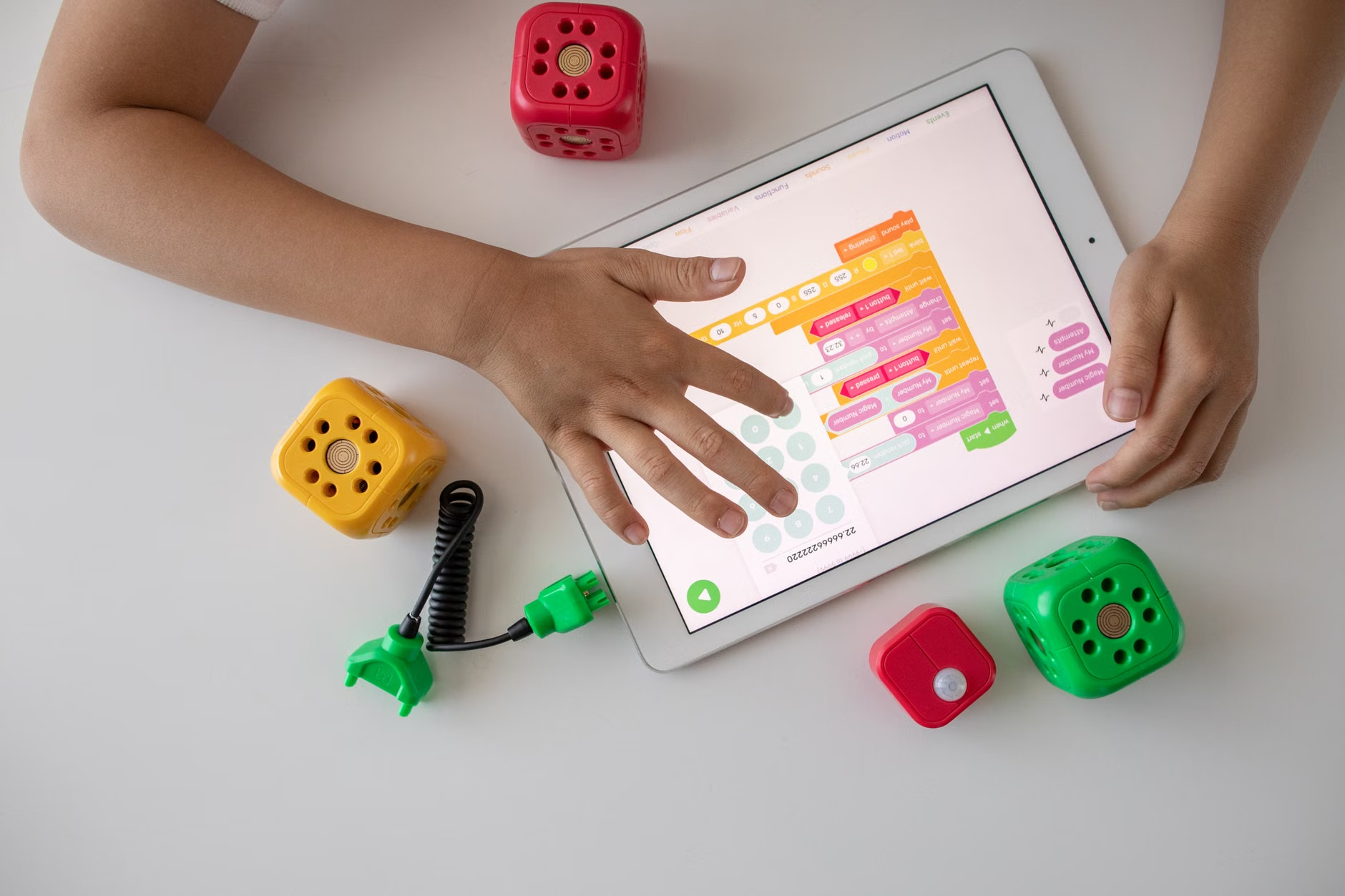
If you’ve watched your seven-year-old navigate a math app lately, you’ve seen the “Invisible Tutor” in action. The app notices they struggled with fractions, so it serves up more practice. On the surface, it’s brilliant. It’s personalized. It’s efficient. But as parents in our 30s and 40s—the generation that grew up alongside the internet—we know that “personalized” is often code for “profiled.”
The term “algorithmic equity” sounds like something for a Silicon Valley boardroom, but it’s actually a kitchen-table issue. It’s about whether the software your child uses to learn to read or calculate is making assumptions about them that aren’t true. Is the AI penalizing a student because they use regional slang? Is it assuming a child is “behind” because their home internet is slower, causing lag in their response times? These aren’t hypothetical glitches; they are the new frontiers of educational fairness.
Why Your Child’s Learning App Might Have a “Blind Spot”
Algorithms aren’t born; they are raised. They are “trained” on massive datasets. If an AI that grades essays is trained primarily on papers written by students in affluent, English-speaking suburbs, it might struggle to understand the brilliant but differently-structured essay of a student from a different cultural background. This is where the inequity starts.
Think of it like a GPS for education. If the map only shows paved highways, the kid who lives on a scenic backroad is going to be marked as “lost” by the system. In digital education, this looks like predictive profiling. If an algorithm decides a child is likely to struggle based on early data points, it might stop showing them challenging material. This creates a self-fulfilling prophecy where the child never catches up because the machine decided they couldn’t.
The “Cultural Context” Gap:
Many educational apps are developed in specific tech hubs. A word problem about a “subway schedule” might be intuitive for a kid in New York or London, but for a child in a rural area or a country without underground rail, the cognitive load is spent figuring out what a subway is rather than solving the math. A “smart” algorithm might interpret that delay as a lack of mathematical proficiency. This is a classic example of how a lack of equity in design leads to a lack of equity in outcomes.
The Shift from Hardware Access to Algorithmic Access
For years, we talked about the “Digital Divide” as a matter of who has a laptop and who doesn’t. While that’s still a massive issue globally, a new divide has emerged: The Quality of the Algorithm.
In wealthier school districts, AI is often used as a supplement to high-touch human instruction. In underfunded districts, AI is sometimes used as a replacement for teachers, where the algorithm becomes the primary instructor. When the “tutor” is a black-box algorithm with no human to override its mistakes, the stakes for equity become sky-high. We aren’t just talking about a grade; we’re talking about the fundamental trajectory of a child’s confidence and opportunity.
| Feature | Old School Digital (Static) | AI-Driven (Current) | Equitable AI (The Goal) |
|---|---|---|---|
| Content Delivery | Same for everyone. | Changes based on speed/accuracy. | Adapts to learning style and cultural context. |
| Data Usage | Minimal (scores only). | Heavy (clicks, time, eye-tracking). | Transparent, privacy-first, bias-checked. |
| Human Oversight | Teacher leads. | Algorithm leads; Teacher monitors. | Teacher-AI partnership with manual overrides. |
The table above illustrates the transition we are currently in. Most schools are in the middle column. The danger of the “AI-Driven” phase is that we trust the data because it looks “objective,” forgetting that the data was generated by humans with their own biases.
The Hidden Cost of “Personalized Learning” and Data Privacy
As parents, we often trade privacy for convenience. We let the app track our kid’s progress because we want that weekly email report. But the “algorithmic” part of equity involves asking: Where does that data go, and how is it being used to judge my child later?
In many jurisdictions, student data is protected by laws like COPPA (USA) or GDPR (Europe). However, these laws often focus on *identity* protection (keeping the name and address safe) rather than *reputational* protection. If an algorithm labels a child as “low-performing” in the third grade, does that label follow them in the school’s database? Does it influence the “recommendations” the system makes to their high school counselor five years later?
The “Feedback Loop” Trap:
One of the most significant risks in non-equitable algorithms is the feedback loop.
1. The AI observes a student struggling.
2. The AI assumes the student has low potential.
3. The AI provides simplified, repetitive content.
4. The student gets bored and disengages.
5. The AI records the disengagement as further proof of low potential.
Breaking this loop requires Human-in-the-Loop (HITL) systems. This means the algorithm shouldn’t have the final say. There must be a clear pathway for a teacher or parent to say, “The machine is wrong here; my child needs a challenge, not more drills.”

Global Perspectives: How Different Regions Tackle AI Fairness
The fight for algorithmic equity looks different depending on where you live. Because our audience is global, it’s important to see how different regions are setting the rules of the game.
The European Approach: Regulation First
The European Union’s AI Act is a pioneer here. It classifies AI used in education and vocational training as “high-risk.” This means companies can’t just release an app and hope for the best. They must meet strict requirements for data quality, transparency, and human oversight. For a parent in Berlin or Paris, this provides a legal safety net that ensures the “black box” isn’t quite so dark.
The North American Approach: The Patchwork Quilt
In the United States and Canada, the approach is more fragmented. While there are federal guidelines, much of the heavy lifting is done at the state or provincial level. Some states have robust student privacy laws, while others are essentially the “Wild West.” Parents here often have to be more proactive, checking the specific Privacy and Equity policies of the EdTech vendors their local school board signs contracts with.
The Asian Tech Boom: Efficiency vs. Equity
In countries like China, South Korea, and Singapore, AI integration in education is incredibly high-speed. “Smart Classrooms” use everything from facial recognition to track focus to AI that grades complex essays. While this drives massive efficiency and high test scores, the conversation around “equity” is often focused on closing the rural-urban gap. The challenge here is ensuring that the drive for high performance doesn’t leave behind students who don’t fit the “standard” high-achiever mold.
What You Can Do: A Parent’s “Audit” for School Apps
You don’t need a degree in computer science to advocate for your child. You just need to ask the right questions. When the school introduces a new digital learning platform, consider this your checklist:
- Is the “Leveling” Transparent? Ask the teacher: “How does the app decide when my child moves up or down a level? Is it just based on speed, or does it account for different ways of solving a problem?”
- Can the Teacher Override the AI? Ensure the teacher has the power to manually adjust the curriculum if the algorithm gets stuck in a loop.
- What is the “Training Data” Source? This is a tougher one, but you can ask if the company has an “Equity and Inclusion” statement. Reputable companies will be proud to show how they’ve tested their AI on diverse groups of students.
- Check the “Engagement” Metrics: If an app tracks “time on task,” ask how it handles kids with ADHD or those who simply think more deeply (and thus more slowly) before clicking.
A Realistic Scenario:
Imagine your child is using a language app. They are bilingual, often translating concepts between two languages in their head. This takes an extra 2 seconds. A biased algorithm might flag this as “hesitation” and lower their “fluency score.” As a parent, if you notice your child getting frustrated with “easy” content despite their skill, this is your cue to step in. The “hesitation” isn’t a lack of knowledge; it’s a sign of a more complex cognitive process that the algorithm isn’t sophisticated enough to reward.

The Future: Moving Toward “Equity by Design”
The goal isn’t to get rid of AI in education. When done right, AI can be the greatest equalizer in history. It can provide a high-quality tutor to a child in a remote village who otherwise wouldn’t have access to specialized teachers. It can translate lessons in real-time for refugee children. It can provide specialized support for neurodivergent learners that a single teacher in a room of 30 kids simply can’t manage.
But this only happens if we demand Equity by Design. This means that fairness isn’t an afterthought or a “patch” applied later; it’s the foundation of the code. It means developers include diverse educators, sociologists, and parents in the room when the software is being built.
Decision Rule: When to Support an EdTech Tool
If you are choosing an app for home use or voting on a school’s tech budget, use this simple rule: Does this tool provide “Actionable Insights” for the human, or does it make “Final Decisions” for the child?
– Support: Tools that highlight a student’s specific struggle areas so a teacher/parent can help.
– Skepticism: Tools that automatically sort students into “tracks” or “levels” with no clear explanation or human off-ramp.
Final Thoughts for the Modern Parent
We are the first generation of parents raising “AI Natives.” Our kids won’t remember a time when a computer didn’t try to “help” them learn. This gives us a unique responsibility. We aren’t just protecting their eyes from too much blue light; we are protecting their minds from being unfairly categorized by a machine that doesn’t know their heart, their humor, or their heritage.
Algorithmic equity isn’t about giving every child the same thing; it’s about making sure the digital tools we use give every child what they need to succeed. It’s about ensuring the “Invisible Tutor” is as fair, patient, and unbiased as the best human teacher we ever had.
Your next action: The next time you see your child using an educational app, sit with them for 15 minutes. Don’t just watch them play—watch how the app responds to their mistakes. If it feels like the app is “giving up” on them too easily or getting stuck, it’s time to have a conversation with their teacher about algorithmic fairness.
For further reading on official standards and research, you can explore these resources:
- UNESCO: Recommendation on the Ethics of Artificial Intelligence
- European Commission: The AI Act
- U.S. Department of Education: Office of Educational Technology – AI and the Future of Learning
Frequently Asked Questions
1. How can I tell if my child’s school app is biased?
Look for “stuck patterns.” If your child is performing well in real-life conversations or paper-based tests but the app keeps them in a “remedial” level, there may be a mismatch in how the algorithm measures success. Also, check if the app’s examples and stories reflect a variety of cultures and backgrounds.
2. Does “Algorithmic Equity” mean my child will be held back to help others?
Not at all. Equity is about *accuracy*. It ensures that high-achieving students are identified correctly and challenged, while students who learn differently aren’t mislabeled as “low-ability.” It’s about making the “ceiling” higher for everyone by removing artificial barriers built into the code.
3. Are free educational apps more likely to be biased than paid ones?
Not necessarily, but there is a correlation. Developing unbiased, high-equity AI requires significant investment in diverse data and testing. “Free” apps often monetize through data collection, which can prioritize engagement (keeping the kid clicking) over actual equitable learning outcomes. Always read the “Data Privacy” and “About Us” sections of free apps.
Stay curious, stay involved, and remember: you are the most important “algorithm” in your child’s life.
— SoCooly