The most effective way to force a modern family to actually talk to each other is to move them at exactly four miles per hour on a vessel that requires manual labor to get through a gate. A canal boat circuit isn’t just a holiday; it is a physical intervention for the over-scheduled, digitally-fatigued parent.
Key Takeaways:
- No license is required: In the UK and most of Europe, you can captain a 70-foot boat after a 45-minute handover, as the top speed is capped at a walking pace.
- Circuits beat linear routes: Choosing a “Ring” route (like the Cheshire Ring) ensures you never see the same scenery twice and eliminates the stress of turning a long boat around in tight spaces.
- It is the ultimate “active” rest: While the boat moves slowly, the physical task of operating locks and steering provides a satisfying focus that clears mental clutter better than sitting on a beach.
If you are in your 30s or 40s, your life is likely a series of high-speed transitions. You transition from the school run to a Zoom call, from a grocery dash to a bedtime routine. The idea of a “slow adventure” might sound like a marketing gimmick, but on a canal boat, “slow” is the only setting available. You cannot go faster. If you try, the bow wave will damage the banks, and seasoned boaters will—quite rightly—shout at you. This forced deceleration is exactly why this specific type of travel is surging in popularity among parents who feel like they are constantly racing a clock they can’t win against.
But let’s be real: the prospect of helming a 20-ton steel tube through a 7-foot-wide stone bridge with your children on board sounds less like a vacation and more like a stress test. This guide is designed to dismantle that anxiety and show you how to navigate the “Slow-Adventure” circuit without losing your cool or your deposit.
The Mechanics of Moving at a Walking Pace
The first thing you need to understand is that a narrowboat (or a penichette in France) is essentially a floating apartment that handles like a shopping trolley on ice. You steer from the back (the stern) using a tiller. If you want to go left, you push the tiller right. It’s counter-intuitive for about the first twenty minutes, and then it becomes second nature. The real challenge isn’t the steering; it’s the momentum. Steel boats do not have brakes. To stop, you have to put the engine into reverse, and even then, physics takes a few seconds to agree with your decision.
Why does this matter for a parent? Because it turns the journey into a team sport. Unlike a car trip where the kids are strapped into the back watching tablets, a canal boat requires “crew.” Someone needs to watch for oncoming boats, someone needs to prep the center line for mooring, and everyone needs to be eyes-up when approaching a lock. For kids aged seven and up, this is the first time they might feel genuinely useful on a family trip. They aren’t just passengers; they are deckhands.
The “circuit” or “ring” is the gold standard of canal travel. In the UK, these are interconnected loops of different canals. A linear route requires you to reach a certain point, find a “winding hole” (a wide part of the canal), turn the boat around, and see everything in reverse. A circuit, however, provides a continuous narrative. You start at point A, travel through a variety of landscapes—from industrial heritage sites to deep forest—and arrive back at point A a week later without ever repeating a mile.
The Reality of the “Handover”
Most international travelers worry about the lack of a captain’s license. When you arrive at the marina, a staff member will spend about an hour with you. They will show you how to check the oil, how to turn on the water pump, and how to navigate a lock. The most important rule they will tell you is to stay in the middle of the channel. Canals are often shaped like a saucer; if you get too close to the edge, you will run aground in the mud. If this happens, you don’t call emergency services; you grab a long wooden pole from the roof and push yourself off. It’s a low-stakes crisis that usually ends in a family laugh rather than a call to the insurance company.
Choosing Your Circuit: UK vs. Mainland Europe
Where you choose to go depends entirely on what kind of “slow” you want. The experience in the UK is vastly different from that in France or the Netherlands. Here is a breakdown of the most popular circuits for families.
| Region | Circuit Name | Vibe | Difficulty Level |
|---|---|---|---|
| UK (Midlands) | The Cheshire Ring | Urban grit meets rolling hills. Includes the famous Anderton Boat Lift. | High (92 locks in 97 miles) |
| UK (Wales/England) | The Llangollen Canal | Breathtaking. Crosses the Pontcysyllte Aqueduct (126ft in the air). | Medium (Few locks, but narrow channels) |
| France (South) | Canal du Midi | Wine country, plane trees, and sun. Very relaxed pace. | Low (Automated or lock-keeper managed) |
| Netherlands | Friesland Circuits | Windmills, wide lakes, and very easy mooring in town centers. | Low (Very few locks, mostly lifting bridges) |
The Cheshire Ring is for the family that wants to feel like they’ve achieved something. It takes about a week of 7-hour days to complete. You’ll pass through the heart of Manchester—which is surprisingly beautiful from the water—and then out into the Peak District. The trade-off is the lock count. 92 locks mean you will be physically tired at the end of the day. If your goal is to drink wine on the deck while the world drifts by, this is not the route for you.
For the “wine on deck” experience, the Canal du Midi is the undisputed king. Built in the 17th century, it is a UNESCO World Heritage site. The locks here are often operated by lock-keepers, meaning you don’t have to jump off and do the heavy lifting yourself. It’s much hotter, the boats (penichettes) are generally wider and more “plastic” than the steel UK narrowboats, and the focus is on gastronomy and history rather than the technicality of boating.
The Lock System: Where the Adventure (and the Arguments) Happen
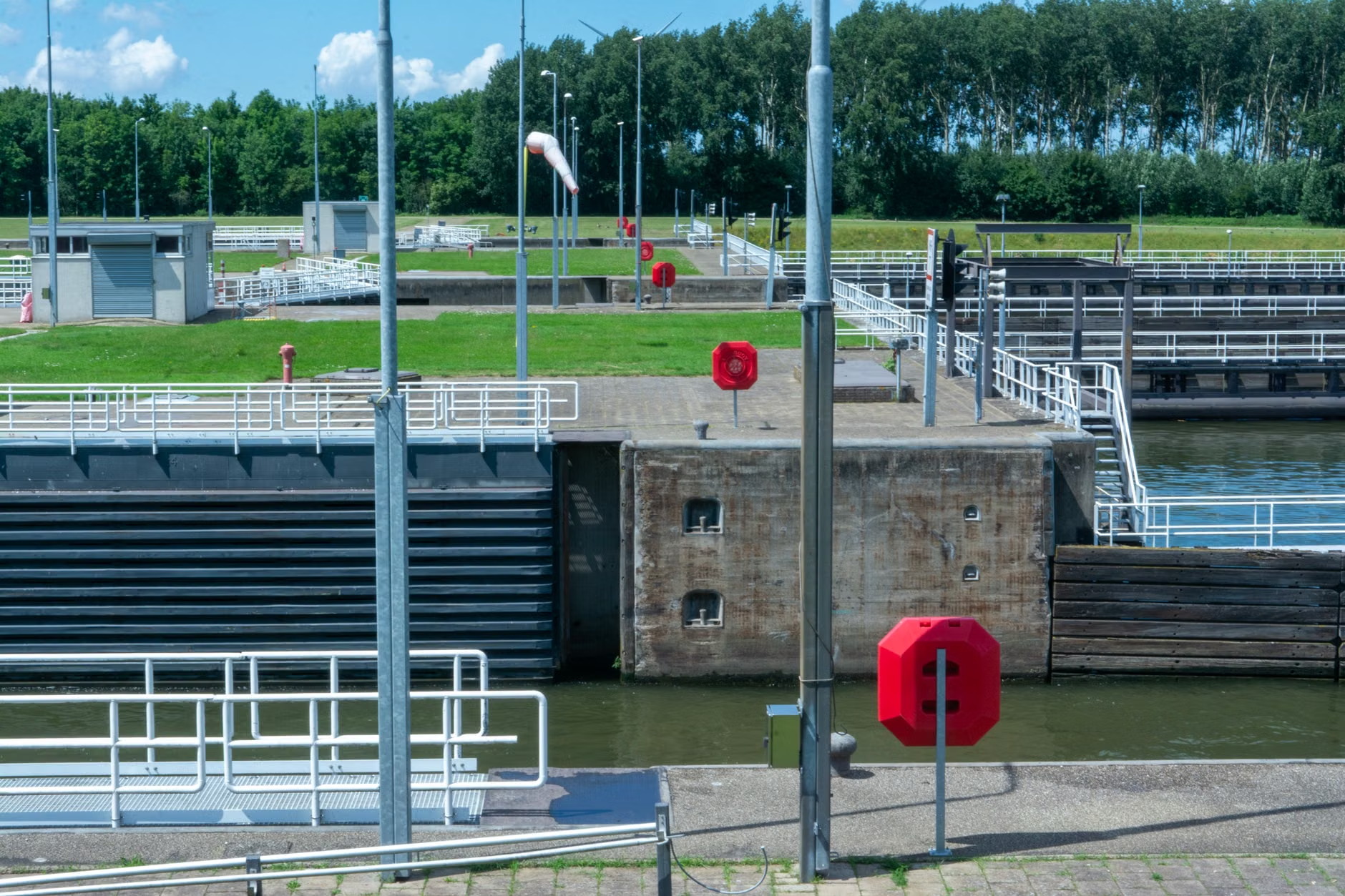
Locks are the elevators of the canal world. They allow boats to travel uphill and downhill. To a newcomer, they look like medieval torture devices involving heavy iron “paddles” and massive wooden beams. In reality, they are a masterclass in 18th-century engineering that still works perfectly today.
The process is simple:
- You drive the boat into the stone chamber.
- You close the gates behind you.
- You open the “paddles” (small underwater doors) to let water in or out.
- The boat rises or falls.
- You open the front gates and drive out.
The “SoCooly” Insight: The lock is where the “community” of the canal happens. You will almost always find a “gongoozler”—a local person who stands on the bridge just to watch boats go through. More importantly, you will meet other boaters. Because you are all moving at the same speed, you’ll likely see the same three boats for several days. This is where your kids will make “canal friends” at the towpath, and you’ll find yourself exchanging tips on which pub has the best garden three miles ahead.
Common Mistake: Rushing the lock. If you open the paddles too quickly, the rush of water can toss the boat around like a toy. The key is “slow and steady.” If you have small children (under 5), they should stay in the “cratch” (the front cockpit) or inside the cabin while the boat is in the lock. For older kids, the task of turning the windlass (the key that opens the paddles) is a badge of honor. It requires some muscle, but it’s incredibly satisfying.
Living in a 7-Foot Wide Corridor
Modern narrowboats are surprisingly luxurious, but they are still narrow. You are essentially living in a hallway. Most rental boats for families come with a full kitchen (galley), a shower, a flushing toilet, and central heating. However, the resources are finite. You have a water tank that needs refilling every two days at designated water points. You have a battery bank that charges while the engine runs. If you sit moored for two days and try to run a high-powered gaming laptop, you will wake up in the dark.
Managing the “Parental Load” on Board
On a normal holiday, “doing nothing” is the goal. On a boat, “doing nothing” is impossible, and that’s actually the secret to its success. There is always a small task: checking the weed hatch (to make sure no plastic bags are caught in the propeller), tidying the ropes, or planning the next water stop. This keeps the “parental brain” occupied in a way that feels like a hobby rather than a chore.
The “No-Go” Items: Do not bring hair dryers, straighteners, or electric kettles unless the boat specifically has an “inverter” of high capacity. Most boaters use a whistling kettle on the gas hob. Embrace the “boater hair”—a combination of wind-swept and “I haven’t looked in a full-length mirror in four days.” It’s liberating.
The Grocery Strategy: One of the joys of a circuit is “mooring up” outside a supermarket. In many UK towns, the canal runs right behind major stores. You can literally park your house, walk 50 yards, fill a trolley, and load it directly into your kitchen. No parking stress, no carrying bags across a hot parking lot.
Safety and the “Overboard” Anxiety
The number one question parents ask is: “Will my child fall in?” The answer is: maybe, but the canal is rarely more than four feet deep, and the boat is moving at 3mph. It’s not a high-seas thriller; it’s a slow-motion splash. However, safety is paramount.
The Lifejacket Rule: Any child under 12 (and any non-swimmer) should wear a lifejacket whenever they are on the deck or the towpath near the boat. Most rental companies provide these. Make it a non-negotiable rule from the moment you step on the boat. If the lifejacket is on, they can be outside. If it’s off, they are in the cabin.
The “Propeller” Rule: The most dangerous part of the boat is the propeller at the back. Never, ever let anyone swim near the back of the boat, even if the engine is in neutral. If someone does fall in, the first move is always the same: Neutral. Stop the spinning blades first, then worry about the rescue.
The Hidden Costs of the Slow Adventure
While the rental price is your biggest outlay, there are a few “hidden” variables that catch international travelers off guard. Unlike a rental car, you don’t just return it with a full tank of gas.
- Fuel Deposit: You usually pay a deposit (around £100-£150) upfront. At the end of the trip, the marina measures how much diesel you used and either refunds the difference or charges more.
- Pump-out Fees: If you are on a two-week trip, your “black water” (toilet) tank will get full. You have to pay at a marina for a “pump-out,” which costs roughly £20-£30.
- Mooring Fees: Most canal-side mooring in the UK is free. You just hammered your metal stakes (pins) into the grass and tie up. However, in popular spots or private marinas, you might pay £10-£20 a night for the privilege of a power hookup and a secure gate.
- Damage Waiver: Always pay the optional non-refundable damage waiver. Narrowboats are made of steel, but the chimneys, fenders, and paintwork are fragile. A single low bridge can knock a chimney off, and that waiver will save you hundreds.
The “SoCooly” Decision Matrix: Is This For You?
Before you book that flight to Manchester or Toulouse, ask yourself these three questions. If you answer “No” to any of them, you might prefer a traditional cottage rental.
- Can you handle “Low-Stance” Problem Solving? If the water pressure drops, you need to be okay with poking around a pump or realizing you just need to refill the tank. If you need a concierge to fix every minor hiccup, the DIY nature of boating will frustrate you.
- Are you okay with “Close Quarters”? You will be sleeping in bunks or narrow doubles. You will hear every cough and whisper from the next cabin. For some families, this is “cozy bonding”; for others, it’s a recipe for a mid-week meltdown.
- Do you actually want to disconnect? While many boats now have Wi-Fi, the signal in deep canal cuttings is notoriously bad. This is a feature, not a bug. If your job requires you to be “on-call” with high-speed video, you will find the canal a very stressful place to work.
How to Plan Your First Circuit
If you’re ready to take the plunge, start with a mid-week or weekend break rather than a full 14-day expedition. Many marinas offer “taster” sessions. For a first-timer, I recommend the Llangollen Canal. It’s technically a “there and back” rather than a circuit, but it is the most beautiful stretch of water in the world. It has very few locks, meaning you can focus on steering and enjoying the view without the physical exhaustion of 20 locks a day.
If you are set on a circuit, the Four Counties Ring in the UK is the “Goldilocks” choice. It’s challenging enough to feel like an adventure but has enough service points and easy stretches to keep it manageable for a family. It takes about 10 days at a relaxed pace or 7 days if you’re ambitious.
The “Slow-Adventure” isn’t about the destination. In fact, most of the towns you pass through are places you’d never think to visit otherwise. It’s about the rhythm of the water, the sound of the diesel engine (a low, rhythmic thrum that acts like a sedative for stressed adults), and the simple satisfaction of getting a 70-foot boat through a 7-foot gap. It is the only holiday where I have returned feeling like my brain has been physically reset.
Official Resources for Planning:
- Canal & River Trust (UK) – Official Holiday Guide
- Voies Navigables de France (VNF) – French Waterways Authority
- The Inland Waterways Association
Frequently Asked Questions
1. Do I need to be physically fit to operate the locks?
You don’t need to be an athlete, but you do need “functional fitness.” Opening a lock gate requires leaning your weight against a wooden beam. Winding the paddles requires some arm strength. If you can walk three miles and carry a heavy grocery bag, you can handle a canal holiday. If you have back issues, ensure you have a “crew” who can do the heavy lifting while you stay at the tiller.
2. What happens if I get stuck or the engine breaks down?
Rental companies provide 24/7 breakdown assistance. Because the canal network is a closed system, they can usually get a mechanic to you by road within a couple of hours. Most “breakdowns” are actually just something caught in the propeller (like a discarded rug or thick weeds). The handover will teach you how to clear the “weed hatch” yourself, which solves 90% of issues.
3. Can we travel at night?
No. Hire boat insurance strictly forbids cruising after dark. Navigation lights are rarely fitted to narrowboats, and the risk of hitting a submerged object or a moored boat is too high. The “boater’s day” typically starts at 8:00 AM and ends at dusk, usually followed by a walk to a nearby pub or a quiet dinner on the towpath.
The canal is waiting. It’s the only place where being “slow” is the ultimate flex. Stop racing, start floating, and remember: if you’re hitting the bank, you’re just giving the boat a hug. (But maybe try not to do it too hard.)