Key Takeaways:
- The 18-Month Rule: Most specialized nursery furniture becomes redundant by the time a child reaches 18 months; swapping allows you to offload gear before it becomes clutter.
- The Financial Pivot: By participating in community-swap circles, you can reduce your nursery equipment budget by up to 60% compared to buying new retail items.
- Safety First: Swapping requires a rigorous inspection protocol, specifically checking for recall status via official government databases before any exchange occurs.
The most expensive furniture in your house is likely the stuff your child uses for the shortest amount of time. If you have ever looked at a pristine, barely-used changing table or a bassinet that served its purpose for exactly four months and felt a pang of regret, you aren’t alone. The “Community-Swap” model—essentially a localized circular economy for nursery gear—is the most effective way to stop the cycle of buying, storing, and eventually landfilling expensive baby equipment.
For parents in their 30s and 40s, life is already a balancing act of career, childcare, and basic household management. Adding the burden of sourcing, assembling, and disposing of bulky furniture is a tax on your limited time. This guide explores how to transition to a rotation-based system, why it is financially superior, and how to execute it without compromising on safety or aesthetic standards.
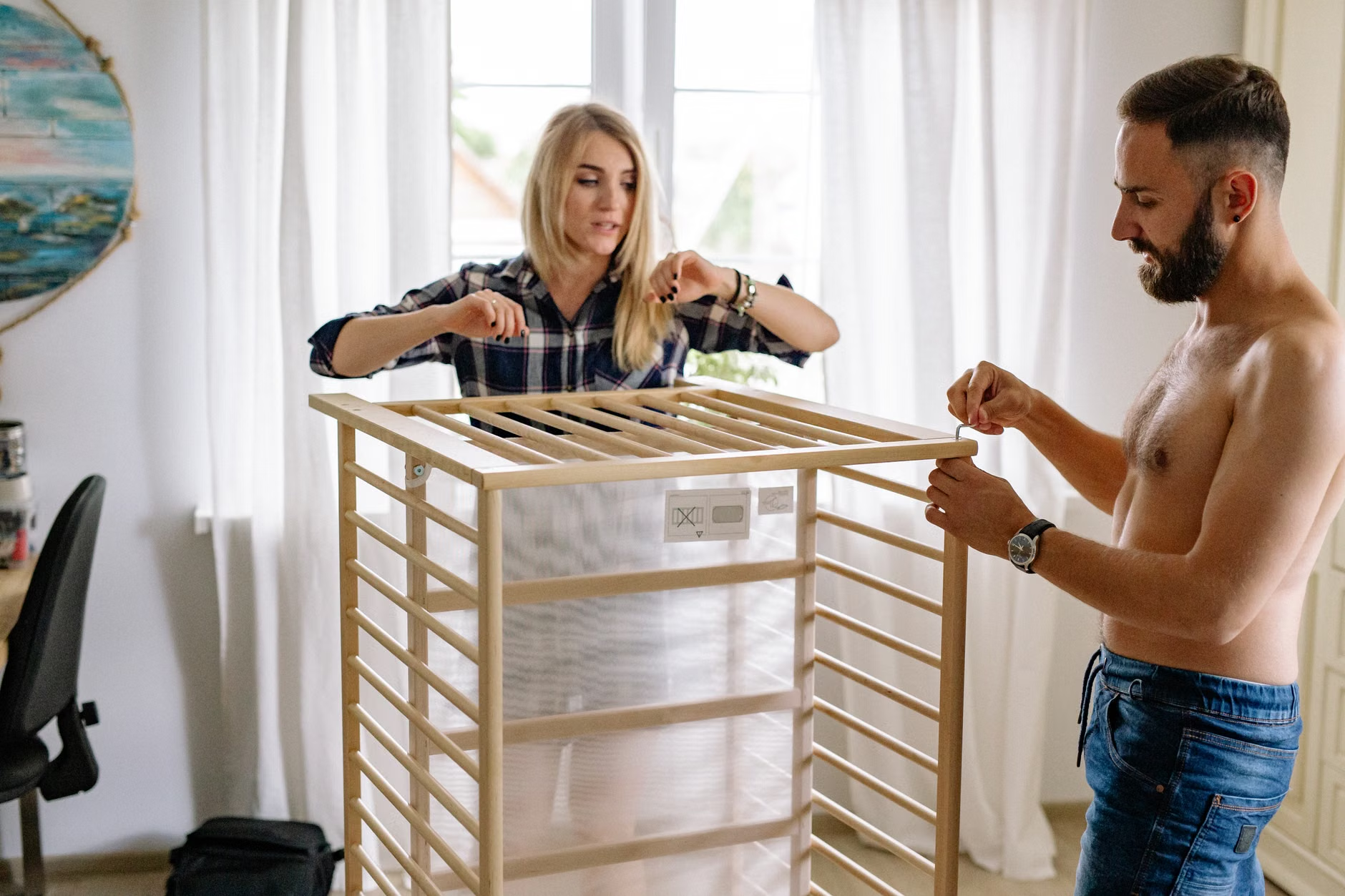
The Economic Reality of Nursery Depreciation
When we talk about nursery furniture, we are often talking about “single-phase” items. A bassinet, a co-sleeper, or a specific type of changing table has a very narrow window of utility. In the retail market, these items suffer from rapid depreciation. Once the box is opened and the item is assembled, its resale value often drops by 40% to 50% immediately. If you buy new, you are effectively paying for the privilege of being the first owner of an object that will be obsolete in under a year.
The “Community-Swap” strategy shifts the focus from ownership to access. By joining or forming a local network of parents with children of slightly different ages, you create a pipeline of equipment. When your child outgrows a piece of furniture, it moves to the next family in the chain, and you receive the next “phase” of furniture you need. This is not just about saving money; it is about reclaiming the square footage in your home that would otherwise be occupied by storage boxes filled with disassembled cribs.
Calculating the Hidden Costs of Ownership
To understand why this matters, look at the “hidden costs” beyond the initial purchase price:
- Storage Opportunity Cost: Storing a crib in a garage or basement costs money in terms of lost space. If you are paying for off-site storage, that crib is costing you monthly rent.
- Disposal Effort: Selling large items on secondary markets is time-consuming. You have to clean, photograph, list, and negotiate with buyers.
- Maintenance and Repair: Low-quality flat-pack furniture often fails after one assembly-disassembly cycle. Investing in high-quality items via a swap network ensures that the furniture is built to last through multiple families.
Establishing a Reliable Swap Network
You cannot simply swap with strangers without a framework. The most successful community-swap groups operate on a “trust-but-verify” model. To start or join a circle, you need a group of 3 to 5 families whose children are spaced out by 6 to 12 months. This staggering ensures that when one family is finished with a bassinet, another family is just about to need it.
The logistics are simple: keep a shared digital document (a basic spreadsheet or a pinned chat message) that lists the current inventory and who currently holds each piece. The most important rule is the “Clean and Inspect” policy. Every time an item changes hands, it must be deep-cleaned and inspected for structural integrity. If a screw is missing or a joint is loose, the current holder is responsible for sourcing the replacement part before passing it on.

The Three-Step Verification Protocol
Before any item enters your home from a swap network, perform these three checks:
- Recall Check: Visit the official government portal for your region (e.g., CPSC.gov in the United States or GOV.UK in the UK) and search the specific model number. Never skip this.
- Structural Integrity Test: Shake the frame. If it wobbles, it is not safe. Check the hardware; if it is rusted or stripped, do not accept the item.
- Surface Hygiene: Wipe down all surfaces with non-toxic, baby-safe cleaners. If the item has fabric components, ensure they have been machine-washed in hypoallergenic detergent.
Why Modular Furniture is the Gold Standard for Swapping
Not all furniture is created equal when it comes to rotation. You should prioritize “modular” or “convertible” designs. A crib that converts into a toddler bed, or a high chair that adjusts from an infant recliner to a full-size chair, is infinitely more valuable in a swap network because it stays in the rotation for years rather than months.
When evaluating furniture for your rotation, look for brands that offer replacement parts. If a piece of furniture is proprietary—meaning it uses custom-sized screws or brackets that are no longer manufactured—it is a liability. You want items that use standard hardware. If a bolt goes missing during a move between families, you should be able to walk into any hardware store and find a replacement for a few cents.
Comparison: New Retail vs. Community-Swap
| Factor | New Retail Purchase | Community-Swap Model |
|---|---|---|
| Upfront Cost | High ($300 – $800 per item) | Low (or zero, if reciprocal) |
| Lifespan Usage | Short (months) | Long (years across multiple families) |
| Storage Burden | Owner’s responsibility | Distributed across the group |
| Environmental Impact | High (manufacturing/shipping) | Low (reuse/circularity) |
The table above highlights that the primary benefit is not just the financial saving. It is the reduction of the environmental and spatial footprint. When you participate in a swap, you are essentially “leasing” the item for its most useful period. Once that period ends, you are liberated from the responsibility of disposing of it.
Managing the Logistics: A Practical Workflow
The biggest failure point in any swap network is the “handover.” Without a clear process, items sit in garages, get lost, or become damaged. Treat your swap network like a small-scale library. Use a simple app or a shared note to track the “loan” status of each item.
Step-by-Step Rotation Guide:
- Inventory Day: Once every quarter, the group meets to update the master list. Who is done with what? Who needs what?
- The Buffer Period: Always build in a 2-week buffer when passing items. If Family A is done with the crib, they have two weeks to clean it and coordinate a drop-off with Family B.
- The “Damage Fund”: It is wise for each participating family to contribute a small, symbolic amount (e.g., $20) into a shared pot. This fund is used to buy replacement hardware or minor repair parts for any gear in the rotation.

Common Mistakes to Avoid
One common mistake is “hoarding for the next.” Many parents feel they need to keep everything just in case they have another child. While this is understandable, it often leads to a nursery that is filled with gear the child is no longer using, which creates clutter and stress. If you are planning for another child in the future, check your timeline. If that future child is more than two years away, it is usually better to let the item rotate out and find a replacement when the time comes. Technology and safety standards evolve; a crib that is five years old might be perfectly fine, but a car seat (which should never be swapped) or a complex electronic swing might be outdated or nearing its expiration date.
Remember: Safety standards change. While wooden furniture is generally timeless, anything with electronics or complex folding mechanisms should be scrutinized against the latest safety guidelines. Never swap car seats. These are safety-critical items that have expiration dates and a “one-crash” rule. Always buy car seats new to ensure you know their entire history.
Advanced Insights: The Psychology of Minimalist Parenting
There is a hidden psychological benefit to the swap model: it helps you practice minimalism. When you know that an item doesn’t “belong” to you forever, you treat it with a different kind of care. You view it as a tool rather than a possession. This shift in mindset can reduce the “consumerist itch”—the urge to buy the latest, trendiest nursery gear that social media algorithms constantly push toward new parents.
By relying on your community, you also build stronger ties with other parents in your area. This is an overlooked variable in parenting success. Having a network of people who understand exactly what you are going through—and who are sharing the same equipment—creates a support system that goes beyond just furniture. You are building a village, one piece of gear at a time.
Hidden Costs and Trade-offs
Are there downsides? Yes. You have to communicate. You have to be reliable. If you are the person who forgets to clean the high chair before handing it over, the network will dissolve. The swap model requires a level of accountability that buying new does not. However, the trade-off is the development of a reliable community network and a significant reduction in your household waste. For most parents in their 30s and 40s, this trade is entirely worth it.
Another trade-off is aesthetic uniformity. You might not get the exact “Instagram-perfect” nursery if you are swapping items. You might end up with a crib from one brand and a changing table from another. If aesthetic consistency is your highest priority, the swap model might not be for you. But if you value functionality, sustainability, and financial efficiency, the swap model is the gold standard.
Implementing Your First Swap
If you are ready to start, do not overcomplicate it. Start with just two other families. You don’t need a massive organization. You need two other sets of parents who share your values regarding safety and cleanliness. Create a group chat, share a list of what you currently have, and start the conversation. You will be surprised at how many parents are looking for exactly the same thing—a way to declutter their homes and save money without sacrificing the quality of their child’s environment.
Be clear about expectations. Define what “clean” means to your group. Define how you will handle broken items. Define how long an item can be kept. Once these ground rules are set, the actual process of rotating furniture becomes a routine part of your life rather than a stressful project. You will find that you spend less time shopping for gear and more time actually engaging with your child.
Finally, remember that the goal of the nursery is not to create a showroom. It is to create a safe, functional space for your child to grow. By embracing the community-swap model, you are modeling a sustainable lifestyle for your children, showing them that objects can have multiple lives and that community matters more than constant consumption. This is a lesson that will serve them—and you—far better than any piece of mass-produced furniture ever could.
Frequently Asked Questions
1. Is it safe to swap used nursery furniture?
It is safe if you follow a strict protocol. Always check the model number against official government recall databases, inspect for loose hardware, and ensure the item meets current safety standards. Never swap items that have a safety-critical expiration date, such as car seats or sleep-surface components that may have degraded foam or fabric.
2. How do I handle furniture that gets damaged while in my possession?
Transparency is key. If an item is damaged while you are using it, inform the group immediately. Offer to pay for the repair or the replacement cost. Most groups have a “damage fund” for this exact purpose. Being honest and proactive maintains the trust that the entire system relies on.
3. What if I want to keep a piece of furniture longer than expected?
Communication is the solution. If your child is not yet ready to transition out of a crib, let the next family in line know as soon as possible. Most swap networks are flexible, provided that everyone is kept in the loop. The “swap” is a service to the community, not a rigid contract, but common courtesy requires giving the next person in line enough notice to find an alternative if you need to extend your hold.
For further information on product safety and recalls, consult the U.S. Consumer Product Safety Commission or your local national product safety authority.