Key Takeaways
- Prioritize “Slow Rail” over “Fast Transit”: Heritage-rail routes are about the journey, not the destination; allow for at least 30% more time than standard transit to account for photo stops and slower engine speeds.
- Strategic Seating is Non-Negotiable: Always book seats on the “ocean-side” of the carriage if possible, and verify the direction of travel to avoid facing backward for the entire trip.
- Manage the “Station Gap”: Heritage lines often depart from secondary stations; confirm the exact distance from the final arrival point to your accommodation to avoid expensive, last-minute taxi fees.
The most important thing to understand about heritage-rail coastal travel is that it is fundamentally an exercise in logistics-heavy leisure. If you try to treat a vintage steam locomotive or a preserved coastal line like a high-speed commuter train, you are going to end up stressed, hungry, and likely disappointed. These routes are designed for a different pace of life, often operating on tracks that haven’t been updated for speed since the mid-20th century. For those of us in our 30s and 40s balancing the logistics of parenting with the desire for a “real” vacation, the secret isn’t just picking the prettiest route—it’s managing the friction between the romanticism of the past and the practical demands of the present.

Why Heritage Rail Requires a Different Planning Mindset
When you book a ticket on a modern high-speed rail, you are paying for efficiency. When you book a heritage-rail route, you are paying for an experience. This distinction is the root of most travel planning failures. A heritage-rail route often involves older rolling stock, limited air conditioning, and a schedule that is frequently at the mercy of historic maintenance requirements. If you approach this with a “commuter mindset,” you will view every delay as a crisis. If you approach it with a “slow travel” mindset, you view the delay as more time to look at the coastline.
For parents, the biggest challenge is the environment. These trains are often smaller, louder, and less equipped with modern amenities like Wi-Fi or high-capacity power outlets. You need to transition from expecting the world to cater to your convenience to actively curating your own environment. This means bringing portable power banks, physical books for the kids, and anticipating that the “snack car” might be a tiny counter selling only basic refreshments, rather than a full-service dining carriage.
The Physics of Coastal Rail: Choosing the Right Side of the Train
There is a recurring frustration among travelers who spend four hours on a scenic coastal line only to realize they were staring at the inland hills the entire time. On heritage lines, the train configuration is rarely symmetrical in terms of views. Before you book, you must identify the geographical orientation of the track.
Decision Rule: If the route is a single-track line along a coastline, the train almost always has a “preferred” side. Check the railway’s official website or, better yet, look at user-submitted photos on travel forums to see which side faces the water. If you are booking a ticket where you cannot select a specific seat, arrive at the platform at least 45 minutes early. In the world of heritage rail, “open seating” is a competitive sport.
Consider the table below when evaluating your seating options:
| Seating Factor | Why It Matters | Actionable Strategy |
|---|---|---|
| View Direction | Coastal beauty is the primary ROI of the trip. | Use Google Earth to trace the rail line relative to the coastline. |
| Forward vs. Backward | Some passengers experience motion sickness on older, swaying carriages. | Confirm if the carriages are turned at the terminus or if they are “fixed” orientation. |
| Proximity to Steam/Engine | Noise and soot levels vary significantly by proximity to the locomotive. | Book middle-of-the-train carriages for a quieter, cleaner experience. |
Managing the “Last Mile” Problem with Kids in Tow
One of the most overlooked variables in heritage-rail planning is the final destination. Heritage lines often terminate at “heritage stations” or specialized depots that are not integrated into the modern metropolitan public transport network. You might find yourself dropped off in a beautiful, remote valley that is three miles from the nearest taxi rank or bus stop.
If you are traveling with children, the “last mile” is where the vacation can fall apart. Do not assume that an Uber or a local bus will be waiting for you at a historic station. Always pre-book your ground transportation for the moment of arrival. Many heritage stations operate in areas with poor mobile signal, making it nearly impossible to summon a ride-share app once you pull into the depot.
The Logistics of “Vintage Comfort”
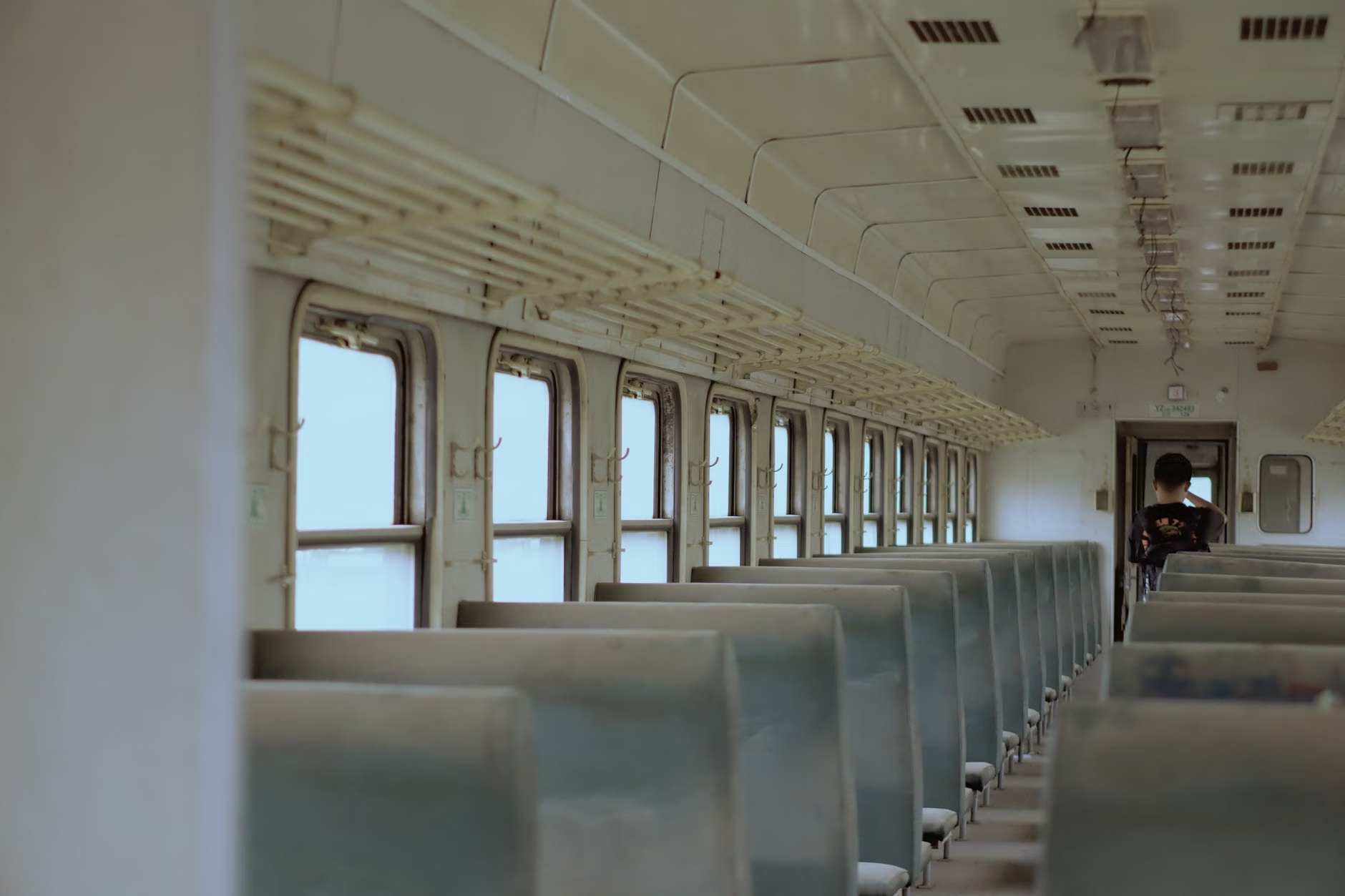
Heritage rail is not a luxury cruise. It is a historical experience. This means you should expect hard wooden seats, windows that may not seal perfectly, and potentially limited toilet facilities. For a parent, this requires a specific tactical approach to packing. You are essentially preparing for an outdoor excursion that happens to be indoors.
The “Heritage Pack” Checklist:
- Noise-Canceling Headphones: Older trains are significantly louder than modern electric trains. This is essential for children who might find the engine noise overstimulating.
- Layered Clothing: Heritage carriages often have inconsistent heating and cooling. You might be freezing in a tunnel and sweating in the sun. Think in terms of base layers that can be shed or added in seconds.
- Physical Entertainment: Do not rely on streaming services. The coastal terrain often creates “dead zones” for cellular data, and the lack of power outlets means your tablet battery will die faster than you expect.
- Snack Sovereignty: Never assume the train will have food you or your children will eat. Bring a cooler bag with enough supplies for the entire duration of the trip, plus a two-hour buffer for unexpected delays.
Common Misconceptions: Speed, Punctuality, and Frequency
There is a persistent myth that because a route is a “railway,” it functions like a metro system. This is fundamentally untrue for heritage coastal lines. These lines are often run by volunteers or private trusts, and their primary function is heritage preservation, not commuter transport. This means they operate on “seasonal schedules.”
A common mistake is assuming that a line running every day in July will be running in November. In many regions, particularly in the Northern Hemisphere, heritage lines shut down completely or operate on a skeleton schedule during the off-season. Always check the official website for the specific railway trust, not a third-party aggregator. Aggregator sites are notoriously bad at updating seasonal schedule changes, which can lead to you showing up at a locked, empty station.
How to Evaluate a Route’s “Coastal Worthiness”
Not all coastal lines are created equal. Some offer a fleeting glimpse of the sea, while others run directly along a cliff edge. To determine if a route is worth your family’s time and money, you need to look beyond the marketing photos. Use satellite view on map services to trace the actual line.
If the track is separated from the water by a dense line of trees or a highway for more than 50% of the journey, you are essentially paying to ride a train through a forest with occasional views. For families, the “boredom threshold” is key. A three-hour ride with 30 minutes of actual coastal view will be a struggle for younger children. A two-hour ride with 90 minutes of constant ocean views is a success. Choose the latter, even if it is shorter.
The Hidden Costs of Heritage Travel
When budgeting, don’t just look at the ticket price. Heritage rail travel is an “add-on” heavy industry. You will frequently encounter costs that aren’t immediately obvious:
- Station Parking: Heritage stations in popular tourist areas often charge premium rates for parking, sometimes exceeding the cost of the train tickets themselves.
- “Experience” Upgrades: Many lines offer “First Class” or “Dining Car” upgrades. While these sound fancy, evaluate if they are truly necessary for a 90-minute trip. Often, the standard carriage offers the exact same view for a fraction of the cost.
- Last-Minute Logistics: As mentioned, the need for pre-booked private transfers from remote stations is a hidden cost that can add 20-30% to your total transit budget.
Designing Your Itinerary: A Step-by-Step Framework
If you are serious about planning a successful trip, follow this sequence to minimize risk and maximize enjoyment:
- Verify the Seasonality: Visit the official website of the railway operator. Do not trust third-party travel blogs for current schedules.
- Map the Track: Use satellite imagery to confirm the actual proximity of the tracks to the water. Look for physical barriers like tunnels or dense woodland that might obscure the view.
- Secure the “Golden Seat”: Once you have decided on a date, book as far in advance as possible to ensure you get a seat on the correct side of the train.
- Plan the “Last Mile”: Identify exactly how you are getting from the destination station to your next point of interest. If you need a taxi, find a local company and call them in advance.
- Audit Your Gear: Pack the “Heritage Pack” (headphones, snacks, power banks, physical books) at least 24 hours before departure.
Refining the Experience: A Note on Expectations
The beauty of heritage rail is its imperfection. You might hear the whistle, you might smell the coal smoke (if it’s a steam train), and you might feel the vibration of the track. If you are the type of person who needs perfect punctuality and modern convenience, this type of travel will frustrate you. If you are the type of person who values a unique, tactile connection to history—and you have planned for the logistical hurdles—it will be one of the most memorable experiences your family has.
The goal isn’t to reach the destination as quickly as possible. The goal is to exist in a space where time feels like it has slowed down. By handling the logistics beforehand, you free yourself up to actually enjoy that feeling, rather than worrying about where the next meal is coming from or how you’re going to get to your hotel.
Frequently Asked Questions
Is it better to book a round-trip or a one-way heritage rail ticket?
For most heritage lines, a round-trip is the standard. However, if the line connects two distinct towns, a one-way trip followed by a local bus or a different train line back to your starting point can be a great way to see more of the region. Just ensure that the return transport is reliable and doesn’t require a long, uphill walk from the station.
Are heritage trains stroller-friendly?
Generally, no. Most heritage carriages have narrow doors, steep steps, and limited floor space. If you are traveling with a toddler, a high-quality baby carrier is a much better option than a stroller. If you must bring a stroller, call the station in advance to ask if they have a luggage/stroller storage area, as many historic carriages are not equipped to handle them.
What should I do if the weather forecast for my trip is poor?
Heritage rail is one of the few activities that remains enjoyable in bad weather. The sound of rain on the metal roof of a historic carriage and the atmospheric mist over the coast can be incredibly beautiful. Unless the weather is severe enough to cause a safety-related cancellation, embrace it. Just ensure you have appropriate rain gear for the “last mile” transit at your destination.
Ultimately, the success of your heritage-rail coastal adventure comes down to preparation. By respecting the age of the equipment and the limitations of the infrastructure, you move from being a stressed passenger to a savvy traveler. Take the time to map your route, secure your seating, and pack for the specific environment of a vintage carriage, and you will find that the journey becomes the highlight of your entire vacation.
Official guidance on historic rail safety and accessibility can often be found on national rail regulator websites, such as the Office of Rail and Road (ORR) for UK-based lines or equivalent national transport authorities in your specific region. Always check these resources if you have specific accessibility requirements.