The most effective way to manage a child’s wardrobe isn’t by buying better brands or catching seasonal sales, but by shifting entirely to a circular model where clothes circulate between families rather than ending up in a landfill. By prioritizing swapping and second-hand acquisition, you can reduce your annual clothing expenditure by up to 70% while simultaneously eliminating the “closet clutter” that plagues most households with growing children.
Three Key Takeaways for the Circular Wardrobe
- The 80/20 Rule of Growth: Children outgrow 80% of their wardrobe within six months; swapping eliminates the financial loss of these short-lifecycle items.
- Quality Over Quantity: A circular wardrobe relies on high-durability fabrics (organic cotton, wool, linen) that can withstand multiple owners, unlike fast-fashion polyester blends.
- The “In-Out” Protocol: For every item you bring into your child’s closet, one must be passed on, sold, or donated to maintain a zero-net-growth inventory.
The Hidden Cost of the “New Clothes” Habit
If you have spent any time in the parenting aisles of a department store, you know the frustration: you buy a pair of jeans, your toddler has a growth spurt, and six weeks later, the cuffs are halfway up their shins. It is not just the money; it is the mental load. We spend hours browsing, purchasing, washing, organizing, and eventually discarding clothes that were barely worn.
The traditional “linear” model of parenting—buy new, wear out, throw away—is fundamentally broken for children. According to the Ellen MacArthur Foundation, the fashion industry is responsible for significant global waste, and children’s wear is one of the fastest-moving segments. When we view clothes as disposable, we lose the incentive to care for them, creating a cycle of low-quality consumption that drains your bank account and clutters your home.
A circular wardrobe changes the objective. Instead of “owning” the clothes, you are essentially “leasing” them from the ecosystem of your community. When the item no longer fits, it moves to the next child. This isn’t just about charity or saving pennies; it is a logistical shift in how you manage your domestic life.
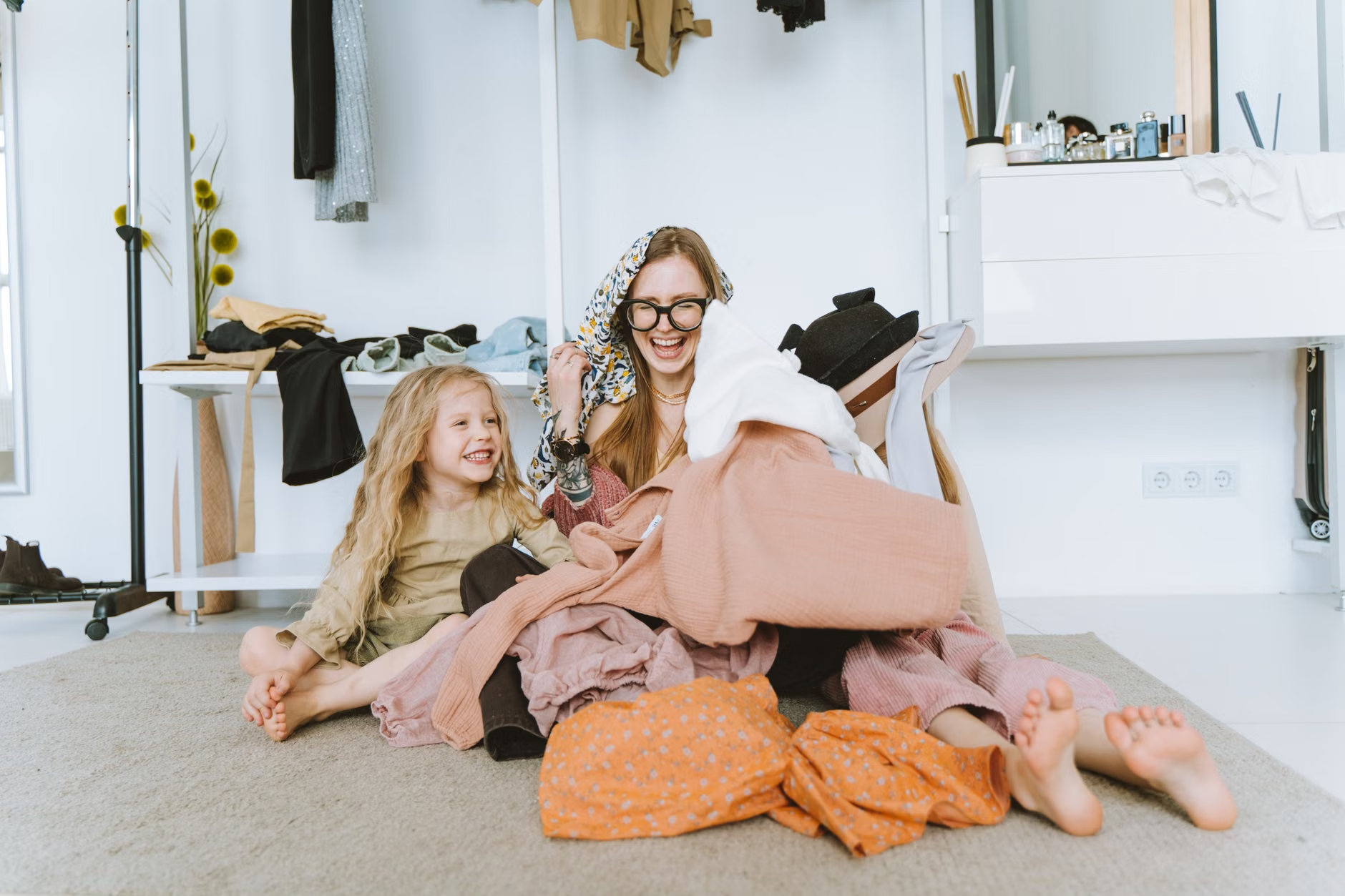
Why Swapping is Logistically Superior to Consignment
Many parents consider selling clothes on platforms like Vinted, Poshmark, or Depop. While this is better than the landfill, it is time-intensive. You have to photograph, list, answer questions, pack, and ship. For a parent in their 30s or 40s juggling a career and childcare, the “hourly rate” of selling a five-dollar shirt is effectively zero.
Swapping, by contrast, is a high-efficiency system. Whether you join a local neighborhood “moms swap” group on Facebook or use a dedicated circularity platform, the friction is lower. You exchange a bag of clothes that no longer fit for a bag of clothes that do. The transaction cost—the time and effort required—is significantly lower than individual retail sales.
The Decision Matrix: When to Buy, Swap, or Inherit
Not every item should be acquired the same way. The following table outlines how to optimize your acquisition strategy based on the item type and its role in a circular wardrobe.
| Item Category | Best Acquisition Method | Why? |
|---|---|---|
| Outerwear (Coats, Rain Gear) | Buy Quality / Inherit | High durability items retain value and safety features. |
| Everyday Basics (Tees, Leggings) | Swap / Second-hand | High turnover rate; quality is less critical than volume. |
| Footwear | Buy New (High Quality) | Foot health is non-negotiable; wear patterns affect development. |
| Formal/Occasion Wear | Borrow / Swap | Used once or twice; buying new is a waste of capital. |
When you look at this table, notice the emphasis on Footwear. This is a common misconception in the sustainable parenting community: that *everything* should be second-hand. However, experts in podiatry often suggest that shoes should be fitted to the individual child to prevent gait issues. This is a “hard constraint” of your circular wardrobe. Everything else, however, is fair game for the circular cycle.
Building Your Circular Infrastructure
To make the circular wardrobe work, you need to stop thinking about “clothes storage” and start thinking about “clothes throughput.” Most homes are designed for permanent storage—drawers and closets meant to hold years of inventory. This is your first mistake.
You need a “Transition Bin” system. Keep three clearly labeled bins in your child’s closet:
- The “In-Rotation” Bin: Currently fitting items.
- The “Next-Size” Bin: Items gifted or bought that are slightly too big.
- The “Out-Flow” Bin: Items that are now too small, ready to be swapped or passed on.
When the “Out-Flow” bin is full, that is your trigger to act. You do not store these items in the attic “just in case.” You move them out of the house immediately. This prevents the accumulation of “maybe later” items that eventually just become dust-collectors.
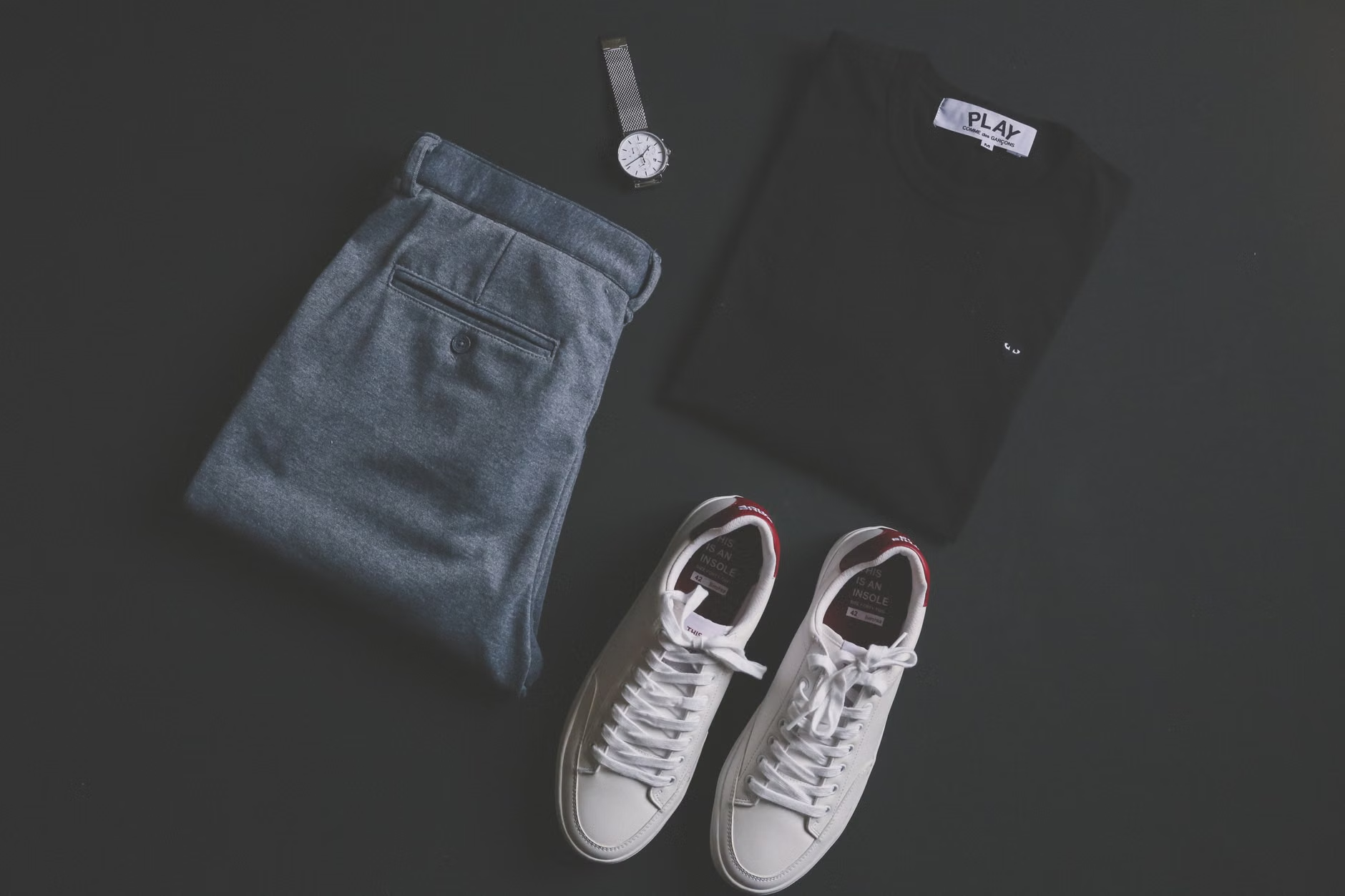
The Quality Threshold: How to Choose What to Keep
The biggest risk with swapping is acquiring low-quality, worn-out clothing. You want to avoid the “hand-me-down dump,” where a well-meaning friend passes on a bag of stained, pilled, or misshapen clothes that you feel obligated to keep but never use.
Establish a “three-point inspection” for any item entering your home:
- Fabric Integrity: Is the material natural (cotton, wool, linen) or synthetic (polyester, nylon)? Synthetic fabrics often hold odors and lose shape faster.
- Closure Function: Do the zippers, snaps, and buttons work perfectly? If a zipper is finicky, it will frustrate you every morning.
- Stain/Wear Assessment: Can you honestly see another child wearing this comfortably? If the answer is no, it belongs in a textile recycling program, not your child’s drawer.
If an item fails any of these, do not accept it. It is not rude to be selective; it is essential for the sustainability of your household. By maintaining a high standard, you ensure that the clothes you eventually pass on are also of high quality, which keeps the circular economy healthy.
Swapping with friends can be tricky. Money and “value” are involved, and it is easy for feelings to get hurt. To avoid this, formalize your swaps. Create a group chat or a shared spreadsheet if you have a tight-knit circle. The key is to remove the “gift” element. When you frame it as a favor, there is a debt of gratitude. When you frame it as a circular system, it is a neutral exchange of goods.
If you don’t have a local group, look for regional “Buy Nothing” projects or specialized platforms. The Buy Nothing Project is a global, hyper-local movement where neighbors exchange goods without money. It is a fantastic way to find high-quality items from families who live within walking distance, reducing the carbon footprint of shipping.

The Financial and Emotional ROI
Let’s talk about the math. If you spend an average of $800 per year on clothing for one child, and you successfully shift 75% of that to a circular model, you are looking at a direct savings of $600 annually. Over five years, that is $3,000. That is not just “pocket change”—that is a family vacation fund or a significant contribution to an education savings account.
Beyond the money, there is the cognitive load reduction. When you have a smaller, curated, circular wardrobe, your morning routine becomes faster. Your child has fewer choices, which reduces decision fatigue for them, and you have less laundry to sort, fold, and put away. You are essentially paying yourself in time.
Common Pitfalls and How to Avoid Them
The most common mistake parents make when transitioning to a circular wardrobe is “hoarding for the future.” You find a box of size 4 clothes, but your child is in size 2, so you store it in the basement for two years. By the time you need them, the clothes are either forgotten, damaged by moths or moisture, or simply not the style your child prefers at that age.
Rule of thumb: If you cannot use it within six months, do not store it. If you have a surplus of items in a size you don’t need yet, pass them on to someone who needs them *now*. Trust that when your child reaches that size, the circular economy will provide the items you need. Hoarding creates a “stagnant” wardrobe, which is the antithesis of a circular one.
When to Abandon the Circular Model
There are specific scenarios where the circular model might not be your best bet. If you live in a remote area with no access to local swap groups or reliable shipping, the logistics of a circular wardrobe can become more expensive (in time and fuel) than buying new, high-quality, long-lasting items. In this case, your best strategy is to buy fewer, higher-quality pieces that can be handed down to siblings or friends later. The goal is always to minimize the “buy-wear-toss” cycle, regardless of which path you take to get there.
Actionable Steps to Start Today
You don’t need to overhaul your entire life this afternoon. Start with one category. Choose “Pajamas” or “Summer Tees.”
- Audit: Pull everything out. Sort into “Keep,” “Pass-on,” and “Recycle.”
- Connect: Find one local parent who is at a similar stage of parenting. Propose a “swap bin” system.
- Commit: For the next month, vow to not buy any new clothing in that category. If you need something, check your swap partner first.
By taking these small steps, you are not just cleaning out a closet; you are participating in a larger, necessary shift in consumer culture. You are teaching your children that items have value beyond their purchase price and that stewardship of resources is a daily practice, not a theoretical concept.
The circular wardrobe is not a destination; it is a way of living. It is about choosing to be a custodian of items rather than a consumer of trends. It requires a bit more intentionality, but the payoff—in money, time, and environmental impact—is worth every bit of effort. Start small, be selective, and keep the cycle moving.
Frequently Asked Questions
Is it really sanitary to swap clothes for children?
Yes. Standard laundry practices are highly effective at sanitizing clothing. For peace of mind, ensure items are washed and dried on high heat before they enter your “In-Rotation” bin. If you are concerned about specific items like cloth diapers or items with persistent odors, it is perfectly acceptable to opt out of swapping those specific categories.
How do I handle “seasonal” gaps in a circular wardrobe?
The key is to plan one season ahead. If it is currently summer, you should be actively looking for winter gear in your swap groups. Because you are not paying retail prices, you have the flexibility to acquire items as they become available rather than having to purchase them at full price right when the temperature drops.
What if the clothes I get in a swap are not my child’s style?
Style preferences are a secondary concern compared to utility. However, you can manage this by being specific in your swap requests. Most parents are happy to trade specific items. If you end up with items that your child refuses to wear, simply put them back into your “Out-Flow” bin and pass them on to someone else. The beauty of the circular model is that nothing is “wasted” just because it didn’t work for you.
For further reading on the impact of textile waste and the benefits of a circular economy, consult the official resources provided by the Ellen MacArthur Foundation’s Fashion Initiative.