The most important takeaway for families and professionals in their 30s and 40s is that micro-communities aren’t just about downsizing your square footage; they are about trading excess private space for higher-quality, shared amenities that actually reduce your daily mental load.
Key Takeaways:
- The “Space-for-Service” Trade-off: You typically sacrifice 15-20% of your private living area in exchange for access to high-end shared facilities like professional-grade kitchens, coworking spaces, and communal childcare areas.
- Reduced Household Management: Living in a micro-community often includes bundled utilities and shared maintenance, which can save a busy parent or professional 5–8 hours of household management time per month.
- Social Resilience: The primary benefit isn’t just the design; it’s the intentional social structure that creates a “village” effect, which is statistically shown to reduce the isolation often felt by urban families.
You’ve probably seen the headlines: urban housing prices are climbing, and the dream of the “standard” detached family home is drifting further out of reach for many. If you are in your 30s or 40s, you are likely balancing a career, a mortgage, and perhaps the demands of parenting, all while trying to maintain some semblance of a social life. The traditional “go home, close the door, and manage everything yourself” model of urban living is increasingly feeling like a burnout trap.
Enter the “Micro-Community” movement. This isn’t just a fancy term for tiny homes or dorm-style living. It’s a deliberate architectural and social shift where private living quarters are paired with expansive, high-quality shared spaces. It’s the difference between a cramped apartment and a private suite within a larger, well-resourced ecosystem.
What Defines a Modern Micro-Community?
At its core, a micro-community is a hybrid housing model. It combines the privacy of a self-contained unit—usually a studio, one-bedroom, or two-bedroom apartment—with a significant footprint dedicated to communal use. Unlike a traditional apartment building where common areas are limited to a small lobby or a mailroom, micro-communities prioritize “shared utility.”
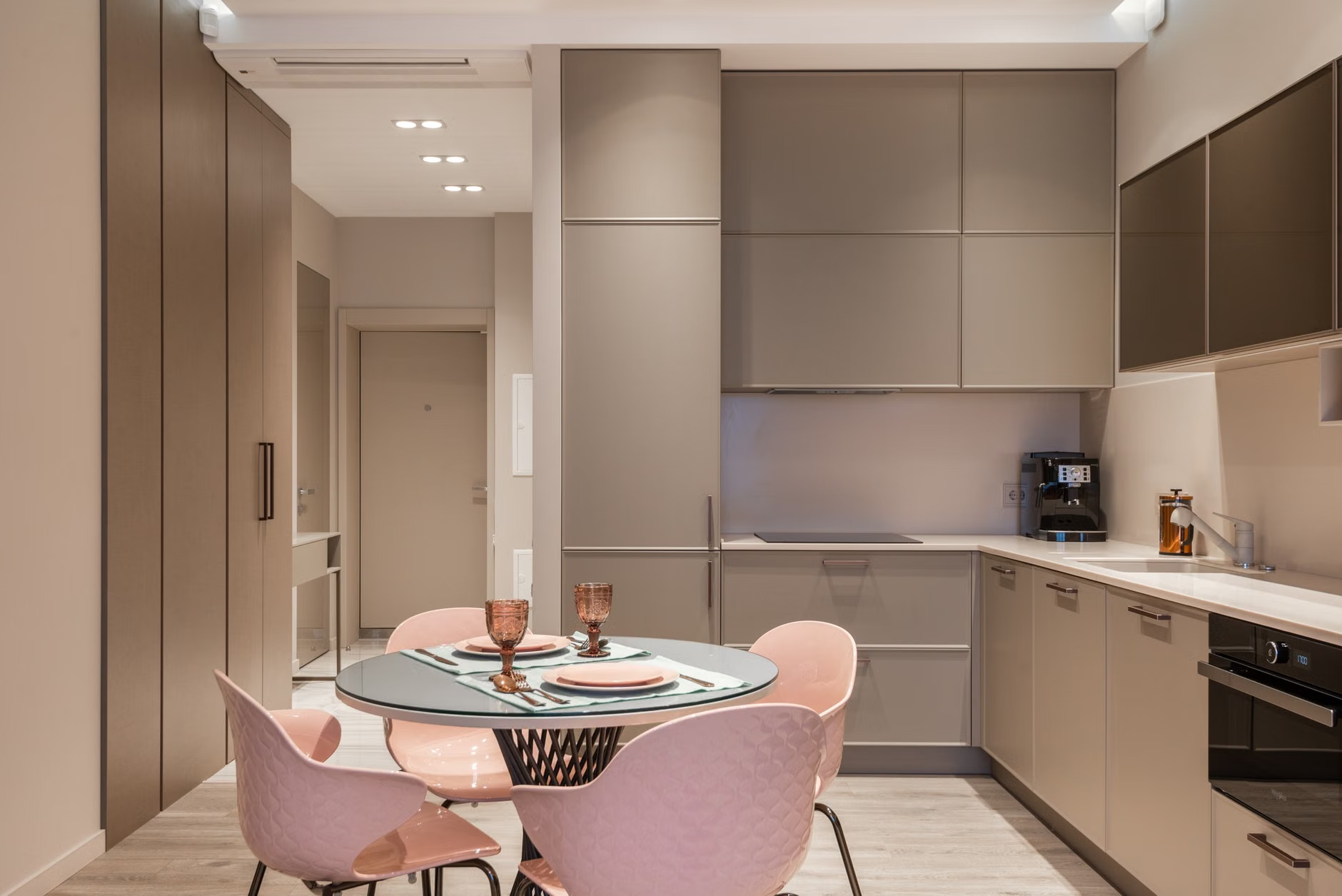
In a standard urban apartment, you pay for a full kitchen that you might only use to make coffee, a guest bedroom that stays empty 350 days a year, and a private laundry setup that takes up precious square footage. In a micro-community, those functions are outsourced to the building’s infrastructure. You have a smaller private kitchen, but access to a commercial-grade chef’s kitchen for hosting parties. You have a “flex room” you can book for guests, and you share laundry facilities that are maintained by the management, not you.
Why does this matter? Because for someone in their 30s or 40s, time is the scarcest resource. The “micro” element is actually a tool for efficiency. By reducing the physical space you are personally responsible for cleaning, maintaining, and paying for, you are effectively buying back time and reducing your overhead costs.
The Economic and Social Reality: Is the Math Working?
When we look at the financial side, we have to look past the “per square foot” price. It is easy to look at a 400-square-foot unit and think it’s overpriced. However, you must calculate the Total Cost of Living (TCL). A micro-community unit often includes high-speed internet, electricity, water, waste management, and sometimes even a cleaning service or coworking membership in the base rent or HOA fee.
Let’s compare a standard urban apartment versus a micro-community setup for a hypothetical professional couple:
| Expense Category | Standard Apartment | Micro-Community |
|---|---|---|
| Monthly Utilities (Internet/Water/Electric) | $350 | $0 (Included) |
| Coworking Membership | $250 | $0 (Included) |
| Cleaning/Maintenance Services | $200 | $50 (Shared/Bundled) |
| Total Monthly “Hidden” Costs | $800 | $50 |
The table above illustrates that while the base rent might look higher or similar, the out-of-pocket expenses for a standard lifestyle drop significantly in a micro-community. The key variable here is the utilization rate of the shared amenities. If you work from home and host dinner parties, you will extract maximum value. If you are a minimalist who prefers total solitude, the extra cost for shared spaces becomes a “sunk cost” that you aren’t actually using.

The “Village” Factor: Combating Urban Loneliness
One of the most overlooked aspects of the micro-community movement is the psychological benefit. Research from sources like the Journal of Urban Affairs suggests that intentional housing communities with shared spaces foster higher levels of social interaction compared to traditional residential blocks. For parents, this is a game-changer. The “it takes a village” adage is difficult to implement when you don’t know your neighbors.
In a micro-community, the design forces interaction. You walk through a shared garden to get to your unit; you pick up a package in a communal lounge; you might run into a neighbor while using the building’s shared tool library. This is not about forced social events—which most busy 30-somethings despise—but about low-friction social contact.
It provides a “social safety net.” If you need someone to hold a package, watch a pet for ten minutes, or simply have a quick coffee with an adult while your kids are playing in the shared area, the infrastructure is already there. For families, this reduces the “lone wolf” pressure that leads to burnout. It transforms housing from a static asset into an active support system.
Common Misconceptions and Where People Get it Wrong
The most common mistake people make when considering this lifestyle is assuming it’s “dorm living for adults.” This is a significant misconception. Modern micro-community developments are often built with high-quality soundproofing, privacy-first floor plans, and professional management. They are not designed to be chaotic; they are designed to be curated.
Another pitfall is the “community expectation” trap. Some residents move in expecting a constant stream of events and deep friendships. If that doesn’t happen, they feel disappointed. The reality is that these communities work best when you view the social aspect as a bonus, not a requirement. If you are someone who deeply values total, uninterrupted privacy, you need to look for developments that offer “hard” boundaries between private and public zones—specifically, units with private balconies or soundproofed walls that face away from the communal areas.
Also, verify the governance structure. Some micro-communities are managed by a corporate entity (like a landlord), while others are resident-led (like a housing cooperative). If you are looking for stability, a corporate-run building might be better because they handle the conflict resolution. If you want a say in how the building is run, a co-op model is better, but be prepared for the time commitment of attending meetings and making collective decisions.

Step-by-Step: Is a Micro-Community Right for Your Life?
If you are considering making the move, don’t just look at the photos of the rooftop deck. Use this decision framework to determine if the trade-offs align with your current life stage.
- Audit Your “Space Usage”: For two weeks, track how much time you spend in your kitchen, your guest room, and your home office. If you aren’t using those rooms for at least 30% of your waking hours, you are essentially paying rent to store your furniture.
- Assess Your Social Capacity: Do you find energy in casual interactions, or do you find them draining? If you are an extreme introvert, the “shared” aspect might become a source of anxiety rather than comfort.
- Check the “Hard” Amenities: Look past the “fun” stuff like the rooftop bars. Focus on the practical: Is there a secure package room? Is the laundry situation actually convenient or just a bottleneck? Is the internet robust enough for two people to work simultaneously?
- The “Exit” Strategy: Look at the lease or ownership terms. Is it easy to sublet? Is the market for these units growing? Because this is a niche, you need to ensure that the liquidity of the unit is high enough that you aren’t trapped if your life circumstances change (e.g., a new job in a different city).
Refining Your Search
When you start searching for these properties, don’t just use terms like “apartment.” Search for “coliving,” “co-housing,” “intentional community,” or “managed residential community.” Check the municipal zoning laws in your specific region. In some cities, there are specific “micro-unit” zoning categories that mandate certain levels of shared amenities. Understanding these local laws will help you identify which buildings are actually designed for this purpose versus those that are just “cramped apartments with a fancy lobby.”
For official data on housing trends and urban development, I recommend checking the Urban Land Institute (ULI) reports on https://uli.org. They provide excellent, non-biased insights into how residential trends are shifting globally. Another great resource is your local government’s urban planning department website, which often publishes “future of housing” white papers that outline which neighborhoods are being earmarked for this type of development.
Final Thoughts
The micro-community movement is not a universal solution for everyone. It is a specific solution for a specific problem: the unsustainable cost of individual space in a world where we are increasingly time-poor and socially isolated. If you are in your 30s or 40s and feel like you are spending more time managing your home than actually living in it, this shift might be the exact lever you need to pull.
Start by visiting one of these spaces. Don’t look at the decor; look at the people. Watch how they interact with the space. If you see people using the shared kitchen to prep a quick meal while chatting, or a parent using the communal library while their child reads nearby, you’ll start to see the potential. It’s not about living smaller; it’s about living more efficiently and, perhaps, a bit more connectedly.
Frequently Asked Questions
- Are micro-communities only for young, single professionals?
Not at all. While they are marketed toward that demographic, many modern developments are specifically designed with families in mind, offering larger family-sized units alongside shared childcare facilities and family-friendly common spaces. Always check the floor plans for “family” vs. “studio” designations. - How do you handle conflict in shared spaces?
Most professionally managed micro-communities have a “Community Manager” whose job is to mediate disputes and enforce the “house rules.” If you are in a resident-led co-op, ensure there is a pre-existing conflict resolution policy in the bylaws before you commit. - Do these units hold their value as investments?
Micro-units are a niche market. Their resale value depends heavily on the location and the quality of the management. They tend to be “lifestyle” investments rather than “capital appreciation” plays. If you are buying, look for properties in high-demand, transit-oriented urban centers where space is at a absolute premium.
Sources and further reading:
- Urban Land Institute: https://uli.org/research/housing/
- Journal of Urban Affairs: Research on social cohesion in shared housing developments.