The most effective way to regulate your internal clock isn’t a supplement or a new pillow—it is controlling the color temperature and intensity of your indoor lighting to mimic the natural cycle of the sun.
- Blue light is a biological trigger: Exposure to bright, cool-toned light (above 4000K) after 8:00 PM suppresses melatonin, the hormone required for deep sleep.
- Automation is mandatory: Manual adjustments are rarely consistent; use ‘Adaptive Lighting’ features or sunset-based schedules to ensure your home transitions automatically.
- Intensity matters as much as color: Reducing light brightness by 50% in the two hours before bed is often more effective for sleep onset than simply changing the color temperature.
If you are in your 30s or 40s, you likely know the feeling of the “second shift.” You put the kids to bed, tidy the kitchen, and finally sit down to answer a few emails or scroll through your phone. By the time you try to sleep, your brain is wide awake. You blame the stress, the caffeine, or the endless to-do list, but there is a silent culprit in every room: your light bulbs.
For most of human history, our internal clocks—our circadian rhythms—were synchronized by the rising and setting sun. Today, we live in environments where the light at 10:00 PM is often as bright and “blue” as the light at 10:00 AM. This confuses the suprachiasmatic nucleus (SCN), the tiny part of your brain that acts as your master clock. When your SCN thinks it is midday, it keeps your body in a state of high alert, making it significantly harder to fall asleep and stay asleep.
What is Circadian Lighting, and Why Does Your Brain Care?
Circadian lighting is the practice of adjusting the light in your home to match the natural progression of the day. This isn’t just about dimming the lights for “mood.” It is about the specific Kelvin (K) temperature of the light. Kelvin measures the color appearance of light; lower numbers (2000K–3000K) are warm, amber, and sunset-like, while higher numbers (5000K–6500K) are cool, blue, and daylight-like.
Why this matters for your 30s and 40s: Your sleep quality is already being squeezed by work demands and parenting responsibilities. When your biological clock is misaligned, your sleep efficiency—the ratio of time spent asleep to time spent in bed—drops. You aren’t just sleeping less; you are sleeping worse. You wake up feeling groggy, which leads to more caffeine intake, which further disrupts your circadian rhythm. It is a cycle that smart lighting is uniquely positioned to break.
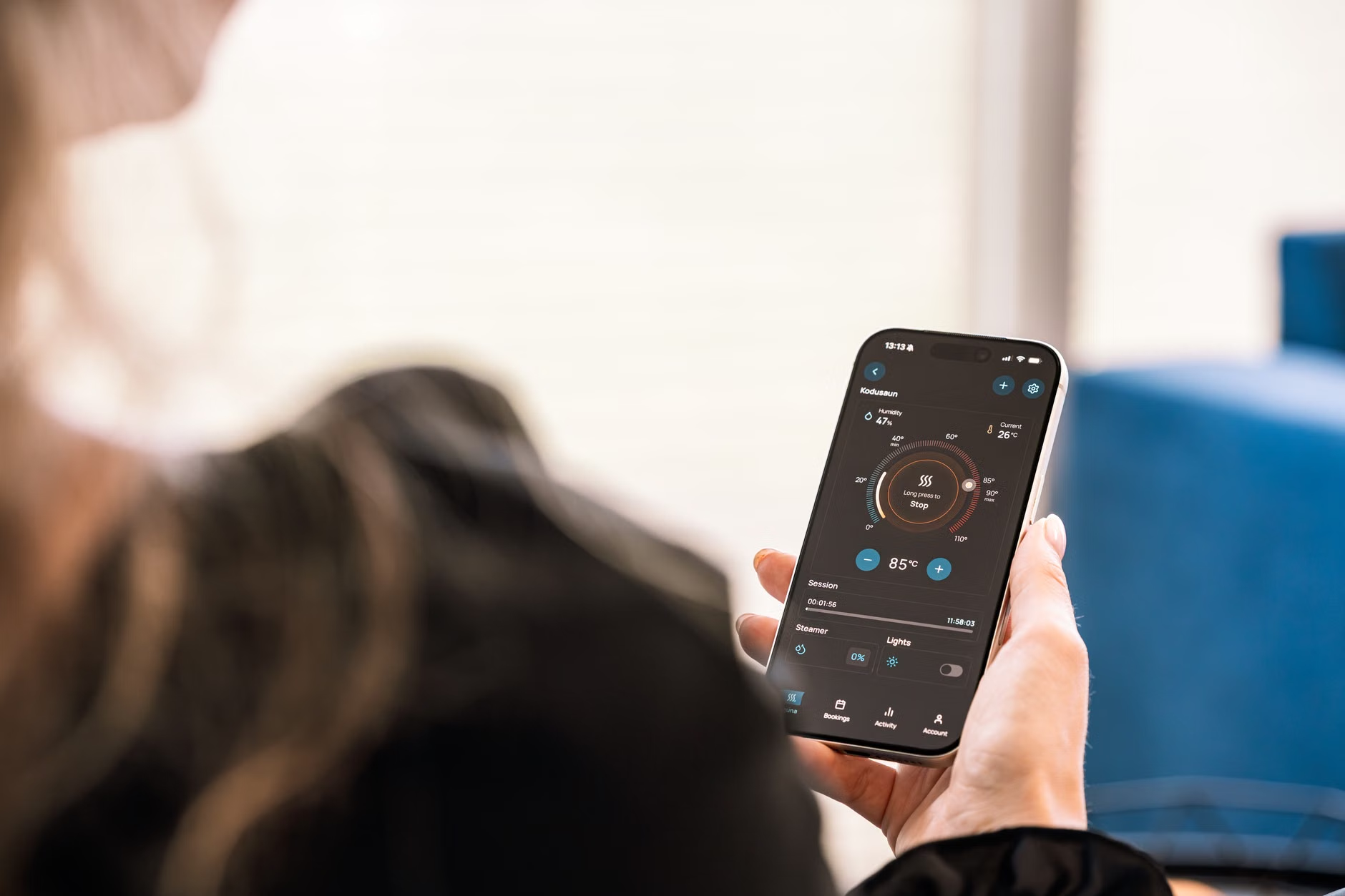
Building Your Automation Strategy: The Three-Phase Cycle
You don’t need a PhD in lighting design to fix your home’s rhythm. The most effective approach is to divide your day into three distinct lighting phases. Most smart lighting ecosystems (like Philips Hue, Nanoleaf, or LIFX) allow you to set these schedules based on your local sunrise and sunset times.
1. The Morning Energizer (Sunrise to Noon)
The goal here is “circadian suppression” of melatonin. You want bright, cool-toned light to tell your brain that the day has begun. If you have smart bulbs in your kitchen or home office, set them to 5000K–6000K at 100% brightness during your morning routine. This signals to your body that it is time to stop producing sleep hormones and start producing cortisol, which helps you feel alert.
2. The Midday Neutral (Noon to 5:00 PM)
As the day progresses, you can shift the light to a more neutral white (around 4000K). This is comfortable for general tasks and keeps your energy levels stable without the intense “daylight” shock of the morning. Many smart systems have an “Adaptive” mode that tracks the sun’s position and does this transition for you automatically.
3. The Evening Wind-Down (Sunset to Bedtime)
This is the most critical phase. Two hours before your target bedtime, your lights should transition to a warm 2200K–2700K and dim to 30% or 40% intensity. This mimics the low-angle, warm light of a sunset. By reducing the blue light spectrum, you allow your brain to naturally release melatonin. Common mistake: Leaving overhead lights on until the moment you walk into the bedroom. Your eyes perceive this light even if you are looking down at a book or a screen.
The Parenting Factor: Managing Kids and Night Feeds
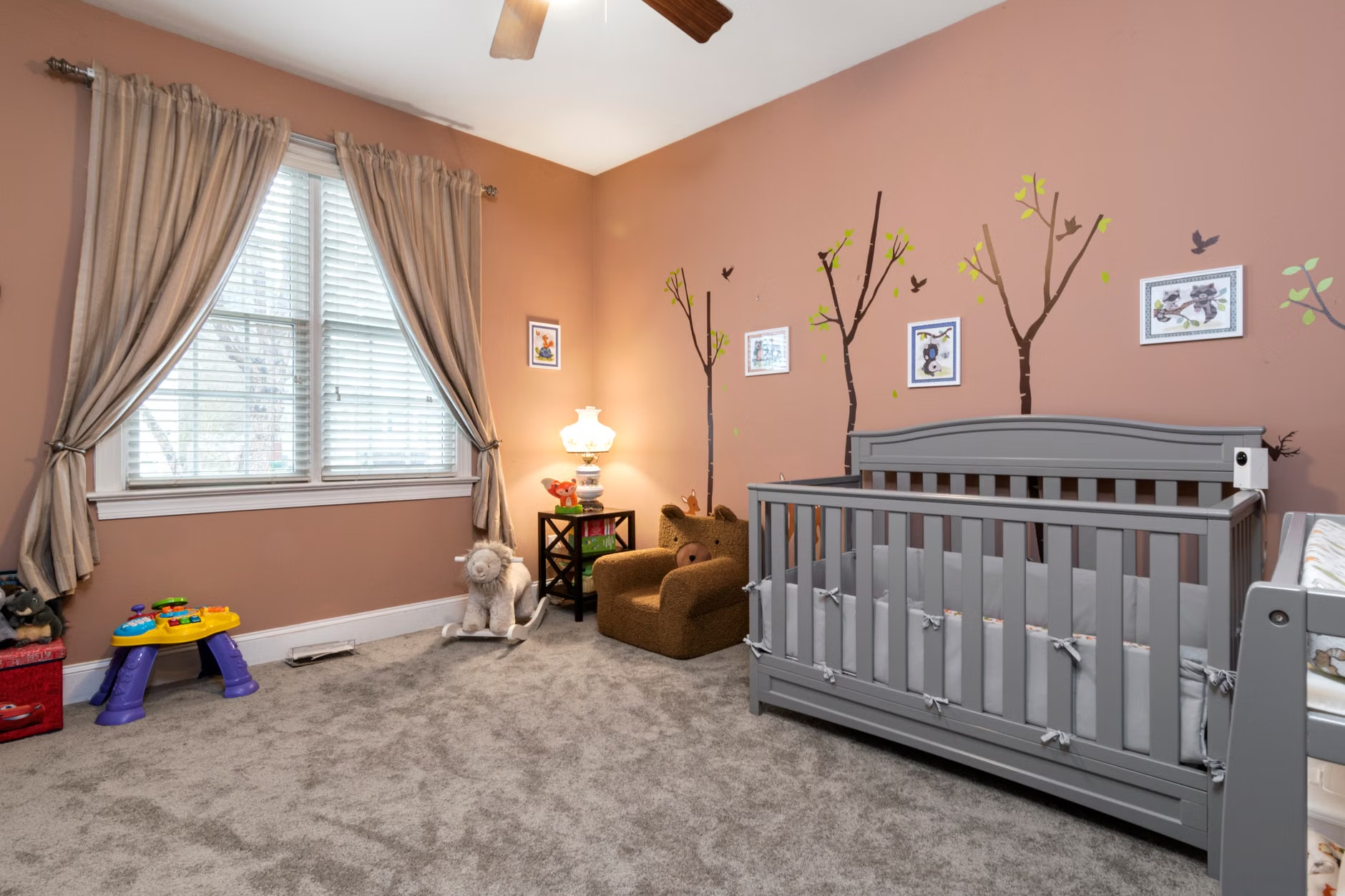
If you have young children, smart lighting is a parenting superpower. The “night feed” or the “midnight nightmare” scenario is usually met with a flick of a bright, 6000K overhead light, which immediately tells the child’s brain (and yours) that the day has started. This is why it takes an hour to get back to sleep.
The Solution: Install motion-activated smart lights in hallways and nurseries set to a deep red or soft amber color at 10% brightness. Red light has the least impact on melatonin production. If you have to attend to a child at 3:00 AM, you can navigate the room without triggering the “wake up” signal in your brain. This makes the transition back to sleep significantly faster for both you and your child.
Common Pitfalls and How to Avoid Them
Automation often fails because we make it too complicated. Here are the three most common mistakes people make when setting up their circadian lighting:
| Mistake | The Reality | The Fix |
|---|---|---|
| Over-reliance on “Bright” white | Using 6000K light at 8:00 PM suppresses melatonin. | Set an “Evening Scene” that triggers automatically at sunset. |
| Ignoring Task Lighting | Main lights are warm, but desk lamps are harsh and blue. | Sync every light in the room to the same schedule. |
| Manual Overrides | Toggling switches back to manual defeats the automation. | Use voice commands or sensors to avoid touching switches. |
Another overlooked variable is the “hidden” blue light. Even if your smart bulbs are dimmed, your television, laptop, and smartphone are emitting high-intensity blue light. Smart lighting cannot fix the effects of staring at a smartphone screen six inches from your face. If you aren’t ready to give up the screen, at least pair it with the warmest lighting possible in the room to reduce the contrast.
How to Choose Your Hardware
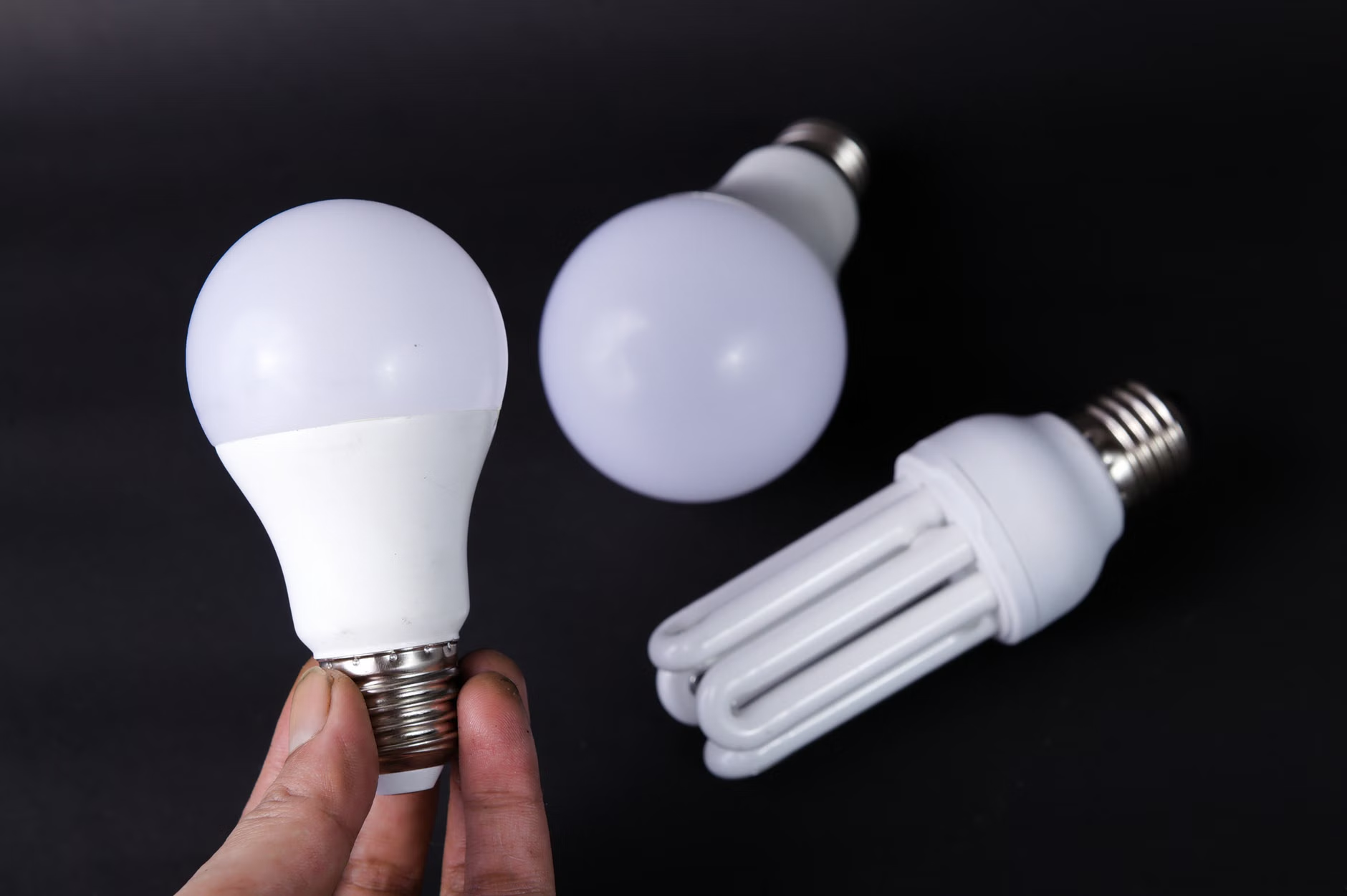
Not all smart bulbs are created equal. If you are looking to invest in a circadian system, look for bulbs that explicitly list a “Color Temperature Range.” You want a range from 2000K to 6500K. Some cheaper “color” bulbs can produce red or blue, but they struggle to produce a high-quality “warm white” that looks natural, often making them look sickly yellow or green.
If you are starting small, prioritize the rooms where you spend your last two hours of the day: the living room and the bedroom. You don’t need to replace every bulb in your house at once. A single, high-quality smart bulb in a floor lamp can be enough to change the ambient feel of an entire room.
The Science Behind the Scenes
The science of circadian lighting is rooted in the discovery of intrinsically photosensitive retinal ganglion cells (ipRGCs) in the human eye. These cells are specifically sensitive to short-wavelength blue light (around 480 nanometers). When these cells detect blue light, they send a direct signal to the SCN to inhibit the pineal gland’s production of melatonin. This mechanism is an evolutionary survival trait—it helped our ancestors stay alert during the day when the sun was high and blue-light rich. In the modern world, this trait is a liability.
Research published in journals such as Nature and Science of Sleep consistently shows that controlling light exposure is one of the most effective non-pharmacological interventions for improving sleep latency (the time it takes to fall asleep). However, the effect is dose-dependent. You cannot expect to fix your sleep by changing your lights for one night. It usually takes 3 to 7 days of consistent light scheduling for the SCN to re-align with your desired sleep-wake cycle.
Practical Implementation: A Step-by-Step Guide
To get started today, follow this simple implementation framework:
- Audit your current bulbs: Check which rooms have smart bulbs and which have traditional ones. Replace the “evening” room bulbs first.
- Set your “Base” schedule: In your smart home app (e.g., Apple Home, Google Home, or the bulb manufacturer’s dedicated app), set a daily recurring routine.
- Sunrise: Lights turn on at 2700K at 20% brightness, ramping up to 5000K at 100% over 30 minutes.
- Sunset: Lights begin to dim and shift to 2200K over a 60-minute period.
- Night: All lights turn off or switch to a 10% “Night Light” mode at your desired bedtime.
If you find that your household members (partners or children) fight the automation, don’t force it. Use “scenes.” Create a “Movie Night” or “Bedtime” scene that can be activated with a single button press or a voice command. This gives them a sense of control while still pushing them toward the right behavior.
Beyond the Bulbs: A Final Word
Smart lighting is a tool, not a cure-all. If you are experiencing chronic insomnia or severe sleep disruption, no amount of color temperature adjustment will replace a consultation with a healthcare professional. However, for the majority of us—balancing the chaos of work, parenting, and life—circadian lighting is one of the lowest-effort, highest-impact changes you can make to your home environment.
The goal is to stop treating your home like a static box and start treating it like a living environment that supports your biology. When you stop fighting your clock and start working with it, you’ll find that the “second shift” feels a lot less like a chore and a lot more like a wind-down.
For further reading on how light affects your health, you can check the resources provided by the Sleep Foundation regarding the impact of light on sleep quality.
Frequently Asked Questions
Q: Will my electricity bill spike if I have smart bulbs running all day?
A: Modern smart bulbs are almost exclusively LED-based. They consume a fraction of the energy of incandescent or even older CFL bulbs. The cost of running a smart bulb for 24 hours is negligible—usually a few dollars per year per bulb. The convenience and sleep benefits far outweigh the minor energy consumption.
Q: Can I use “Night Mode” on my phone instead of changing my house lights?
A: While phone “Night Shift” or “Eye Comfort” modes help reduce blue light from your screen, they do not account for the ambient light in your room. If your phone screen is warm but your overhead ceiling light is a harsh 6000K, your circadian rhythm is still being disrupted. You need to manage the environment, not just the device.
Q: What if I work night shifts? Can I still use this?
A: Shift work is the most challenging scenario for circadian rhythm management. If you work nights, you actually want the opposite of a standard schedule. You would use high-intensity cool light during your “night” shift to maintain alertness and total darkness (or red light) during your “daytime” sleep. Smart lighting is even more critical for shift workers to simulate a shifted day-night cycle.
Note: This guide is based on general principles of chronobiology and smart home technology. Always consult with a professional if you have concerns regarding your health or sleep disorders.